Beta Motorcycle Specs & Dossiers
The CBC Bike Dossier covers 14 Beta models (dirt), with generations from 2018 to 2024. Each dossier lists specs by generation, known issues, service intervals and recalls.
A dossier is a research page on this site. The parts-fitment catalog lists every Beta model name we match parts to, trims included.
Beta models
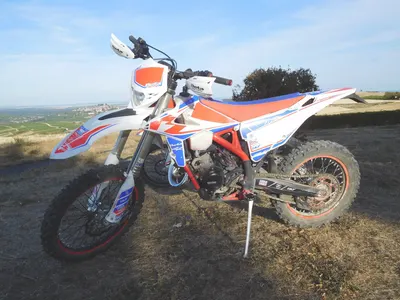
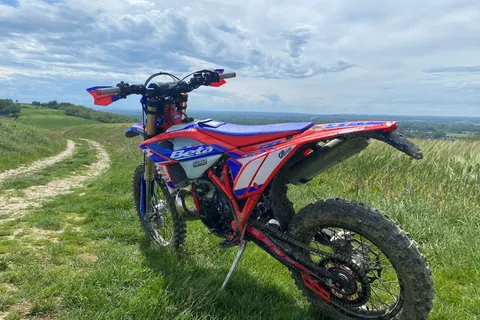
Italian trials and enduro specialists building precision off-road machines since 1904.
BRAND OVERVIEW
Beta Motor is one of Italy's oldest motorcycle manufacturers and a respected force in trials and enduro competition. Founded in Florence over a century ago, Beta has evolved from producing bicycles and early motorized vehicles to becoming a specialist in lightweight, technical off-road motorcycles. The brand has strong credentials in trials circles, where their Evo series has achieved significant success, and in hard enduro, where the RR range competes at the highest levels including Xtreme Enduro events. Beta's lineup is deliberately focused: two-stroke and four-stroke enduro bikes (RR series), trials machines (Evo series), and dual-sport variants (X-Trainer). They don't chase the adventure-touring or street bike markets. Beta buyers are typically serious off-road riders who value handling precision, build quality, and competitive performance over brand cachet. The company remains family-owned, which allows them to maintain their niche focus without pressure to expand into mass-market segments. Beta motorcycles are characterized by their Italian craftsmanship, excellent suspension components (often Sachs or ZF), and a reputation for being race-ready from the crate. The brand has a smaller dealer network than Japanese competitors, which can affect parts availability in some regions, but their loyal community appreciates the specialized attention and racing pedigree. Beta's engineering philosophy emphasizes light weight, agile handling, and rider feedback—qualities that make their bikes excel in technical terrain but may feel less forgiving to novice riders.
MARKET POSITION
Beta occupies the premium specialist segment of the off-road market, positioned above mass-market Japanese brands in price but below ultra-premium Austrian marques like KTM and Husqvarna in volume. They compete directly with GasGas (now KTM-owned), Sherco, and TM Racing in trials, and challenge KTM, Husqvarna, and Japanese brands in enduro. Geographic strength is concentrated in Europe, particularly Spain, Italy, France, and the UK, with growing presence in North America and Australia. Beta's pricing reflects Italian craftsmanship and racing development—typically positioned above comparable Japanese models but offering race-proven components and handling refinement. They're not a budget choice, but neither are they chasing the premium pricing of Austrian brands. The target buyer is an experienced off-road rider who values handling precision and competition pedigree over dealer network convenience or resale value.
RACING HERITAGE
Beta's racing credentials are strong, particularly in trials where they've achieved significant success over decades. Jordi Tarrés won four consecutive World Trials Championships (1987-1990), followed by Dougie Lampkin's seven titles (1997-2003) on Beta machinery. In enduro, Beta has claimed multiple World Enduro Championships and maintains a strong presence in extreme enduro events like Erzbergrodeo, Red Bull Romaniacs, and the Hell's Gate series. Steve Holcombe won back-to-back EnduroGP World Championships on Beta (2017-2018). The factory supports competitive racing programs and uses competition feedback in production bike development, with the RR and Evo models incorporating technology and lessons learned from racing. This racing program is core to their engineering process and brand identity.
OWNER CONSENSUS
Beta owners are fiercely loyal, often citing superior handling and build quality as reasons they'll never switch brands. The community skews toward experienced riders who appreciate the bikes' racing DNA, though some acknowledge the trade-offs in dealer support and resale value. Most agree Beta rewards skilled riders but can be demanding for beginners.
- Exceptional handling and chassis balance, particularly in technical terrain
- Strong trials competition record with multiple world championships
- High-quality Italian construction and attention to detail
- Race-ready suspension and components from the factory
- Strong two-stroke lineup when others abandoned the format
- Limited dealer network outside Europe affects parts availability
- Smaller resale market compared to Japanese and Austrian brands
- Less forgiving for novice riders due to sharp, competition-focused handling
- Higher initial purchase price than Japanese equivalents
- Occasional parts supply delays for North American market
CBC VERDICT
Beta builds some of the finest handling off-road motorcycles available, period. Their trials bikes are highly competitive, their enduro machines punch above their weight in competition, and the Italian craftsmanship is evident in every weld and fastener. But this excellence comes with trade-offs: you'll pay more than a Japanese equivalent, accept a smaller dealer network, and navigate a tighter resale market. Beta doesn't want to be everything to everyone—they're content being the choice of riders who prioritize handling precision and racing pedigree over convenience. If you're serious about technical off-road riding and skilled enough to exploit what these bikes offer, Beta deserves your attention. If you're a casual trail rider who values dealer proximity and resale value, look elsewhere. Verdict: The connoisseur's off-road choice—brilliant if you're committed, demanding if you're not.
FUTURE OUTLOOK
Beta has been cautious about electrification, focusing instead on refining their core two-stroke and four-stroke offerings while monitoring market demand. They've experimented with electric trials prototypes but haven't committed to production models, likely waiting for battery technology to meet the weight and range requirements of serious off-road use. The strategic direction remains focused on their specialist niche—trials and enduro—with incremental improvements to existing platforms rather than dramatic expansion. Recent updates include refined fuel injection mapping, updated suspension components, and continued emissions compliance for two-strokes through advanced oil injection and catalytic technology. Beta's independence allows them to avoid the platform-sharing pressures facing conglomerate-owned brands, but also limits R&D budgets for radical innovation. Expect evolutionary development of current models, potential expansion of the X-Trainer dual-sport range, and selective adoption of electronic rider aids where they enhance performance without adding excessive weight or complexity.
HISTORY
Beta was founded in 1904 by Giuseppe Bianchi in Florence, Italy, initially producing bicycles. The name 'Beta' is an acronym for Bianchi Enzo and Tosi Arrigo, the two partners who took over the company in the post-war period and shifted its focus towards motorcycles, with the name emerging in the 1950s when the company began motorizing bicycles and transitioning to motorcycles. Through the 1960s and 70s, Beta produced a range of street bikes, mopeds, and off-road machines, but by the 1980s began focusing exclusively on trials and enduro. This strategic narrowing coincided with rising success in trials competition, where Beta became a factory team powerhouse. The Betamotor family acquired full control in the mid-20th century and has maintained private ownership through multiple generations. Key milestones include Jordi Tarrés' four consecutive World Trials Championships on Beta (1987-1990) and Dougie Lampkin's seven world titles (1997-2003). In enduro, Steve Holcombe won back-to-back EnduroGP World Championships on Beta (2017-2018). The RR enduro line launched in the 1990s and has become a staple in extreme enduro racing. Beta weathered the 2008 financial crisis by staying lean and focused, avoiding the diversification traps that hurt other European manufacturers. Today, the company operates from Rignano sull'Arno near Florence, exporting worldwide while maintaining Italian production for their complete range.