La historia completa
What it means for you
- Pick the version by the features you will use: the Standard has the full rider-aid suite and the TFT; the Sport adds Gear Shift Assist Pro and the adjustable fork; the GS Trophy adds ERC and the off-road protection, and is the only one eligible for the $800 Enduro Package.
- If you are newer to riding or ride in heavy traffic, ERC is the feature to test. It is standard only on the GS Trophy; ask the dealer about fitting it as an accessory on the other two.
- Seat height is 33.3 inches as standard; if that is tall for you, try the 32.7-inch low seat before you buy, and taller riders can go to the 34.0-inch Rallye seat.
- Set rear preload for your weight and gear first, and adjust the footbrake and shift levers for the boots you ride in.
- The tires are 100/90-19 front and 130/80-17 rear, and type approval allows enduro tires, so you can match rubber to how much dirt you ride.
- Book the free 600 Mile Service within 6 months or 750 miles, whichever comes first.
Qué cambió para 2027
F 450 GS
- Nuevo
Model
All-new 2027 model with a 420 cc parallel twin
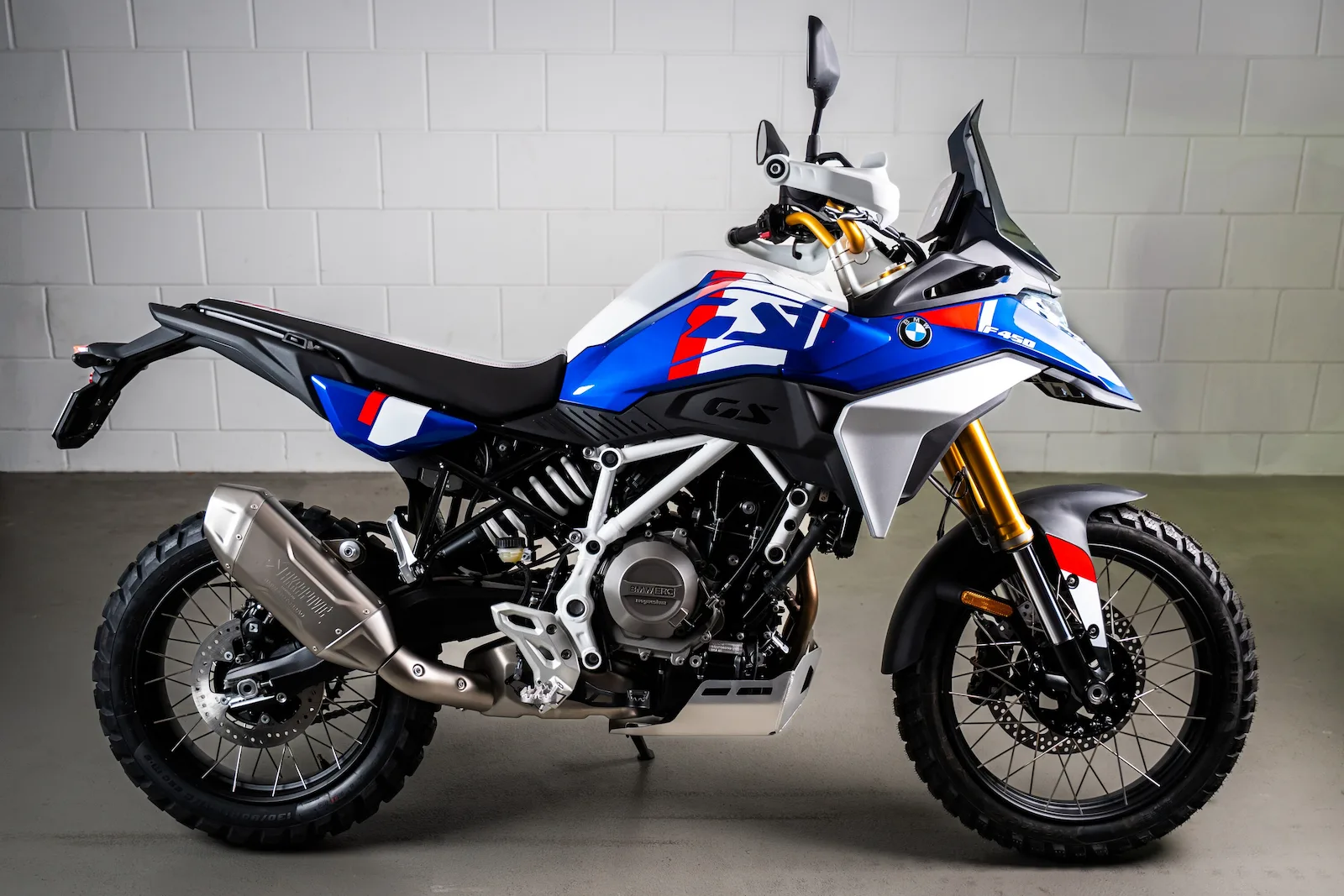
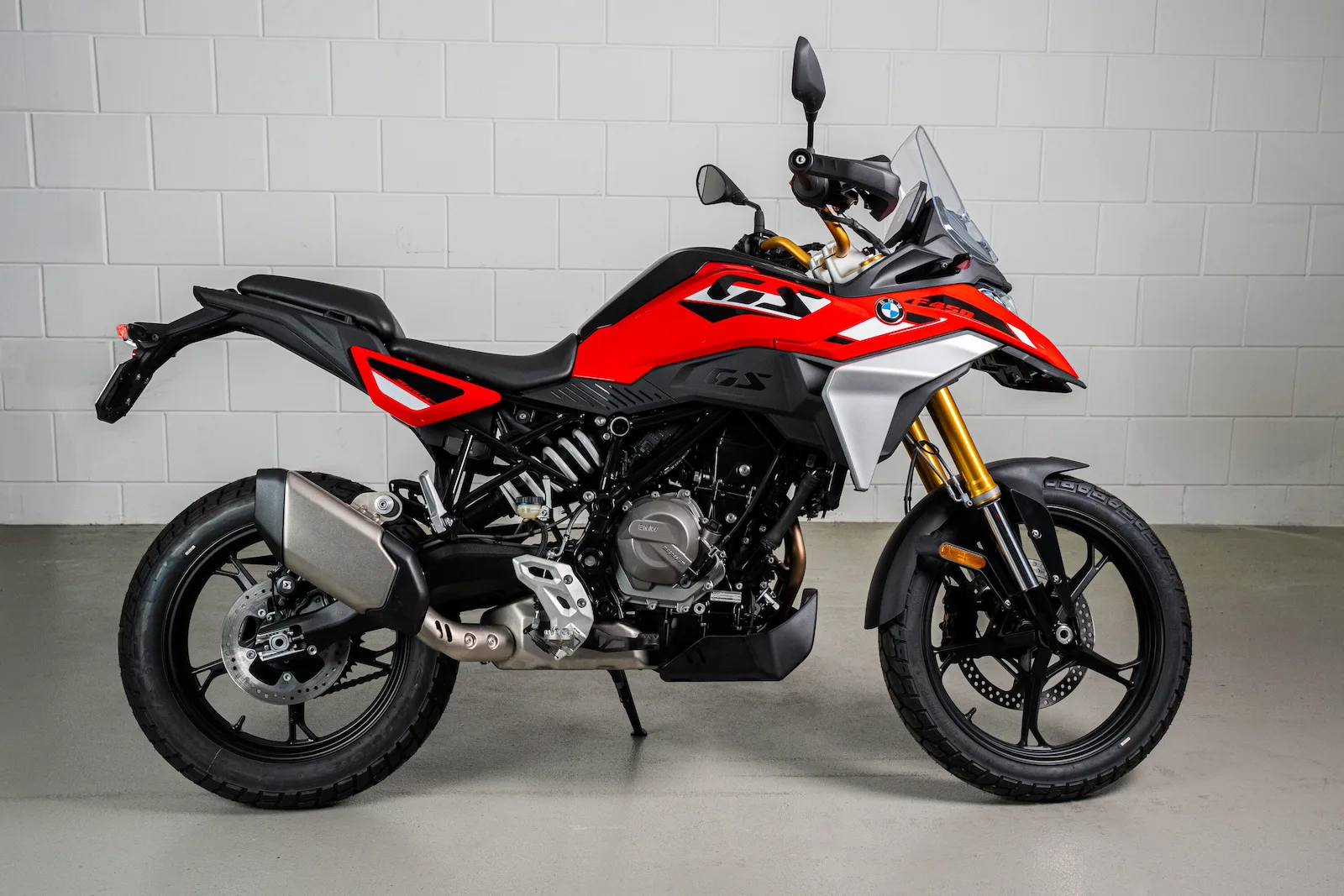
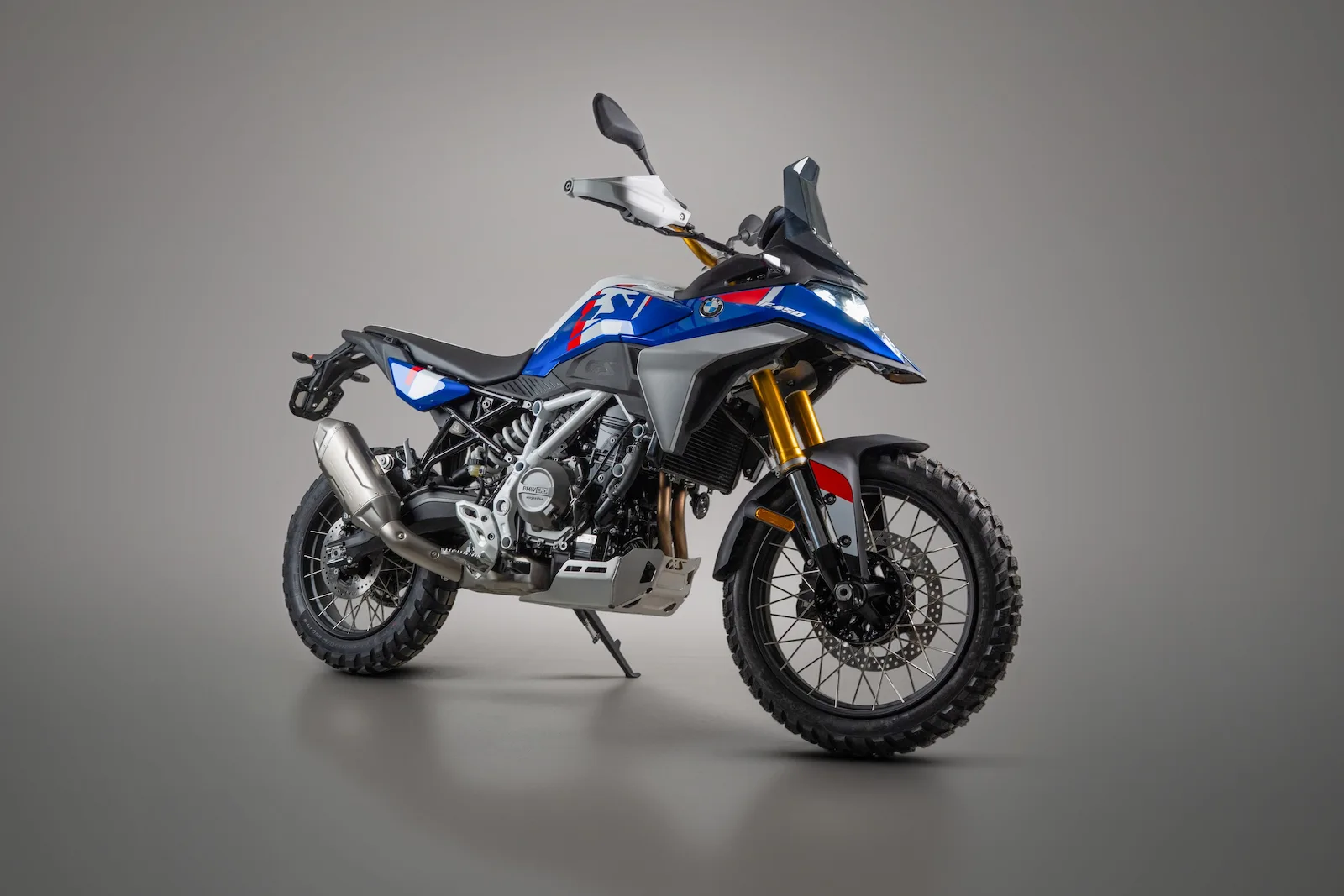
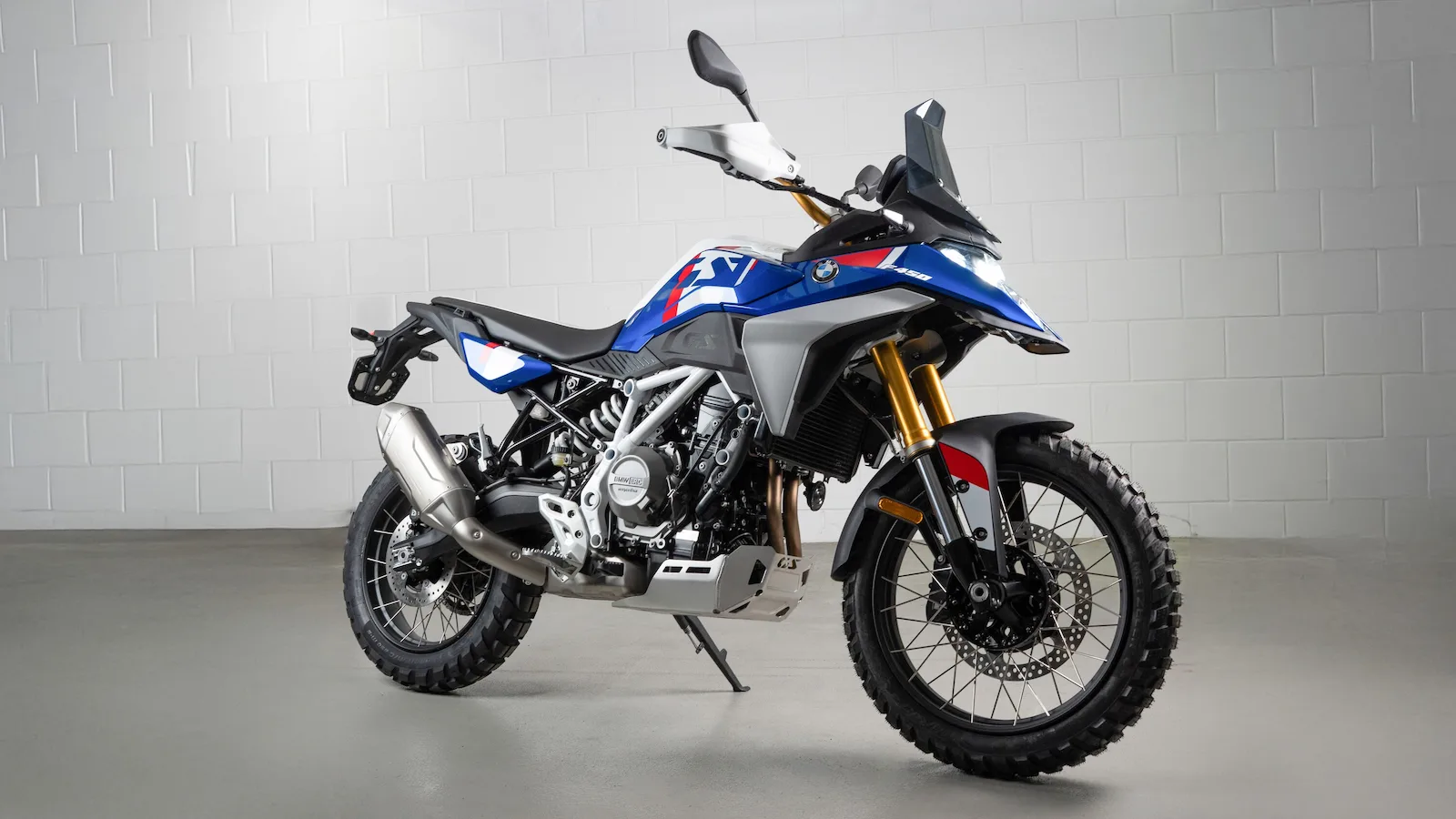
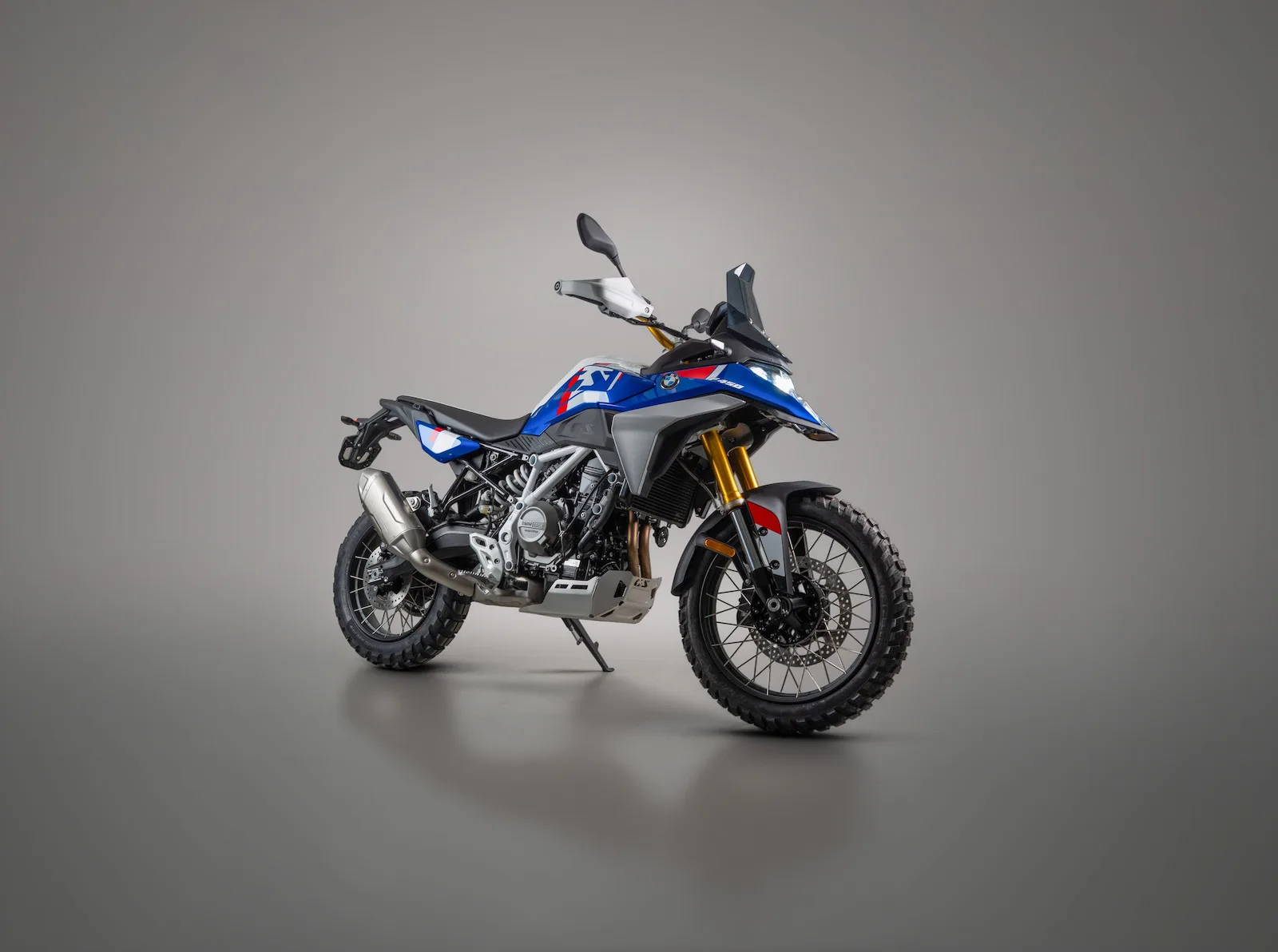
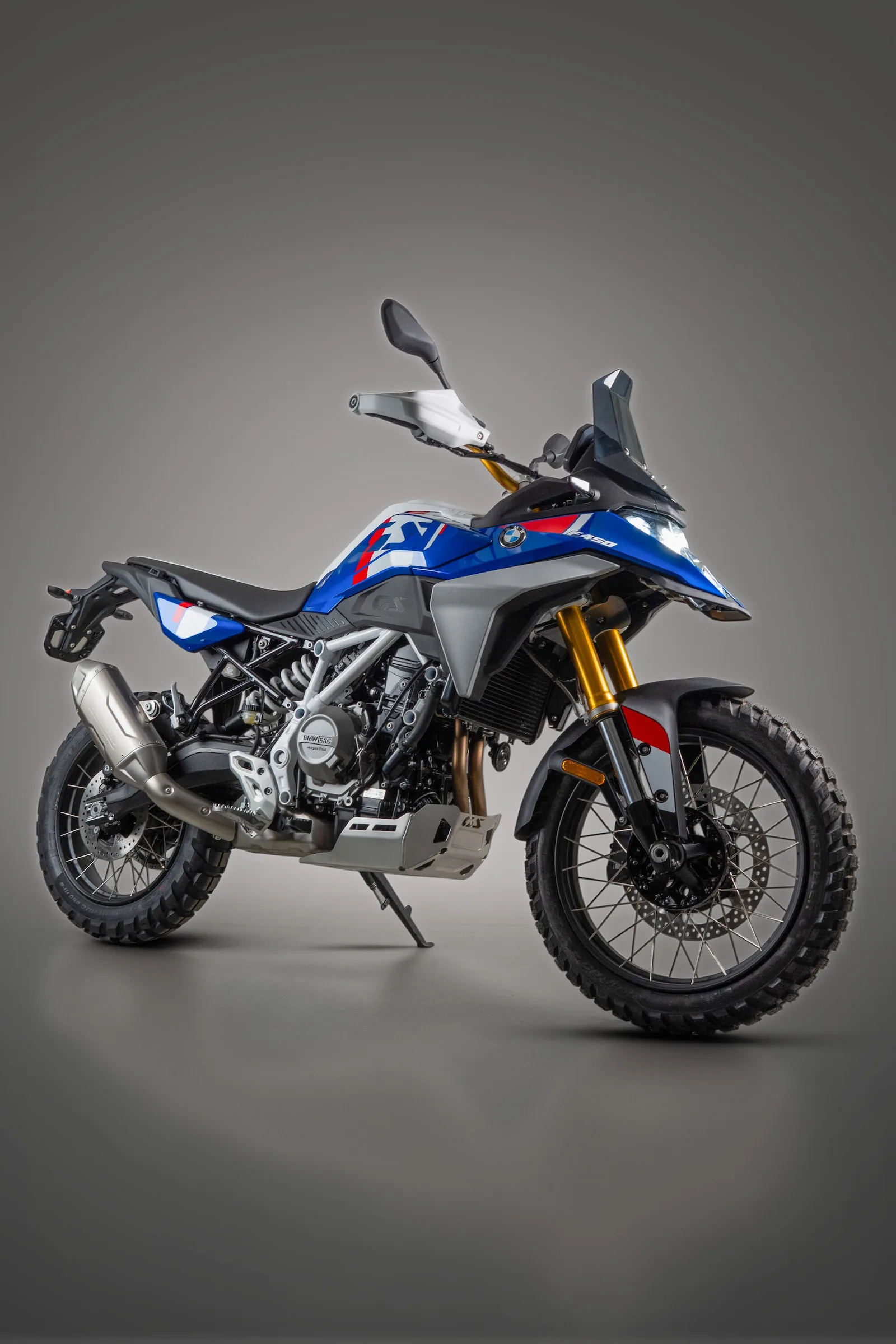
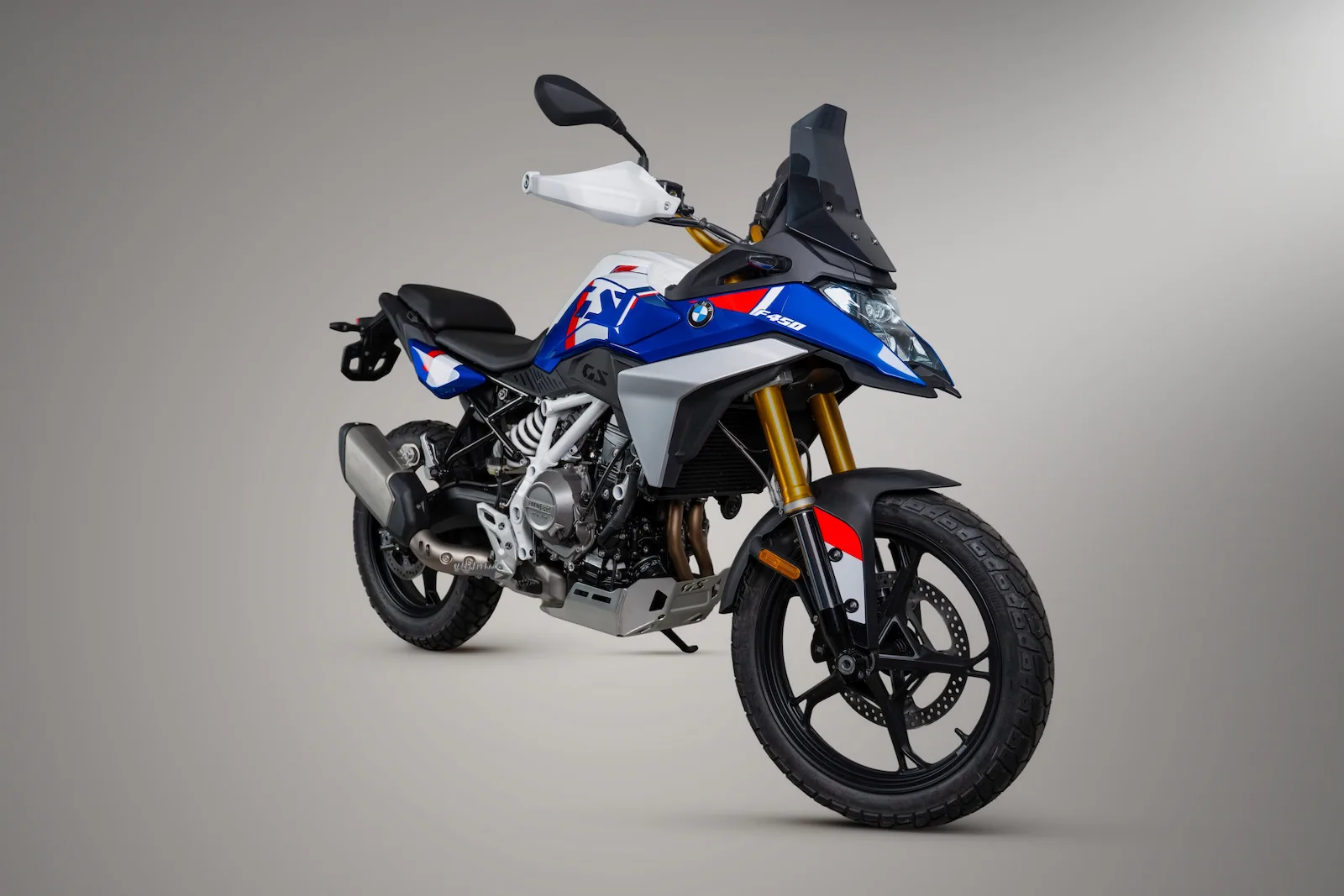
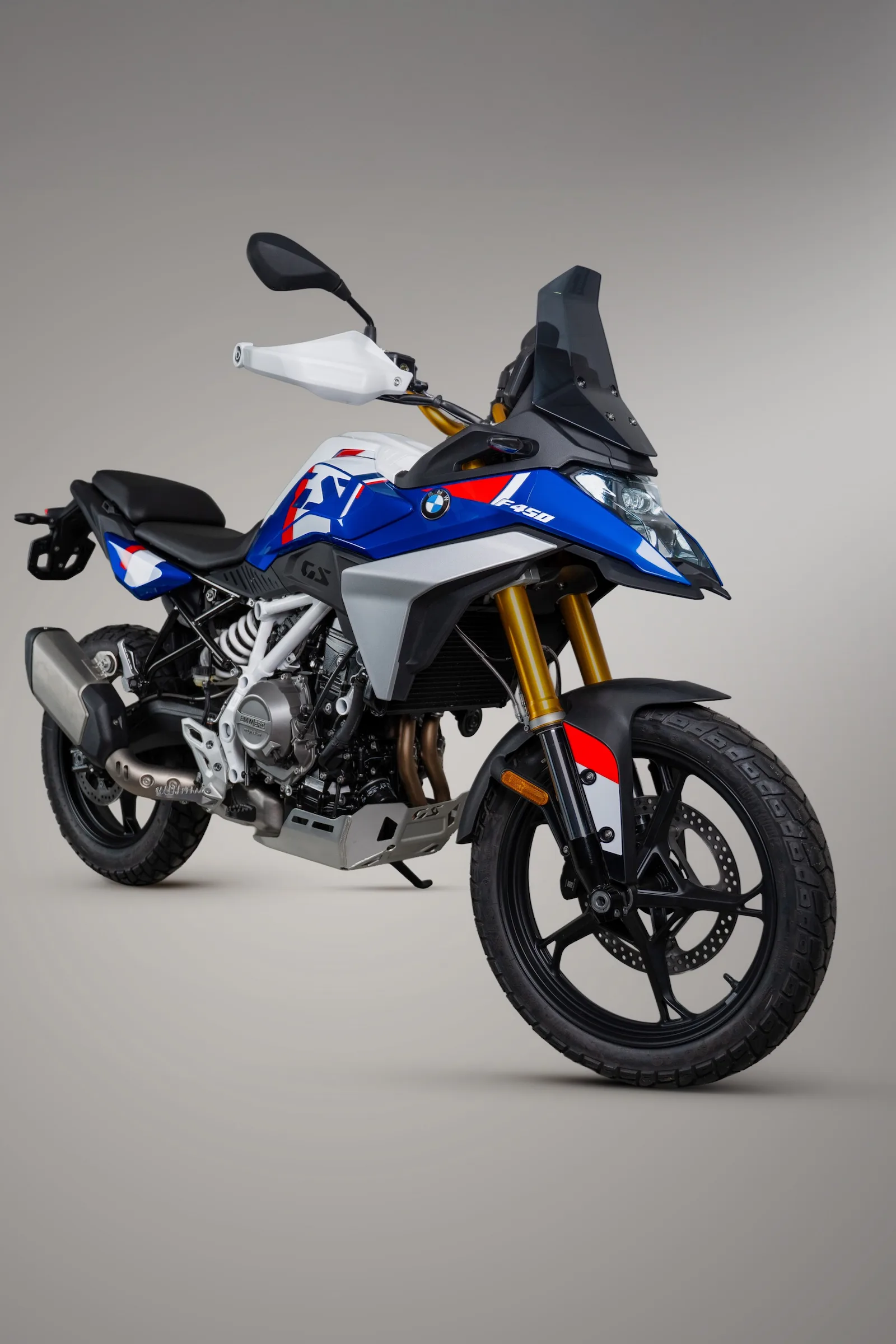
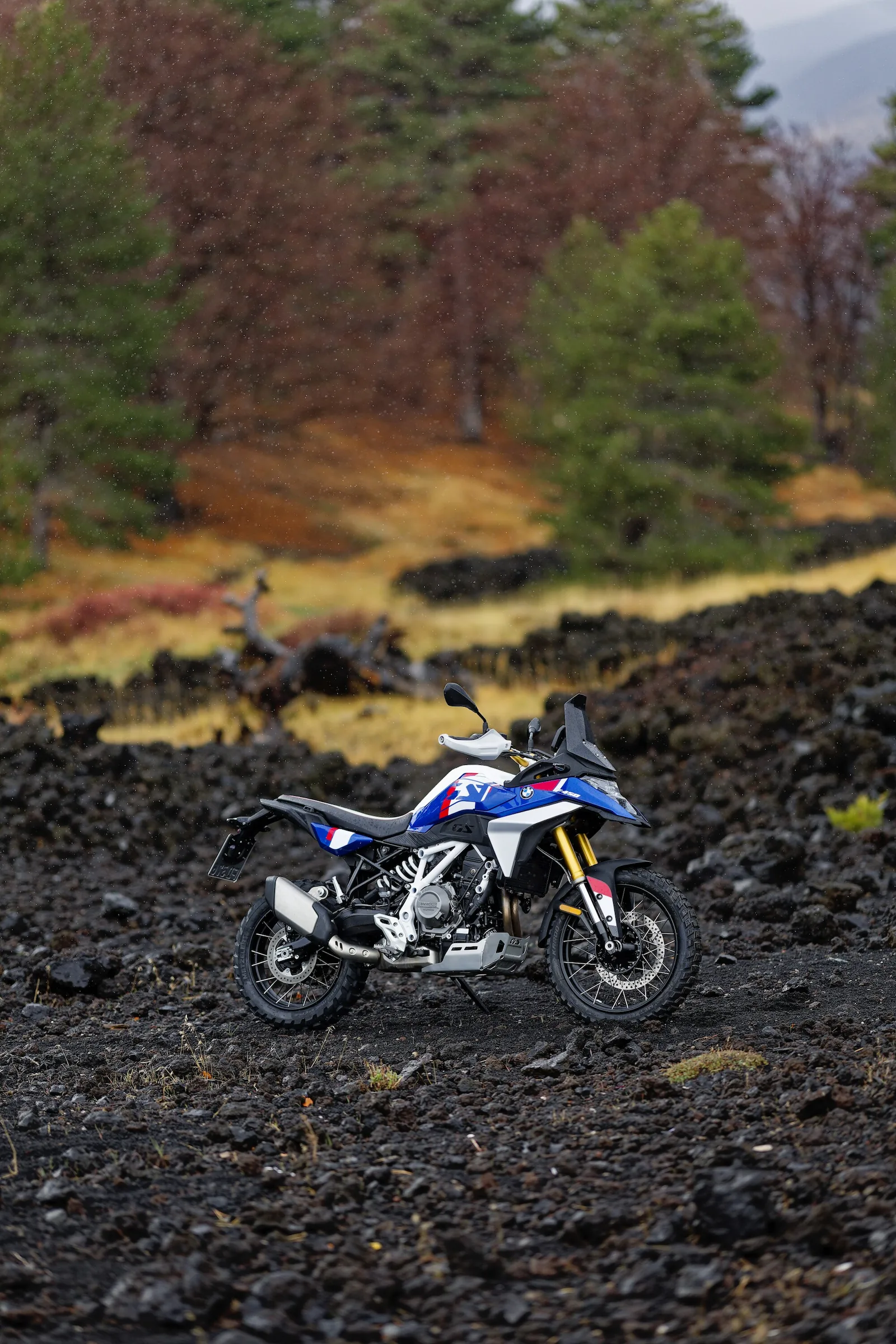
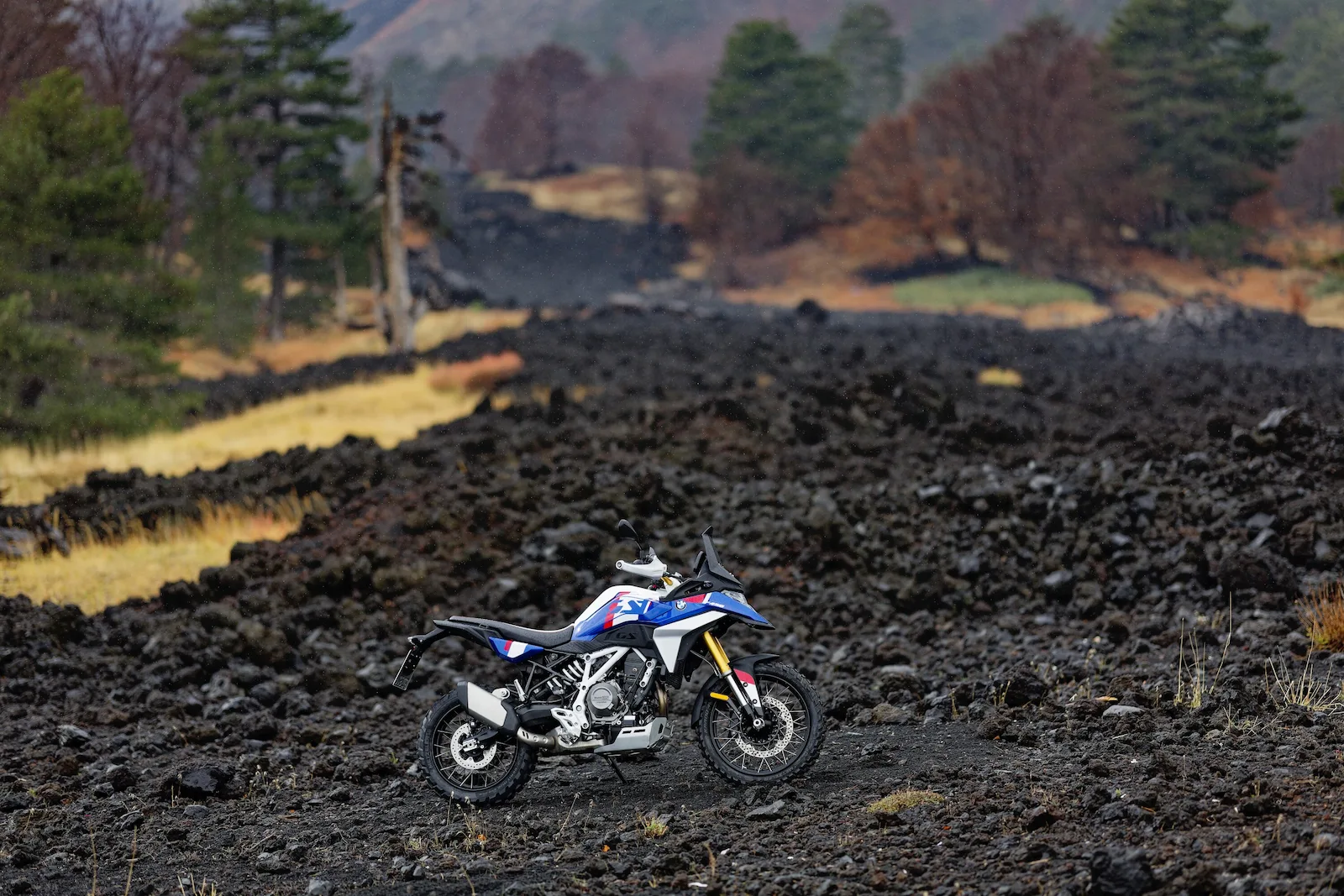
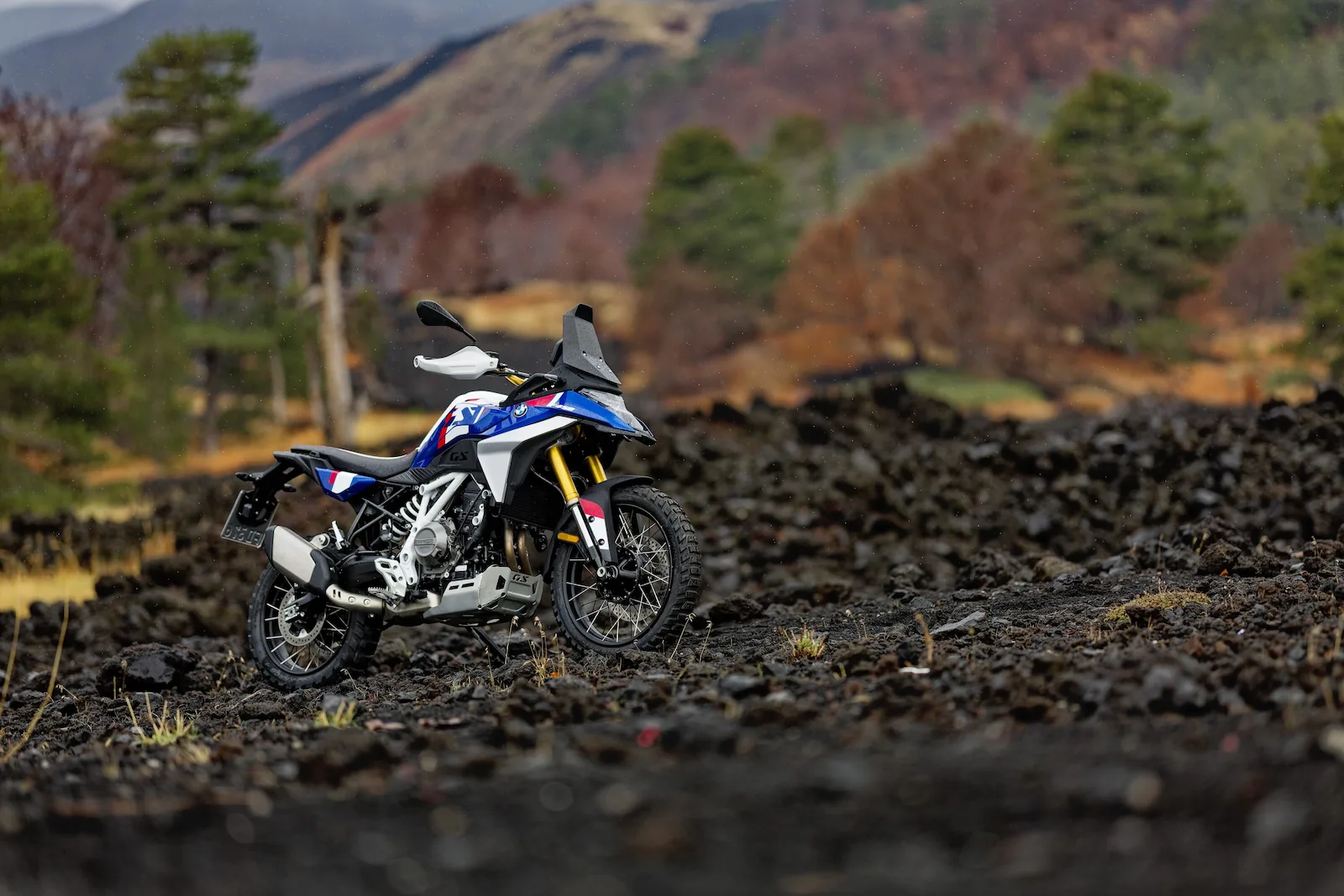
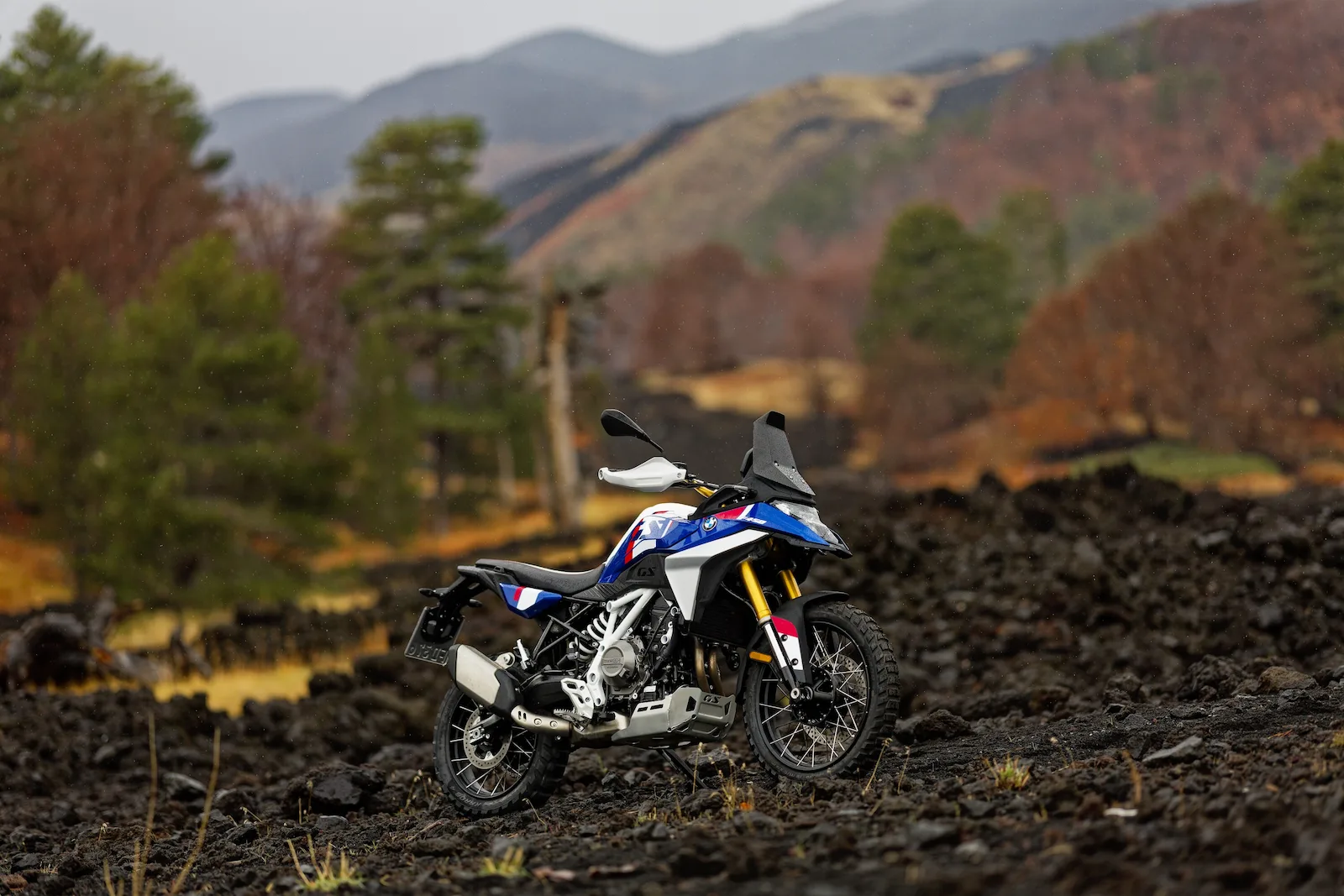
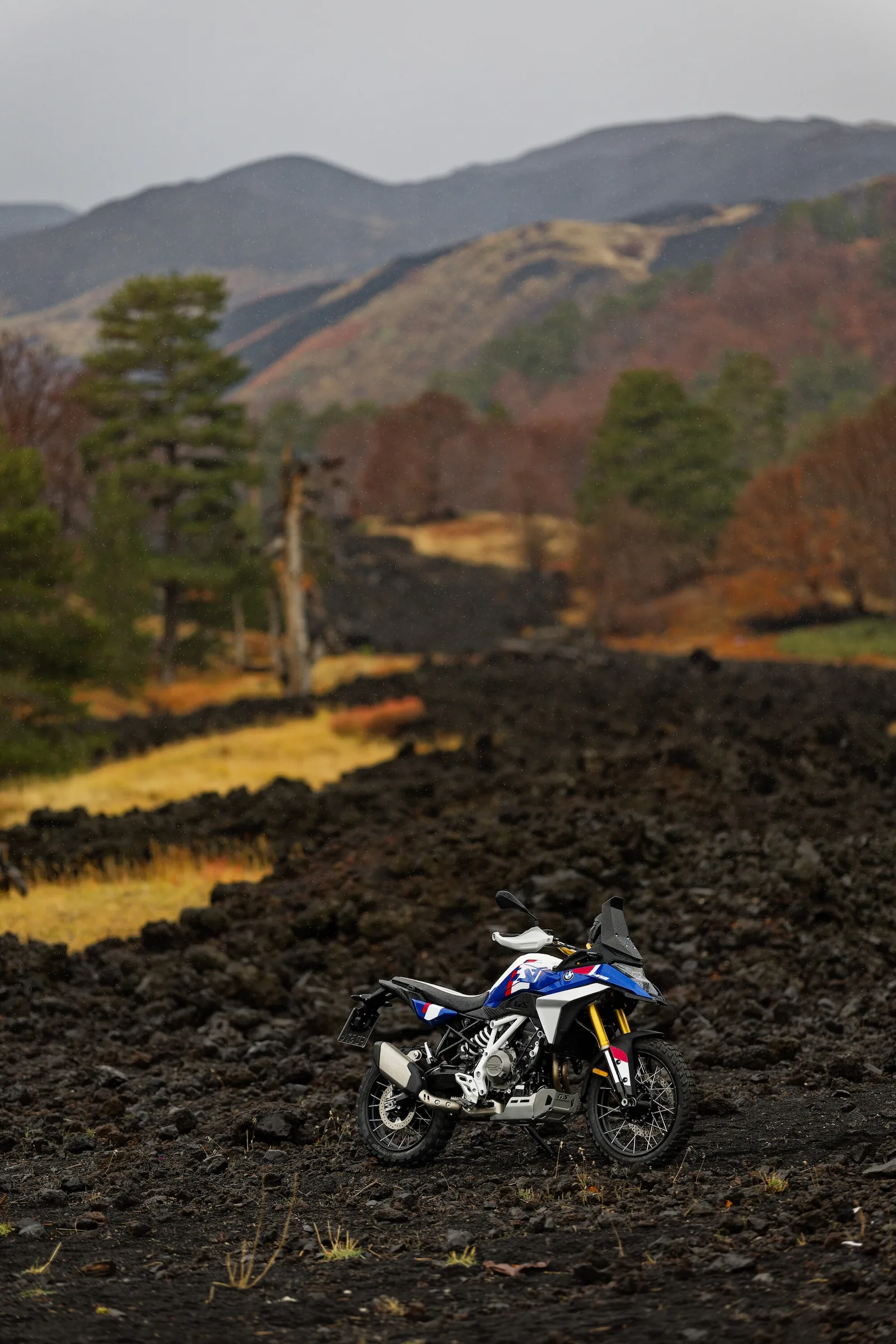
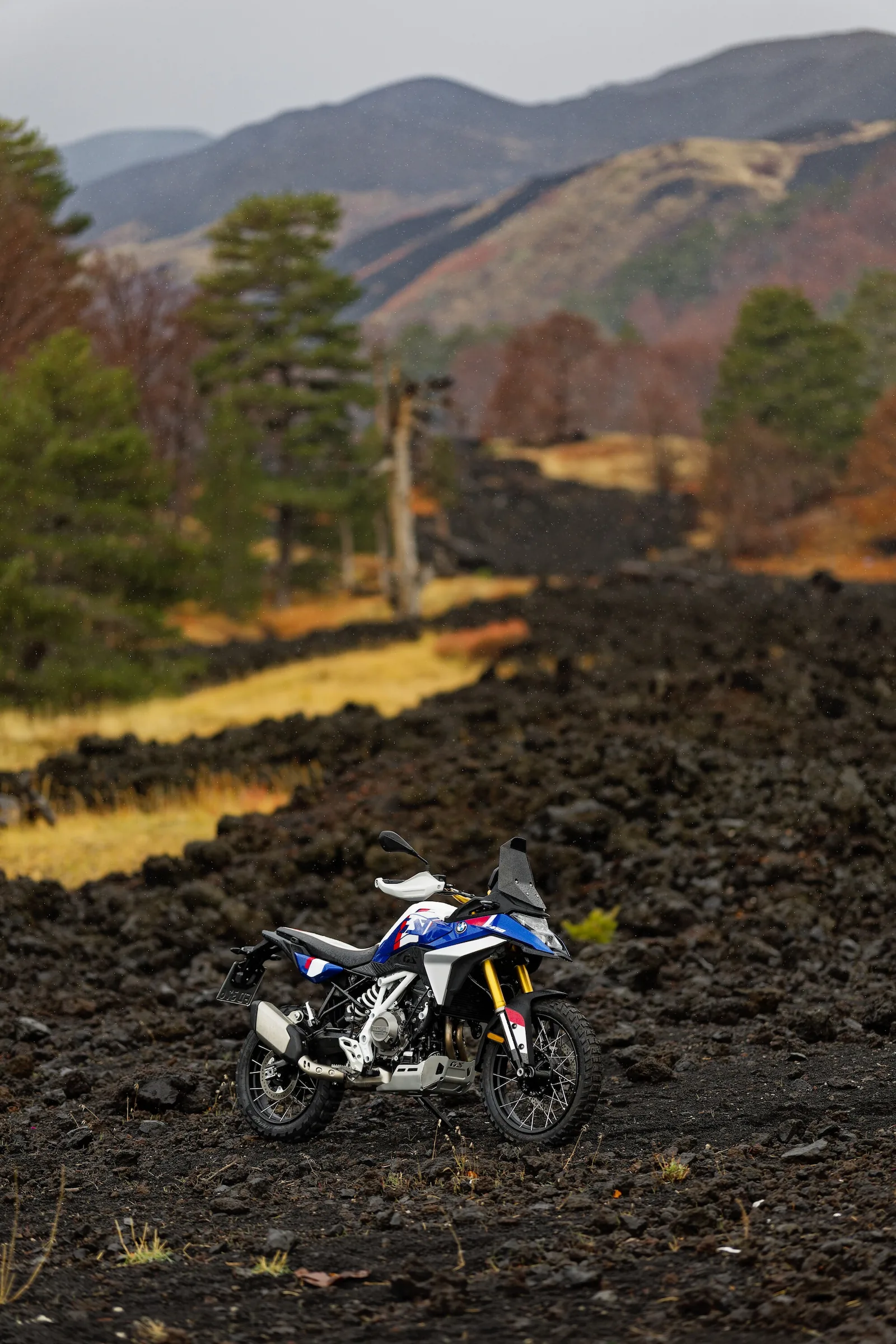
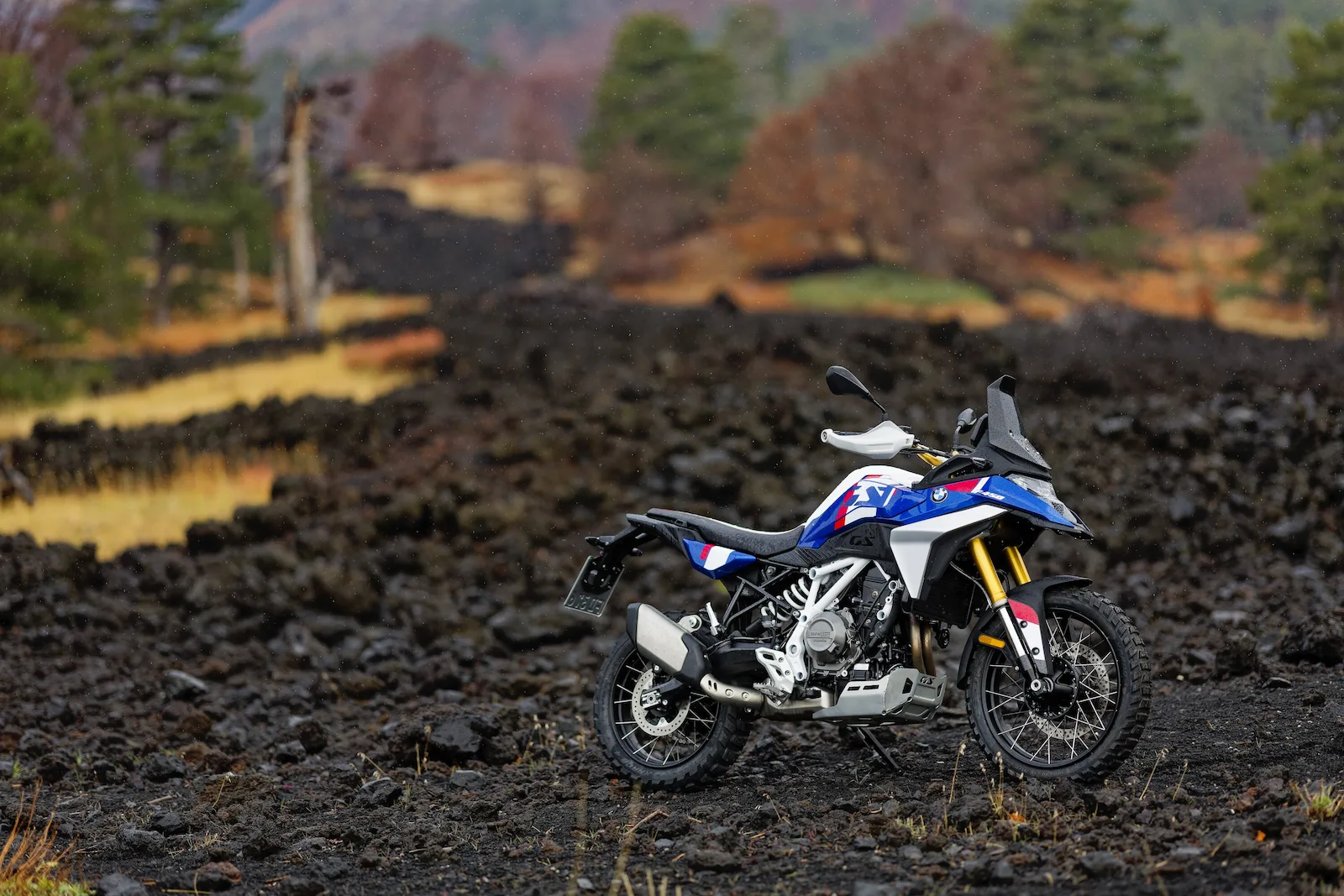
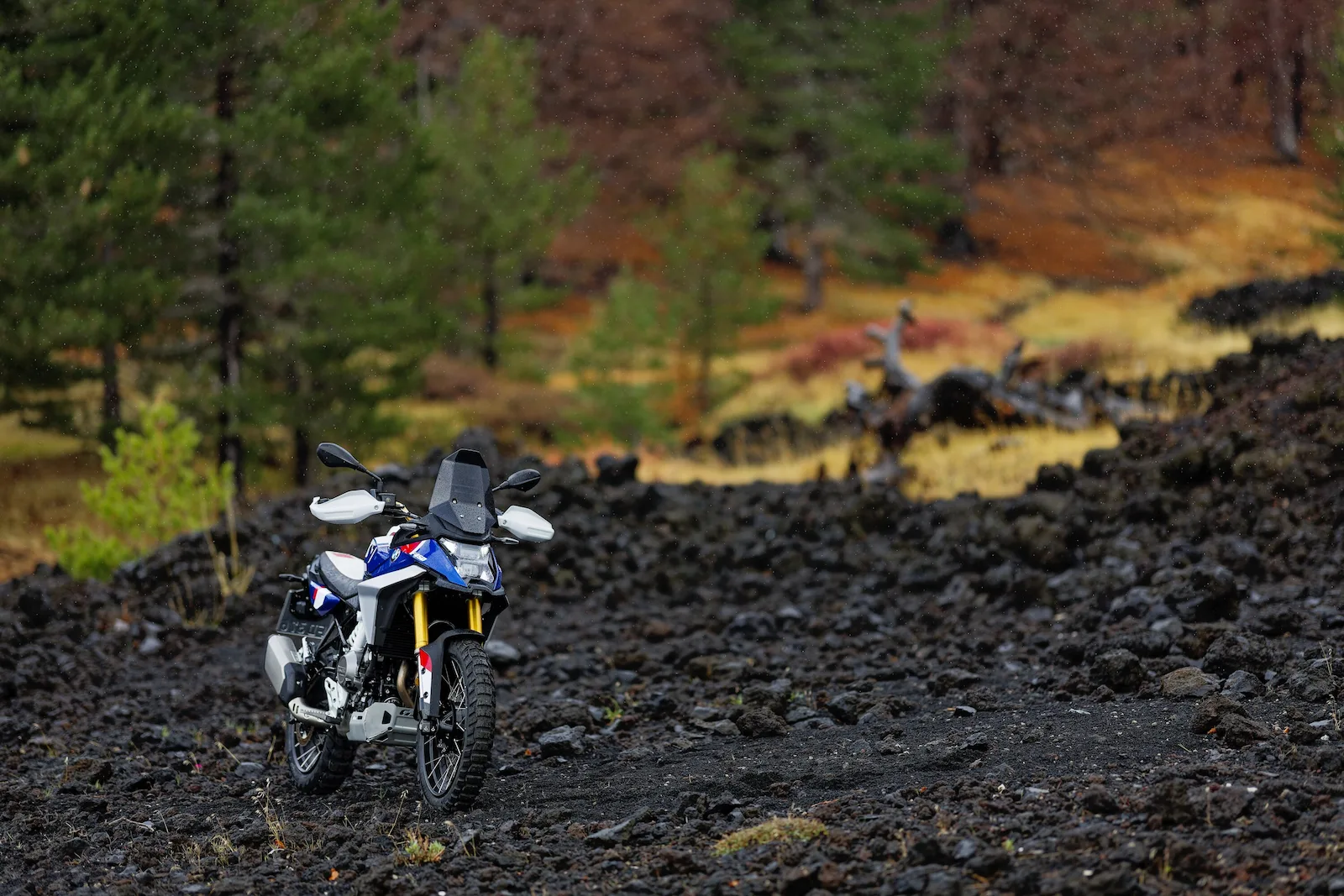
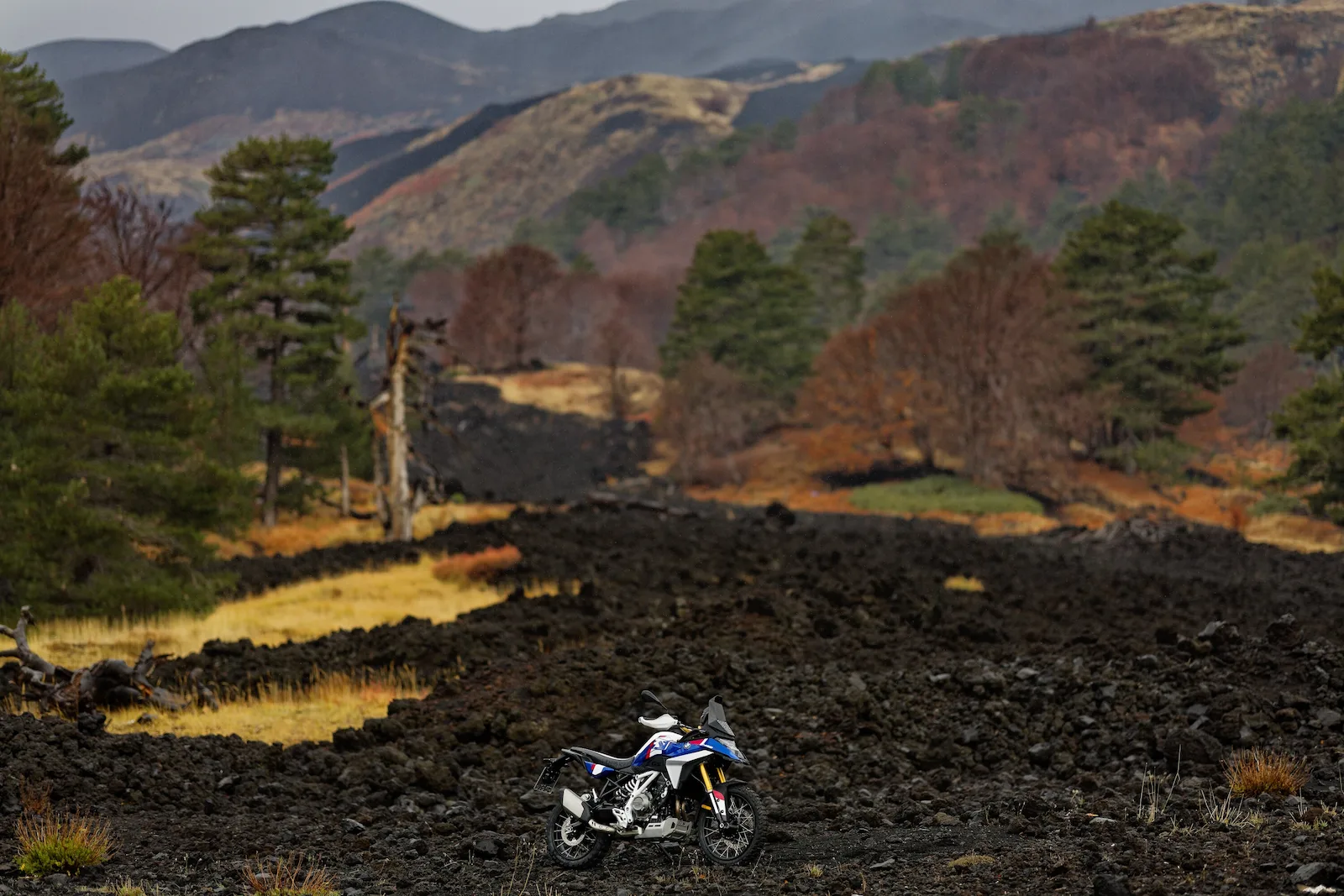
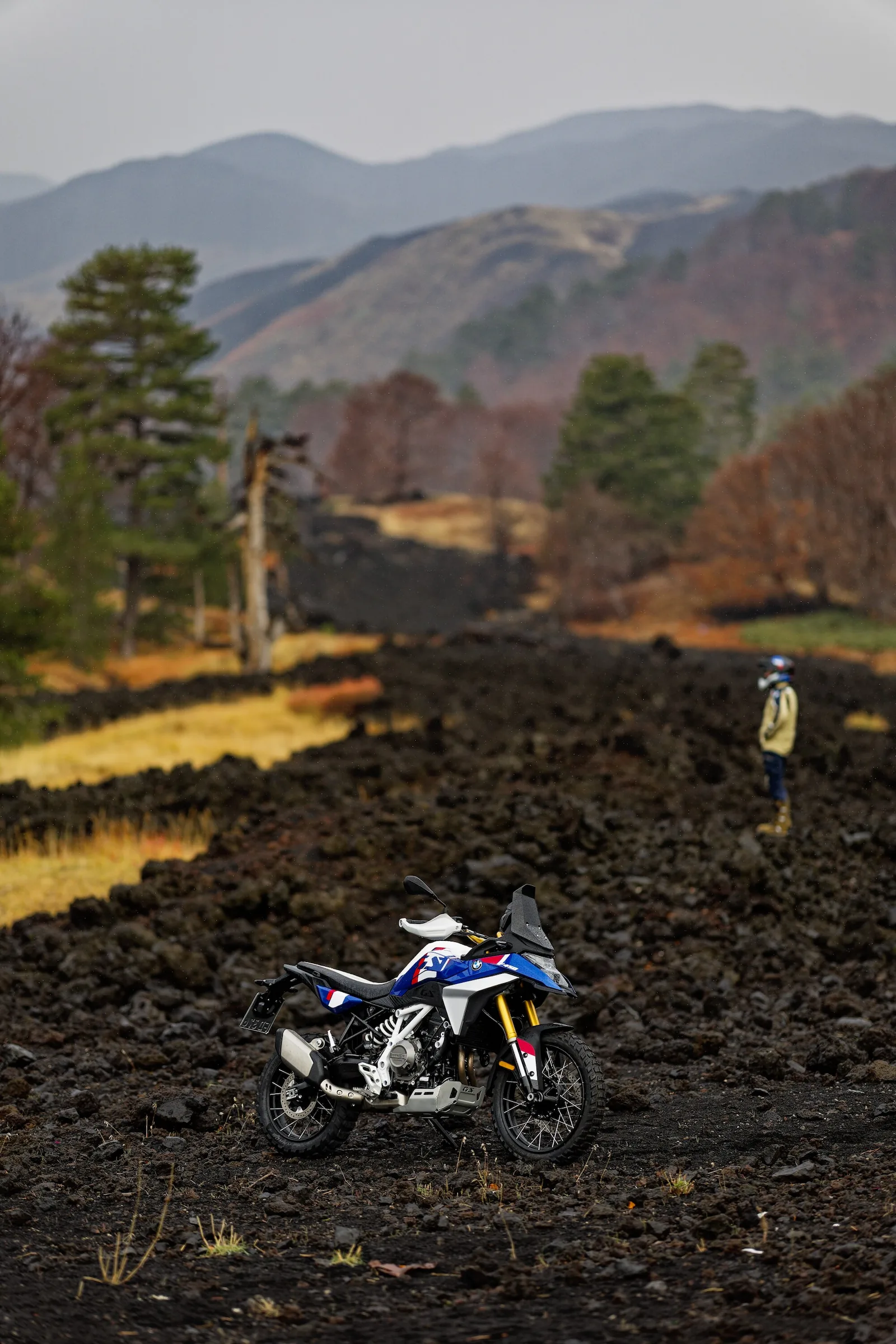
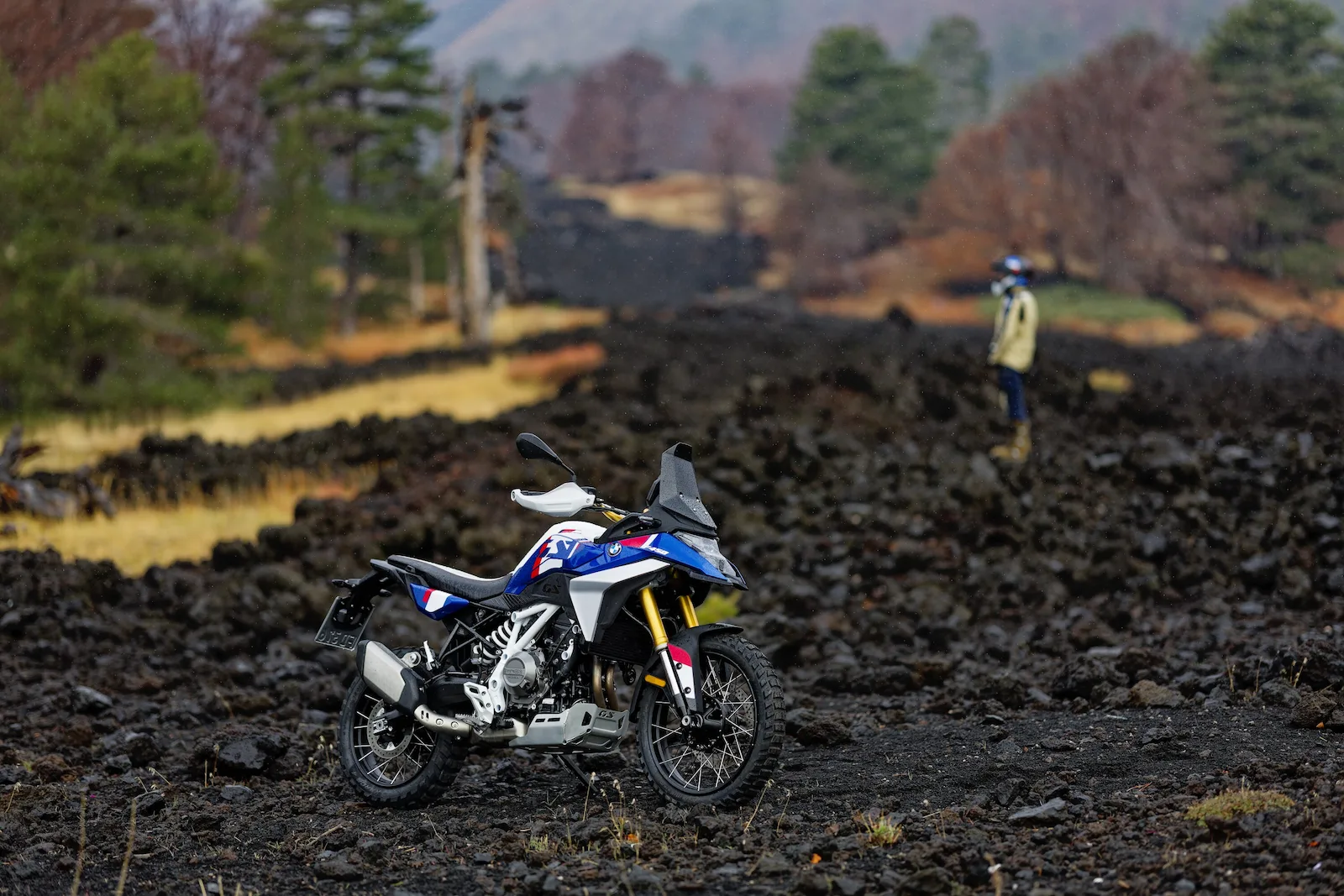
BMW Motorrad USA has announced the 2027 F 450 GS, a compact adventure bike that brings the GS recipe down to the 400 – 500 cc class. It is a clean-sheet design built around a new 420 cc parallel twin with a 135-degree crankpin offset, rated at 48 hp, which arrives at 8,750 rpm, with peak torque of 32 lb.-ft coming at 6,750 rpm. The feature BMW leads with is the Easy Ride Clutch (ERC), a centrifugal clutch that lets you pull away without touching the lever. BMW expects the bike in US showrooms in Q1 2027, with MSRP starting at $6,995 plus destination.
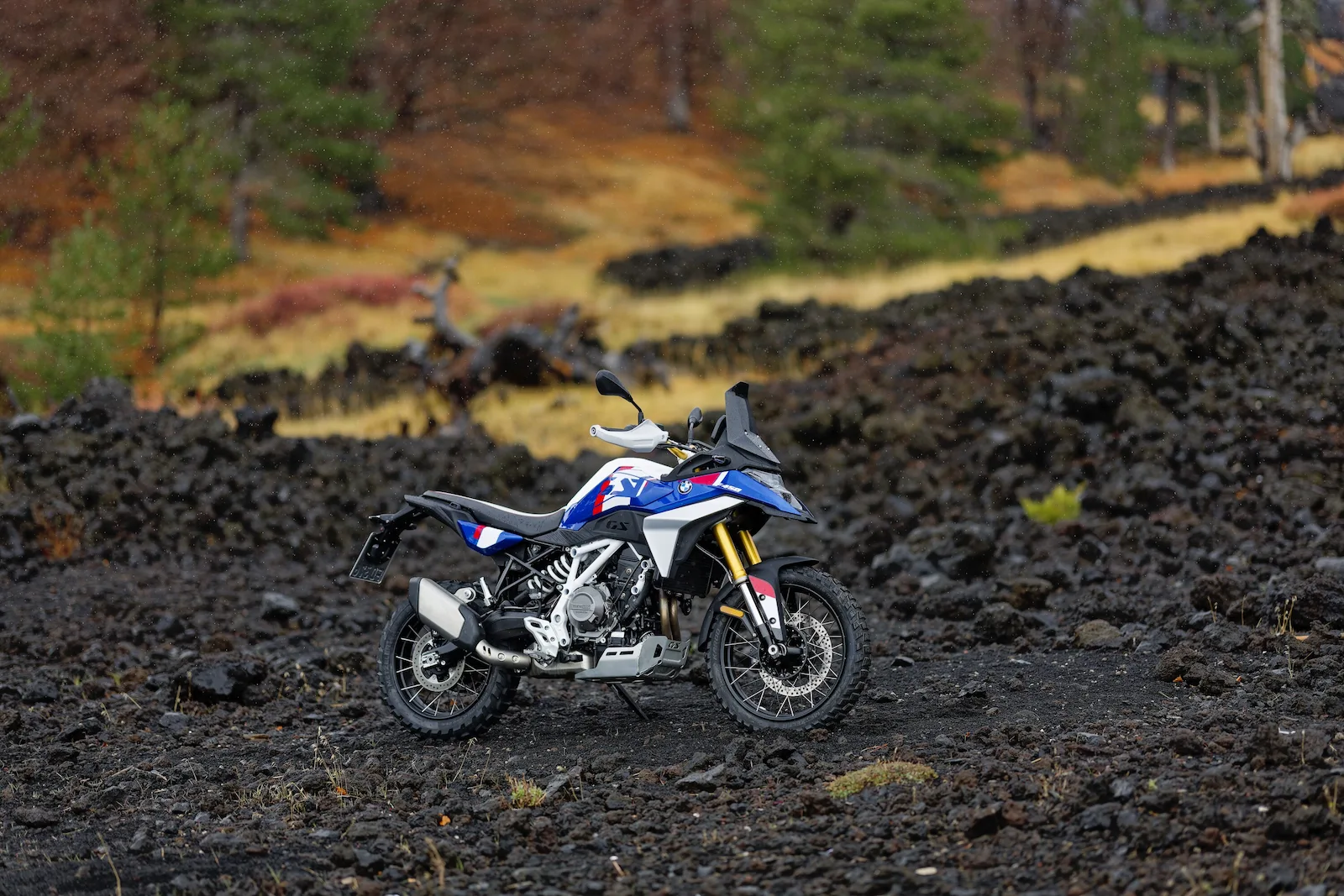
BMW positions it as a genuine GS for the 48 hp A2 class, a European license category, meant to feel light, balanced and easy to trust on pavement and dirt. The release covers the design and ergonomics, the engine, ERC, the six-speed gearbox with Gear Shift Assist Pro, the exhaust, riding modes and rider aids, the steel frame and geometry, KYB suspension with travel-dependent damping, wheels and tires, Brembo brakes with ABS Pro, LED lighting, the 6.5-inch TFT dash and its connectivity, standard equipment, three versions (Standard in Cosmic Black, Sport in Racing Red and GS Trophy), an $800 Enduro Package for the GS Trophy and a long accessory list.
Design
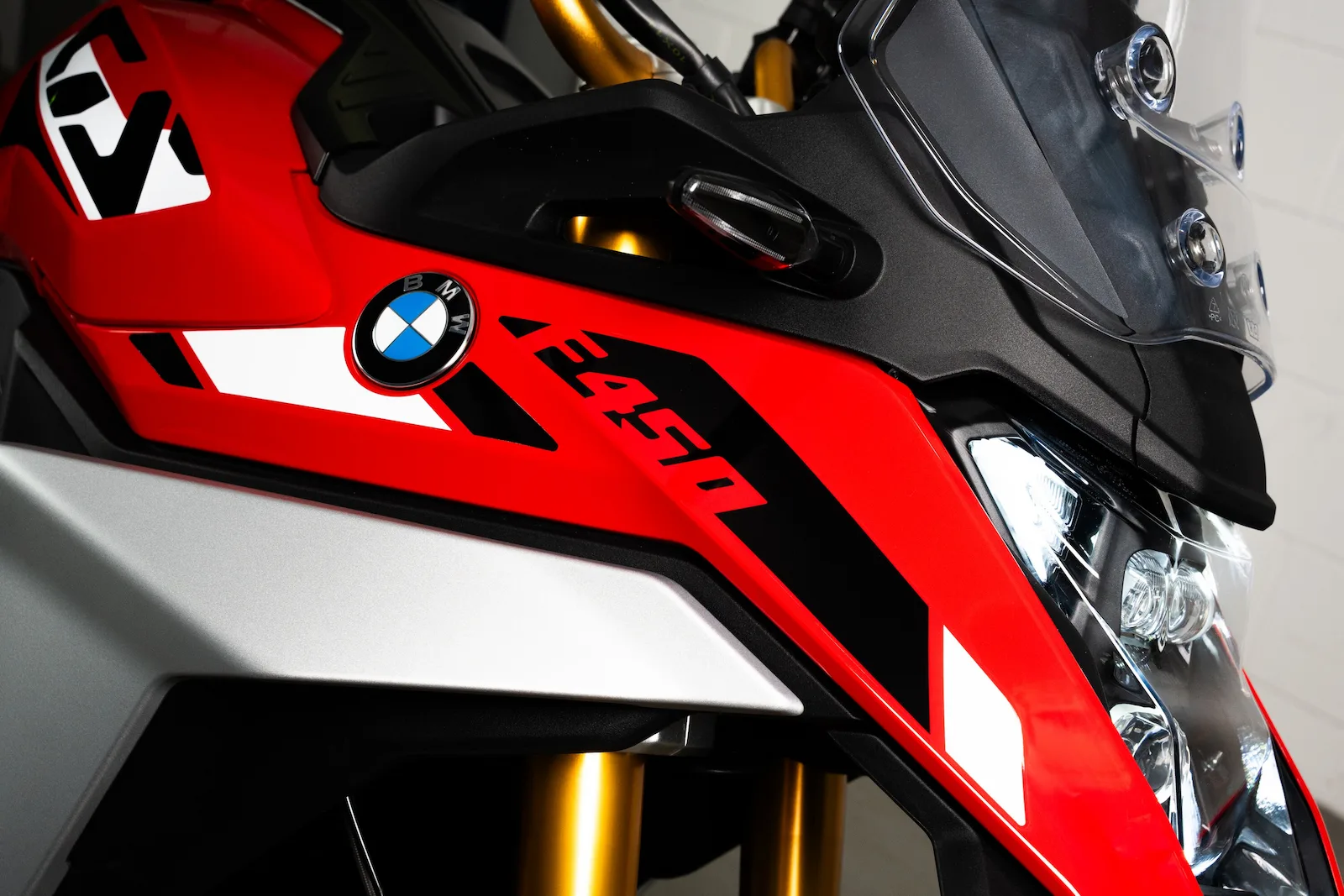
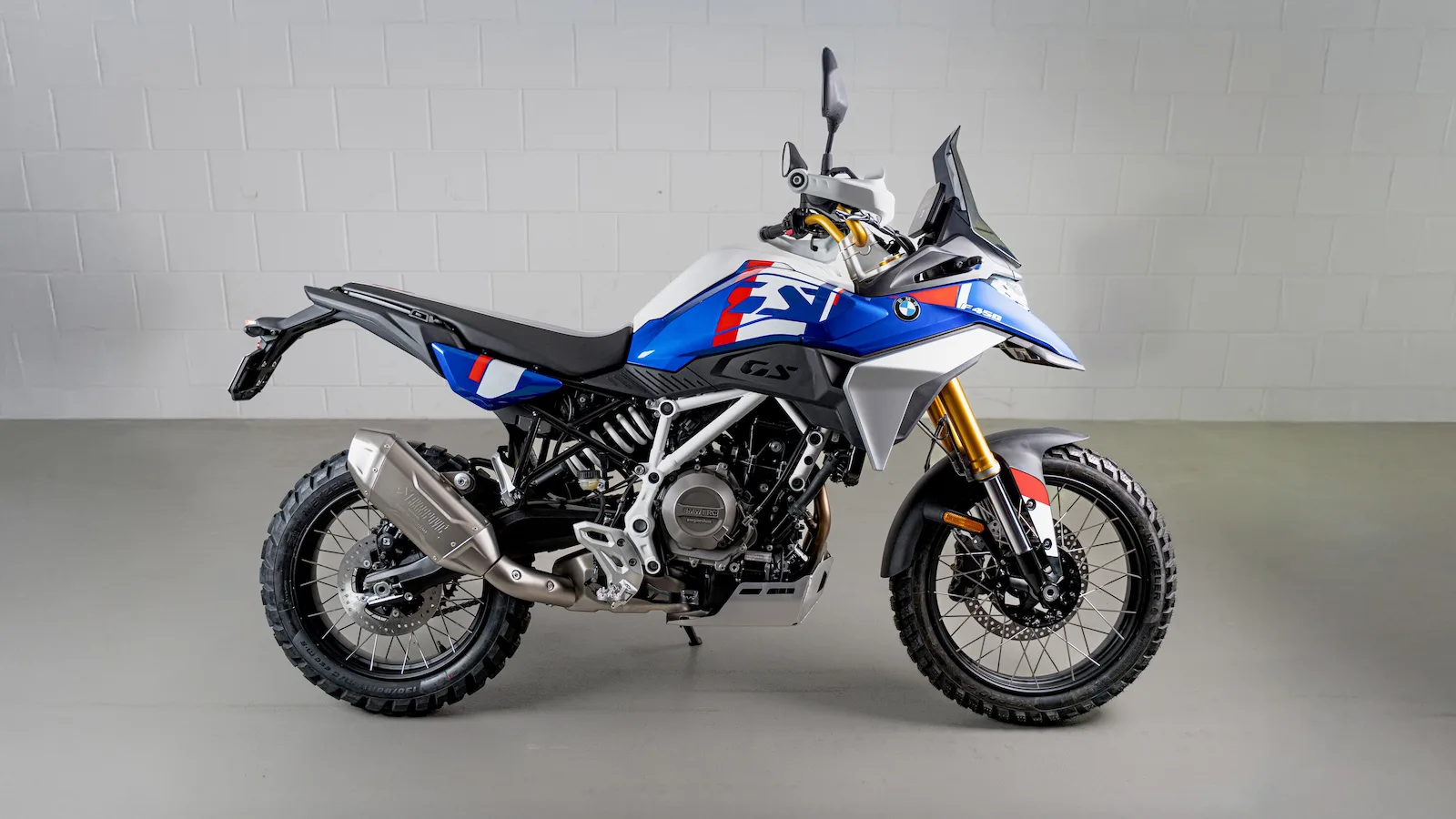
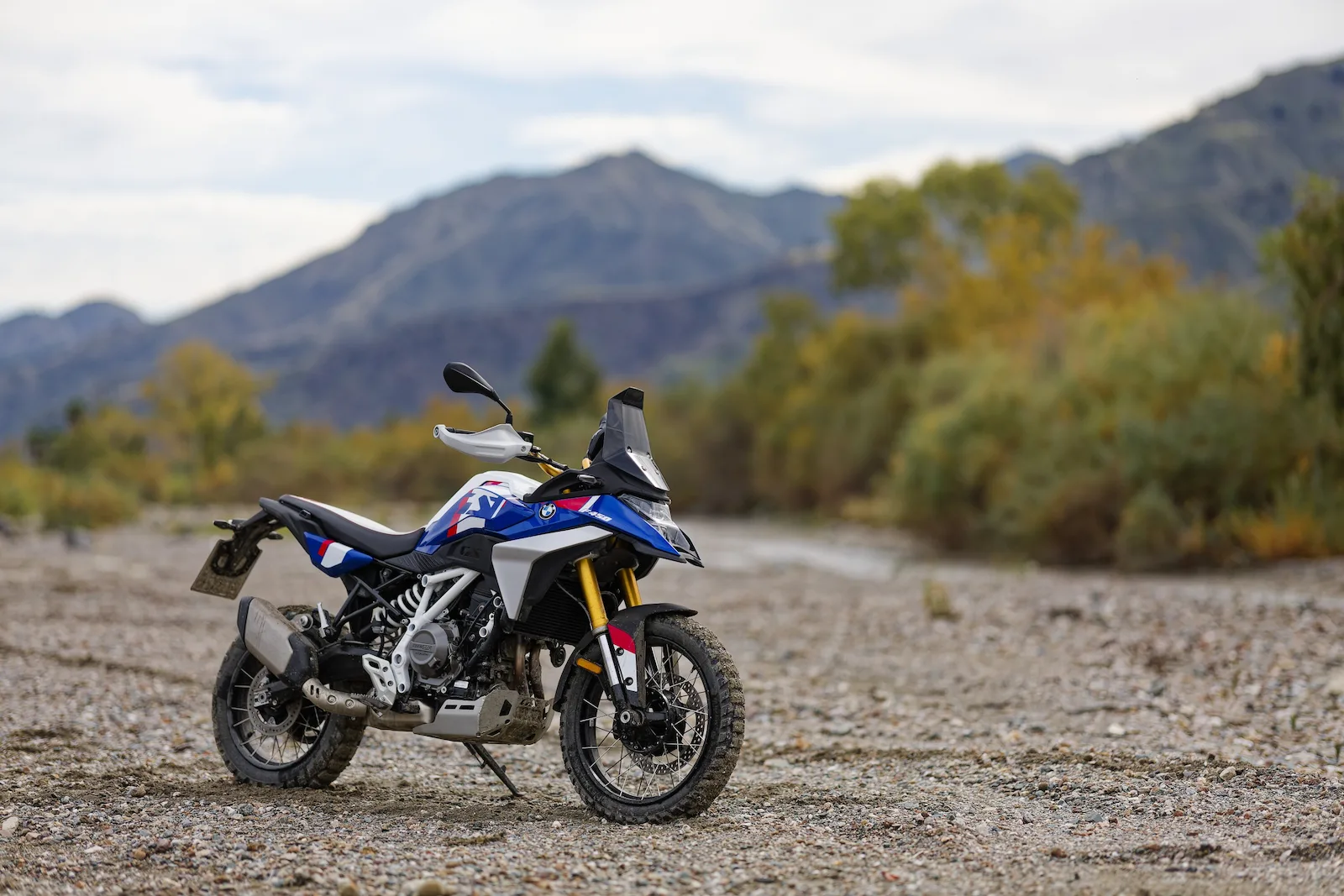
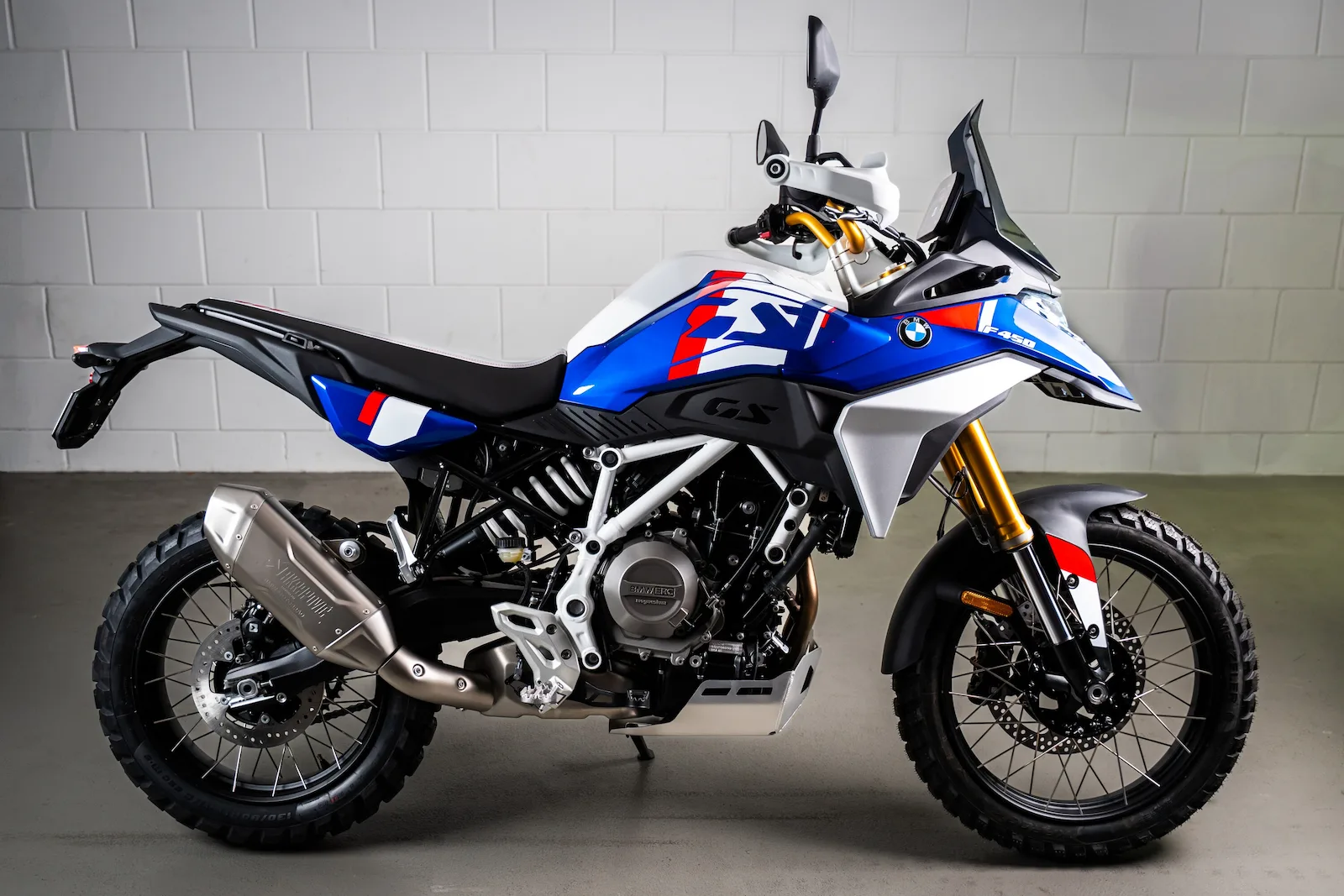
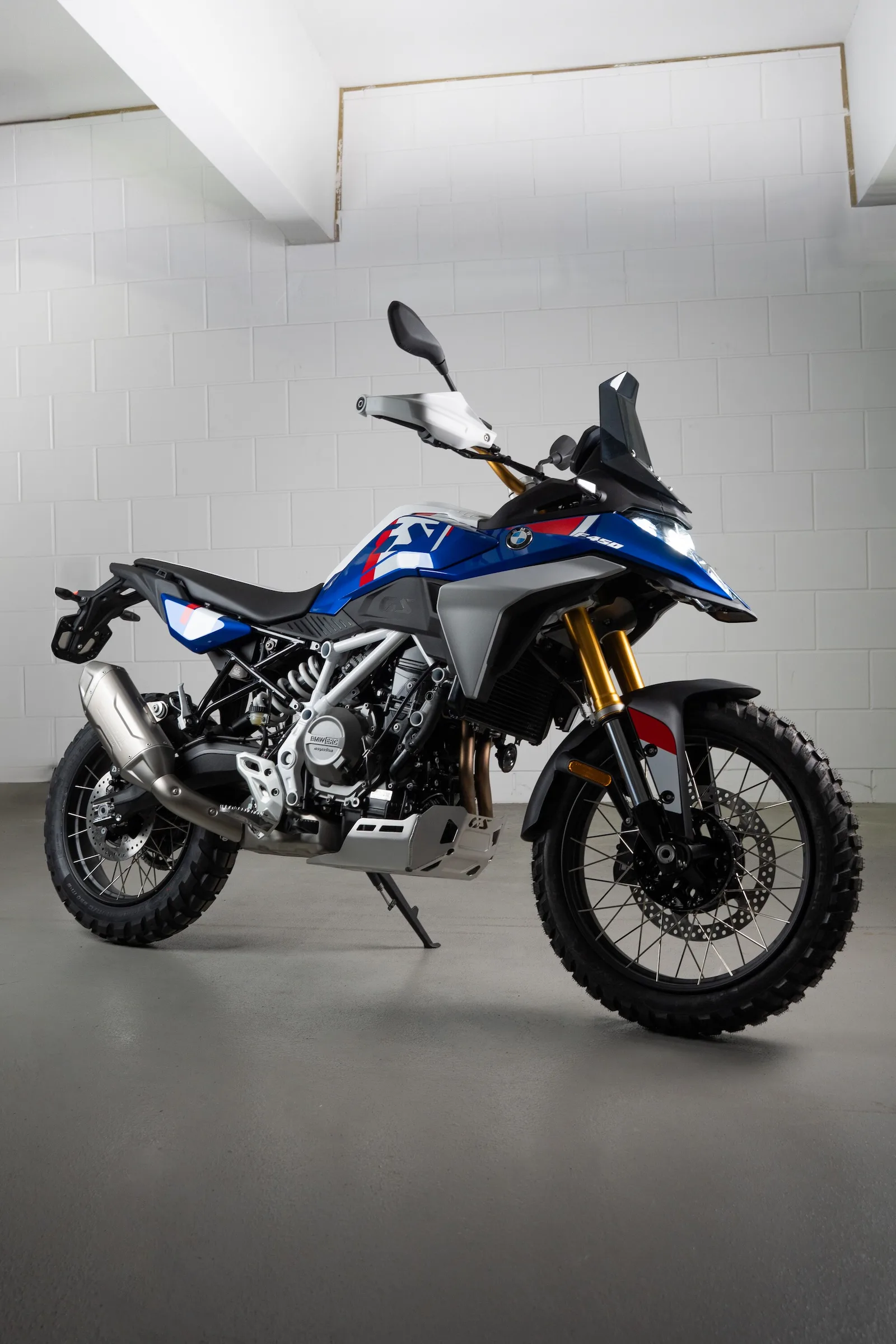
The styling borrows openly from the big R 1300 GS. The GS flyline starts at the front beak, runs over the tank and seat and ends in a very narrow tail, there is a recognizable radiator grille, and the LED headlight carries the X-shaped lighting elements of the larger bike. Alexander Buckan, BMW Motorrad's head of design, describes the aim as moving the look and spirit of its big sister into the 48 hp 400 – 500 cc segment, together with ergonomics that keep the bike easy to reach and control. The slim rear section is there to make the bike look and feel light and agile.
Ergonomics, seats and controls
BMW says the relationship between seat, bar and pegs was refined over many miles of testing in all kinds of conditions. The butted aluminum handlebar sits high and close to you, and the bodywork and the 3.6-gallon tank under it are shaped to give your knees support whether you are sitting or standing on the pegs off-road. The bar and the fixed fork tubes are anodized gold.
The standard two-piece seat is flat and straight and sits at 33.3 inches. From the accessory range you can fit a low black seat at 32.7 inches or a high Rallye seat in Black/White/Red at 34.0 inches. The hand levers, gearshift lever and footbrake lever are adjustable as standard, and silver handlebar risers that add 0.79 inches are an accessory.
The footbrake lever can be moved vertically by 0.79-inch between two positions with a tool, and the shift lever adjusts in height through a toothed fitting on the shift shaft, so you can set both for road boots or for standing in the dirt. The GS Trophy adds wider enduro footrests with a serrated surface that BMW describes as mainly for road use but grippy enough off-road.
Engine
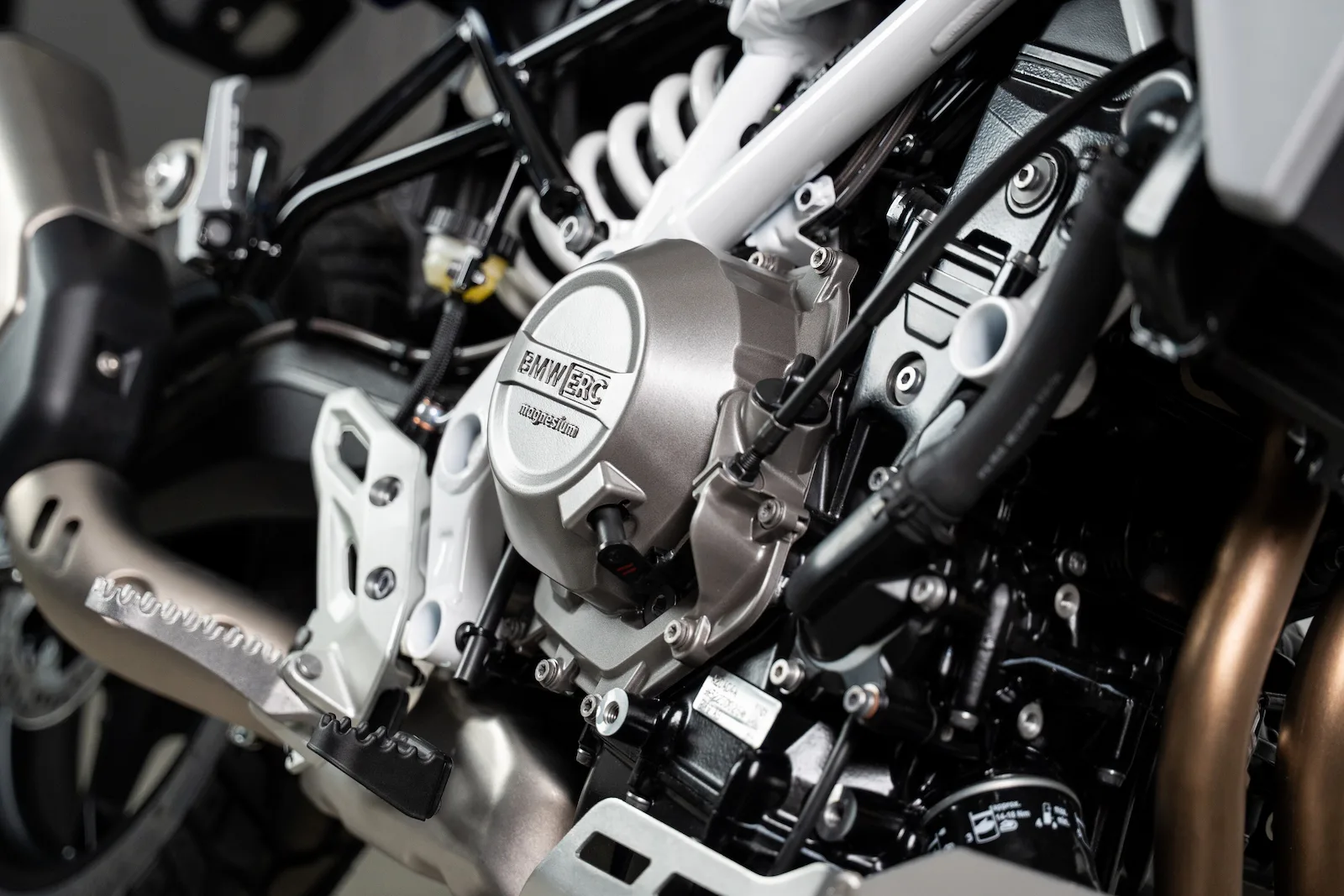
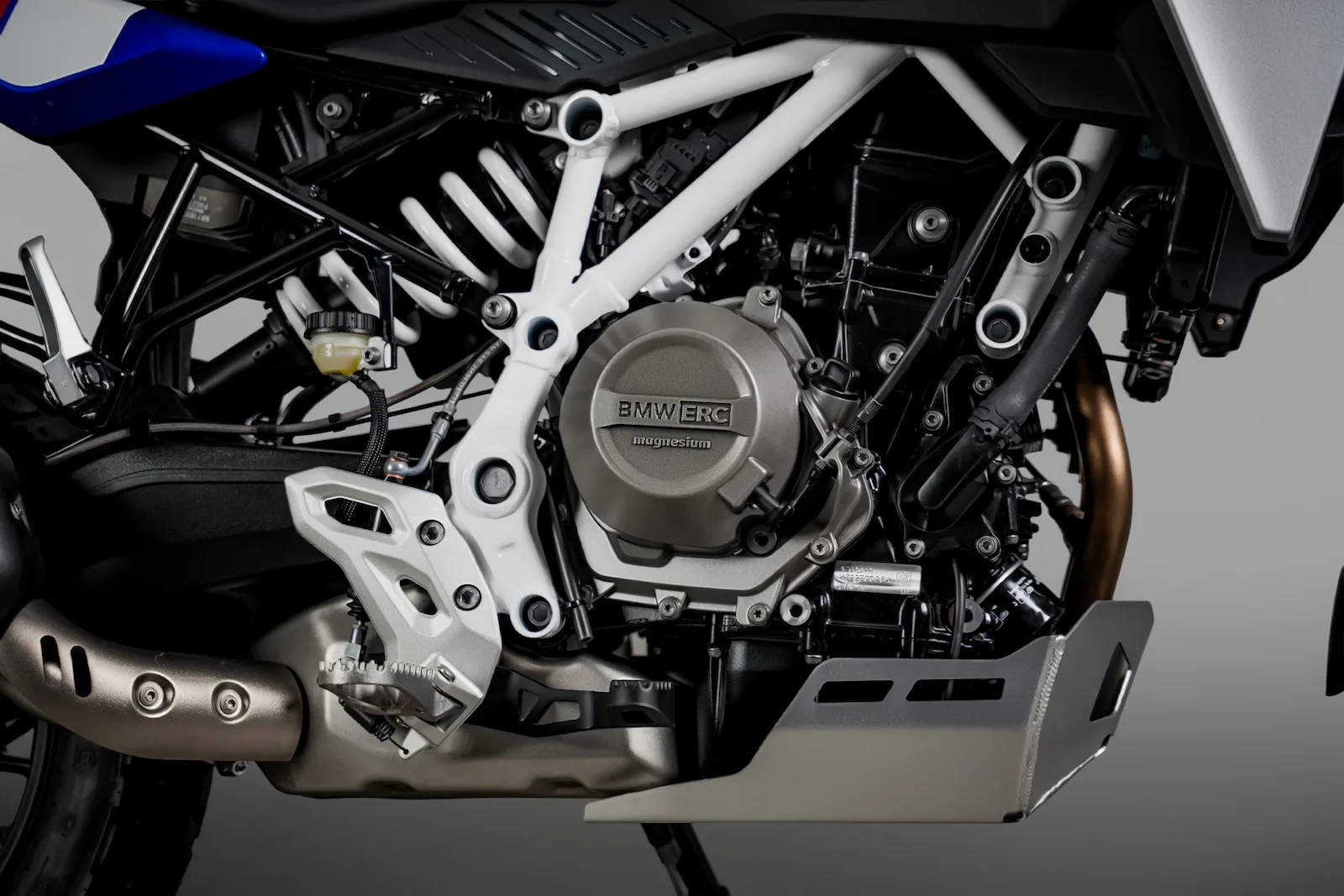
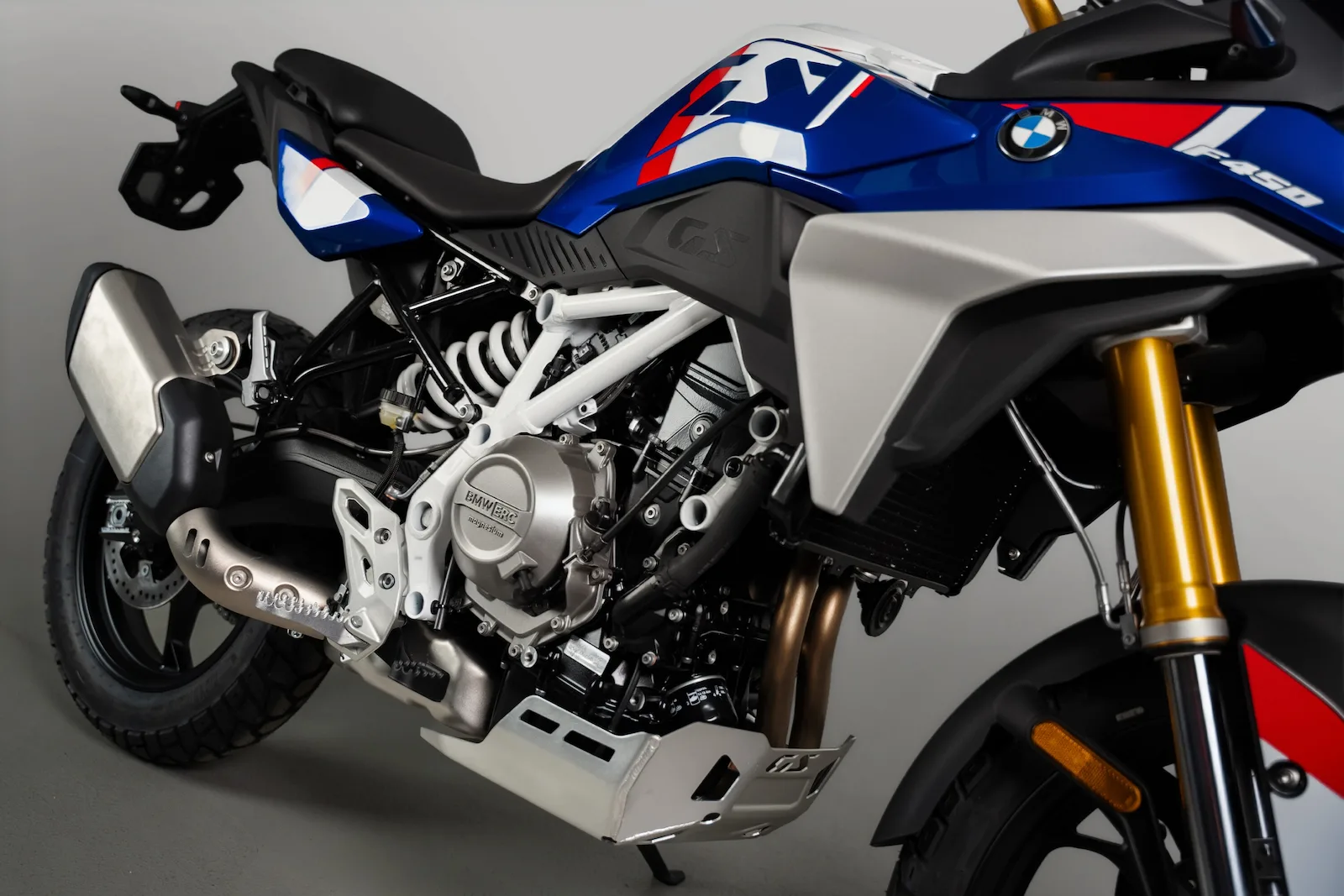
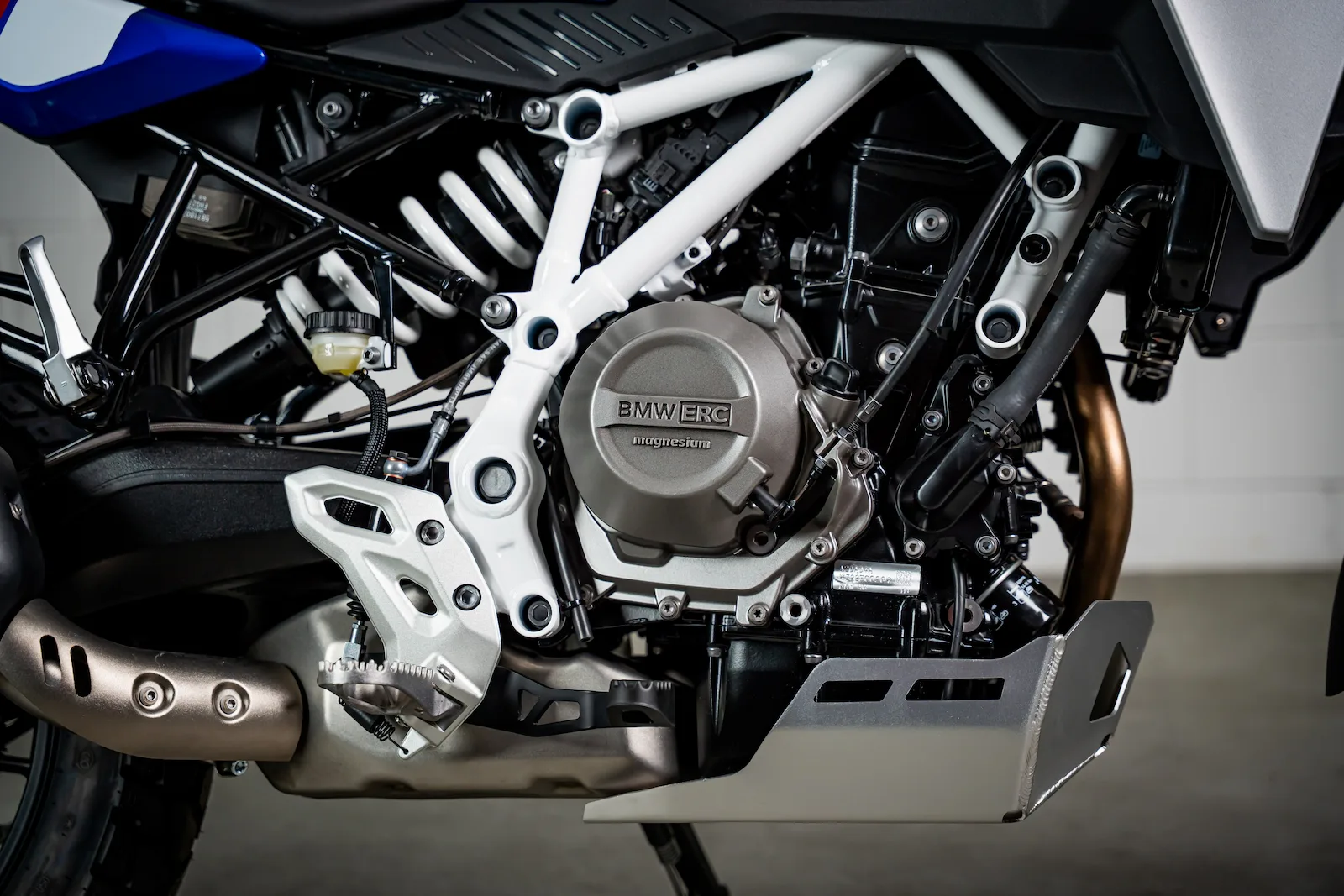
The new two-cylinder engine is liquid-cooled and mounted transversely. A 72 mm bore and 51.6 mm stroke give 420 cc, and compression is 13.0:1. BMW's development goals were low weight, strong power and torque, smooth running, low fuel consumption and a sound of its own.
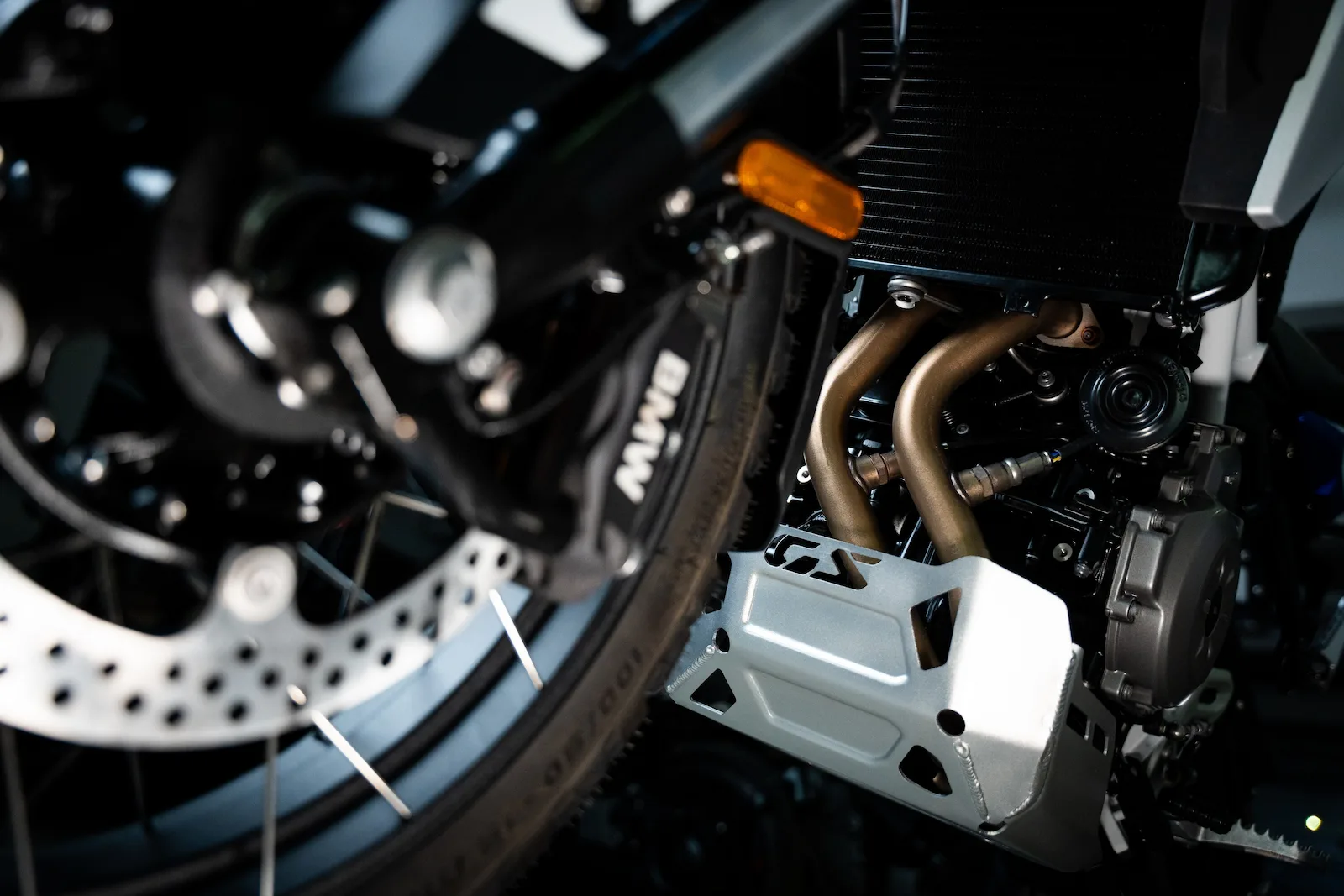
The crankpins are offset by 135 degrees, which BMW calls unique on the motorcycle market. That gives uneven ignition intervals and a strong character, while a counter-rotating balance shaft in front of the crankshaft, driven by a spur gear, soaks up unwanted vibration. Lubrication is wet sump with a chain-driven oil pump, and an engine guard protects the oil pan off-road; the aluminum guard is standard on the GS Trophy.
In the cylinder head, two overhead camshafts open four valves per cylinder through light rocker arms. A toothed chain on the right side of the engine drives the exhaust camshaft from the crank, and a pair of gears off the exhaust cam turns the intake cam. The intake valves sit at an angle of 12 degrees and the exhaust valves at 12.4 degrees, with head diameters of 29 mm and 24.3 mm respectively. Intake manifold injection is run by BMS-Z engine management, and the throttle is electronic (E-Gas, or ride by wire): a sensor at the grip passes your request to the control unit, which sets the throttle valve opening for smooth, predictable response. The spec sheet calls for 95 RON premium unleaded.
Claimed performance is 61.9 mpg on the WMTC cycle, 0-62 mph in 5.9 seconds and a top speed of 102 mph. The release refers to a power and torque curve, but the curve itself is not part of the text.
Easy Ride Clutch
ERC is standard on the GS Trophy and an optional accessory for the other versions. Its core is a centrifugal unit inside the clutch that engages it according to engine speed. Riding it feels much like a normal clutch: with a gear selected, you simply open the throttle to move off. If you choose a gear that is too tall to start in, the display shows a warning. Combined with Gear Shift Assist Pro, you can ride from a standstill through every gear change and tight maneuver without pulling the lever.
The key difference from a basic centrifugal clutch is that ERC stays closed on overrun. You keep full engine braking, including when you roll downhill in gear, until the bike is nearly stopped; only when revs fall to idle does it open, just as you would pull the lever yourself. In heavy traffic, on tight switchbacks or off-road, it keeps the engine from stalling.
The clutch lever stays on the bar and you can override the system at any time. BMW gives two examples where that matters: lifting the front wheel over an obstacle, and gaining extra control on a slippery descent.
One summary line in the release links ERC to the Sport model as well, but the Sport's equipment list does not include it, and the detailed text names it as standard only on the GS Trophy.
Gearbox and Gear Shift Assist Pro
The redesigned six-speed gearbox, a claw-shift unit with spur gearing, sends drive to the left-side X-ring chain. The clutch is a hydraulically operated multi-disk wet clutch. The spec table gives a primary ratio of 2.025 and a secondary ratio of 3.43.
Gear Shift Assist Pro is standard on the Sport and GS Trophy. It lets you shift up without the clutch with almost no break in drive, and shift down without it too. BMW says that keeps gear changes quick, means less clutch work and reduces the jolts and load-change movements that reach the rear wheel. It also cuts down how much you and a passenger rock back and forth on each shift, which is welcome when you ride two-up. The release does not say whether it can be added later to the Standard model.
Exhaust
The exhaust is stainless steel throughout, with two catalytic converters, and the bike meets Euro 5+. The whole system, muffler included, sits on the right side. Because most riders push a bike from the left, that keeps the hot muffler away from your legs and gives you room to walk beside it. An Akrapovič stainless steel rear silencer is offered as an accessory.
Riding modes and rider aids
Three riding modes come standard, each linked to the rider aids: ABS Pro, Dynamic Brake Control (DBC), Dynamic Traction Control (DTC) and Engine Drag Torque control (MSR). DTC can be switched off.
- Rain: for wet pavement. Throttle response is softer and every control system is set for the most stability and control.
- Road: for dry pavement. Throttle response is direct, traction control stays stable in the mid-range and the other systems are set for stability.
- Enduro: for dirt with standard road tires. It shares the Rain throttle map; traction control is set for stability, while front wheel lift-off detection, MSR and DTC step in only minimally.
- Enduro Pro: for rough terrain on knobby tires. Wheelie control and rear-wheel ABS are switched off, and you can tailor ABS Pro, DTC and throttle response.
Where Enduro Pro is offered is printed two ways: one passage puts it on both the Sport and GS Trophy, another on the GS Trophy alone. The Sport's equipment list does include Riding Modes Pro. Check with a dealer if Enduro Pro decides your purchase.
Frame and geometry
The chassis is built around a new welded tubular steel frame with forged parts and the engine as a load-bearing member. BMW chose steel because it holds up better than aluminum in rough terrain, while keeping the weight low. Engineer Marc Weber says the team prioritized compact packaging, precision and agile handling on and off pavement.
Geometry is a 57.7-inch wheelbase, a 28.1-degree steering head angle and 4.5 inches of trail, which BMW says gives sharp steering, stability and playful handling. The compact layout also keeps key parts easy to reach, which BMW counts as a plus for maintenance and for hard off-road use.
Suspension
At the front is a rigid 43 mm KYB upside-down fork with 7.1 inches of travel, held by a forged aluminum fork bridge. On the Sport and GS Trophy, the Sport Suspension makes the fork adjustable for rebound and compression; the Standard fork is not listed as adjustable.
At the rear, a closed hollow-cast aluminum double-sided swingarm works a directly linked KYB shock with 7.1 inches of travel and adjustable preload and rebound. The shock uses travel-dependent damping, which BMW patented as WAD and calls unique in the segment: compression damping rises the further the shock compresses, so it resists bottoming out on big hits. BMW says the principle comes from off-road sport.
For you, that means setting preload for your weight and luggage is the first adjustment to make on any version, and Sport or GS Trophy buyers can then tune the fork to match.
Wheels and tires
Standard wheels are cast alloy, 2.5 x 19 inches at the front and 3.5 x 17 inches at the rear, with tubeless tires in 100/90-19 and 130/80-17. BMW says the new wheels are 2.2 lbs. lighter than the G 310 GS wheels, and type approval allows all common tire types, enduro tires included.
Cross-spoked aluminum wheels in the same 2.50 x 19 and 3.50 x 17 sizes are optional. They come in the $800 Enduro Package, offered only on the GS Trophy, and are also listed among the accessories.
Brakes, ABS Pro and DBC
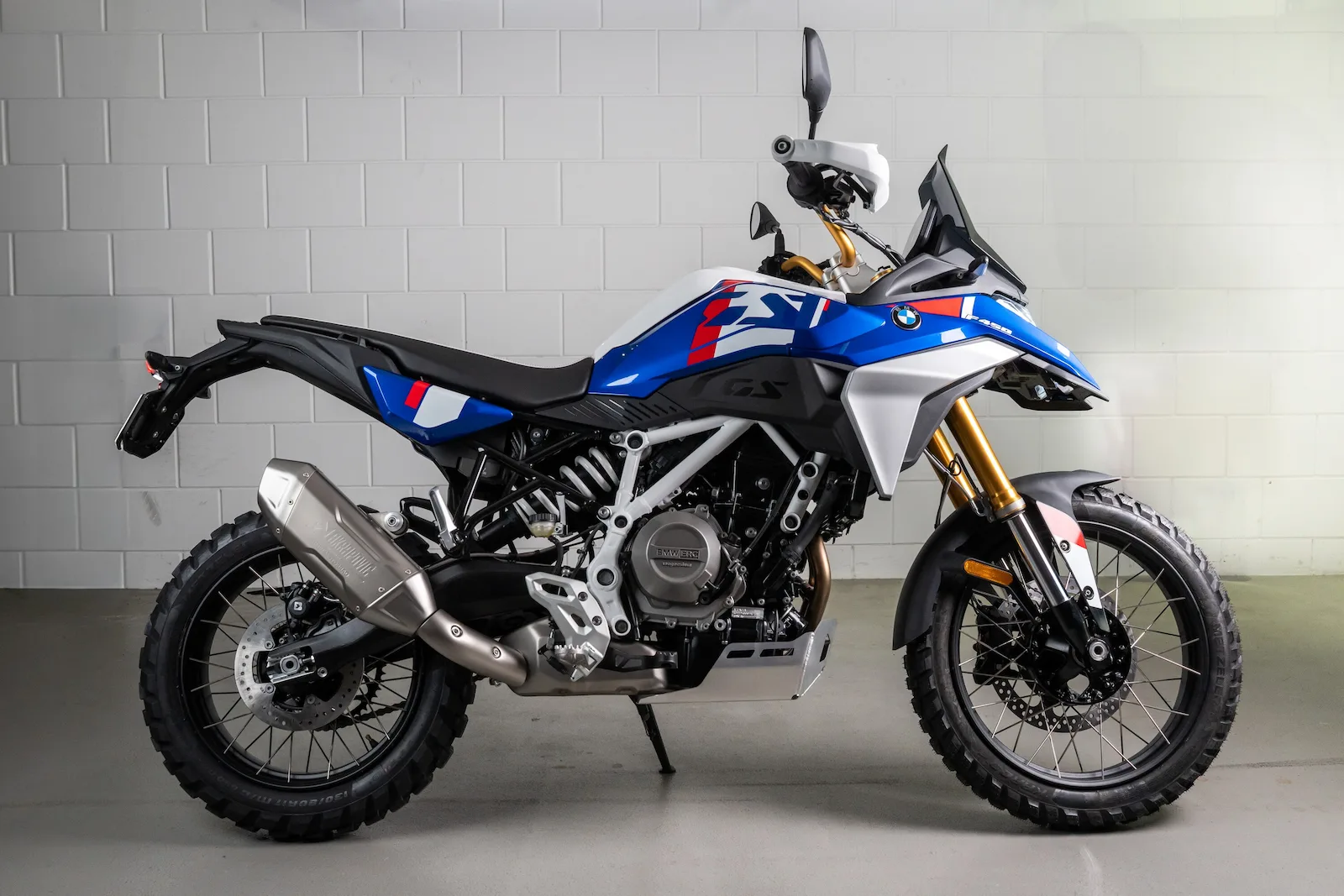
The front wheel has a floating single 310 mm disc with a Brembo four-piston fixed caliper, a monobloc design per the spec table. The rear uses a single 240 mm disc with a single-piston floating caliper.
ABS Pro is standard and works when the bike is leaned over, so you can brake hard in a turn without locking a wheel. BMW says it also limits sudden changes in steering force, which keeps the bike from standing up when you grab the brakes mid-corner. ABS Pro and MSR adapt their behavior to the selected riding mode.
DBC watches for a conflicting throttle input during braking. Once the sensor cluster registers a set level of deceleration, any throttle opening at the same time is treated as a mistake and suppressed, which keeps the bike stable and shortens the stop.
Lighting, display and connectivity
Lighting is full LED: the headlight with its X signature, the turn signals and the control lamps, with comfort turn indicators as standard. The 6.5-inch TFT color display is standard, sized for readability in difficult light and worked through the Multi-Controller on the left grip. A USB-C socket sits in the handlebar area.
Screen choices include the Pure Ride Screen and a Sport Screen with DTC, braking power and lean angle data, which the release lists as part of the GS Trophy variant. Pair a phone and a BMW Motorrad Communication System over Bluetooth and you can take calls and play music with no app needed. The free BMW Motorrad Connected app adds turn-by-turn arrows on the TFT for everyday rides. For full map navigation, the accessory navigation preparation works with either the ConnectedRide Navigator or the ConnectedRide Smartphone Cradle, both controlled from the left-side wheel (MMC).
Standard equipment
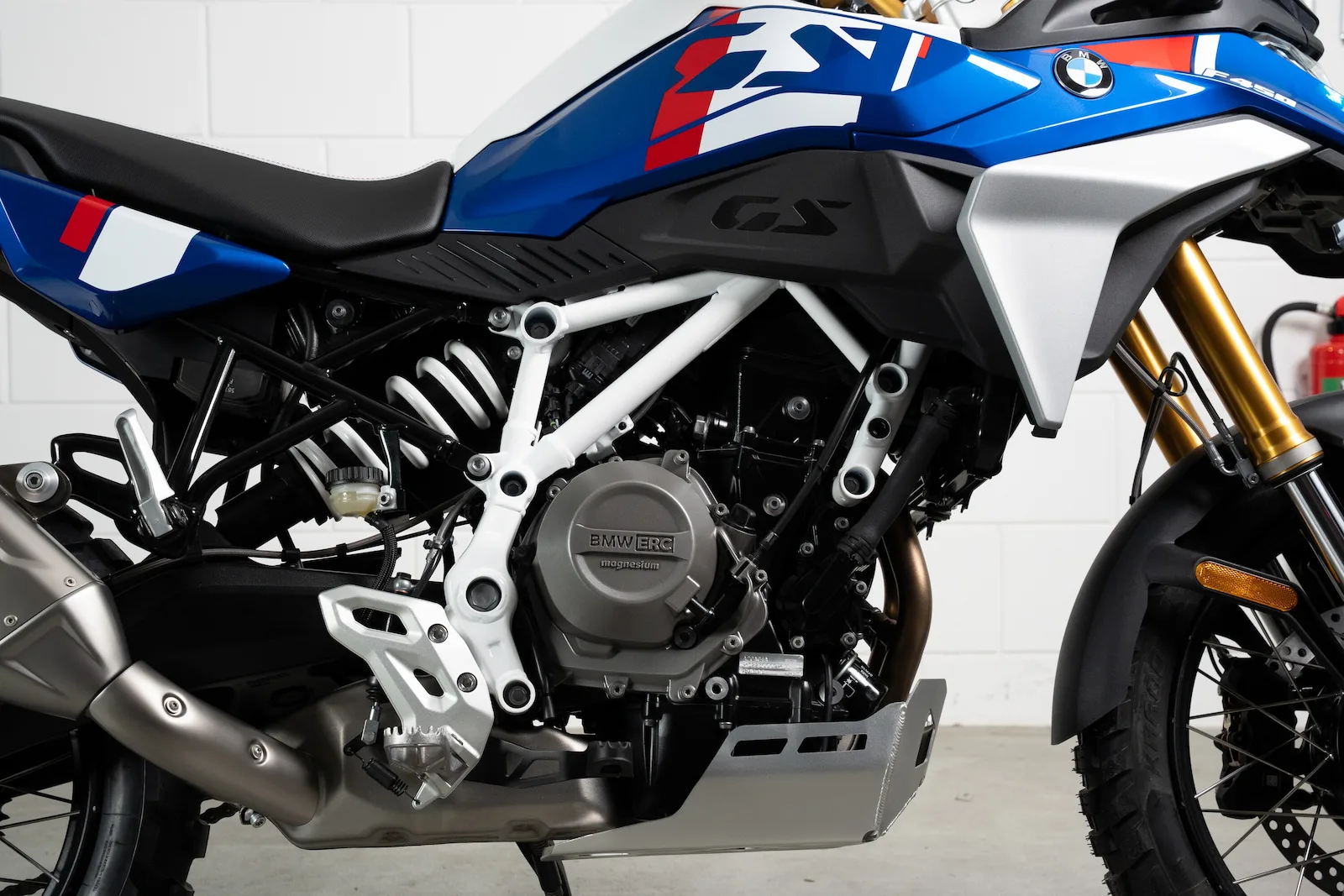
Beyond the engine, chassis and electronics above, every F 450 GS comes with heated grips, an on-board computer, one key for all locks, an engine skid plate, adjustable clutch, hand brake, shift and footbrake levers, and the Multi-Controller.
All 2027 BMW motorcycles also include the Ultimate Care Break-In Service, the 600 Mile Service, at no extra cost. It must be used within 6 months of the in-service date or 750 miles, whichever comes first.
Sport variant
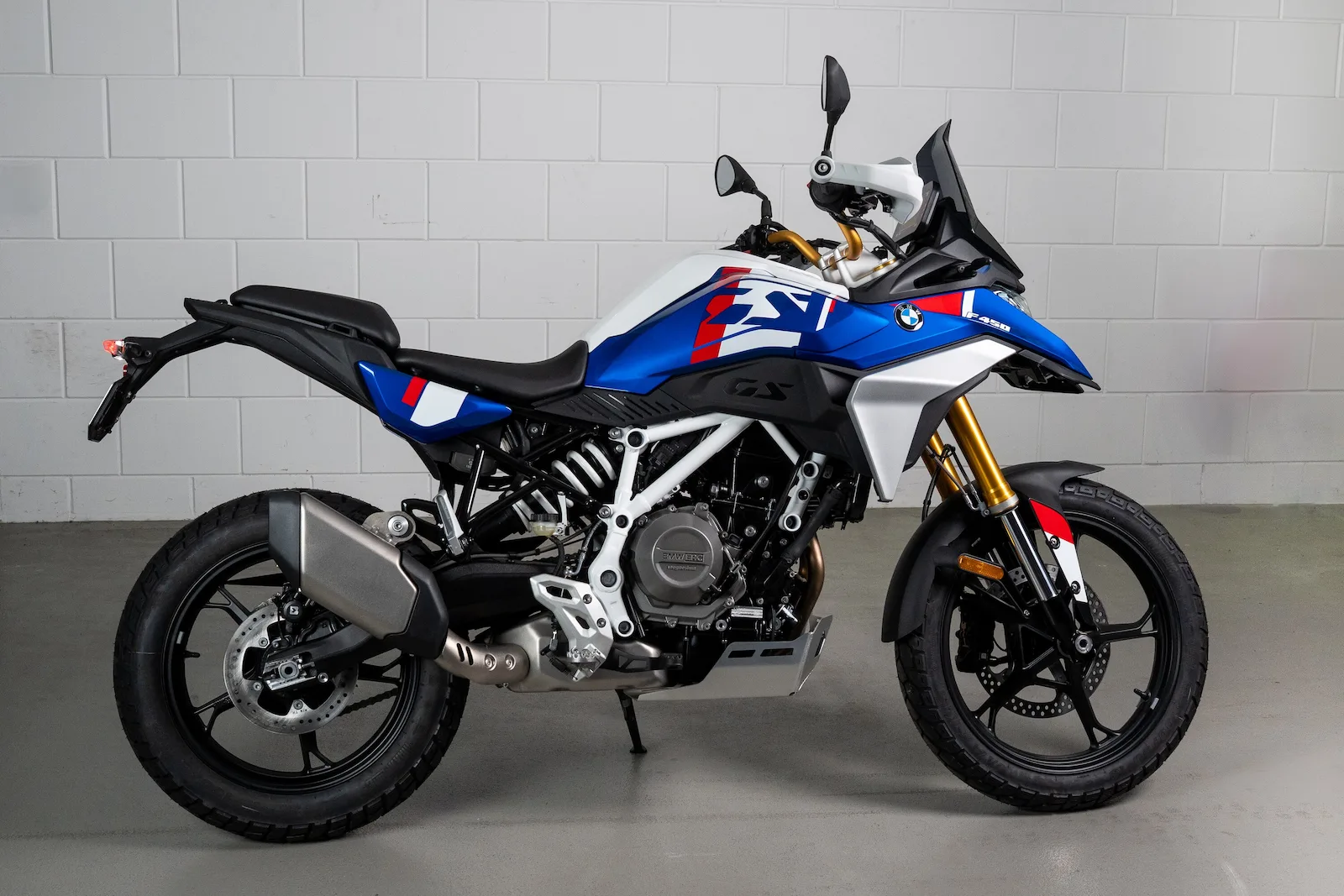
The Sport, at $7,795, is finished in Racing Red Metallic with a black main frame and black hand guards. On top of the Standard it adds wider off-road foot pegs, a plastic engine guard, Riding Modes Pro, Gear Shift Assist Pro, the Touring windshield and the Sport Suspension with front rebound and compression adjustment. It is the version to look at if you want clutchless shifting and an adjustable fork without the GS Trophy's off-road hardware.
GS Trophy variant
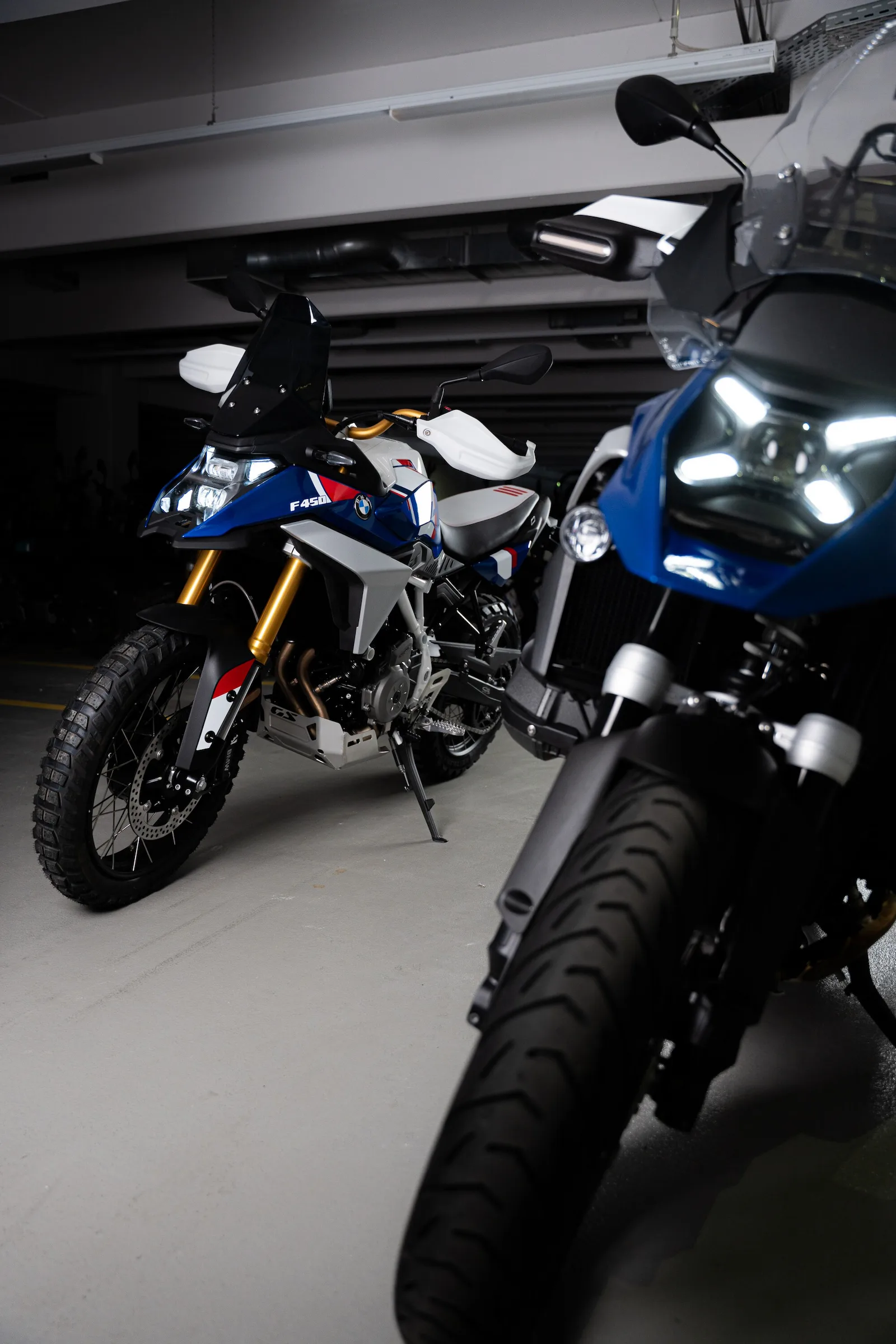
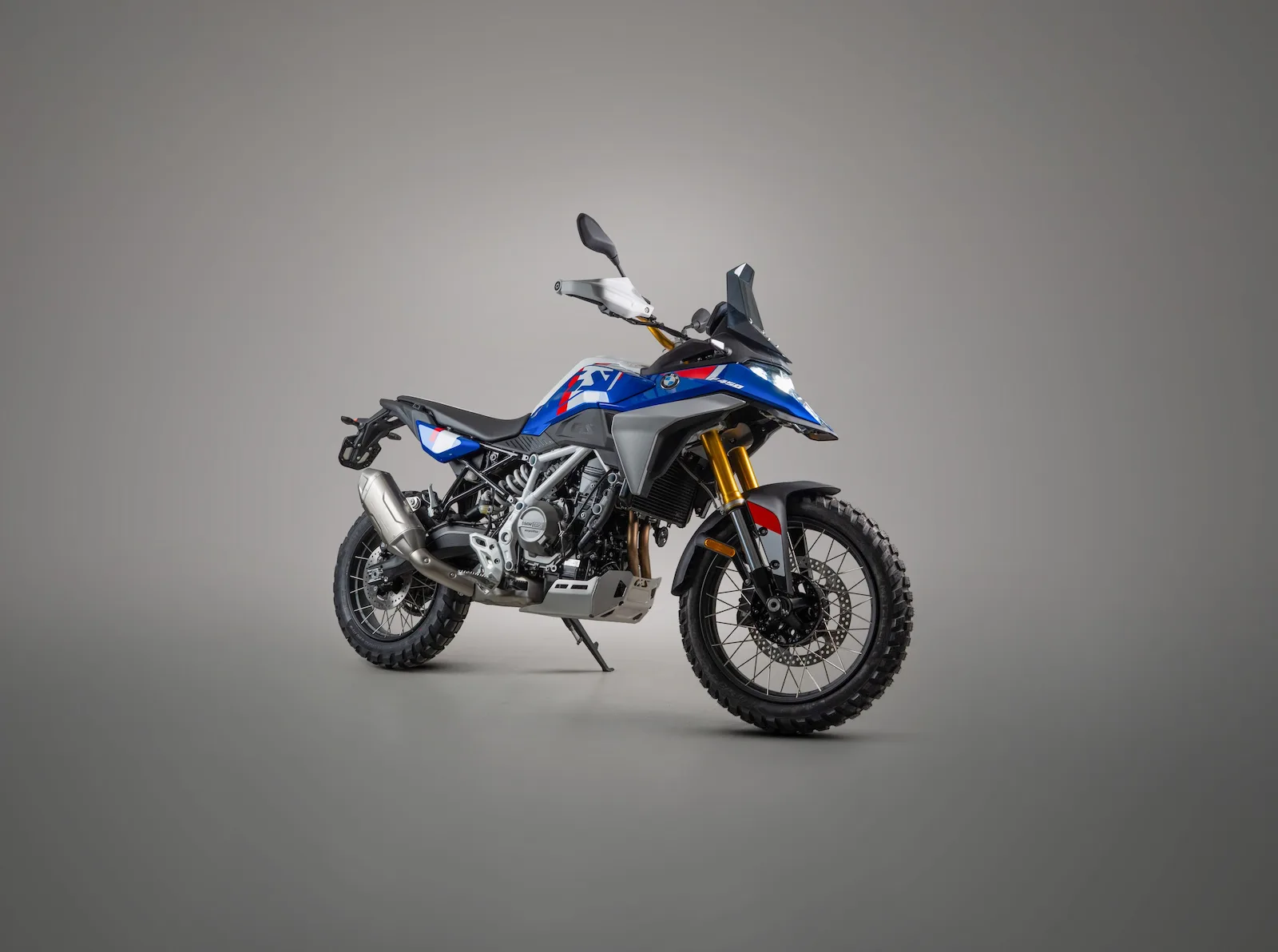
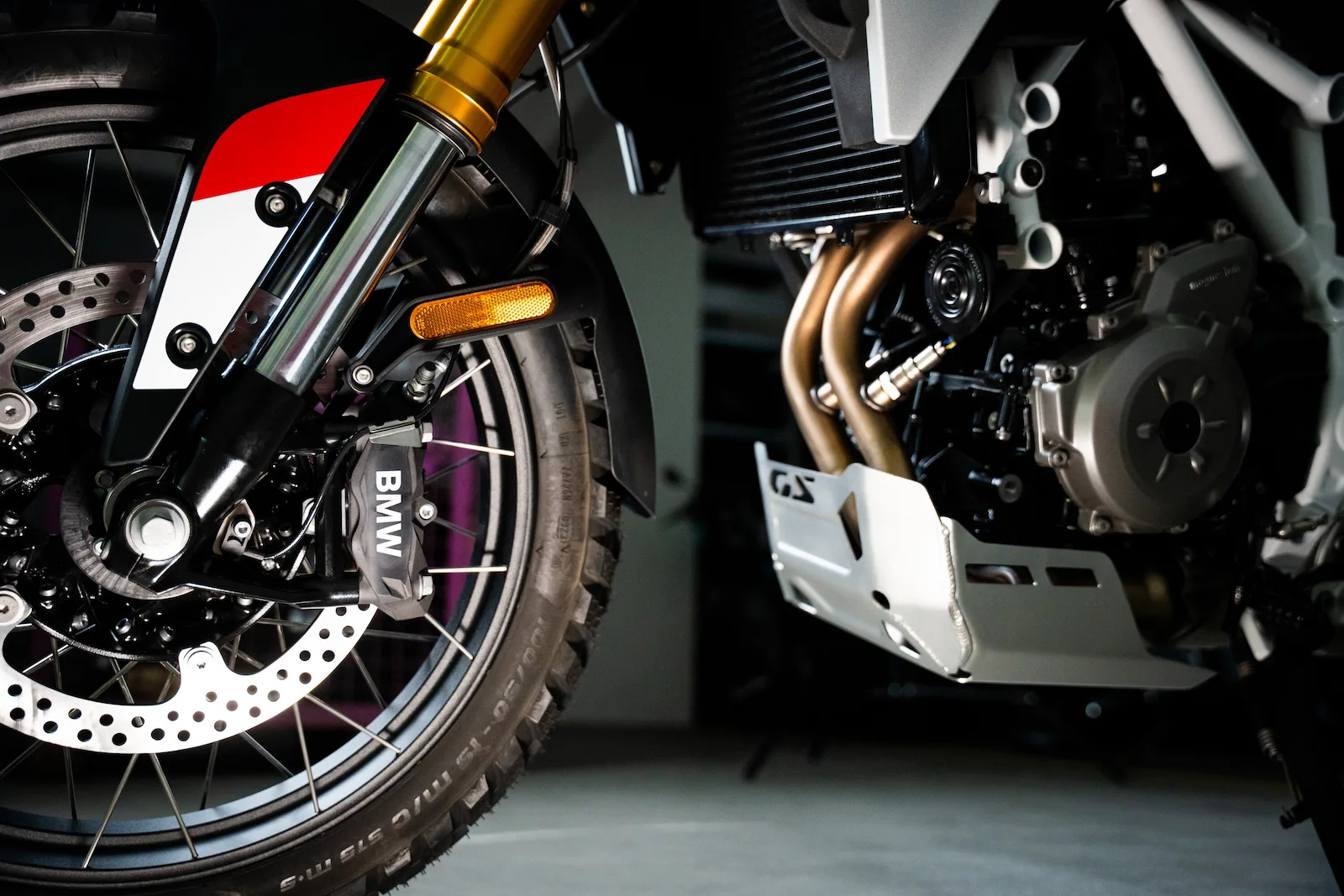
The GS Trophy, at $8,195, wears Racing Blue Metallic paint with a white main frame and white hand guards. Its listed extras are an aluminum engine guard, the Rallye windshield and the Easy Ride Clutch; the release also gives it Gear Shift Assist Pro, the Sport Suspension, the Sport Screen, Enduro Pro and the wider enduro footrests. It is the only version that can take the $800 Enduro Package with cross-spoked wheels, which makes it the pick if you plan to ride rough trails regularly.
Options, packages and accessories
The only package is the Enduro Package ($800, GS Trophy only), which adds cross-spoked wheels. The rest comes from the Original BMW Motorrad Accessories catalog, for which the release gives no prices:
- Windshields: a high Tour windshield, height-adjustable with tools, or the clear Rallye windshield, so you can choose between more wind protection and a lower, off-road-friendly screen.
- Seats and controls: the low black seat (32.7 inches), the high Rallye seat (34.0 inches), silver handlebar risers (+0.79 inches) and enduro rider footrests.
- Protection: aluminum enduro engine guard, left and right engine housing protectors, black engine protection bars, black front axle protector and a radiator grille guard.
- Luggage: luggage rack and rack bag, a small black 29L topcase, side bag mounts with waterproof 10L + 16L side bags, a 40L or 60L roll bag with its own cargo net, waterproof rear bags in 35 – 42L and 50 – 60L sizes and a 5L tank bag; the soft bags come in Urban or Soulfuel Collection styles.
- Navigation and display: navigation preparation, the ConnectedRide Smartphone Cradle, the ConnectedRide Navigator and protective glass for it and for the 6.5 inch TFT.
- Other: the Akrapovič stainless steel rear silencer, a tank pad and cross-spoked wheels.
Prices and availability
MSRP is $6,995 for the Standard in Cosmic Black, $7,795 for the Sport and $8,195 for the GS Trophy, plus destination, which the release does not quantify. BMW Motorrad USA expects the US launch in Q1 2027.