La historia completa
What it means for you
- At $7,699 and available now, it is a quick decision if you have been waiting for traction control on the Z650 S.
- Shorter riders: the seat is about 20mm higher than before; try the ERGO-FIT Low Seat, which sits 20mm lower.
- Budget for the accessory quick shifter if you want clutchless upshifts.
- Navigation and voice command in the app need a paid license.
- The more forward bar position suits sporty riding; sit on one before buying if you commute long distances.
Qué cambió para 2026
Z650 S ABS
- Nuevo
Electronics
KTRC traction control, 4.3” TFT, smartphone connectivity
- Actualizado
Ergonomics
Handlebar 40mm forward, 10mm higher, 30mm wider; seat about 20mm higher
- Actualizado
Brakes
New dual 300mm front discs, Continental ABS
The Z650 S ABS is Kawasaki's new middleweight naked bike for 2026, aimed squarely at city riding and back roads. It keeps the light, compact feel Z650 riders know but looks bigger and more aggressive, with wider shrouds, a wider handlebar and new bodywork in Kawasaki's sugomi style. The 649cc parallel twin is tuned for torque low and in the middle of the rev range, and the bike gains traction control, a 4.3-inch color TFT, smartphone connectivity and an optional quick shifter. It sells for $7,699 in Metallic Matte Graphenesteel Gray with Metallic Flat Spark Black and is available now. Find more on Kawasaki's lineup on our Kawasaki Bike Dossier page.
Styling
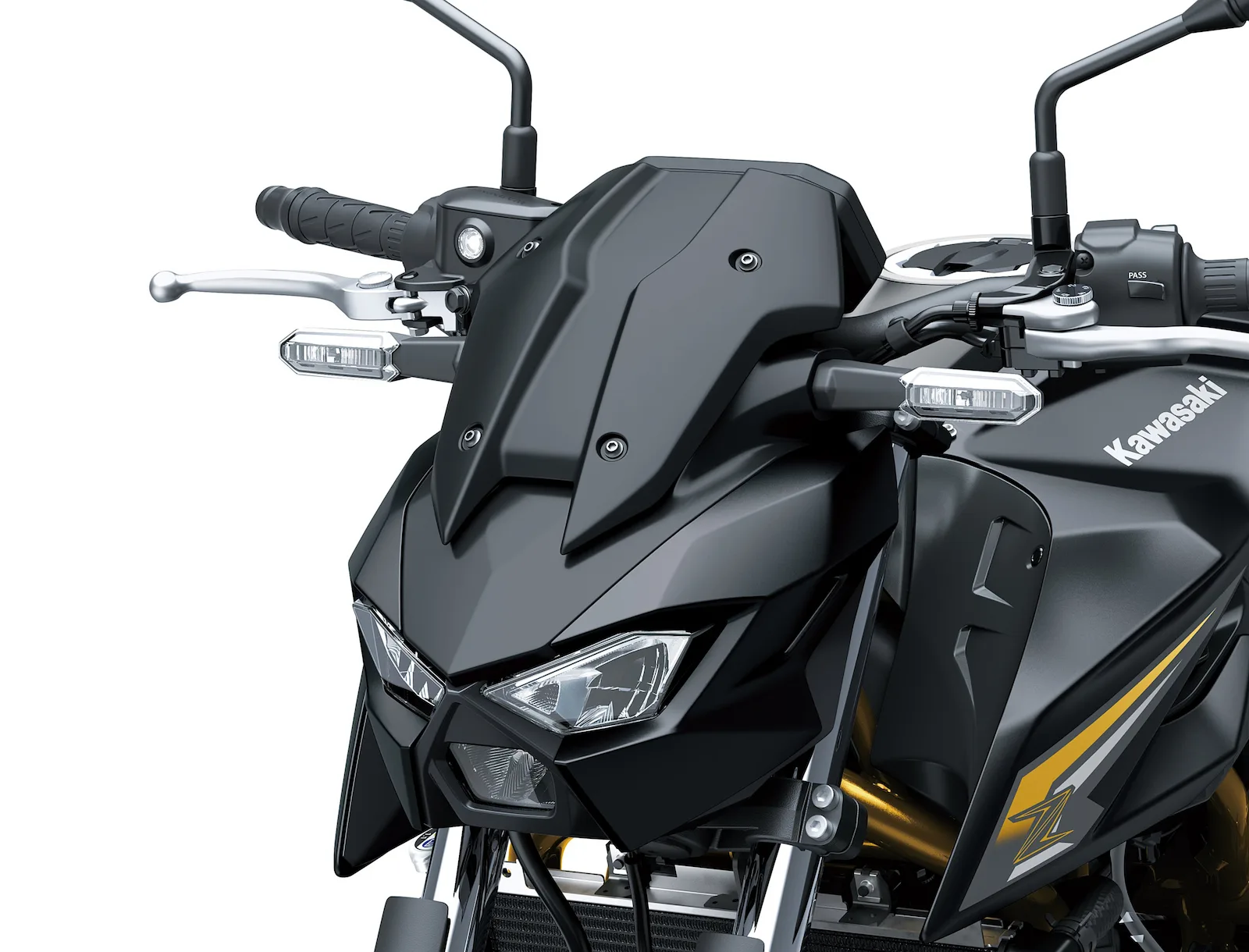
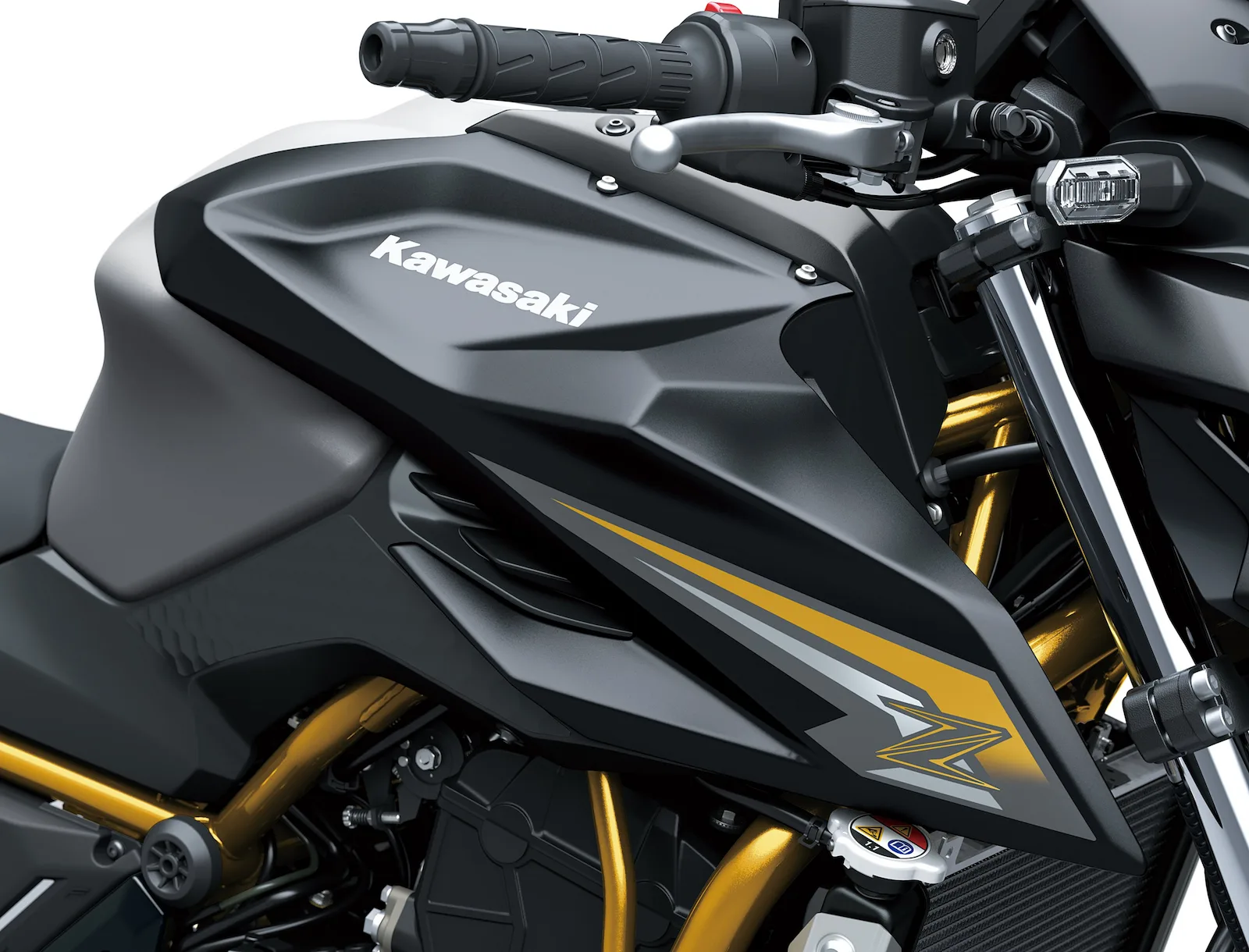
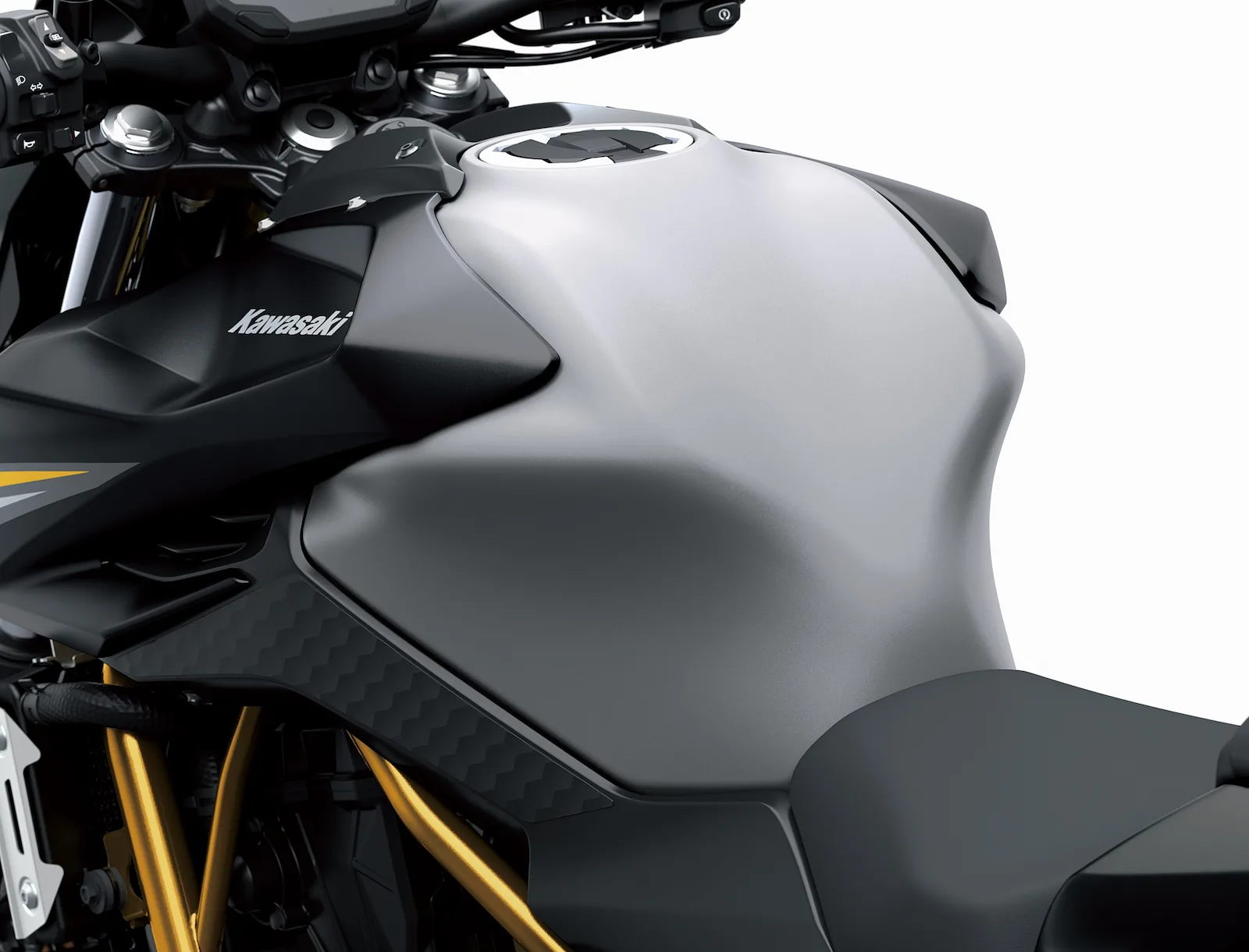
The design splits the bike into colored, decorative upper parts and black, functional lower parts, which makes it look lean and purposeful. The wider shrouds make the bike look larger than it is, and metallic accents plus LED lights at both ends tie it to the rest of the Z family.
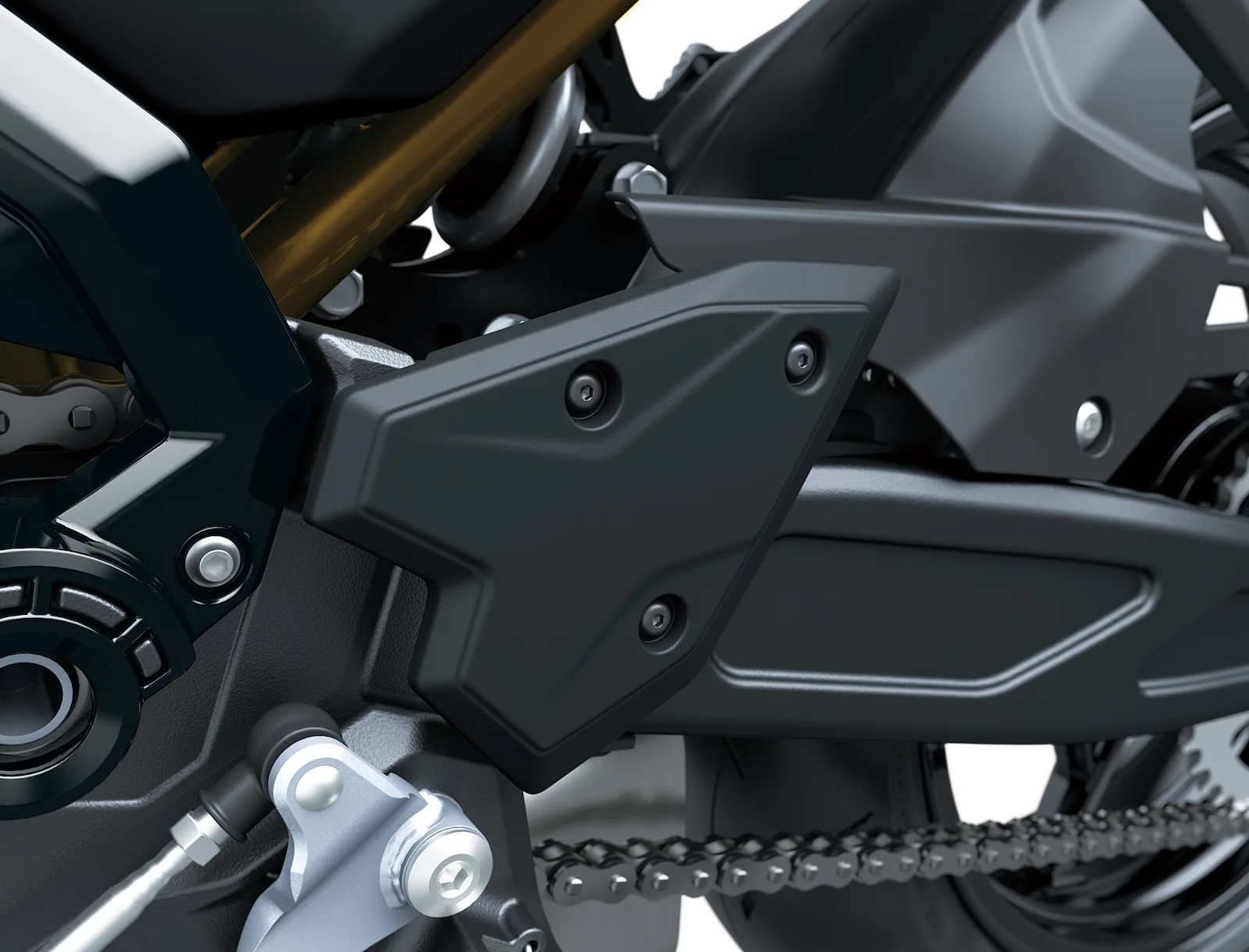
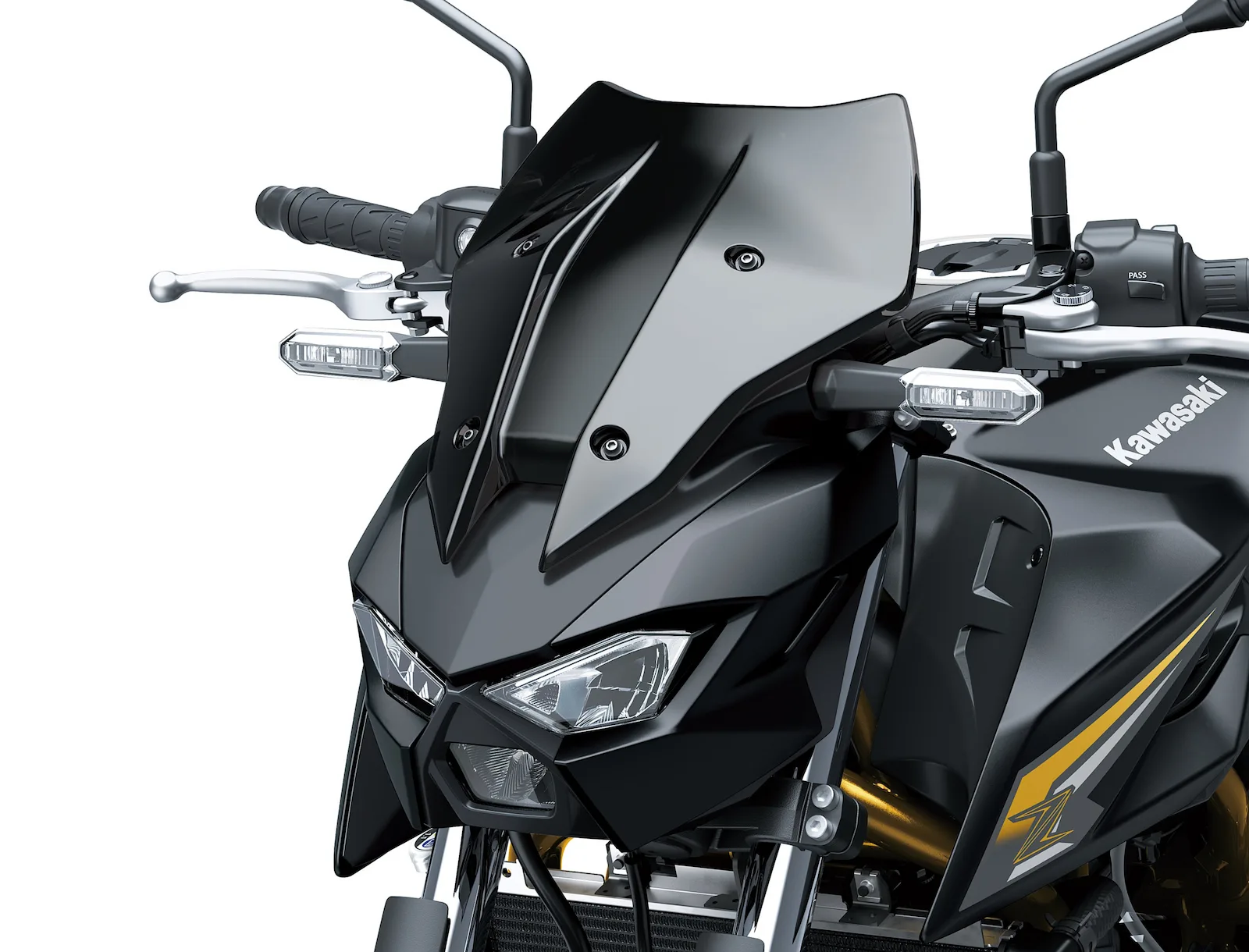
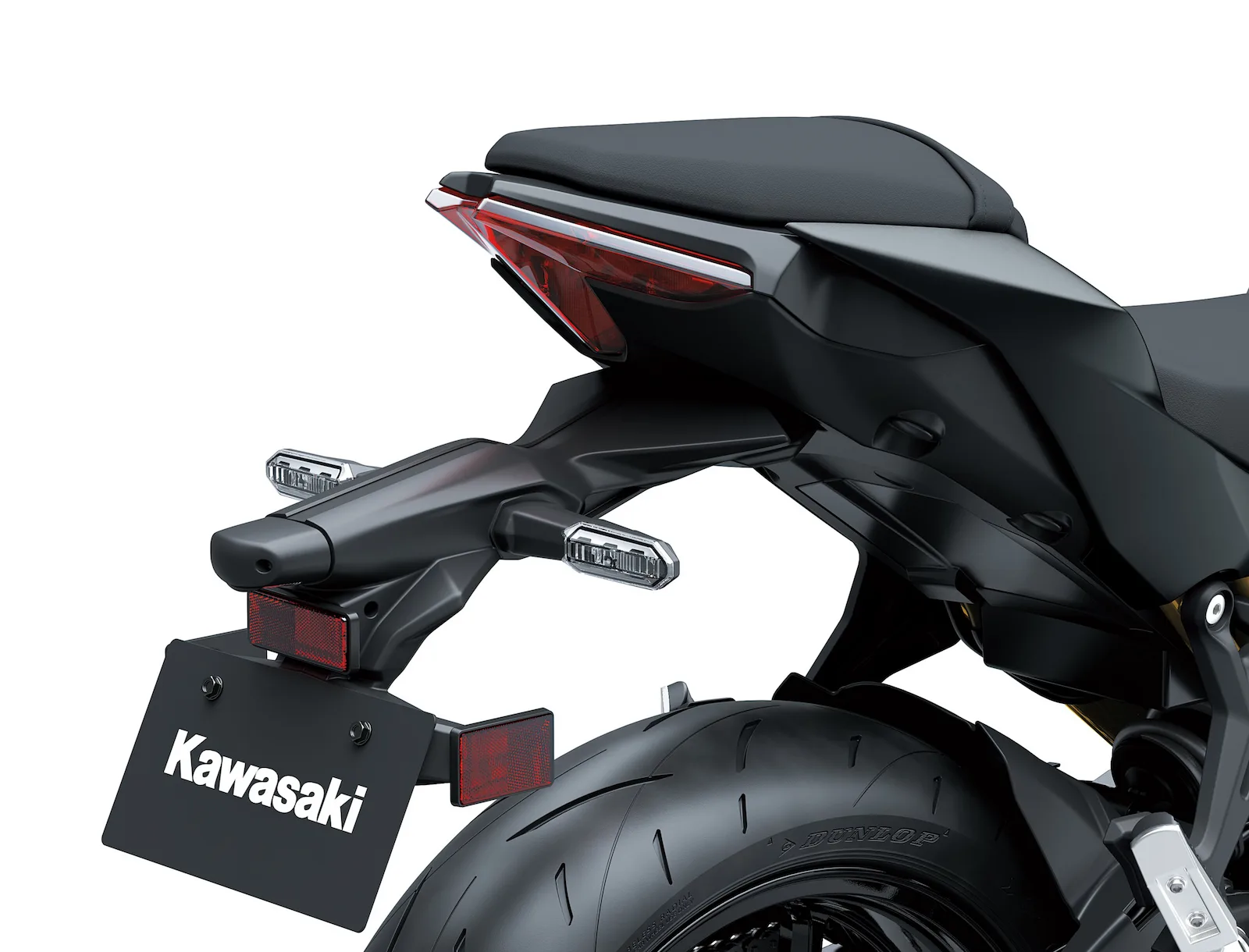
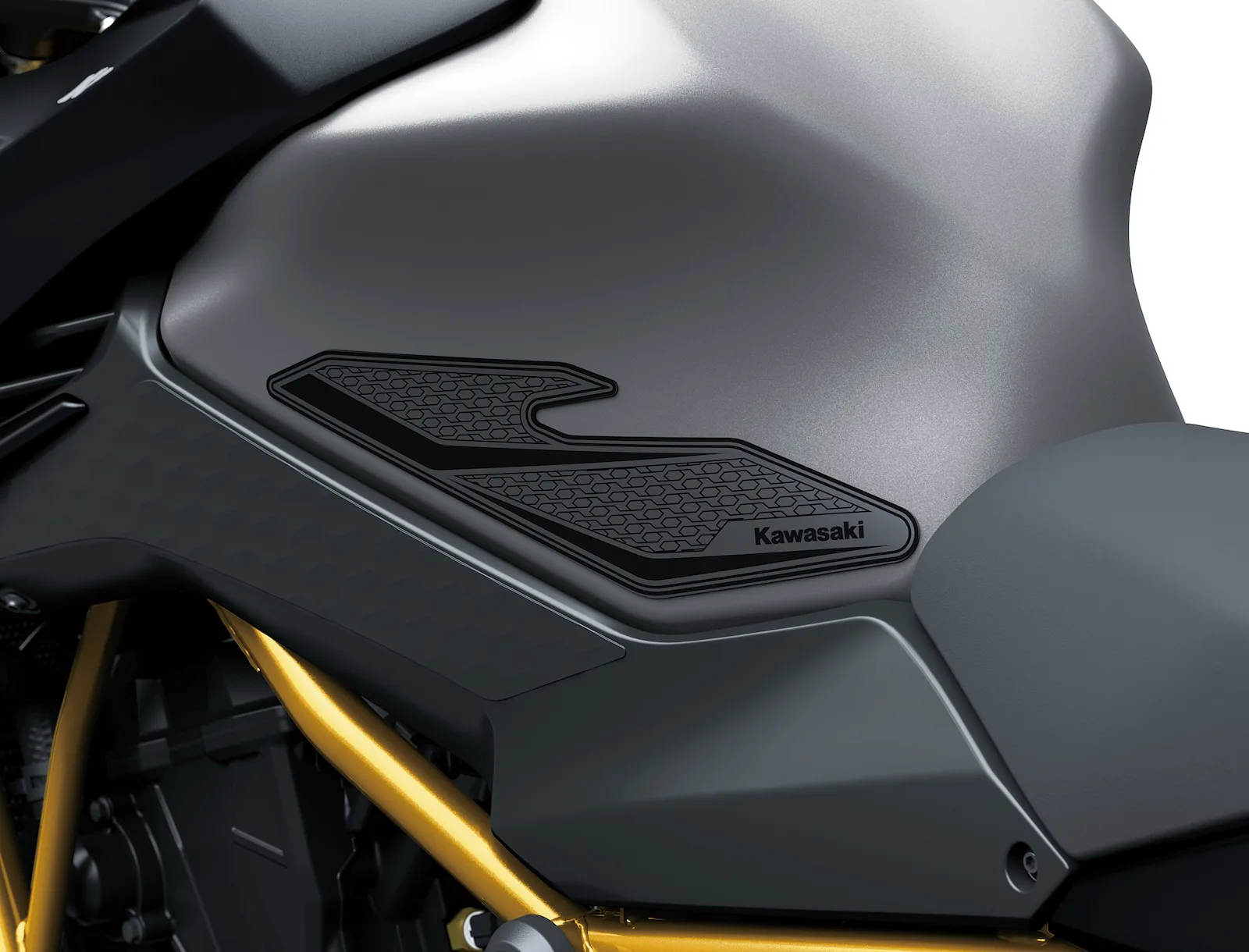
Up front, a compact, steeply angled headlight cowl sits low and follows the line of the tank. Inside are three LEDs: two upper low beams and one lower high beam. Colored panels around the recessed lights, a tight meter cover and a wide fat-type bar sharpen the look, and even the front fender has cutouts. At the back, the tail is short and swept up with a layered design and the Z-family LED taillight. Aluminum side covers, black heel guards, shaped footpeg stays, a hexagon pattern on the side covers below the seat, tidy welds, hidden wiring and a bolt-free resin fuel cap round out the details.
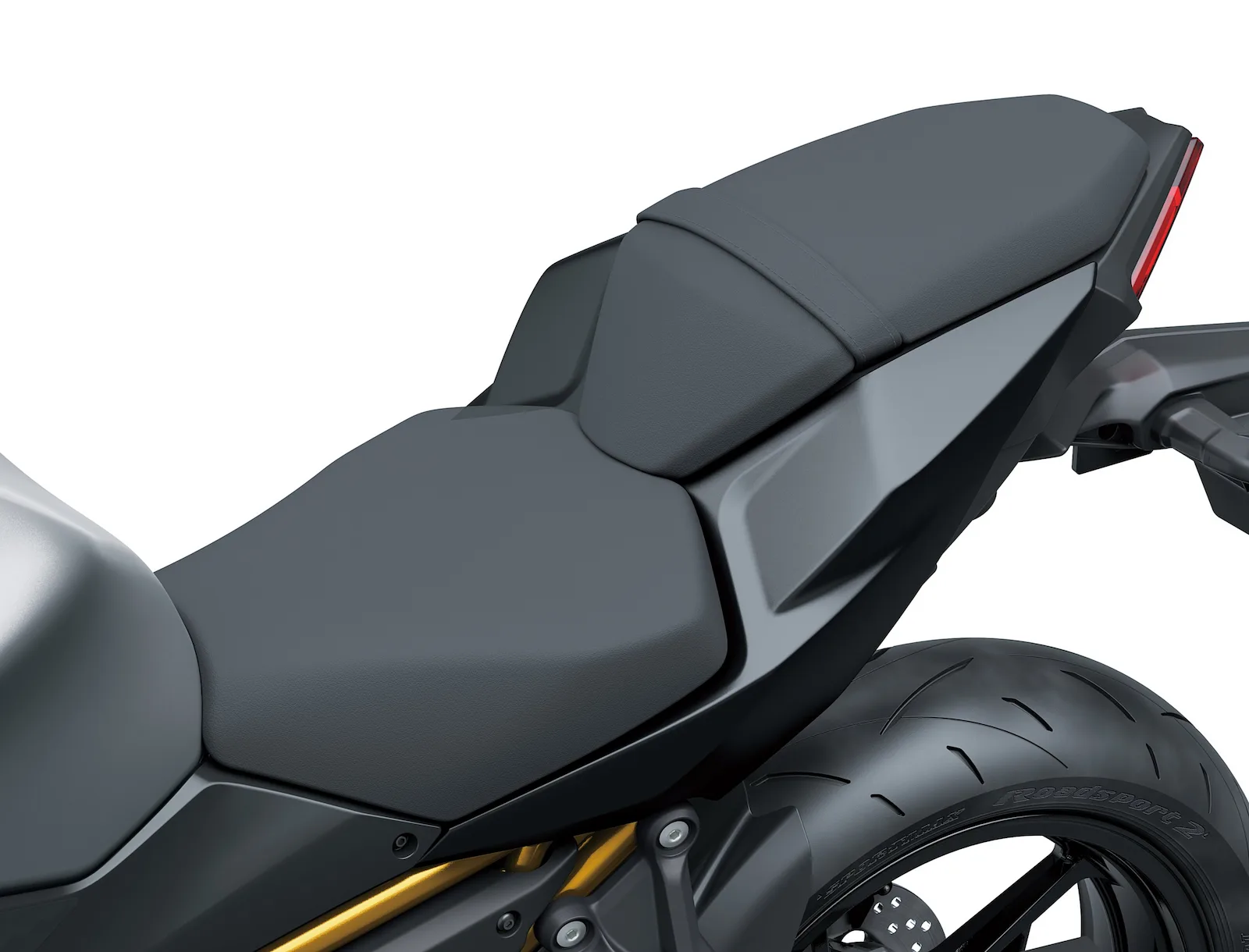
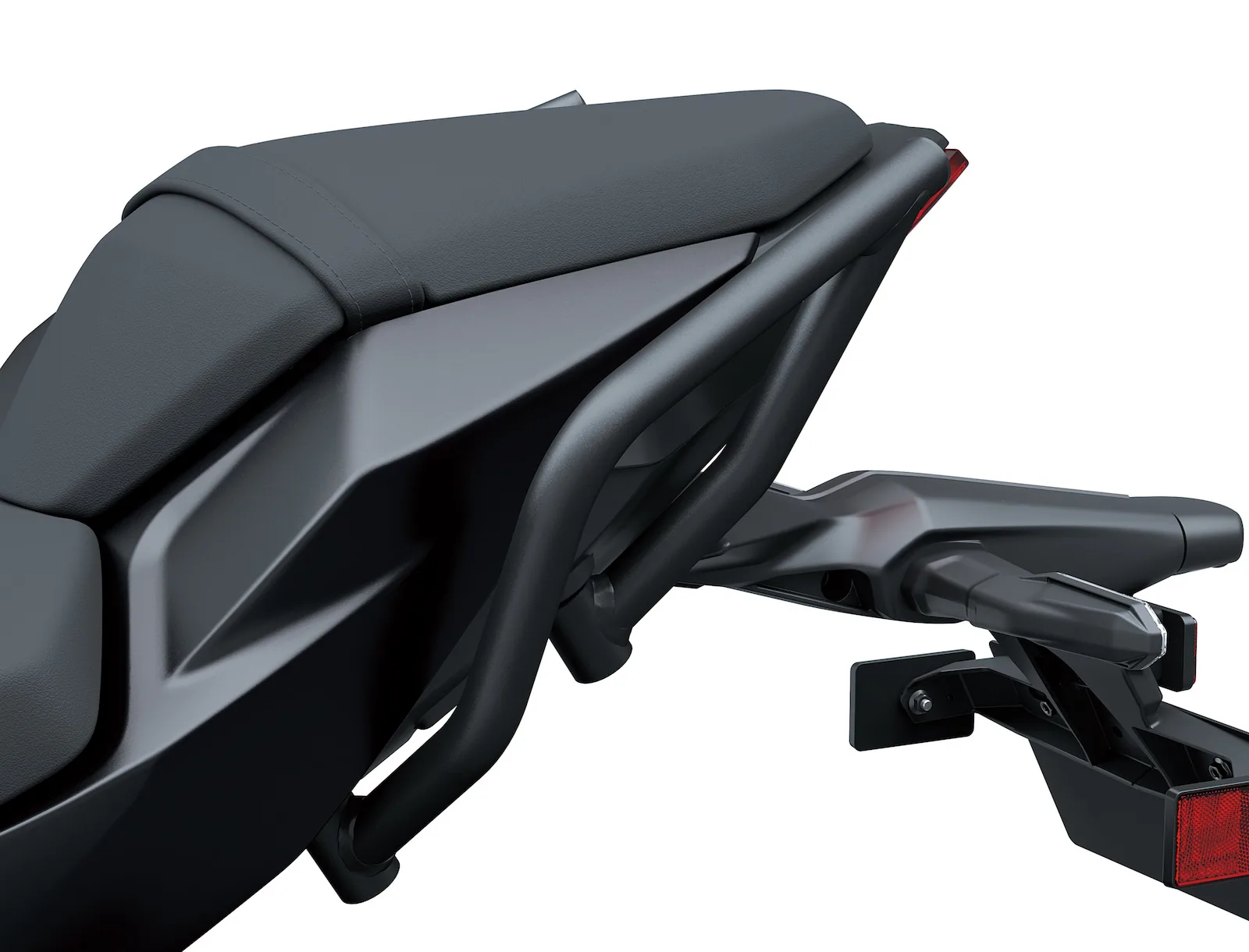
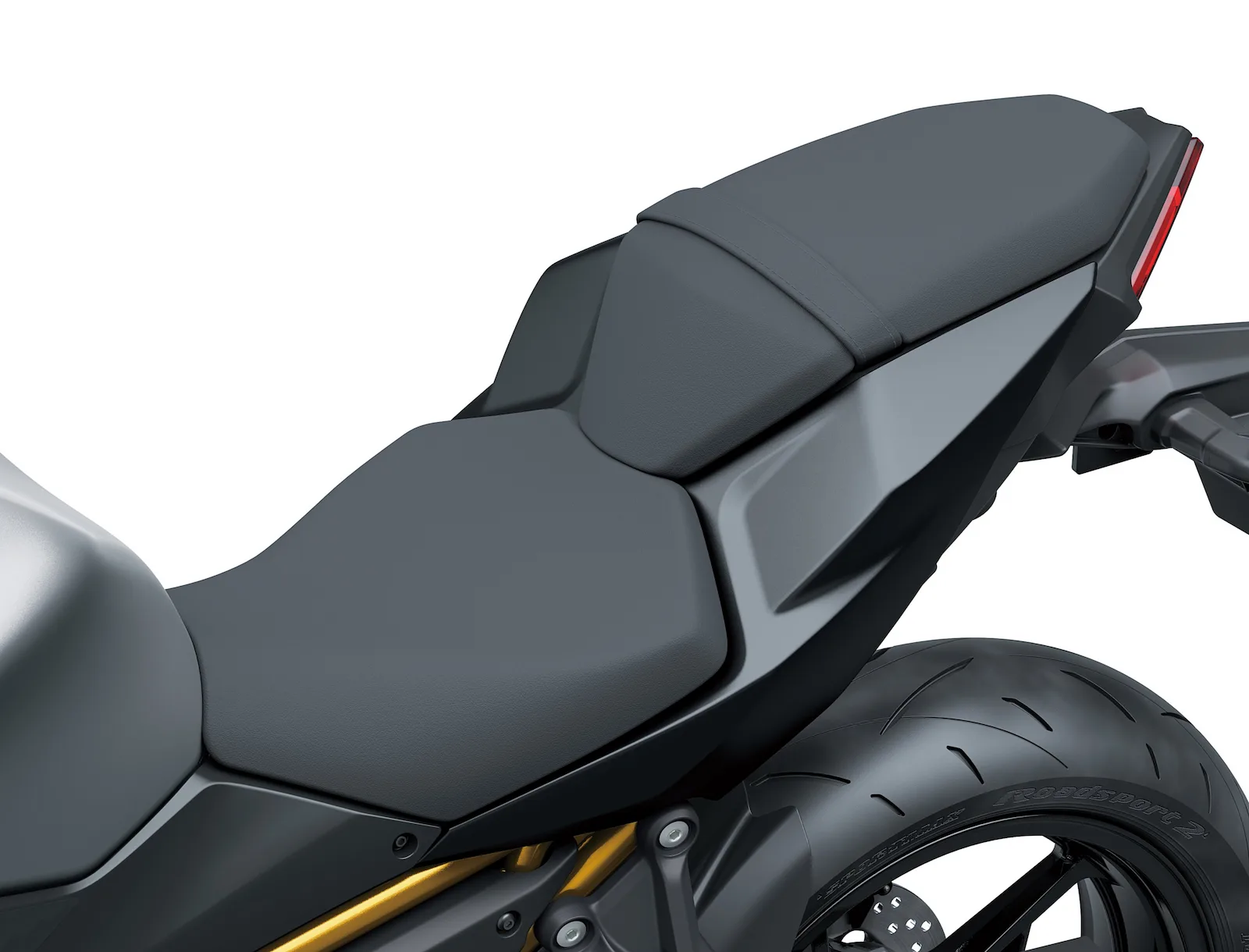
There are practical touches too. Luggage hooks are built into the passenger peg stays, the inner fender doubles as part of the chain guard to keep the tail underside clean, the key has an internal cut to deter theft, and the seat uses a grippy granular-style material.
Engine
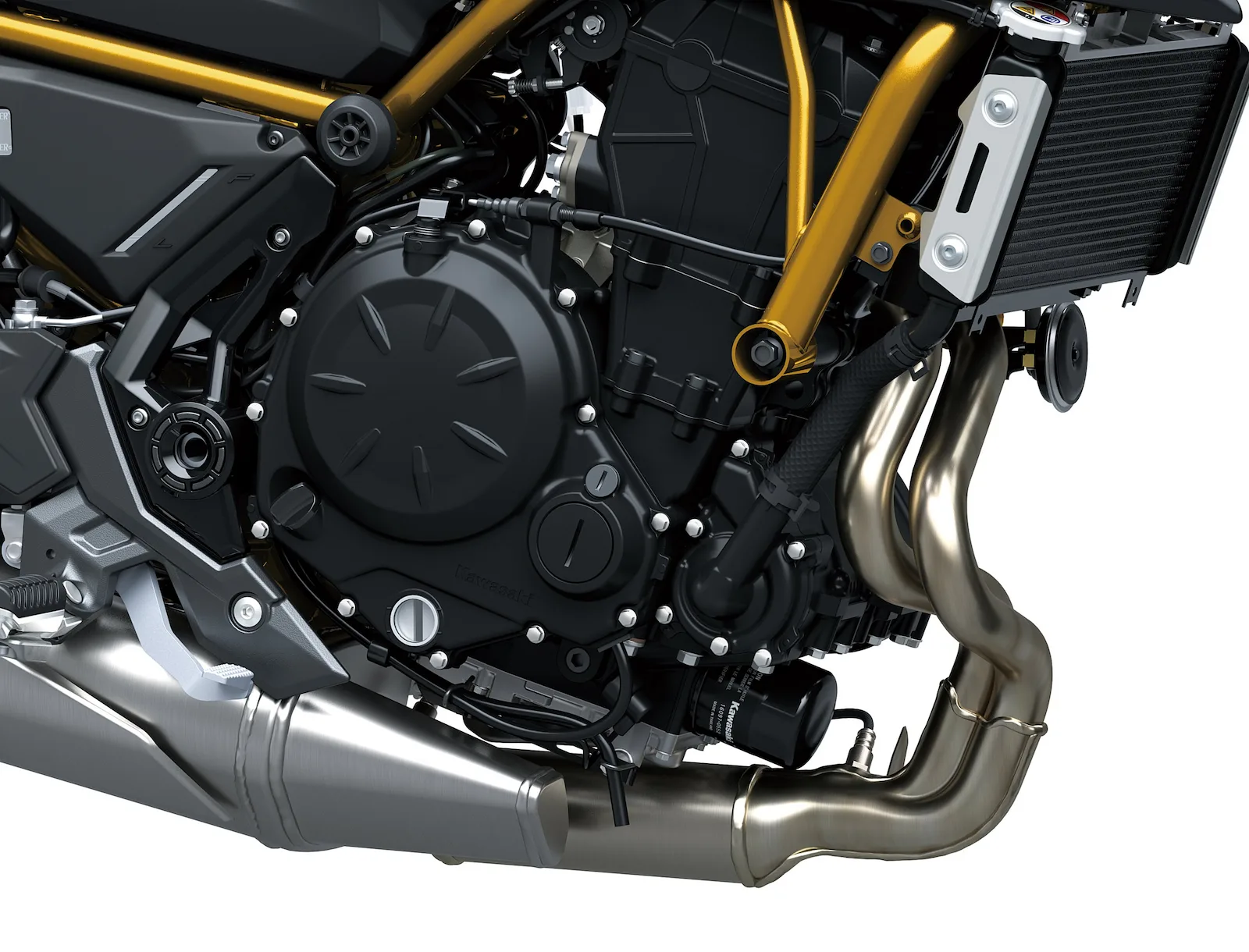
The liquid-cooled 649cc twin revs quickly and answers the throttle sharply. Kawasaki tuned it for strong torque in the 3,000 to 6,000 rpm range, with smooth running below 3,000 rpm and no step in power above 6,000 rpm, so it is easy to meter in traffic and pulls cleanly out of corners. Slim intake funnels, 36mm throttle bodies with sub-throttles, injectors that spray 75 μm droplets and cams with short timing and overlap all serve that low and midrange focus.
The engine is also built to be small. Open-deck aluminum cylinders with plated bores allow a narrow engine, and a triangular layout of crank and gearbox shafts keeps it short. A semi-dry sump, an under-engine muffler and a 180º crank with a balancer shaft keep weight low and central. The cassette-style gearbox is easier to service, and the tail pipe measures 33mm.
An Assist & Slipper Clutch, developed from racing experience, makes the lever lighter and stops the rear wheel hopping on fast downshifts. Cooling is simplified, with coolant routed through both cylinder and head, and a cover over the radiator fan sends hot air away from your legs in traffic, which keeps the bike more pleasant to sit on at a standstill, and a new O₂ sensor helps cut emissions.
Traction control
KTRC is new on this bike. It watches wheel and engine behavior constantly and steps in when needed. Mode 1 is the lightest, aimed at managing grip in corners while letting you drive hard out of them. Mode 2 intervenes earlier and cuts power when it sees wheelspin, which helps on poor surfaces. You can also switch it off completely.
TFT dash and connectivity
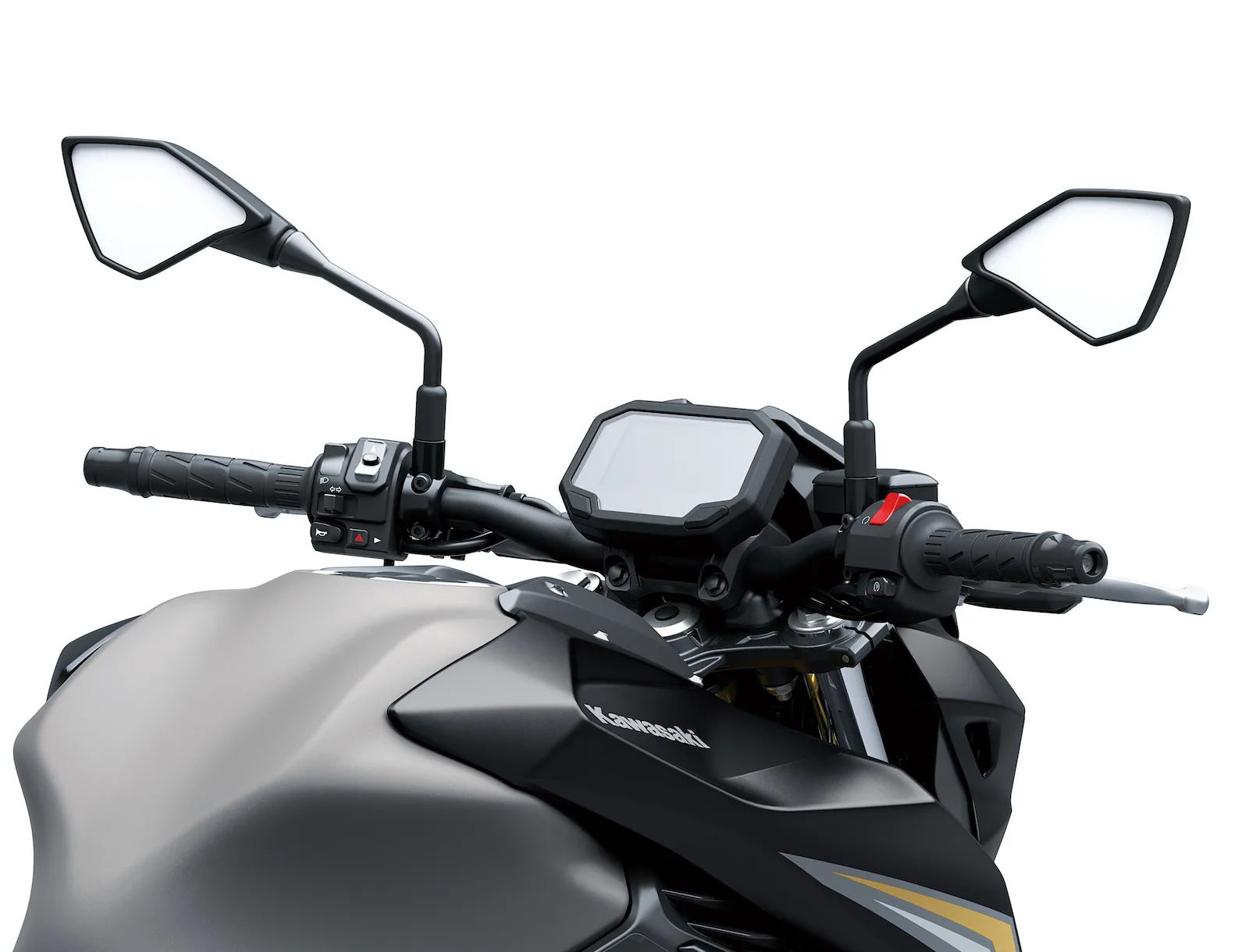
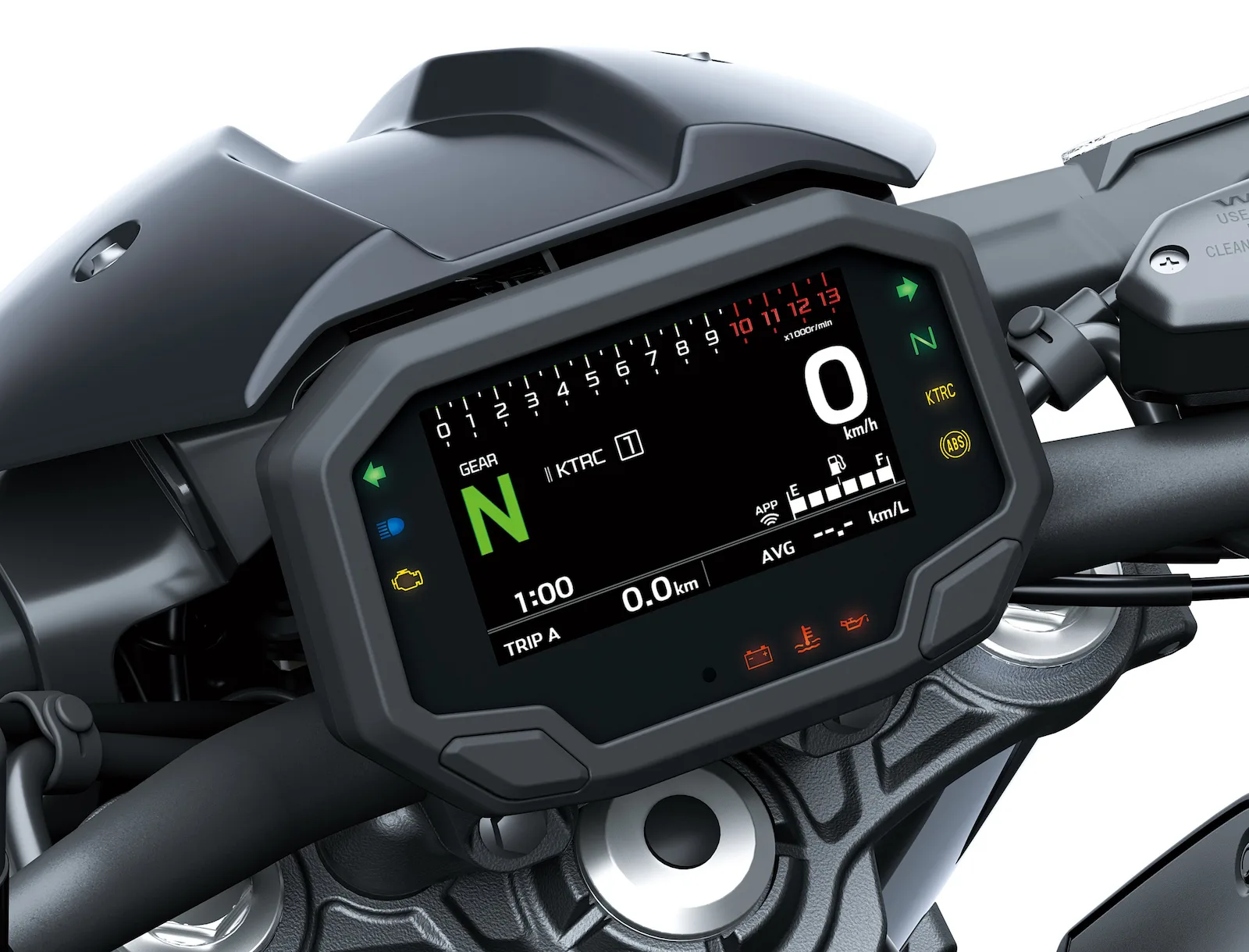
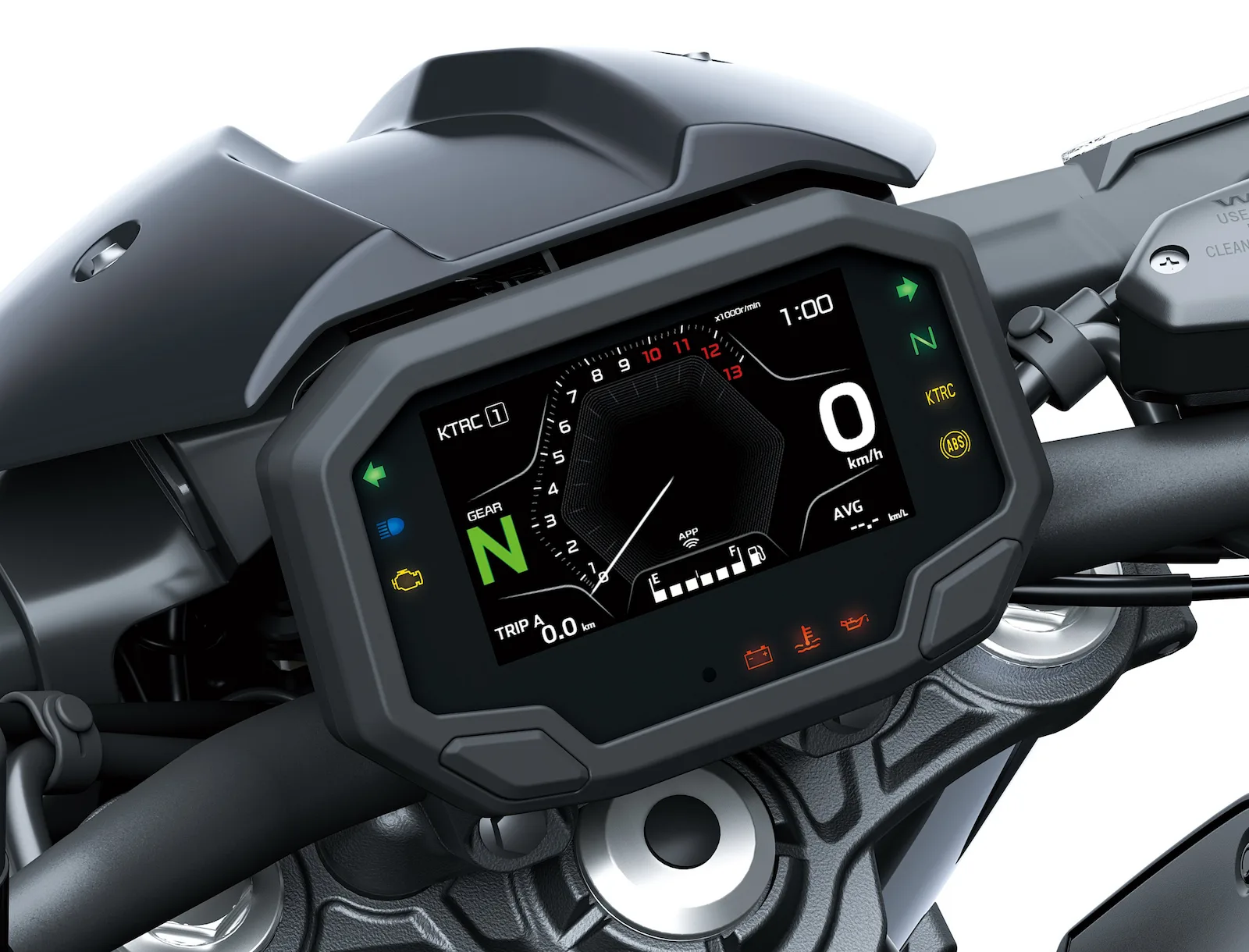
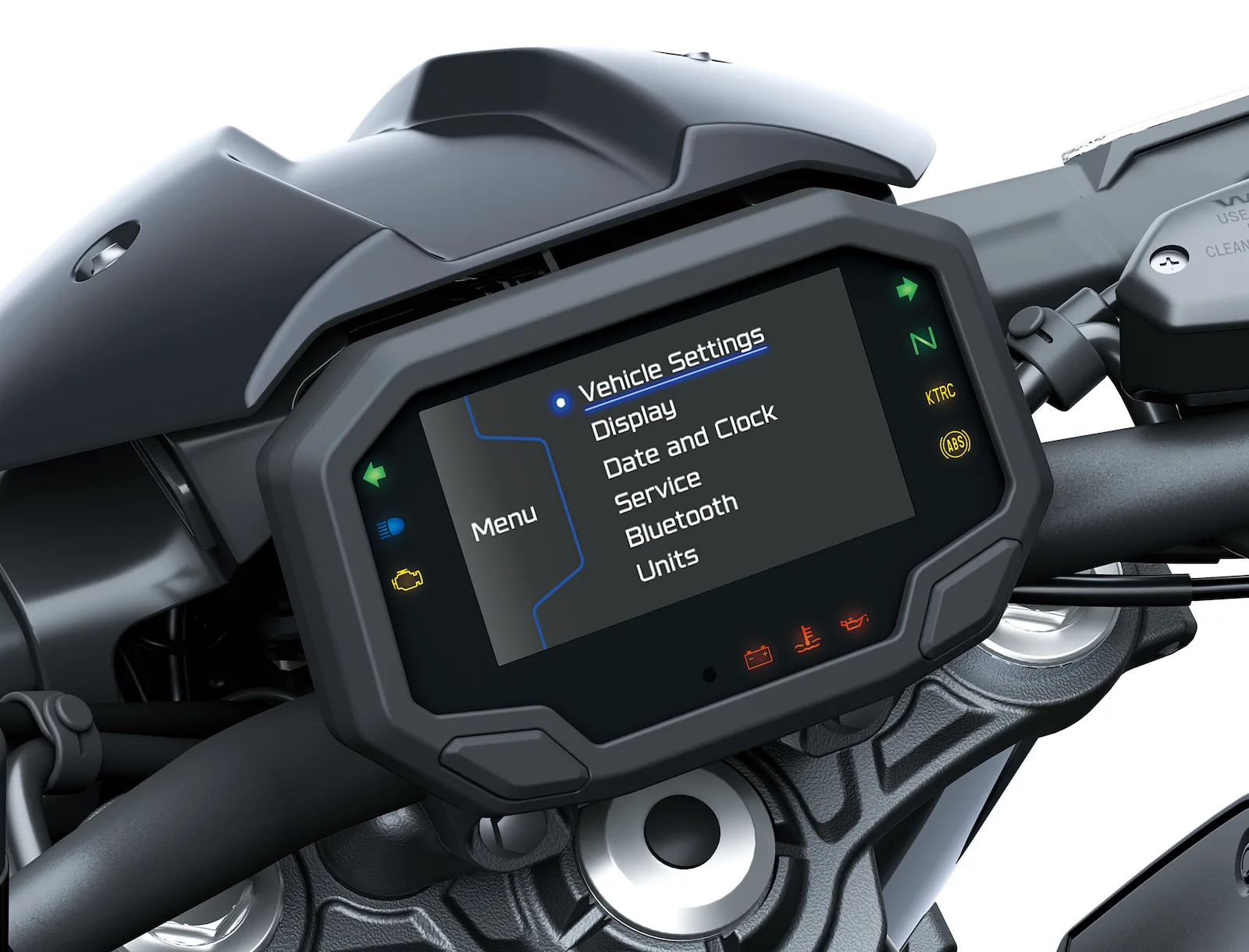
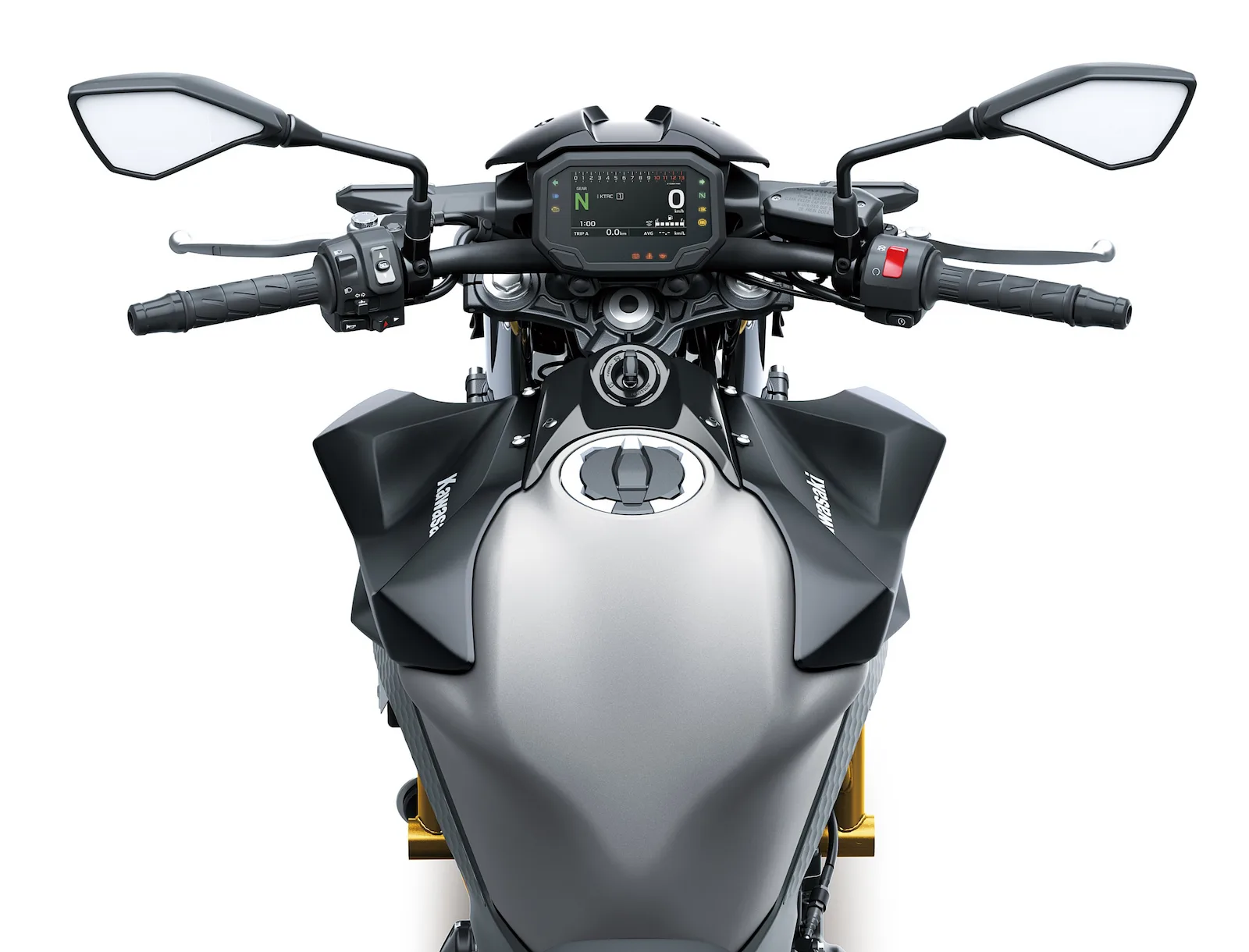
The new 4.3-inch color TFT matches other Z models. The background switches from white to black automatically in low light, or you can choose it yourself, and brightness adjusts automatically with three manual levels on top. Type 1 shows a bar tachometer across the top, Type 2 uses a hexagonal tach. You get speed, revs, gear, shift light, fuel, two trip meters, current and average fuel use, remaining range, coolant temperature, battery voltage, the time, quick shifter status, service and oil change reminders, and call and mail alerts.
RIDEOLOGY THE APP MOTORCYCLE links your phone. It shows fuel level, odometer and maintenance schedule, logs GPS routes and riding data, puts call and mail notices on the dash and lets you set the clock. Voice command and navigation, with destination search, waypoints and route ordering, are available with a purchased license.
Chassis and suspension
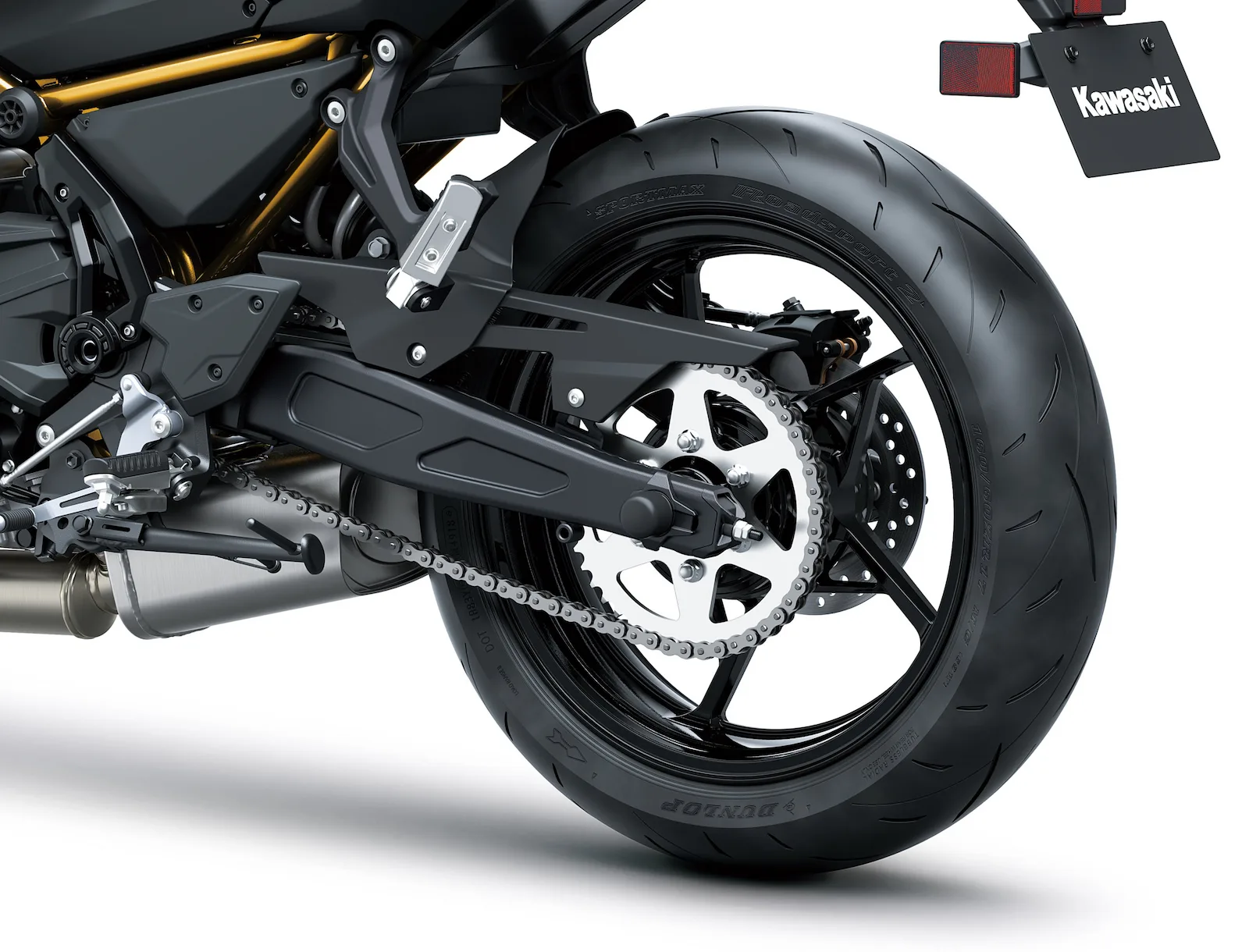
The high-tensile steel trellis frame weighs just 33 lbs. Kawasaki used straight tubes wherever possible and in-house analysis to fine-tune each tube's diameter, length and wall thickness, so it could cut weight without losing stiffness. The engine is a stressed member and even the footpeg stays add rigidity. Kawasaki says the low weight is obvious the moment you pull the bike up off its side stand, which matters to newer riders moving it around a garage or parking lot. The swingarm weighs 10.5 lb. and runs straight from pivot to axle. A steep 24.0º caster angle, a short wheelbase and a tight turning circle make it quick to steer, and a twin-tube rear frame helps keep the seat low.
Suspension is a 41mm telescopic fork and Kawasaki's Horizontal Back-link rear shock, which gives a more progressive feel than a link-less design. The shock sits above the swingarm, which centralizes weight and keeps it away from exhaust heat for consistent damping.
Brakes and wheels
New dual 300mm round front discs with two-piston calipers and a 220mm rear disc handle stopping, backed by a new Continental ABS unit that Kawasaki says intervenes smoothly without spoiling brake feel. Light star-pattern five-spoke wheels, a hollow front axle and the light swingarm keep unsprung weight down. Tires are Dunlop Sportmax Roadsport 2.
Ergonomics
The riding position leans further forward. The new flat, fat-type bar sits 40mm further forward, 10mm higher and 30mm wider than before, putting you in a more aggressive, elbows-out stance, and it is rubber-mounted to cut vibration. Both levers have five-way adjustment.
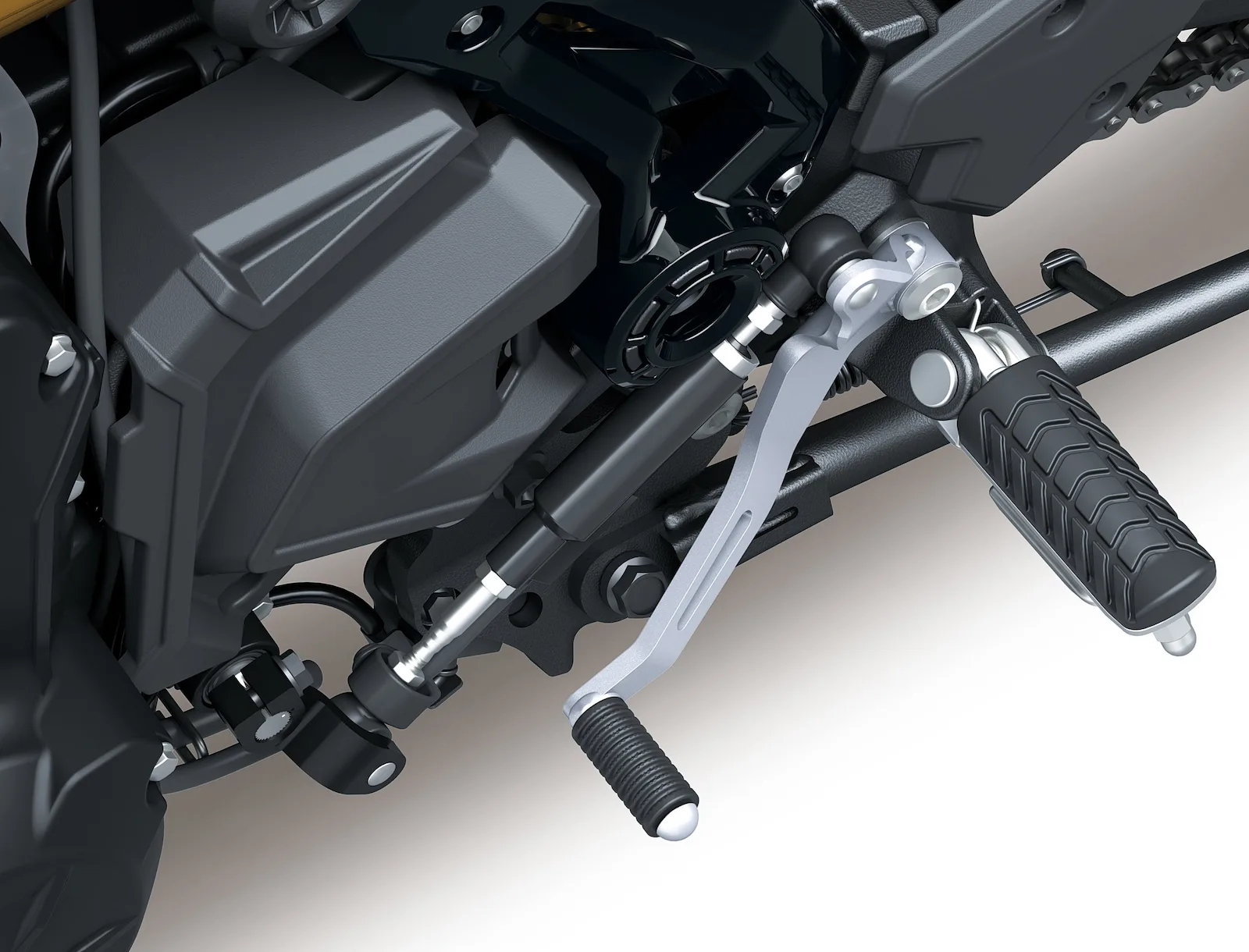
The front seat is about 20mm higher and wider with more padding, which relaxes the knee angle, yet its narrow nose still lets you get your feet down. Front and rear sections are now level. The passenger gets a seat 20mm wider with an extra 10mm of padding, and there is room under the seat for a U-lock. Footpegs move to suit the higher seat, both sets have hollow rubber pads, and the low tank is still easy to grip with your knees. A rubber-mounted seat bracket cuts vibration, and because the frame and engine are narrow, your knees and feet stay close together, which helps control and comfort. Overall, the package aims to be sporty enough for a fast back road and relaxed enough for a daily ride through town.
Accessories
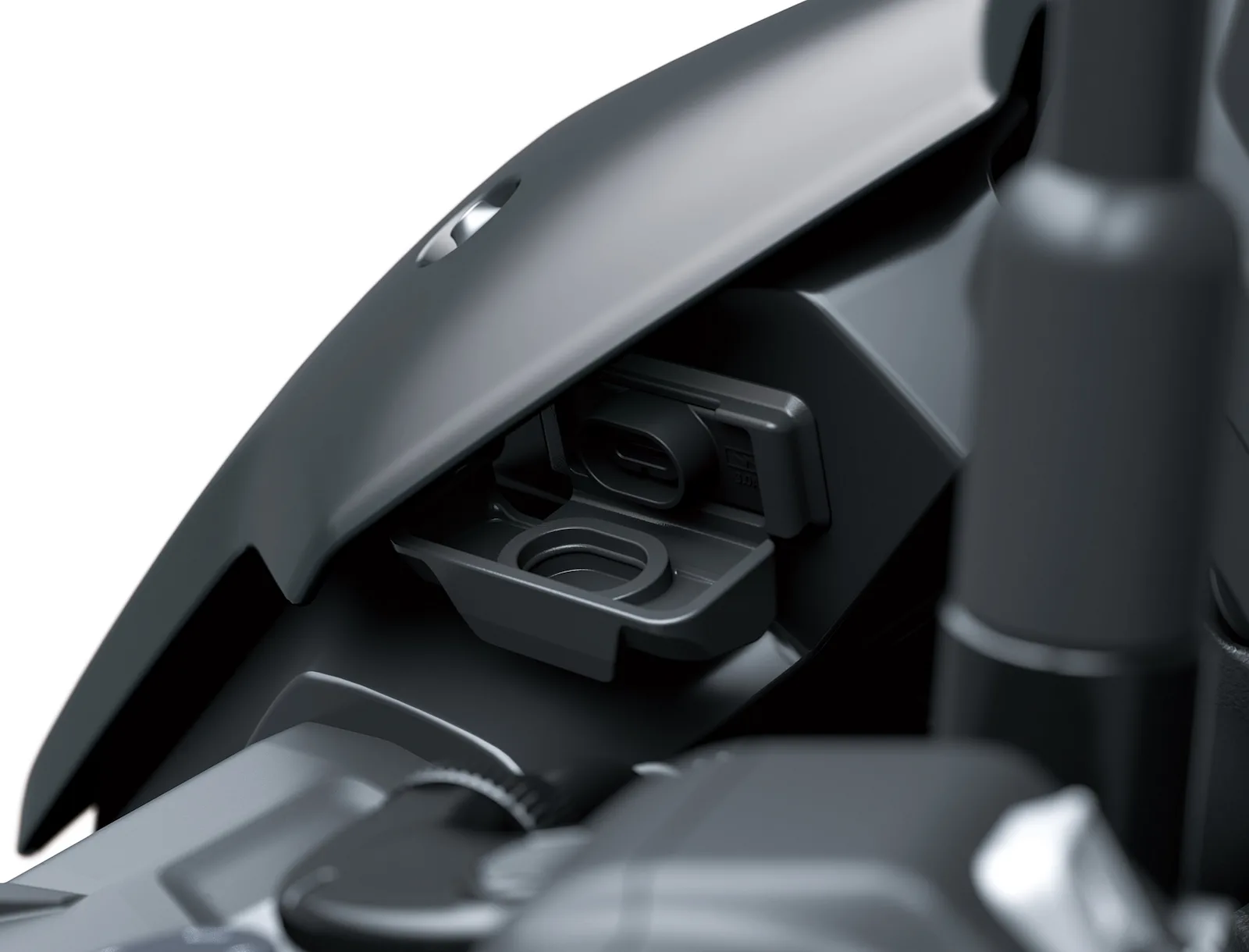
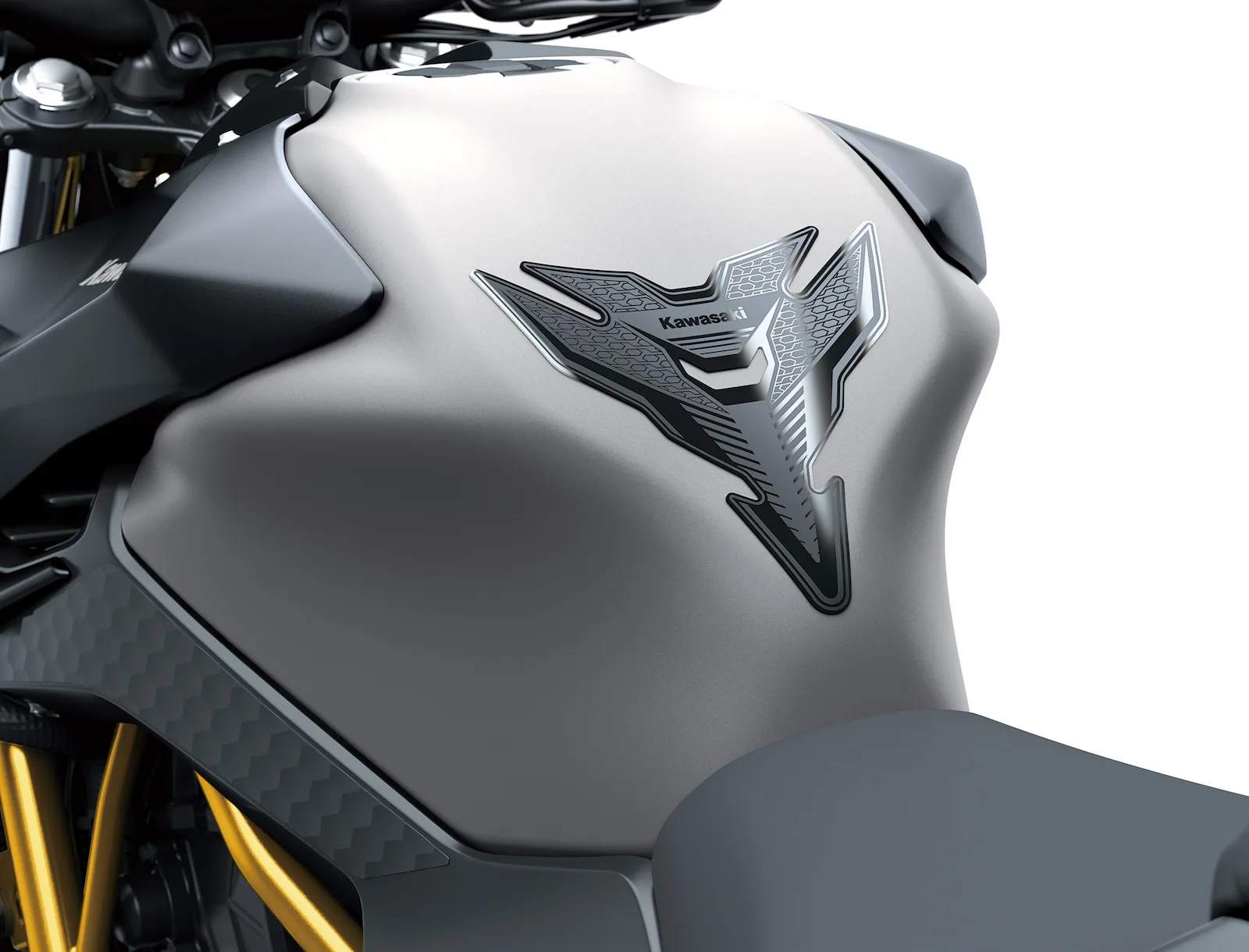
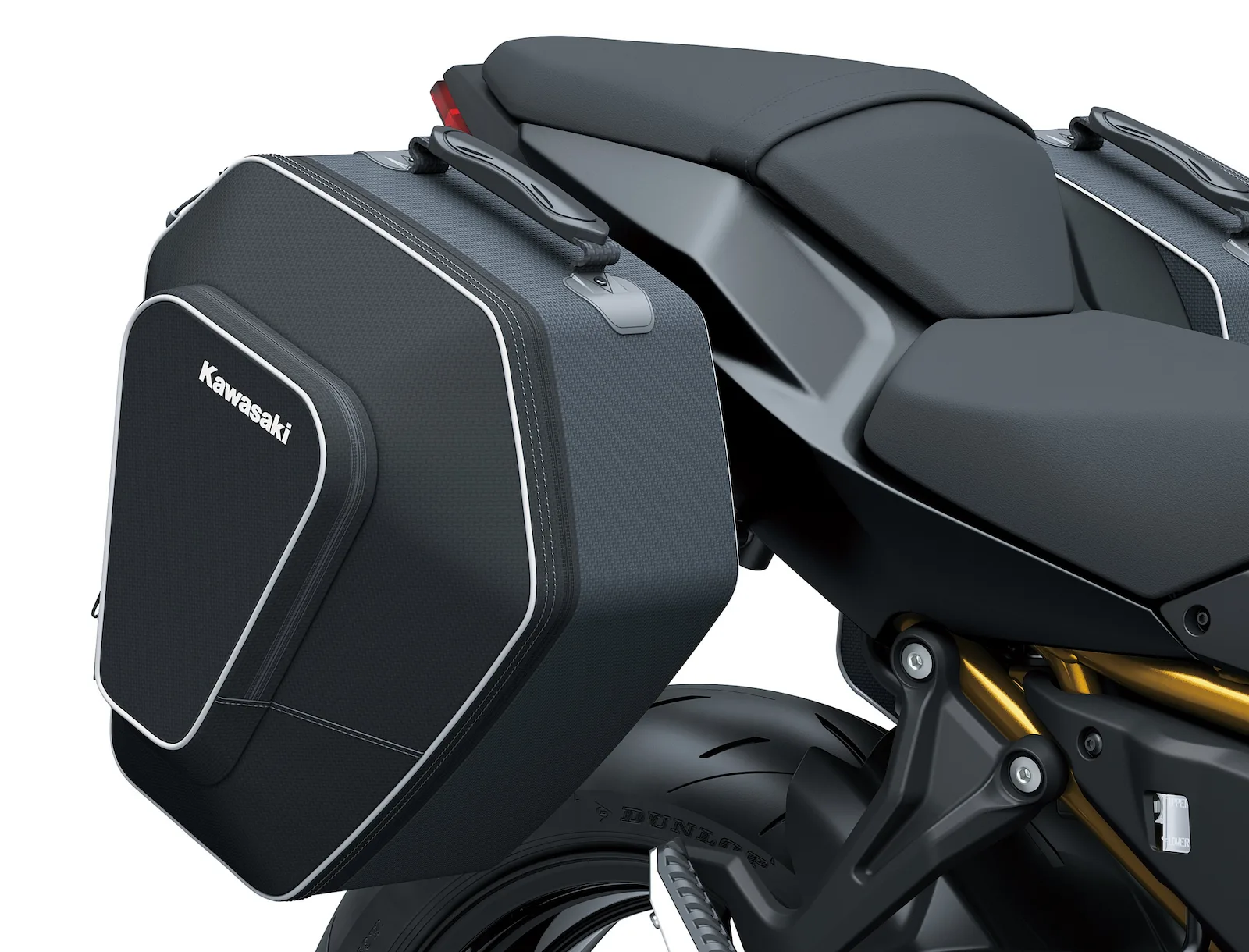
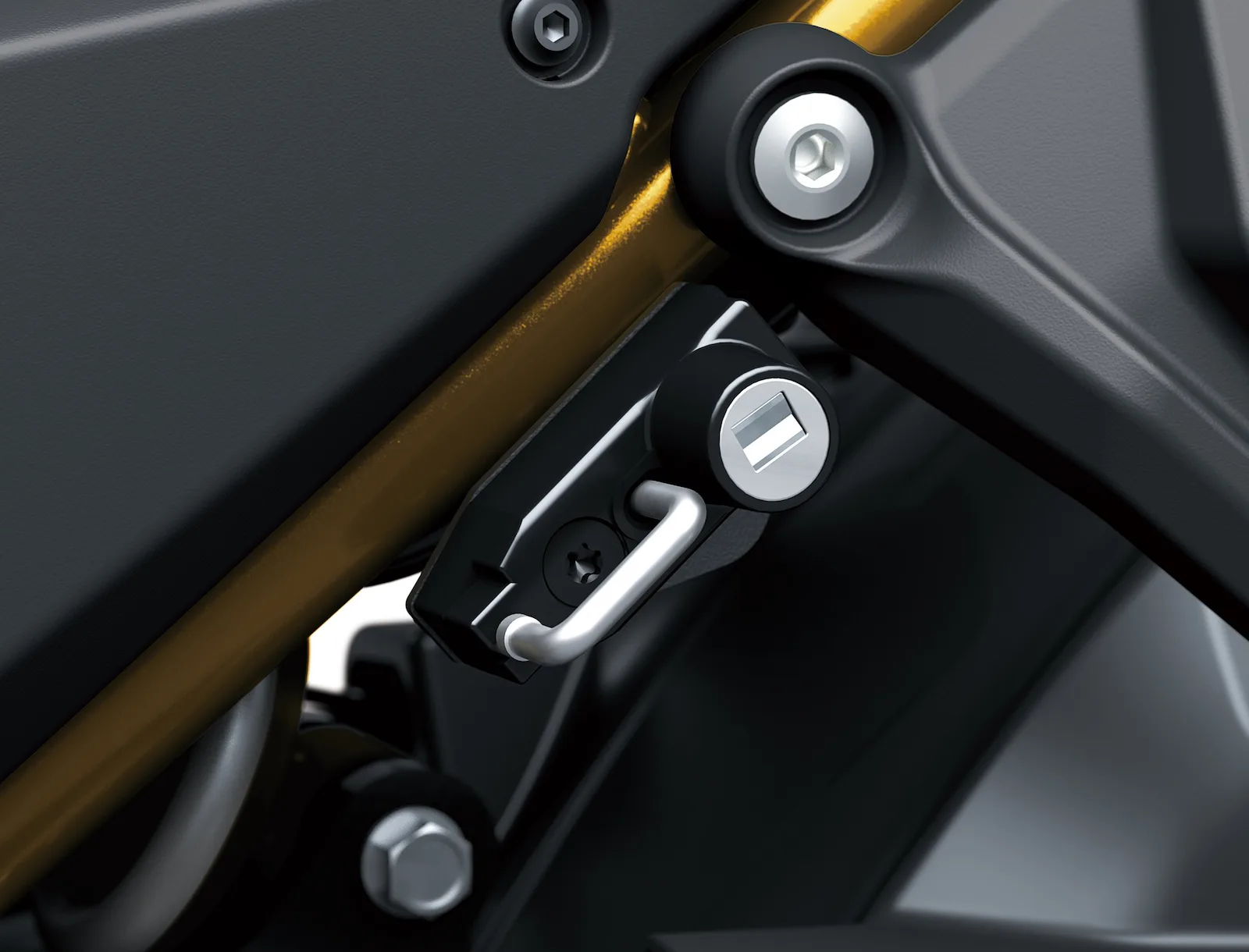
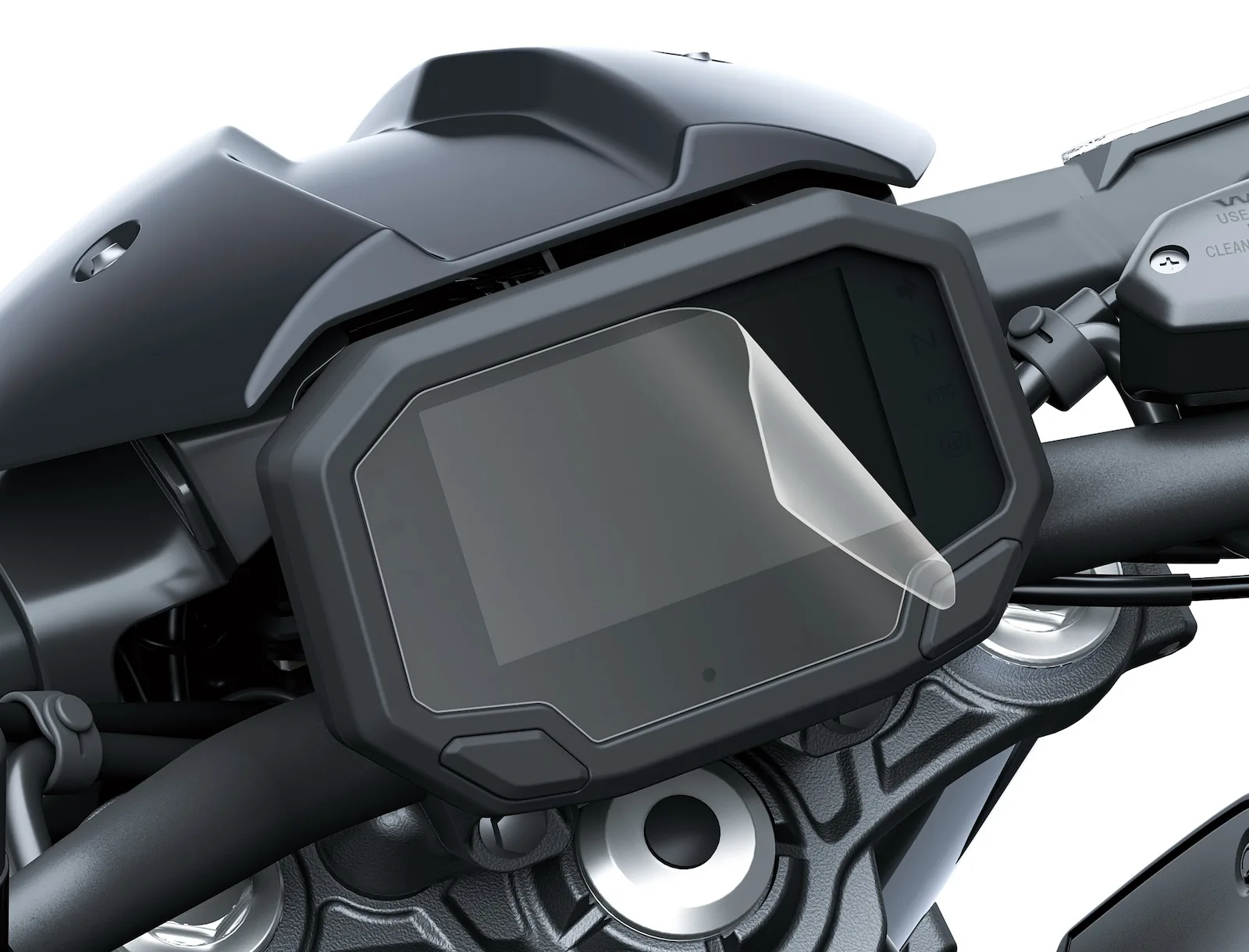
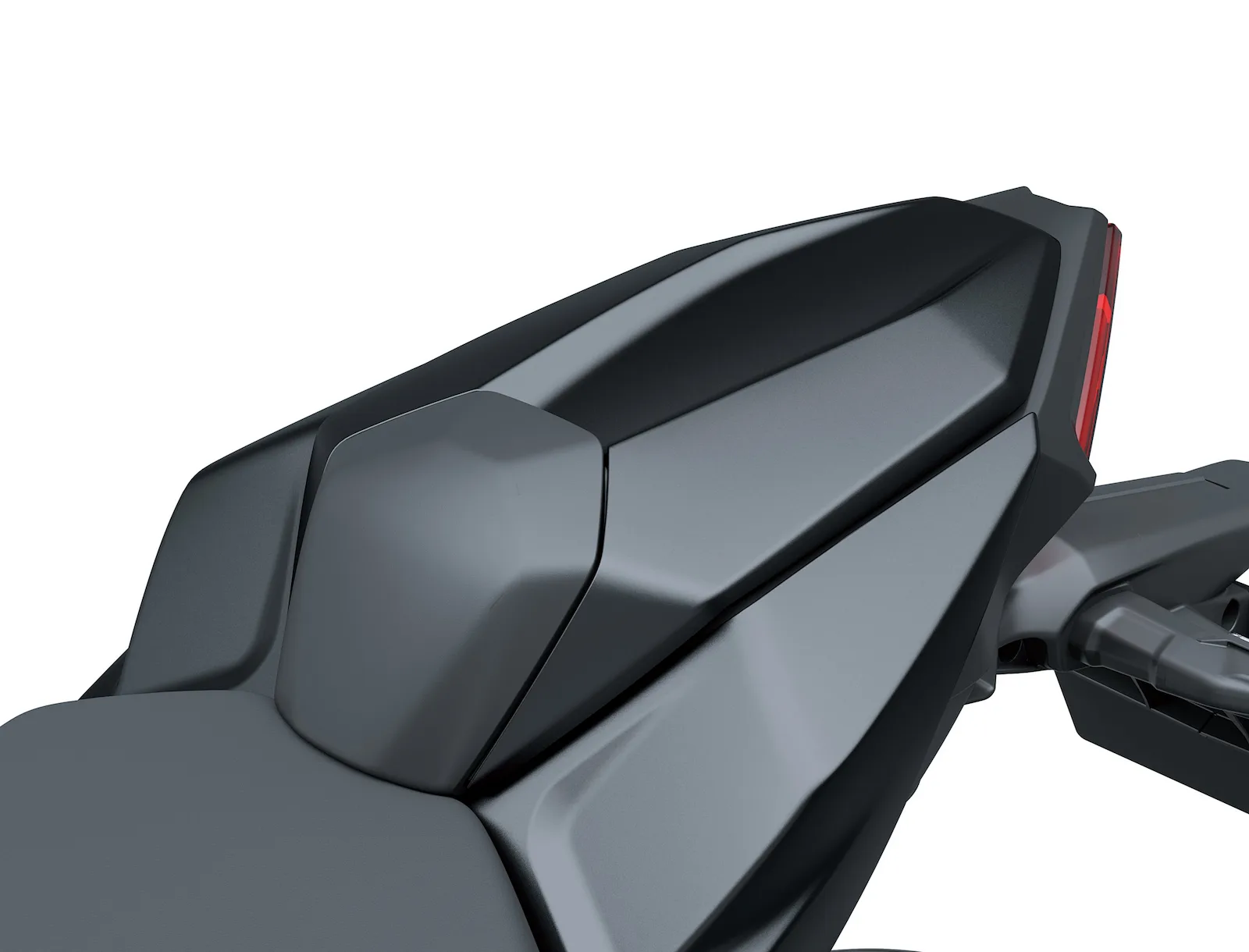
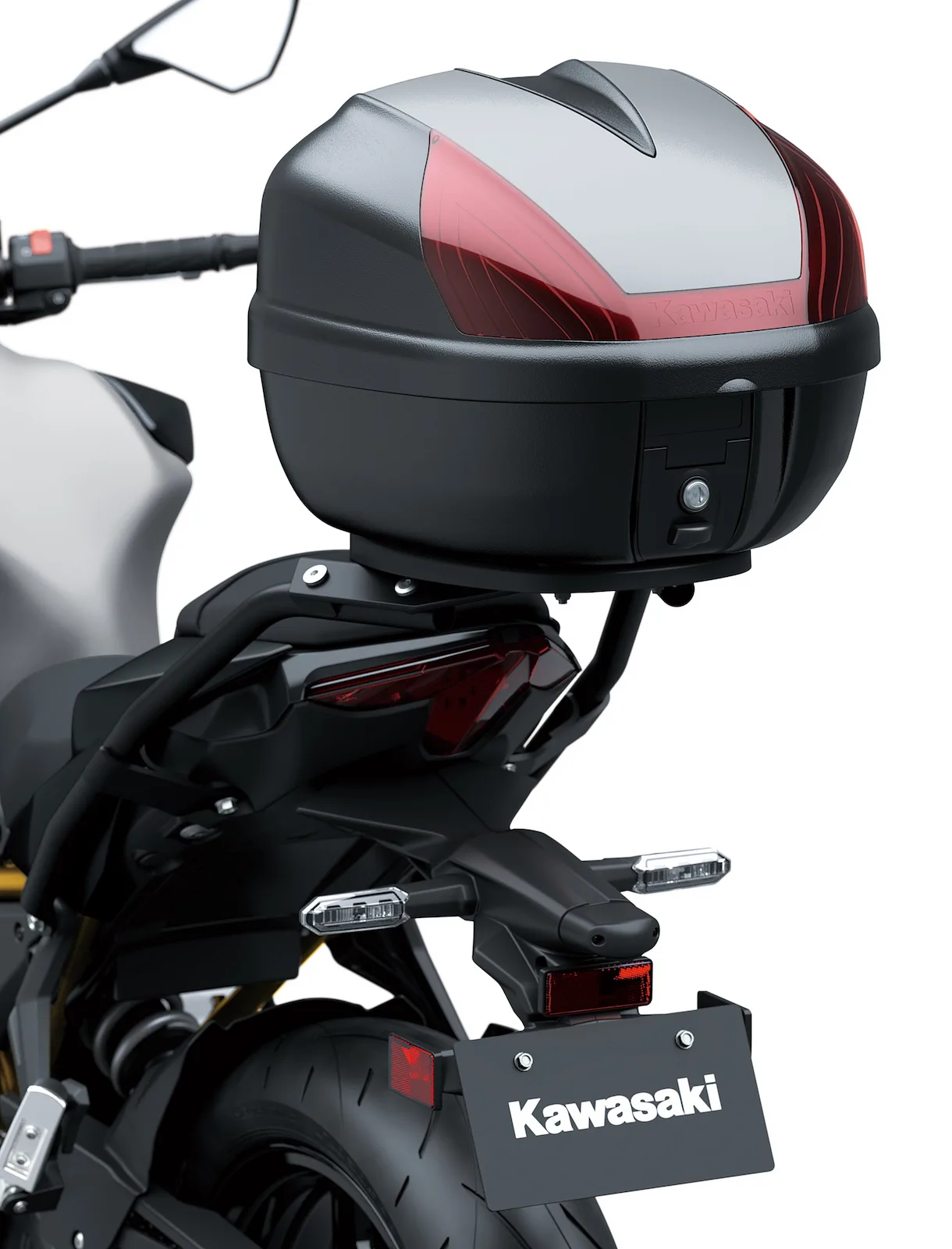
The new Kawasaki Quick Shifter is an option for clutchless upshifts. Other accessories include metal grab bars, a Style Seat in the Z900's two-tone finish, an ERGO-FIT Low Seat 20mm lower than stock, a pillion seat cover whose recessed shape blends into the tail for a solo look, a USB Type-C outlet inside the cowl and a taller smoked meter cover. For luggage there are semi-soft panniers (3.6 gallons, 6.6 lbs. each), a top case (7.9 gallons, 6.6 lbs. max) and a 1-gallon tank bag, plus rim tape, a helmet lock, a radiator screen, frame sliders, tank and knee pads and meter film.