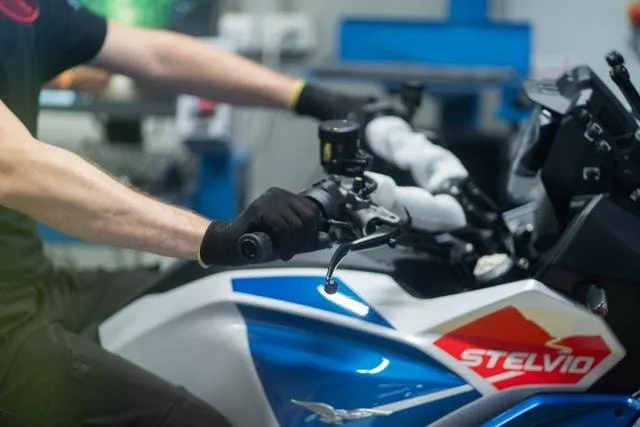
La historia completa
What it means for you
- The site is designed to receive visitors from around the world all year, not only on event days.
- Plan real time for the museum: over 160 bikes, themed sections and a view of the assembly lines.
- History fans can follow the brand from the first G.P. prototype to the current range, racing machines included.
- The note gives no opening hours or admission prices, so check with Moto Guzzi before planning a trip.
For Moto Guzzi road models, see our Moto Guzzi Bike Dossier.
Issued as the new site opened, Moto Guzzi's This is Moto Guzzi note pitches Mandello del Lario as a home rather than just a factory or a museum. The brand presents the Greg Lynn-designed complex as the start of its second century and says it will host visitors for the next 105 years, as long as the company has existed since 1921. For riders, the useful part is what you can actually see there.
The museum
The Moto Guzzi Museum moves into a new 3,000-square-metre building beside the factory. Its forms and finishes take cues from the bikes, and daylight from the lake and the Alpine foothills fills the halls. The collection holds over 160 restored motorcycles, from the one-off G.P. prototype that began the story to today's range, with the racers behind 14 MotoGP world titles. Themed sections cover cinema, competition, travel, the arts and military and police bikes, the halls will also stage events, and you can look out onto the new assembly lines.
Around the new home
The car-free outdoor areas span approximately 4,200 square metres, with two squares planted with 35 tall trees, a walkway overlooking production, the restored Wind Tunnel and a raised terrace above a central square with a giant eagle mosaic. The Motoplex Store, a café, workshop and event areas and a new auditorium add more than 1,200 square metres, all within the original factory boundary.
Behind the red gate
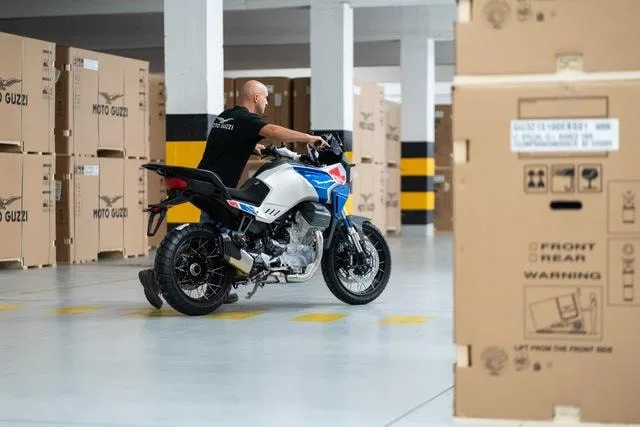
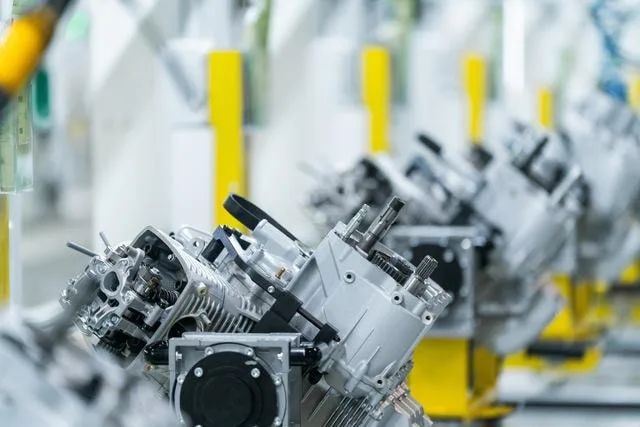
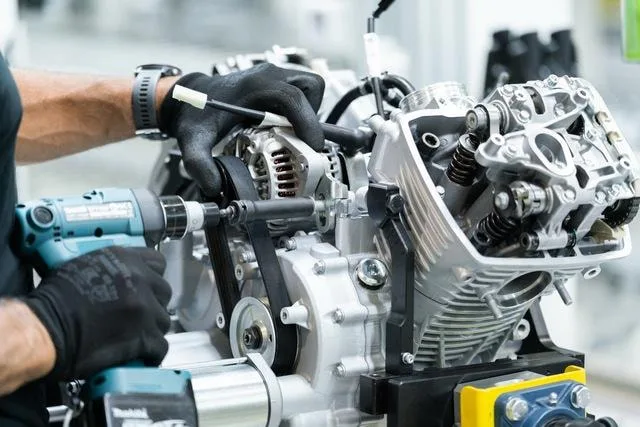
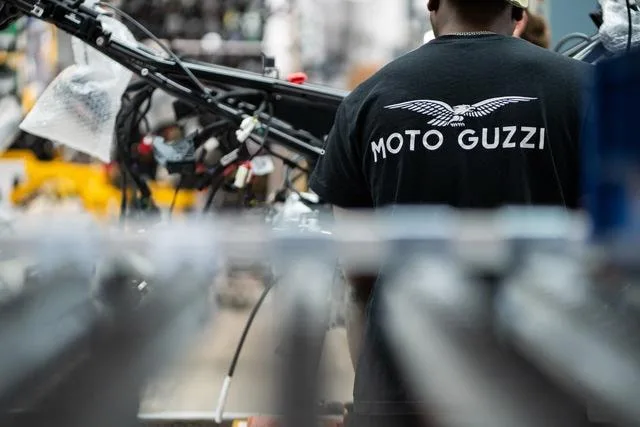
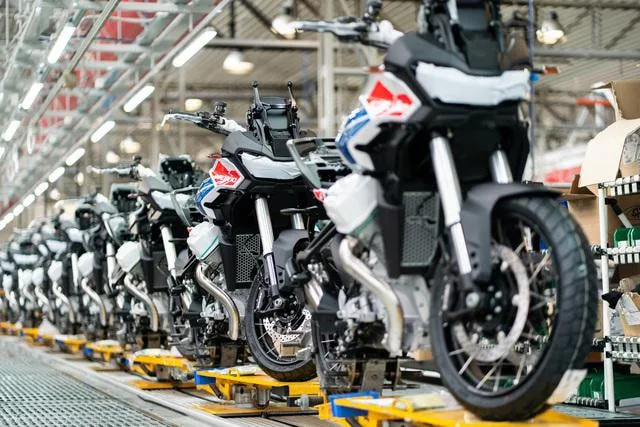
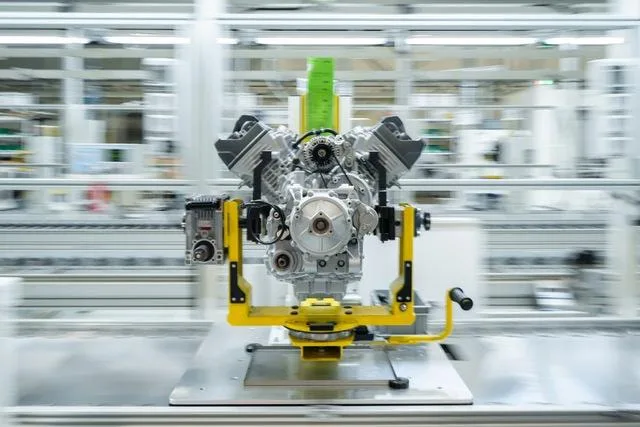
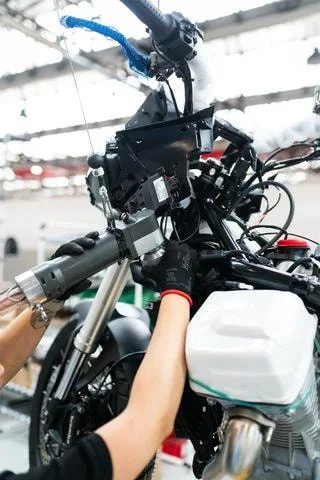
The production side gains 5,500 square metres of new buildings, for 38,000 square metres of factory space, plus 380 square metres of offices. Engines come off new automated lines, a robotic conveyor feeds final assembly, and Kilo robots from Piaggio Fast Forward in Boston take finished bikes to testing. The red gate on Via Parodi, in use since 1921, stays.