La historia completa
What it means for you
- Want a vote? Find the Triumph Originals page on Triumph's website before 13:00 BST on 22 September 2026; the release does not give the address.
- Thinking about your own custom? Every current Scrambler, from the 400 XC to the 1200 XE, shows up as a base here, and builds such as Dune 400 are pitched as ideas an owner could copy.
- None of the custom bikes come with prices or plans for sale in the release; treat them as inspiration, not products.
- Shorter riders: the Scrambler 1200 X seat is 820mm, or 795mm with the accessory low seat. For the smaller bikes, see our Scrambler 400 X Bike Dossier.
Triumph Originals, the brand's worldwide custom challenge, is back for 2026, and this time you get a say. Triumph teams from Spain, Italy, France, the UK, the US, Canada and China each chose a custom shop in their own country and handed it a current Scrambler. The theme is Time Capsule: every team picked a moment from the Scrambler's history and built a single bike that sums up how that period looked and felt.
Voting runs on a dedicated page on Triumph's website with photos and details of each bike, and it shuts on 22 September 2026 at 13:00 BST, UK time. The release does not print the link itself, so look for the Triumph Originals hub on Triumph's site. Your vote counts alongside the scores of an international judging panel.
Why the Scrambler, and what the brief asks
The Scrambler began as a custom. In the 1960s, riders who wanted to head off-road took the quickest road bikes around and fitted knobby tires, wide bars and high pipes so they could run in sand and dirt. Steve McQueen and Bud Ekins won races on machines like that, at the International Six Days Trials, at Big Bear and in the Baja 1000s.
For 2026 each team chose one chapter of that story and built the bike that best captures its style and attitude. Steve Sargent, Triumph's Chief Product Officer, says the current line, from 400cc to 1200cc, means "custom builders have more choice than ever to fire their imagination." The entries prove the point: the seven builds use four different base models.
The entries
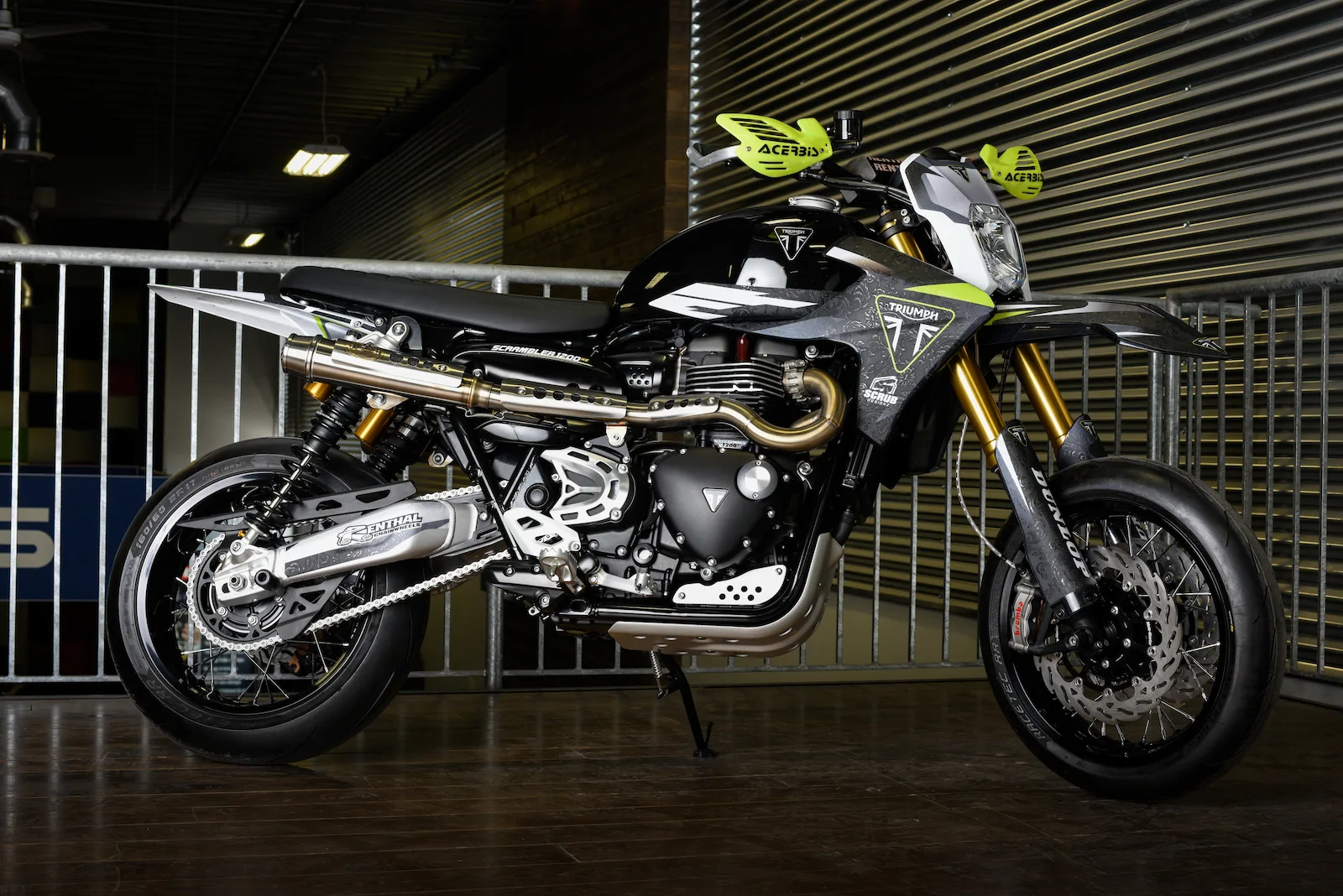
Canada (Motos Illimitées, led by Pascal Lauzon) took a Scrambler 1200 XE in an unexpected direction: a big-bore supermoto rather than an adventure bike, inspired by the TF 250-E motocrosser and a lifetime of off-road riding. It rolls on seventeen-inch Thruxton RS wheels with Moto-Master wave discs and a custom Zard exhaust with two silencers. The front indicators live in the radiator shrouds, the clocks and ignition have moved, the rear lights hide under the fender beside the plate bracket, and MX-style pegs and a lace-pattern graphic finish it. The nod is to the period when riders turned dual-sports into light, nimble street machines.
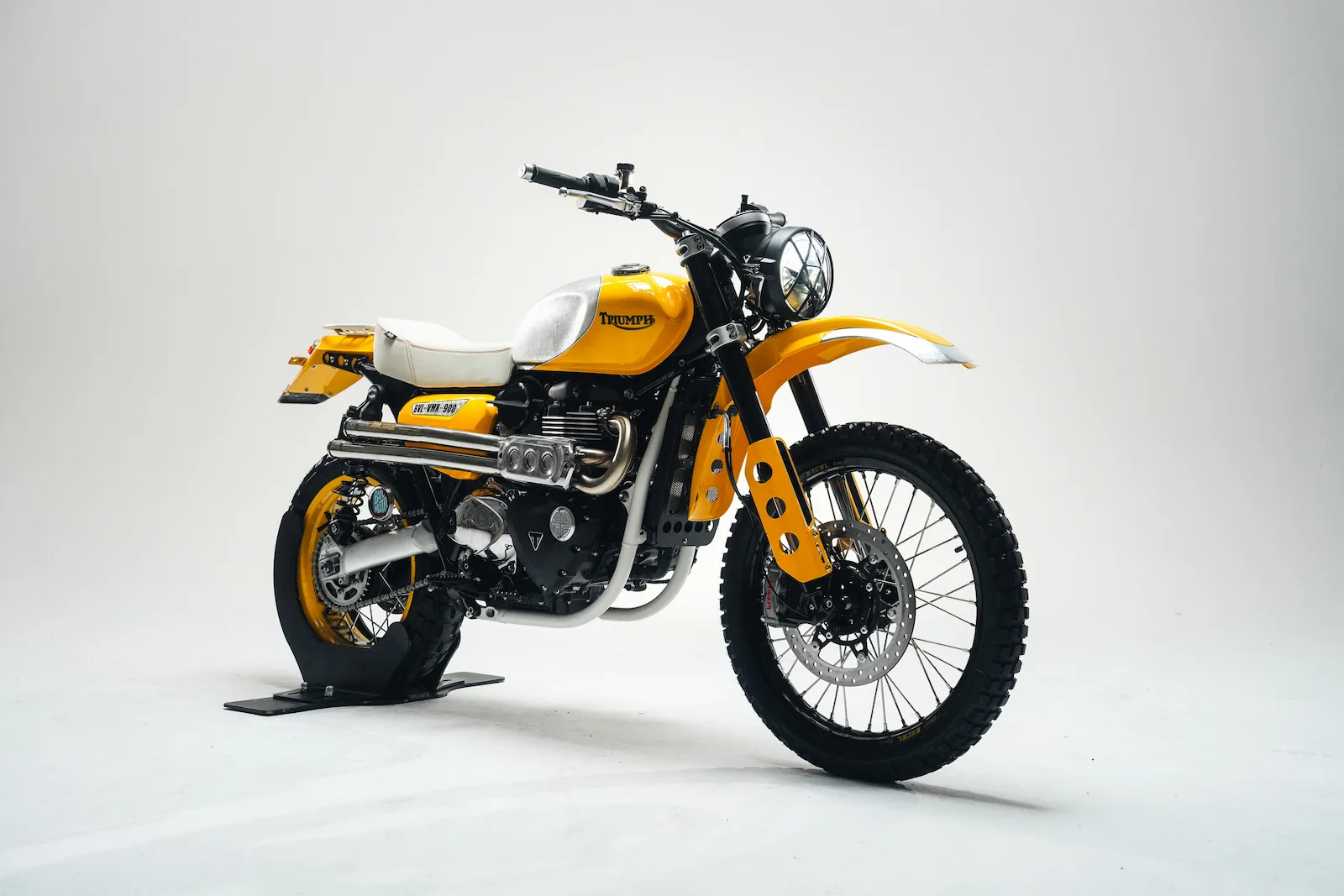
China (BVL Garage, led by JOMO) built the BVL-VMX-900 on the Scrambler 900, taking the 1981 TR7T Tiger Trail and the optimistic, adventurous mood of the 1980s as its starting point. Look for a bright yellow tank with silver leaf, a white frame, an oversized front mudguard and a hand-made rear one. Suspension and wheel changes lift the ride height for more off-road ability and a taller stance, and parts were made with new methods including metal 3D printing alongside traditional handwork.
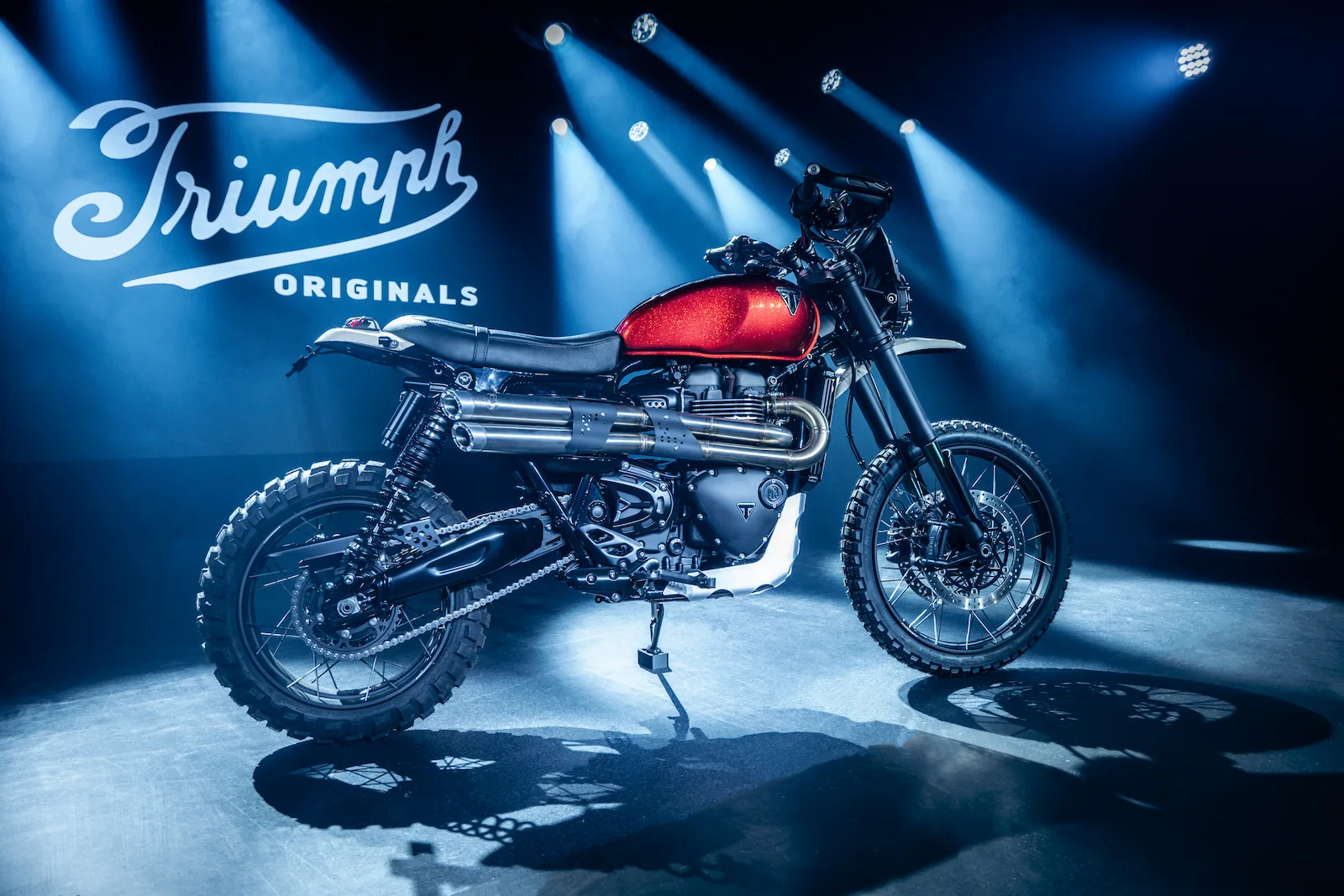
France (FCR Original with Triumph France, led by Sebastien Guillemot) built the Scrambler 1200 XE 'Red Dust'. The goal was a working machine, not a display piece: heavily modified, rooted in the 1960s look but not limited to it, and meant to perform in the dirt as well as it photographs.
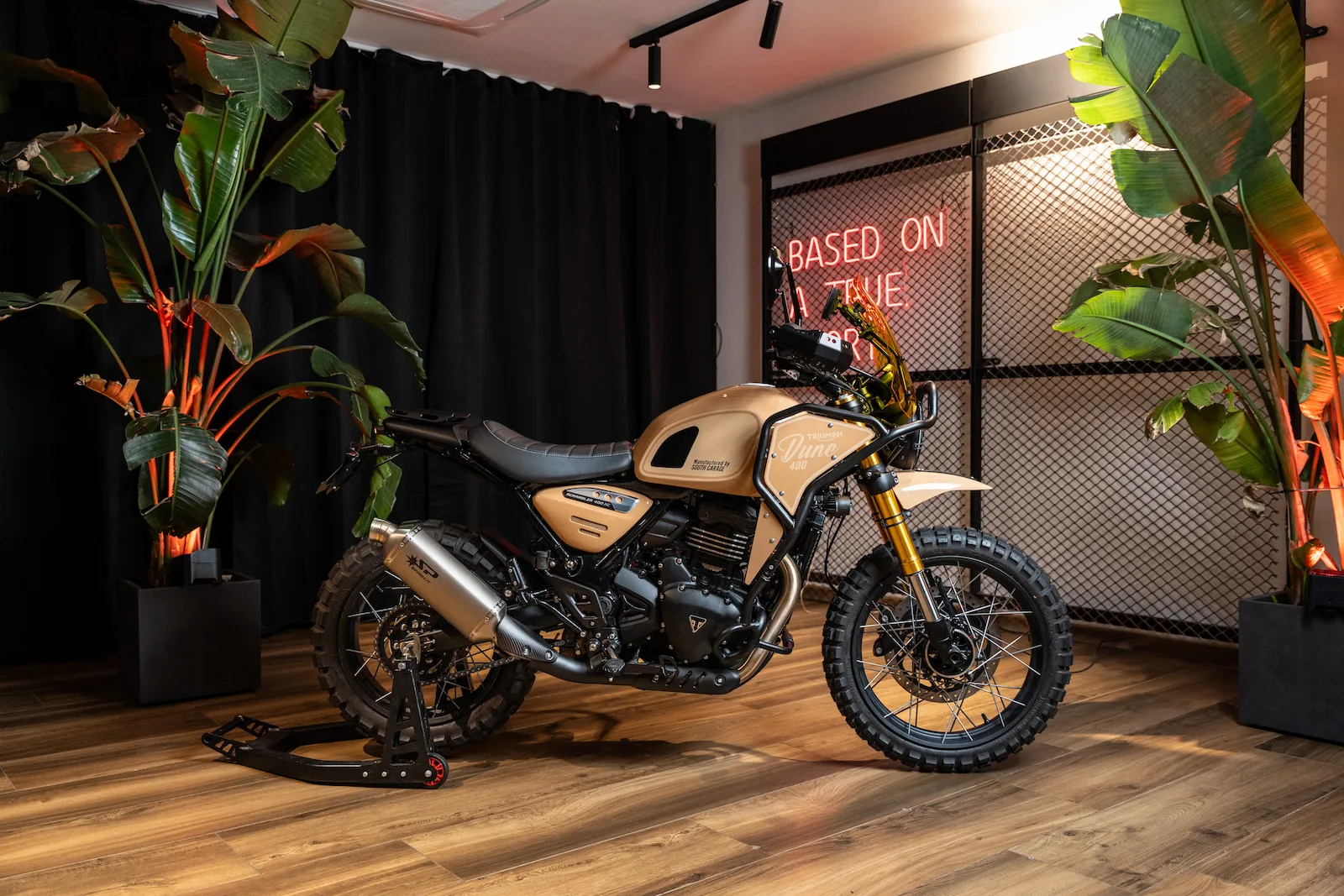
Italy (South Garage Motor Co, led by Giuseppe Carucci) started from the Scrambler 400 XC to make Dune 400, which mixes early Scrambler spirit with the desert racers of the 1980s and 1990s. Rally-style side fairings, a bigger screen, tubular crash protection, a high exhaust, knobby tires and sand-coloured paint give it its name. South Garage stresses that it is a practical bike other owners could copy, not an extreme show special.
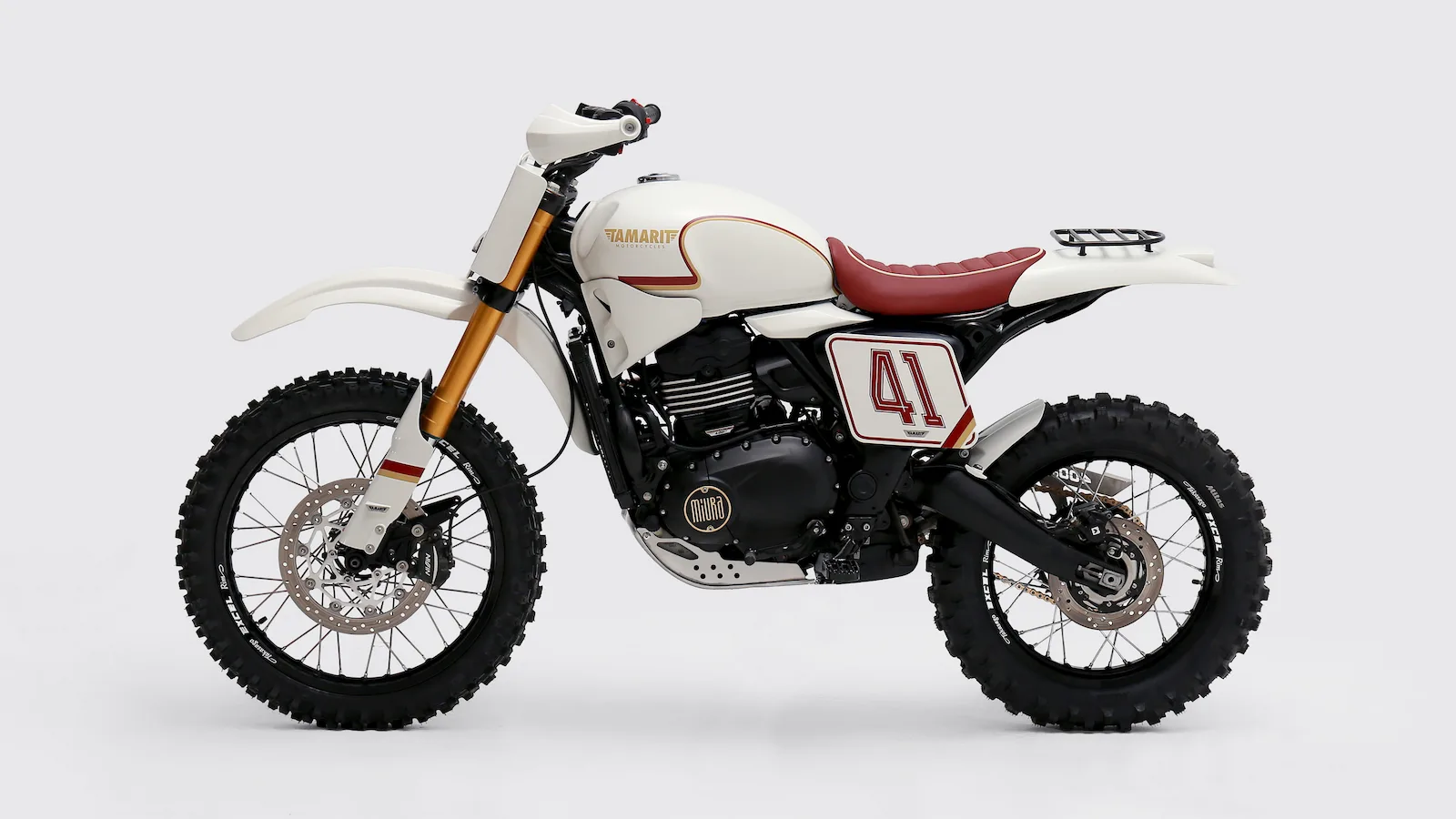
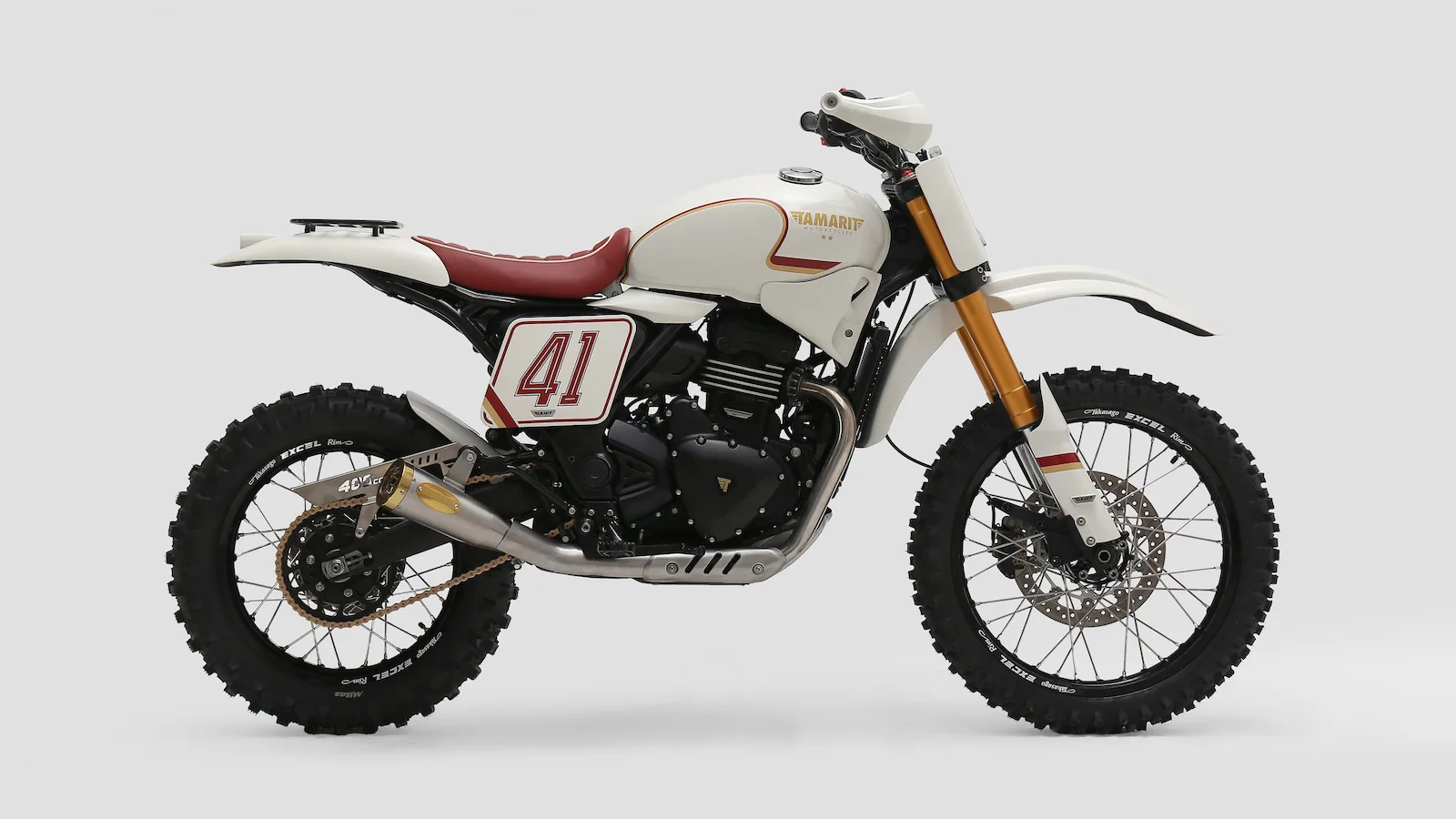
Spain (Tamarit Motorcycles, led by Quique Berna) also chose the Scrambler 400 XC. Tamarit began in 2010 as two friends turning a passion into a business; Berna and Matías Canales now run it from Alicante, the shop says it has delivered over 210 one-off bikes, and it works only on Triumphs, with a specialty in Bonneville engines. Berna judged last year's contest, which the team says sharpened its eye for finish and story. Its 2026 idea is duality: two eras, past and present, joined in one bike that should still look right in twenty years.
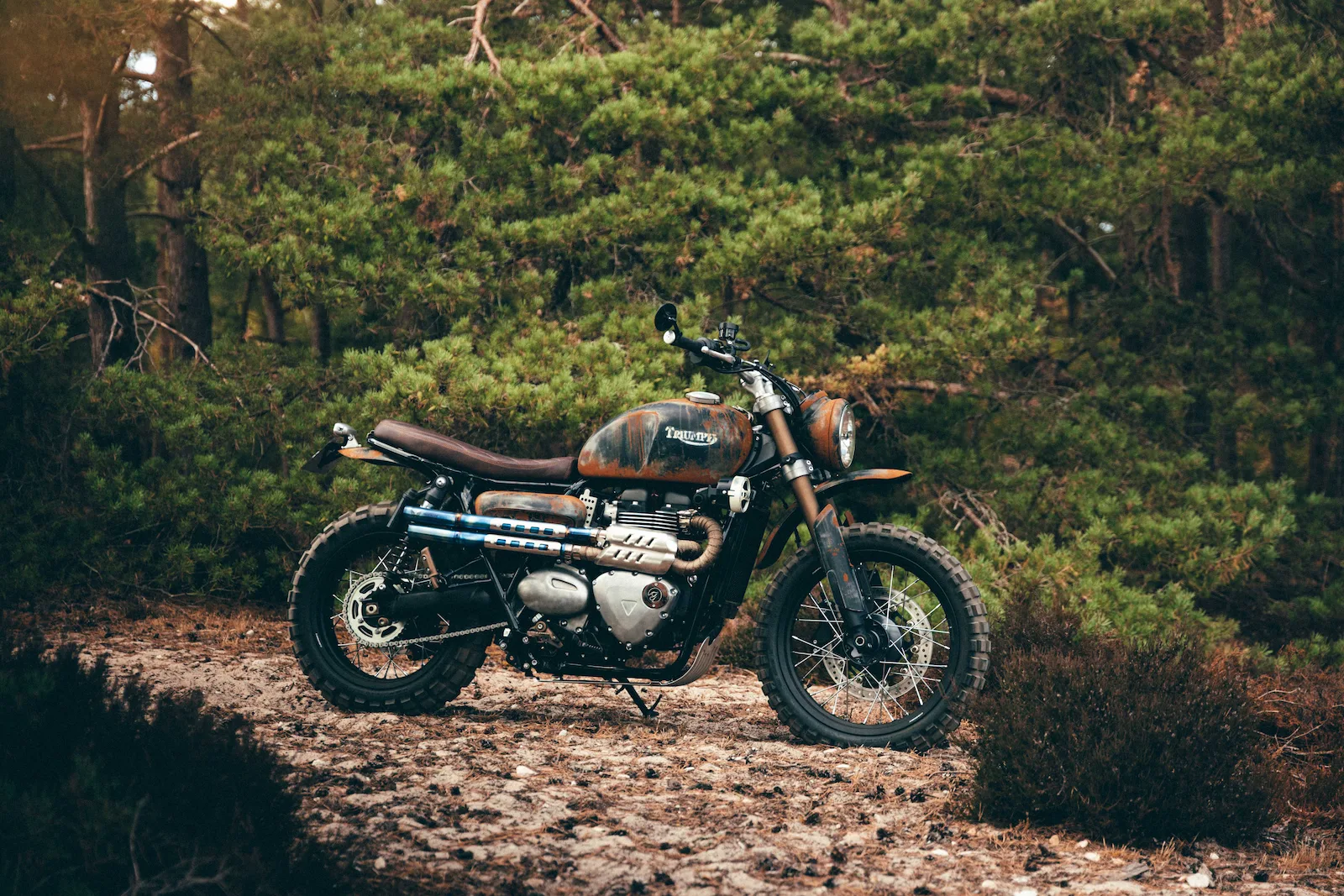
The UK (Stockwell Design, led by Charlie Stockwell) built on the Scrambler 900. Stockwell, which works with the LIND Group and Triumph London and has built customs for three decades, sums up its style as refined, functional and purposeful. This build draws on the raw, stripped-back Scramblers of the 60s and 70s, and is meant to look well used rather than worn out, as if it had toured the world and returned home through muddy English lanes.
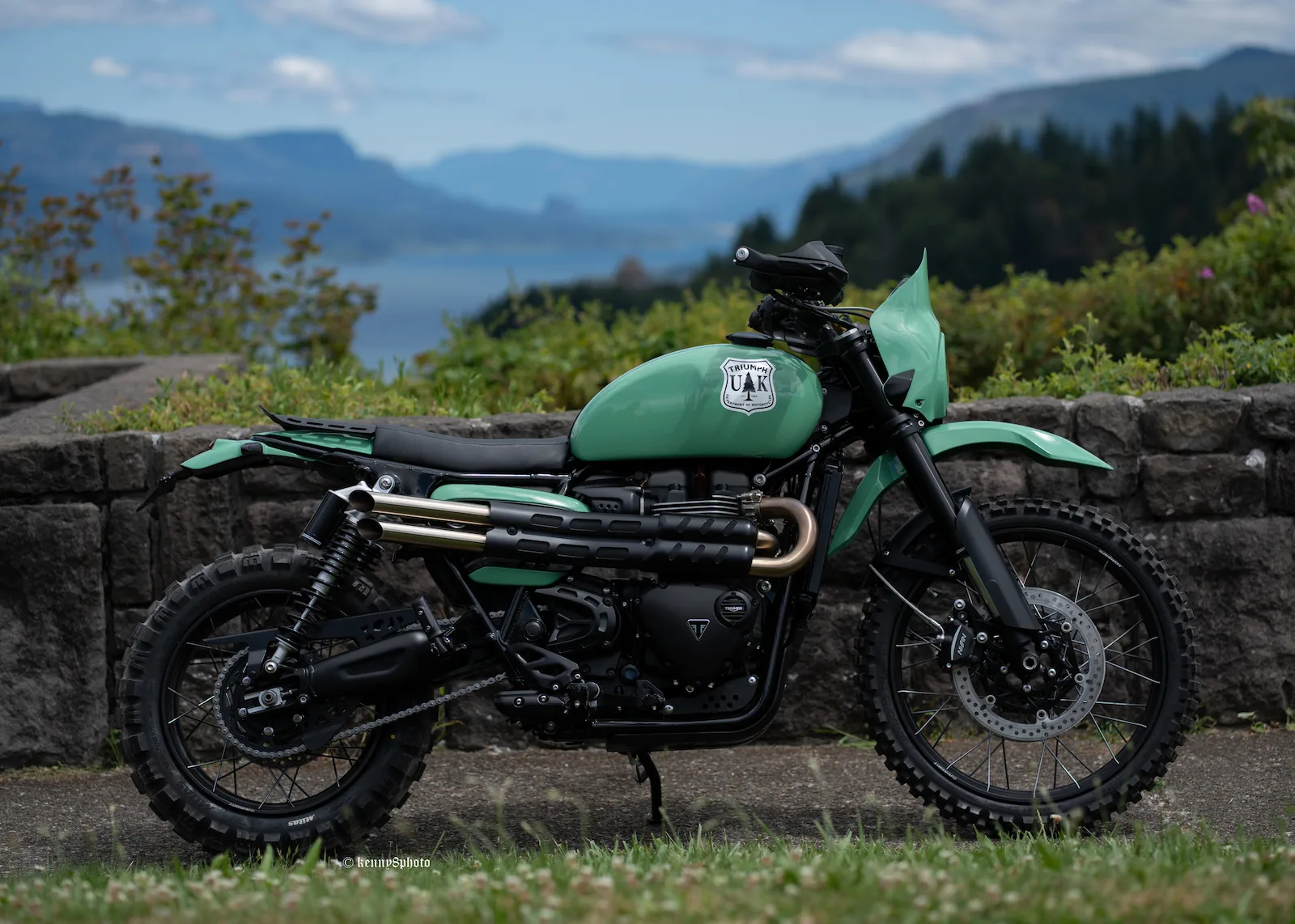
The US (Triumph Columbia River in Portland, Oregon, led by Liz Rubin) built A Tribute to PNW Adventure on the Scrambler 1200 X. It is designed for daily riding and draws on Pacific Northwest roads and scenery, the trucks of the US Forest Service and Rubin's childhood memories of Smokey Bear in the Rockies, with CROOKED brand parts and paint and logo work from Portland's riding community.
The judges
Steve Sargent leads the panel and will pick the builds he thinks show the most original design and build techniques, with his eye on technical creativity. Chase McQueen, Steve McQueen's grandson and Chad McQueen's son, looks after his grandfather's legacy with his sister Madison through partnerships and events, including Boys Republic, the school and treatment community where Steve spent time as a boy, and Steve McQueen's Festival of Speed.
Eric Hendricx is a bestselling author and journalist whose work has run in Revolver, Robb Report, Rolling Stone and Men's Journal; his latest book is Motorcycle Life. Satoshi co-founded Fonk Motorcycles in Kobe, Japan, where he is lead mechanic, and is known for his love of vintage Triumphs. Rolf Henniges founded the German magazine FUEL, which covers custom bikes and their builders, and has logged over a million kilometres across hundreds of motorcycles.
The Scrambler range behind the builds
Triumph revived the Scrambler name in 2006 and now sells it in five variants. Triumph says all of them sit you up with confidence, steer easily and feel tough enough to go anywhere, and it names the high-level twin exhaust and stripped-back styling as signature details.
The Scrambler 400 X is the starting point, with a responsive 400cc single, a light chassis, wide bars and long-travel suspension; the 400 XC takes the same platform and sets it up for more off-road work. The Scrambler 900 uses the 900cc Bonneville twin with ride-by-wire and 19-inch front and 17-inch rear spoked wheels. The Scrambler 1200 X puts the seat at 820mm, or 795mm with the accessory low seat, and the 1200 XE adds a 21-inch front wheel and a Scrambler-specific tune of the 1200cc Bonneville engine.
About Triumph
The notes to editors sketch the rest of Triumph's lineup around the Scrambler: the Bonneville-engined Modern Classics, the Trident, Daytona, Street Triple and Speed Triple roadsters, the Tiger adventure bikes, and the TR-series singles. They also describe Triumph's factories and subsidiaries worldwide.