The full story
What it means for you
- Each edition is limited to 100 numbered units and the release gives no prices, so if you want one, talk to your Ducati dealer now about allocation and cost.
- Track-only parts are part of several packages (open clutch covers, some fuel caps, the DesertX headlight grille): fit the road-legal parts before riding on the street.
- North American buyers: confirm the helmet and jacket come with your bike, especially for the DesertX 100 and Scrambler 100, where the footnote is unclear.
- Keep the matching set together: the certificate, the numbered Nespolo prints, the stand, the cover and, where supplied, the wooden crate all add to the bike's value as a collectible.
- The release names no engine or chassis changes beyond the listed parts and the dry clutch where fitted, so ask your dealer which service parts are specific to your 100.
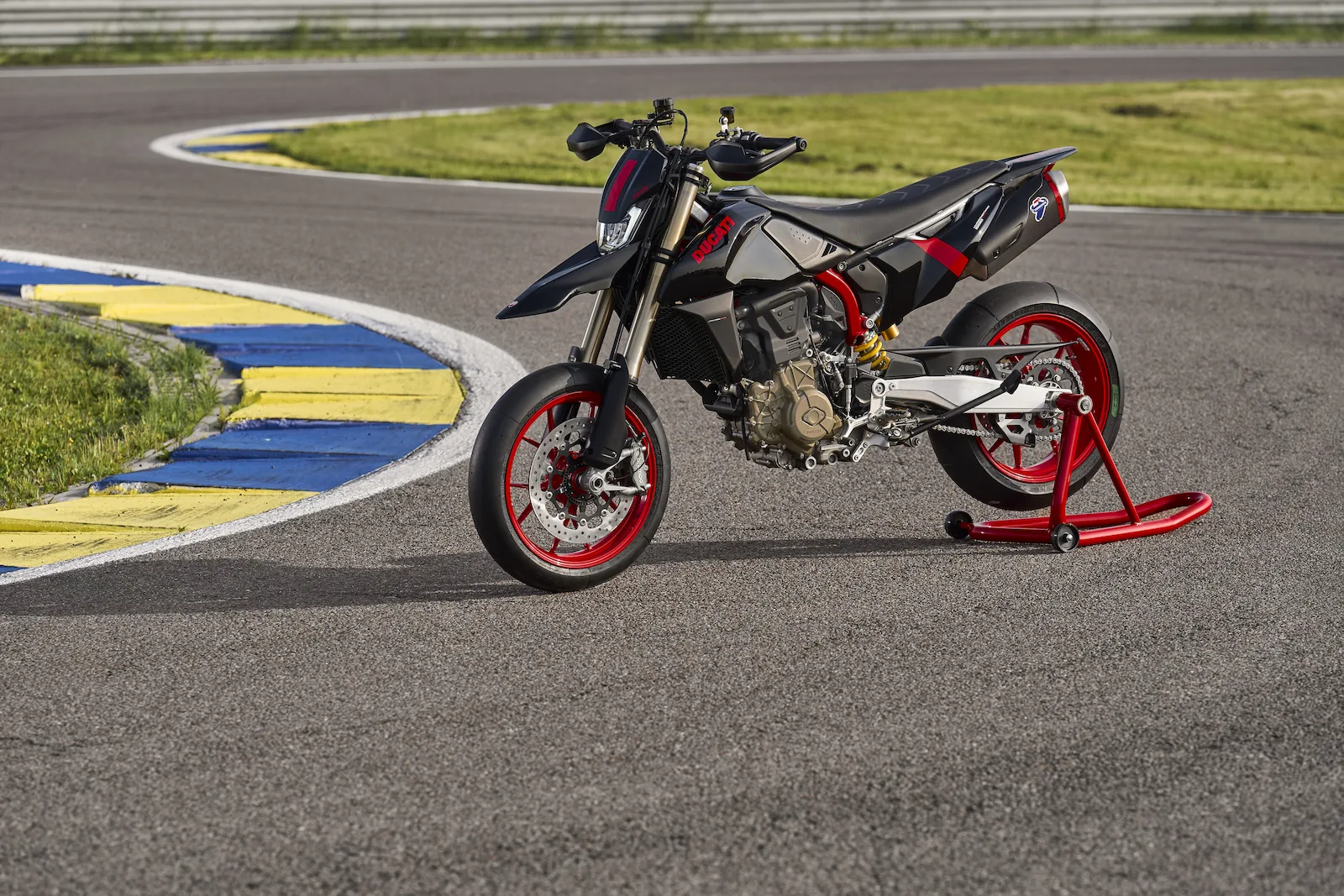
Ducati marked its centenary with the Collezione 100: ten special editions, one per model line, each wearing a livery taken from a famous Ducati of the past and each built as a numbered run of only 100 units. The collection covers the Panigale V4 S 100 and Panigale V2 S 100, the Streetfighter V4 S 100, Monster 100, XDiavel V4 100, Diavel V4 RS 100, Multistrada V4 RS 100, Scrambler 100, Hypermotard V2 SP 100 and DesertX 100. Every bike adds its own premium parts, a shared set of centenary details and two signed art prints by the Italian artist Ugo Nespolo, and North American buyers also get a matching helmet and jacket.
Ducati presented the bikes at Mugello, alongside a combined Collezione 100 livery for the two Ducati Lenovo MotoGP bikes and centenary products from partners Piquadro and Carrera. These are collector bikes for Ducati fans who want a piece of the brand's history in a model they can ride. The release gives no prices, no delivery dates and no engine or performance changes, so the differences are the parts listed for each model below.
What every Collezione 100 bike gets
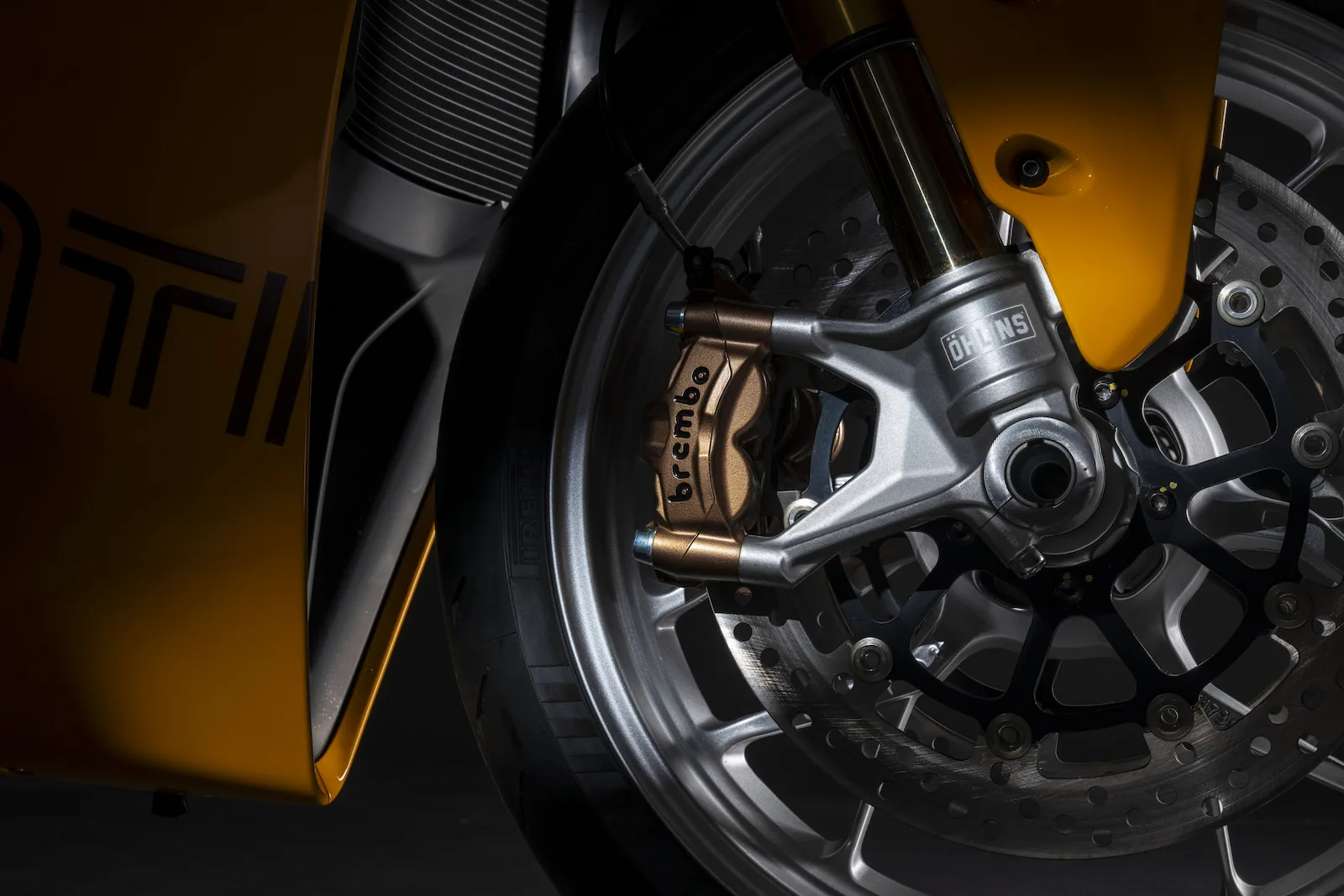
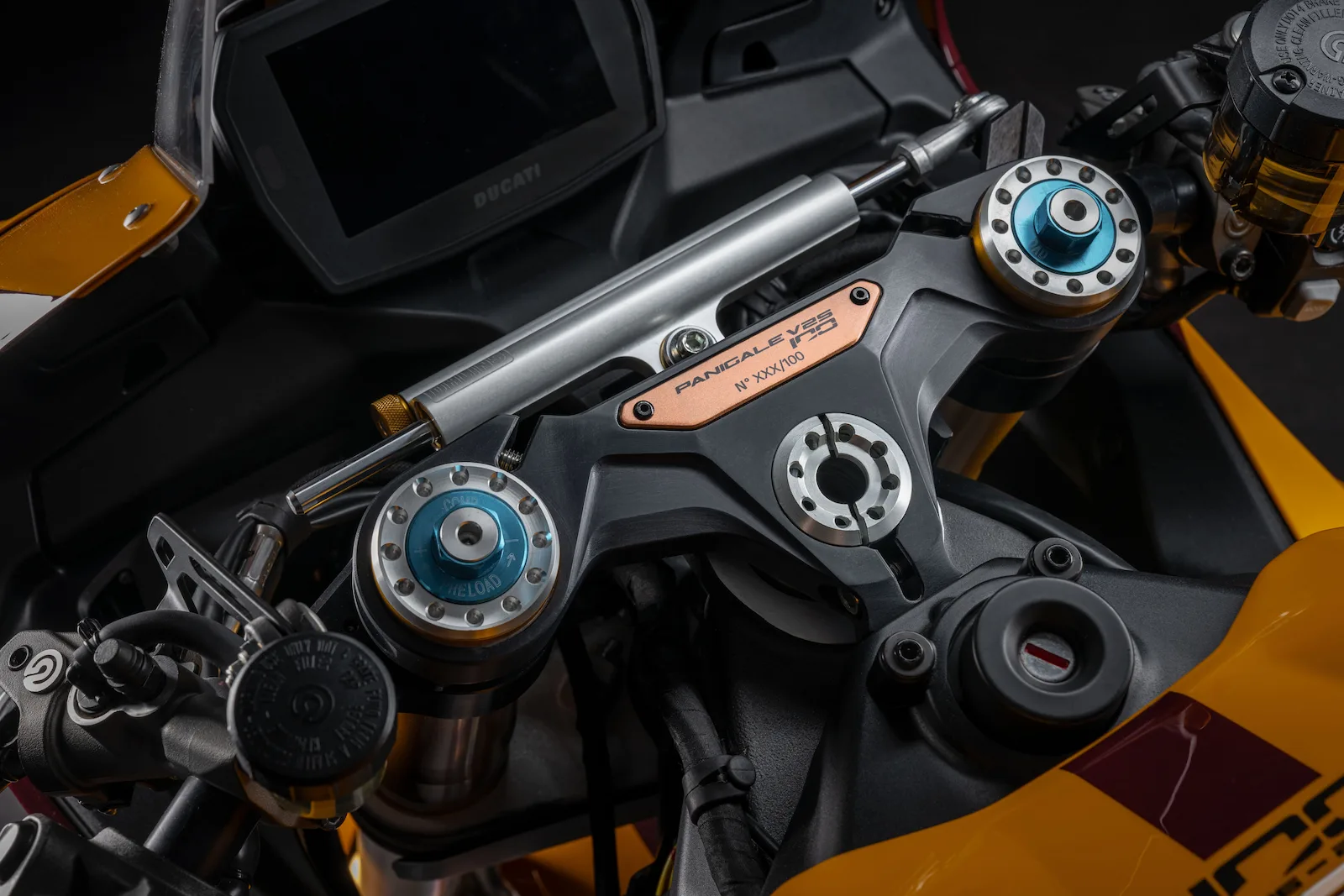
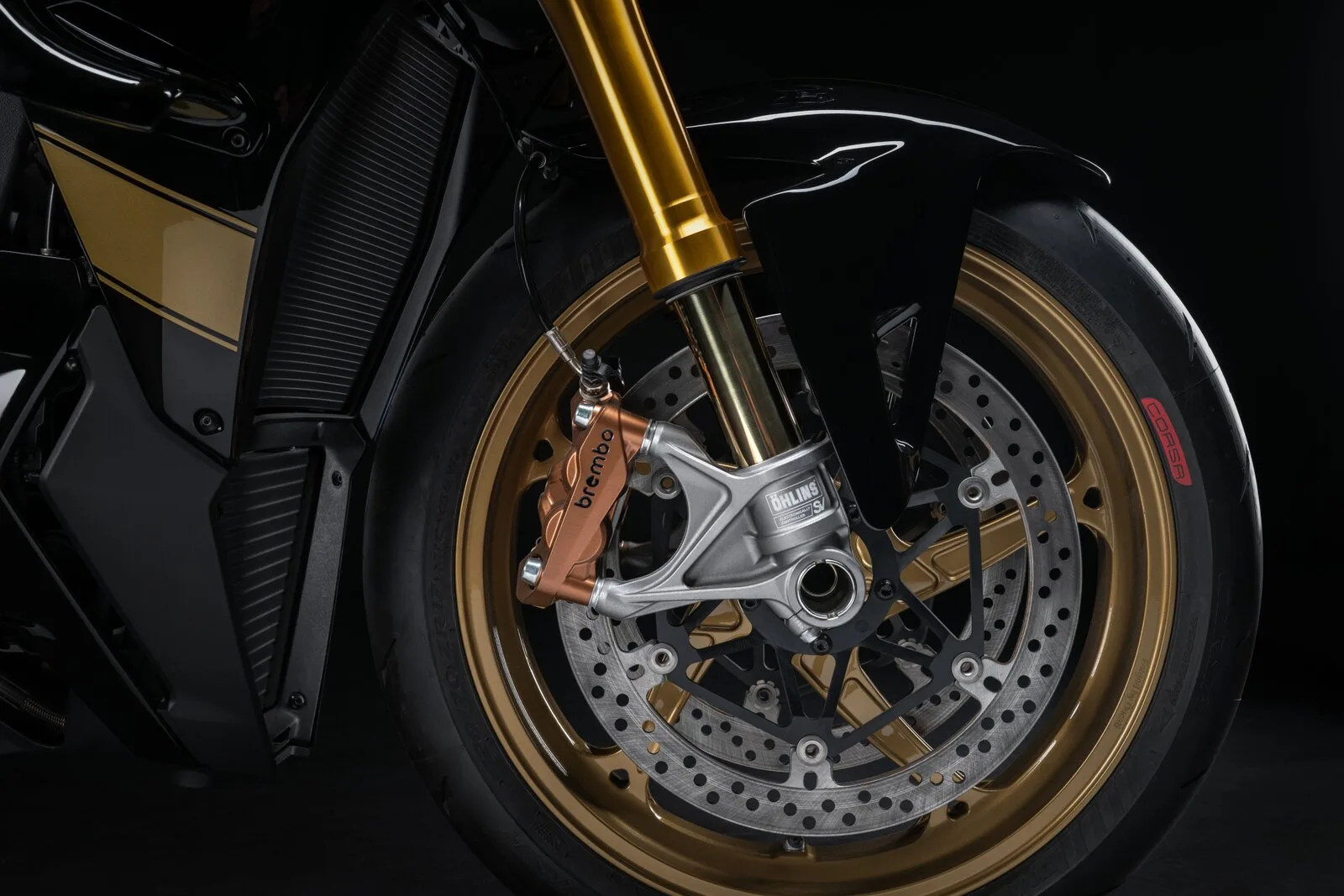
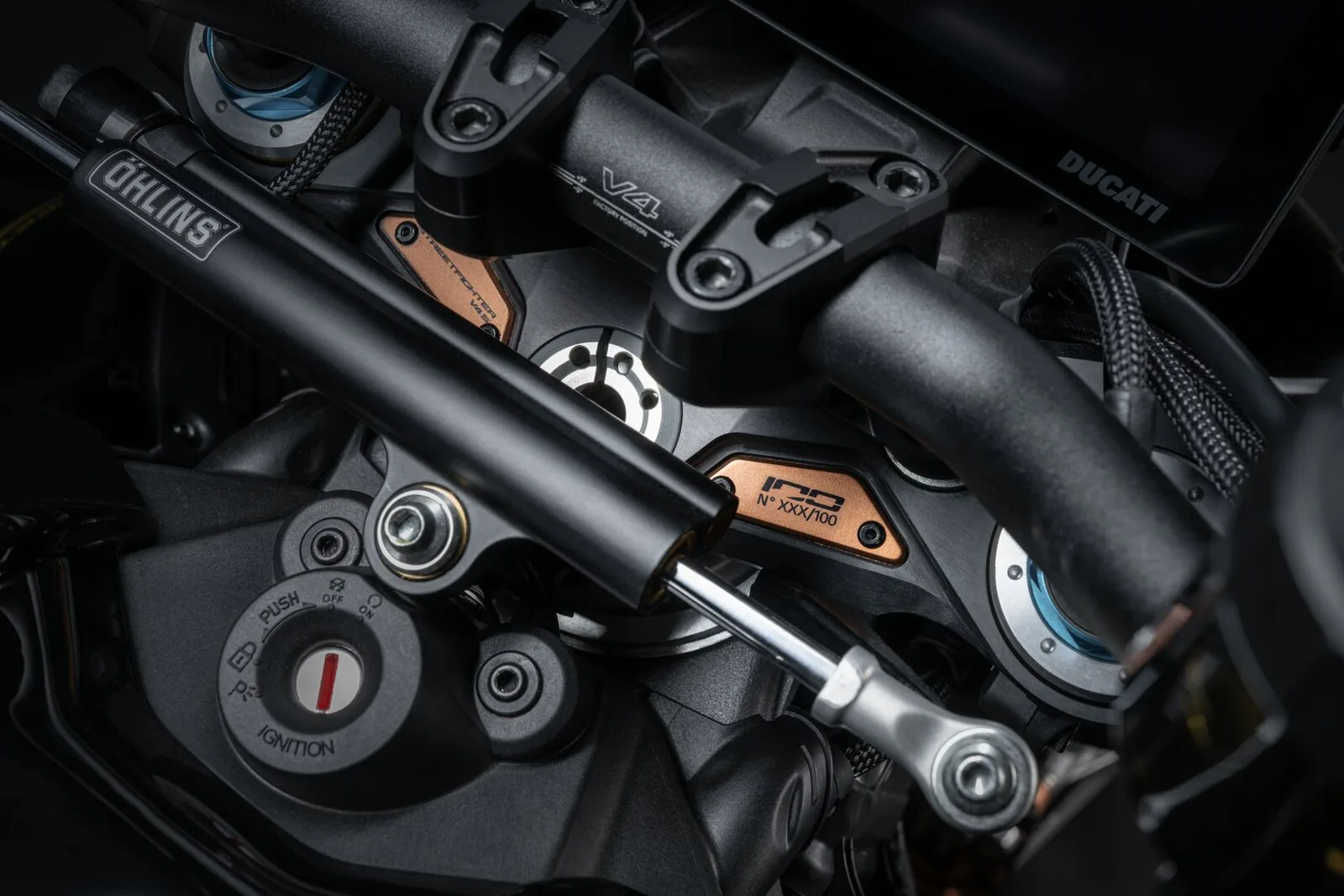
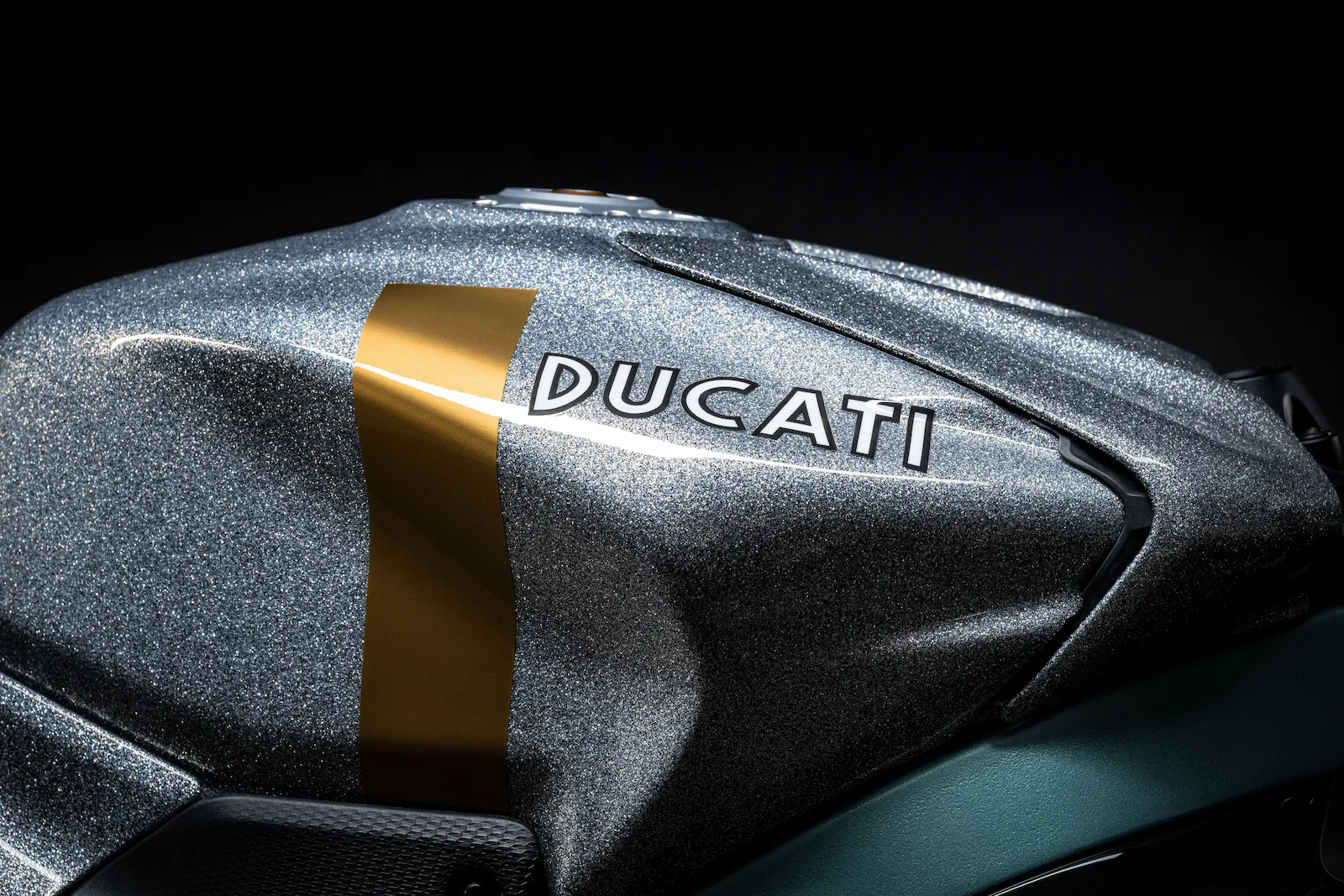
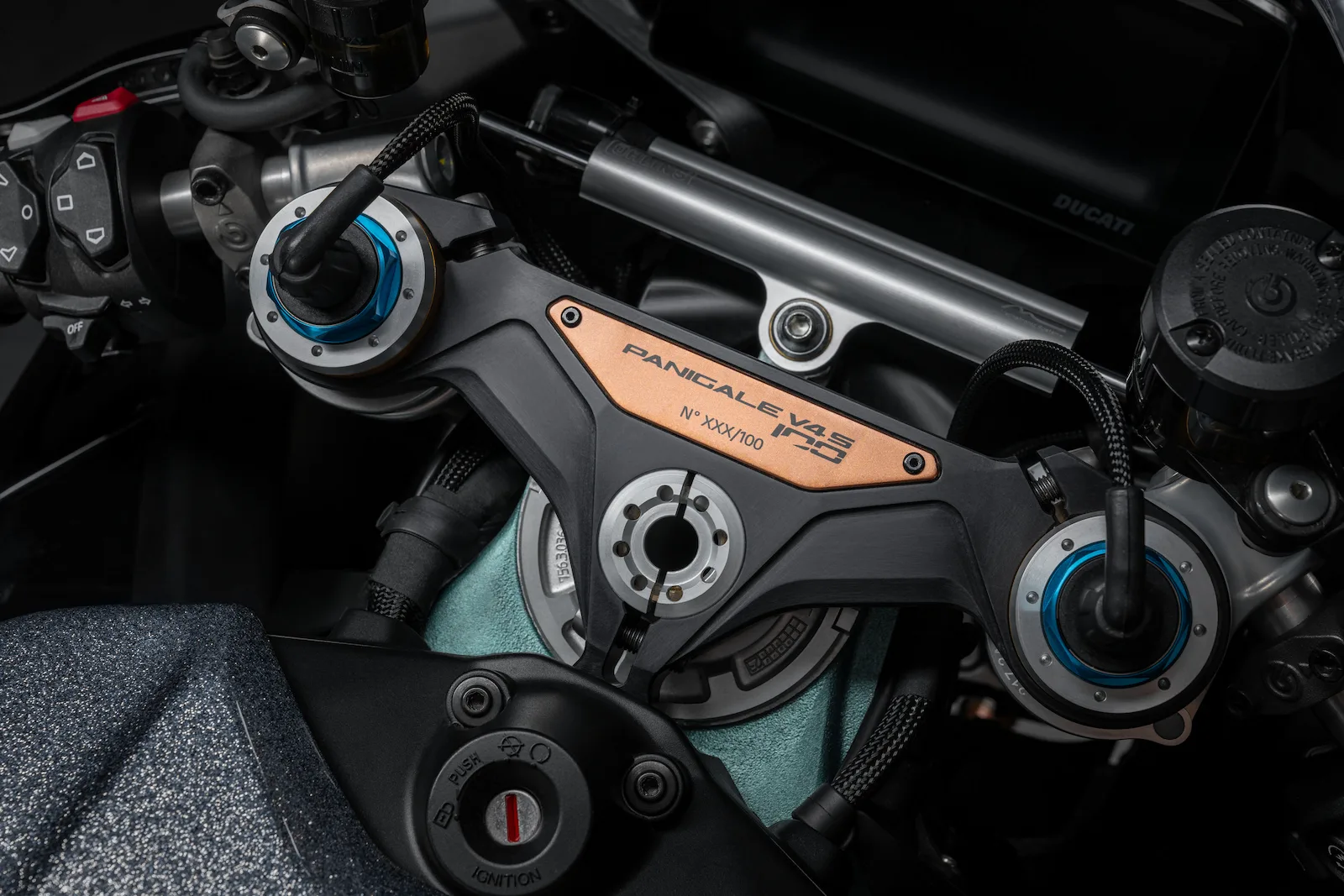
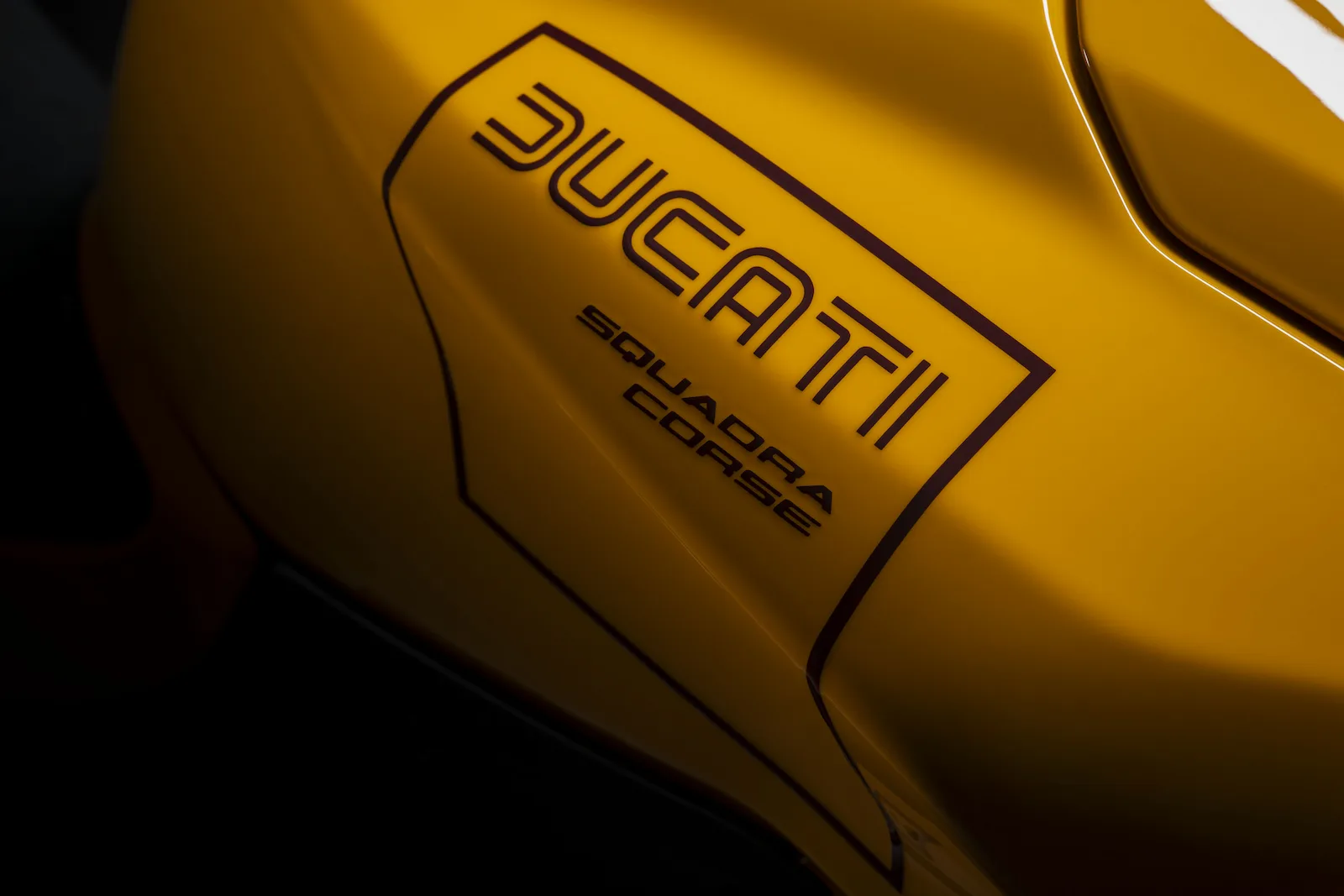
Each edition pairs a historic livery with a seat in Alcantara or leather carrying an embroidered Ducati logo. A new color, Centenary Bronze, is reserved for the collection: it appears on the brake calipers, on the fuel cap trim and on a plate with the model name and serial number, fixed to the steering head or the billet triple clamp. Several mechanical parts on each bike get their own color scheme to suit the livery, and Ducati also highlights a dry clutch, which it says is a first for its V2 models.
In the box you get a rear stand painted to match, a cover for the bike and an authenticity certificate. As on other Ducati collector bikes, the dash plays a special start-up animation when you switch on. In North America each owner also receives a limited-edition helmet and jacket in colors chosen to go with the bike.
One caution on the fine print: the release carries a footnote saying a feature is not available on the DesertX 100 and Scrambler 100, and its asterisks sit both on the dry clutch line and on the North American helmet and jacket line. Neither model's own description lists a dry clutch, so if either matters to you, confirm the exact package with your dealer.
Ugo Nespolo's art prints
The artist Ugo Nespolo, a major name in late 20th-century Italian art and a longtime Ducati fan, painted each of the ten bikes and the historic machine behind its livery in his bright, energetic style. Every Collezione 100 bike comes with a pair of numbered prints of that work, signed by Nespolo and carrying the same serial number as the motorcycle. For a collector, matching numbers on the bike, the certificate and the art are part of what makes the set worth keeping together.
The Mugello reveal and the MotoGP livery
Ducati unveiled the collection on the main straight at Mugello, where it set up what it calls the first art exhibition staged in MotoGP history: a gallery walk of Nespolo's works that ended with the ten bikes.
At the same event Marc Marquez and Pecco Bagnaia showed the special livery their Ducati Lenovo Desmosedici GP bikes would race in. It mixes historic Ducati logos with geometric shapes, puts all ten Collezione 100 graphics on the fairing, uses glitter on the centenary details and the 1926–2026 dates as a nod to the 750 Imola Desmo, and pairs a modern front fairing with an oval number plate in a retro font.
Partner products and where to see the bikes
Two partners launched centenary products at Mugello. Piquadro made a series of four rucksacks inspired by the collection, and Carrera, official sponsor of the Ducati Lenovo team, showed Anniversary Edition sunglasses in a numbered run of 1,000 pieces.
After Mugello the ten bikes were set to go on public display at World Ducati Week on July 3, 4 and 5, then at the Goodwood Festival of Speed, before returning to Bologna for showings in museums around the region.
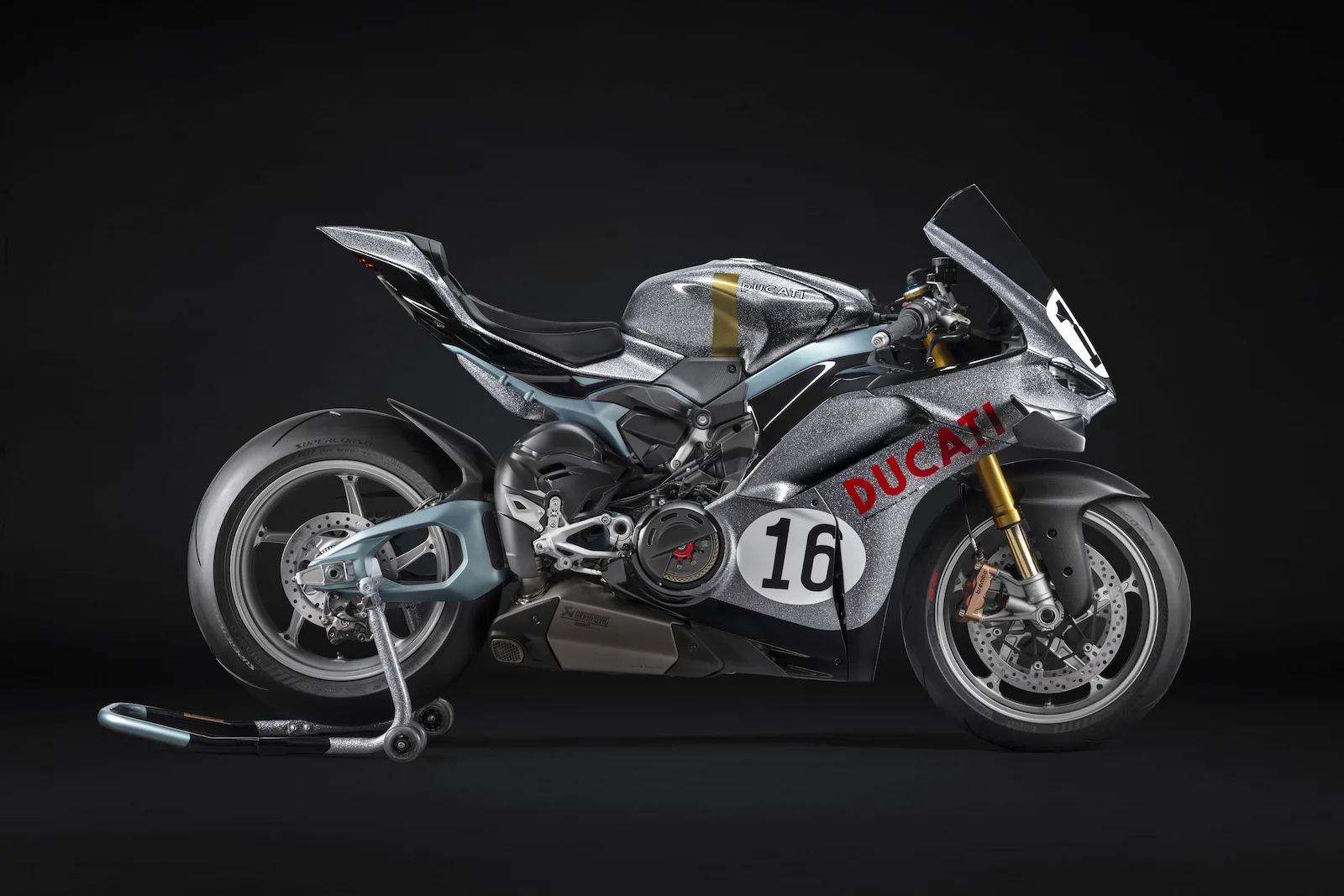
Panigale V4 S 100
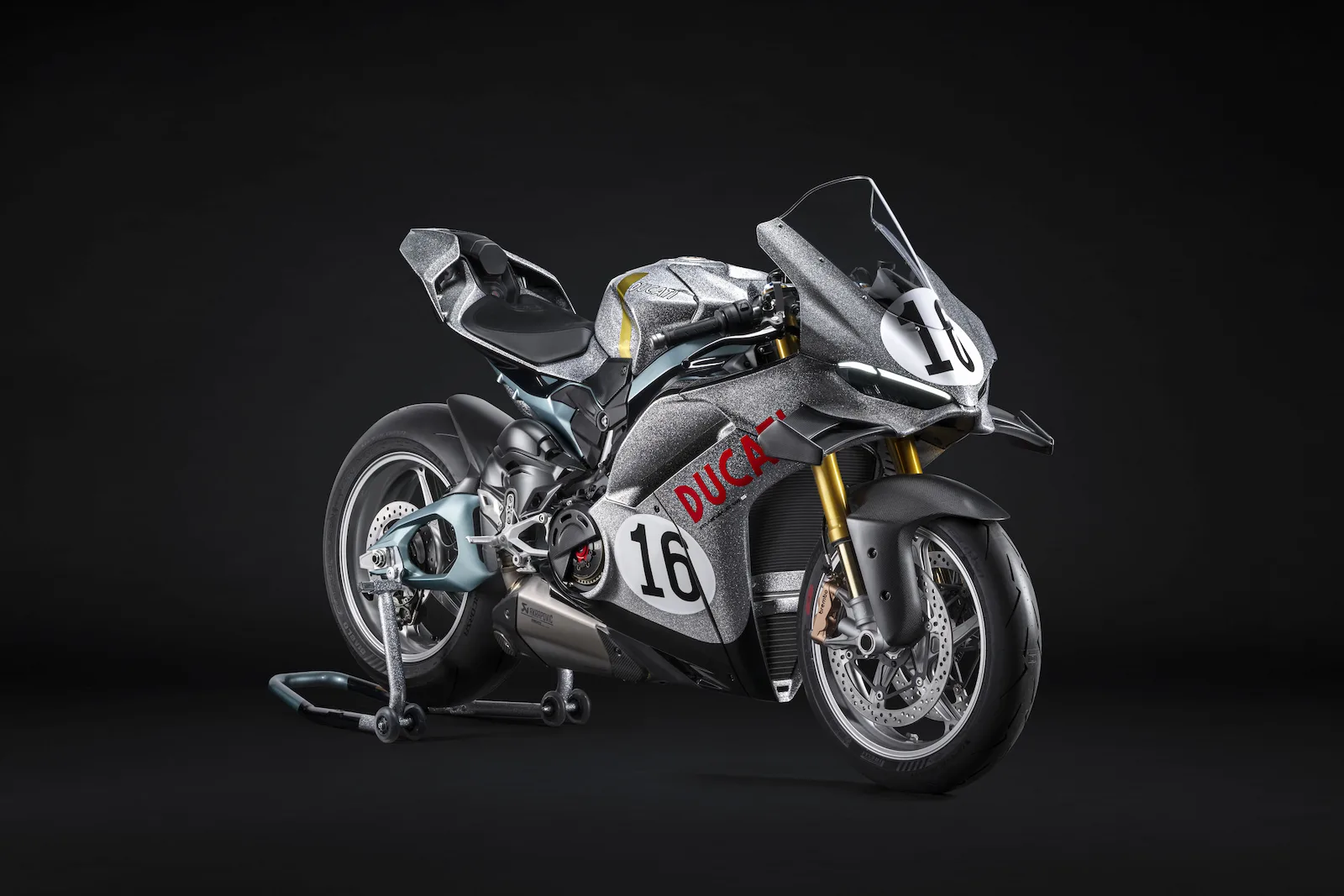
Livery source: the 750 Imola Desmo that Paul Smart and Bruno Spaggiari rode to win the first Imola 200 Miles in 1972. That bike used the 750 GT's twin-cylinder base with desmodromic valves added and the bodywork of the 500 GP racer, finished in the glittery silver Ducati had used before on its 250 and 350 Desmo singles. Beating Giacomo Agostini at Imola made Ducati hugely popular and led to the 750 Supersport Desmo road bike in 1973.
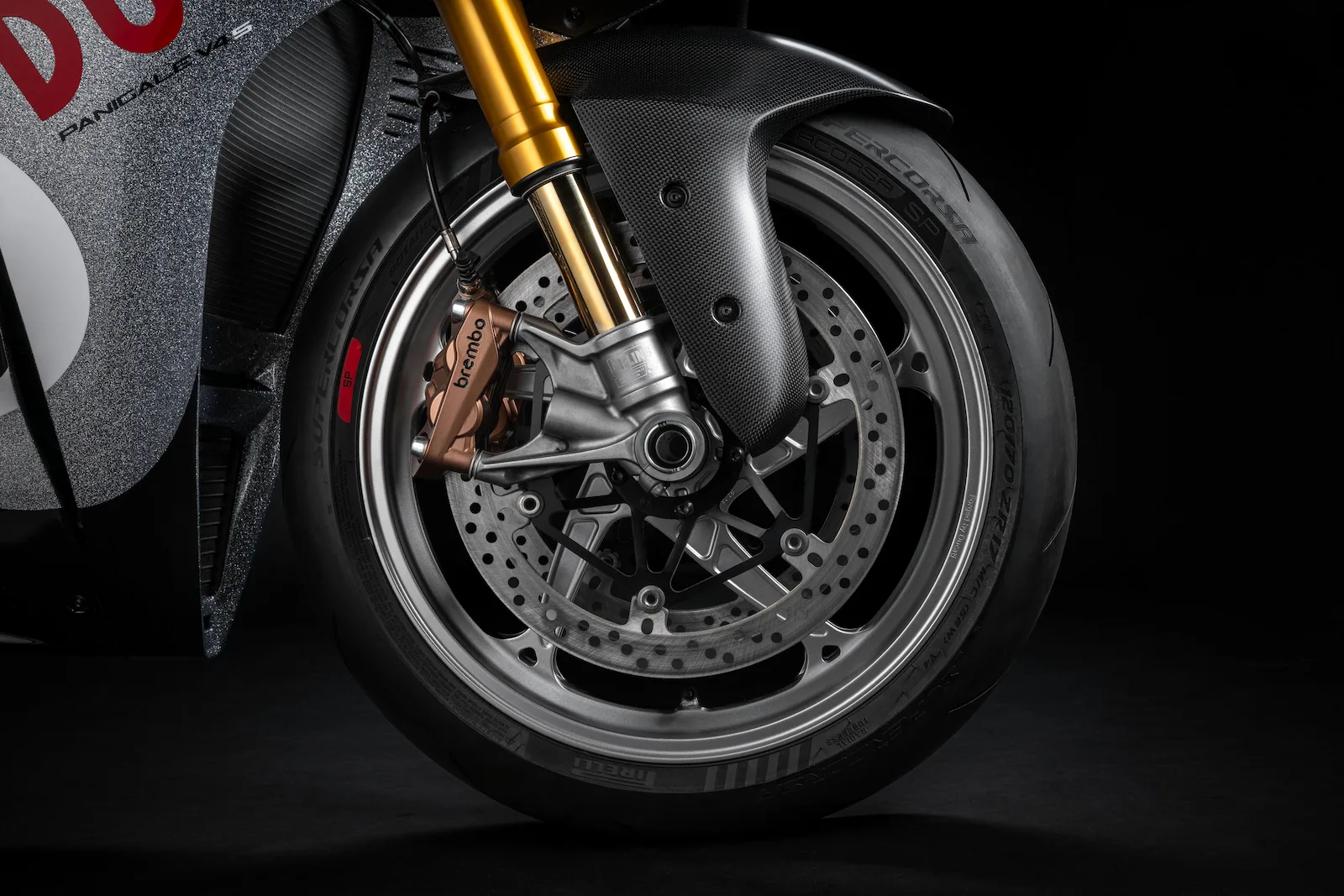
The V4 S 100 gets an Alcantara seat with the Ducati 100 logo, carbon-fiber wings, mudguards and engine and exhaust covers, a Centenary Bronze plate on the billet aluminum triple clamp, the dry clutch and a titanium and carbon-fiber Akrapovič exhaust that Ducati says gives it a sound of its own. Kits to remove the mirrors and license plate, an open clutch cover and a billet aluminum Centenary Bronze fuel cap are included for track days, and the bike ships in a custom wooden crate.
Panigale V2 S 100
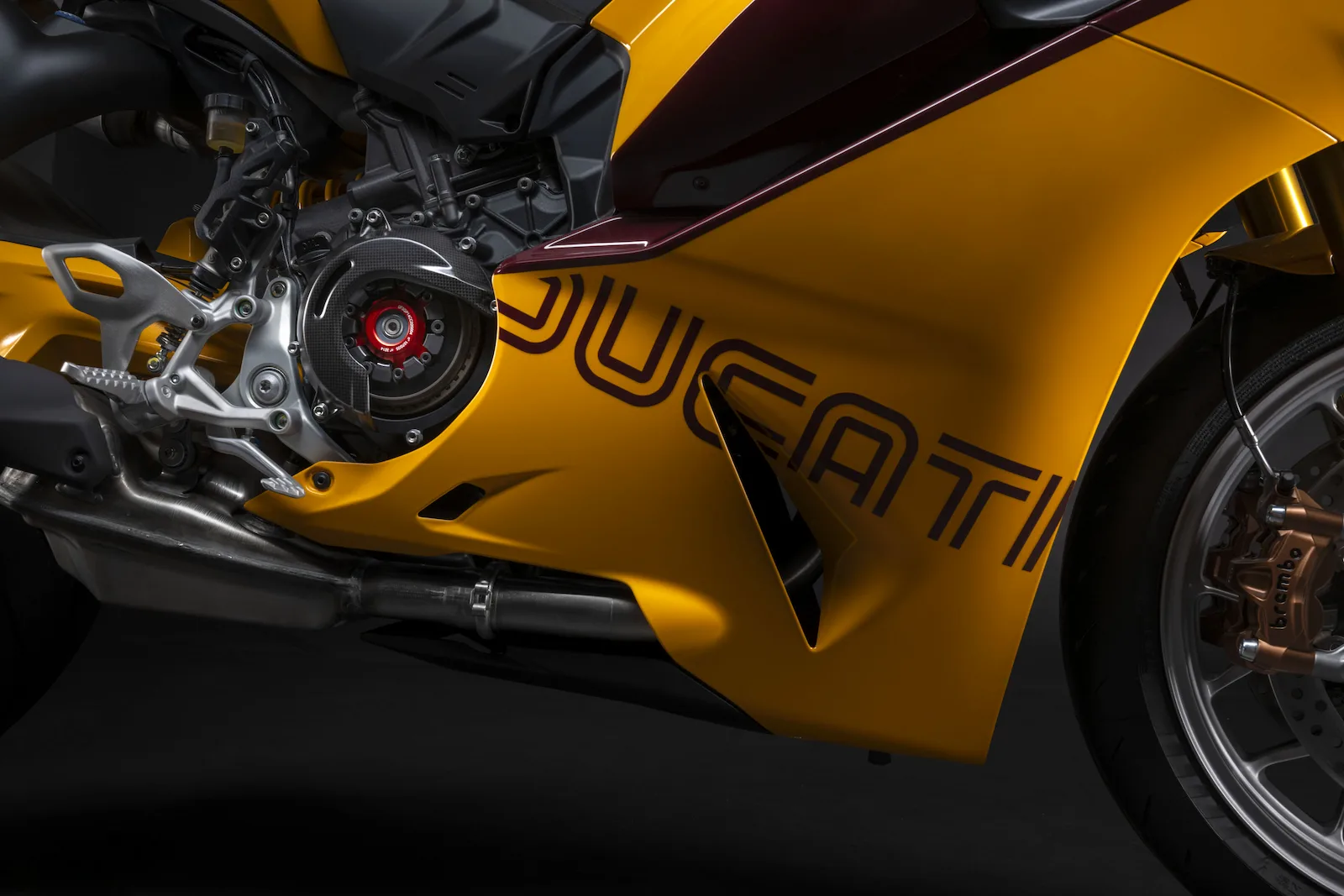
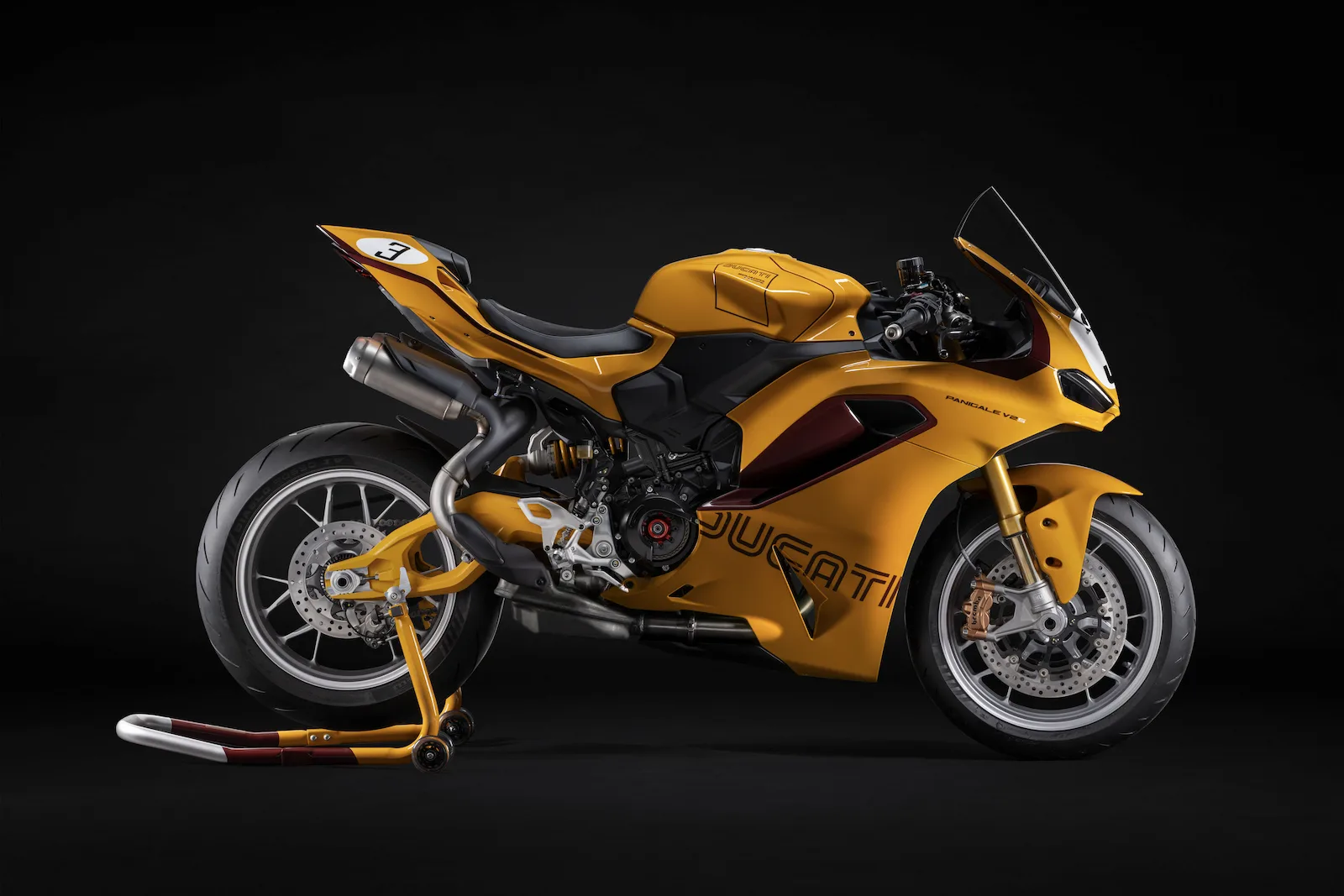
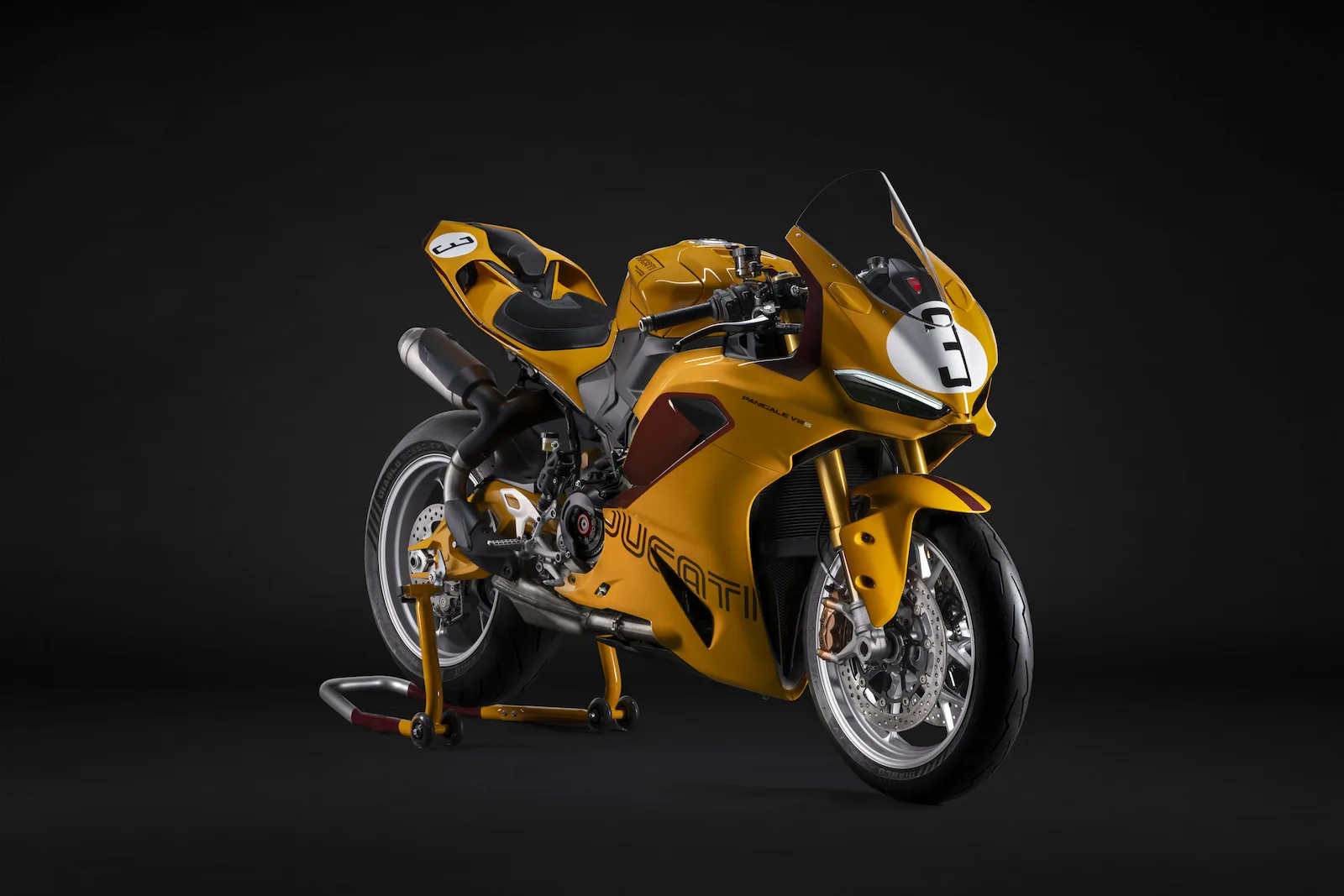
Livery source: the 750 Super Sport Desmo on which Franco Uncini won the 1975 Italian Championship for Bruno Spaggiari's team. Ducati had handed race management to Spaggiari at the end of 1973 to contest the production-based series. The yellow recalls the 750 Sport road bikes, and the brown/burgundy accents copy a color then used on marine inboard engines built at the Borgo Panigale plant.
Equipment includes billet sport handlebars, a steering damper, an Alcantara seat with the Ducati 100 logo and a Centenary Bronze plate on the billet triple clamp. The key mechanical news is the dry clutch: Ducati says this is the first bike of its new V2 family to have one, designed for this model and helping keep the engine compact. Mirror and plate removal kits, an open clutch cover and a billet aluminum fuel cap crown in Centenary Bronze color are included for track use.
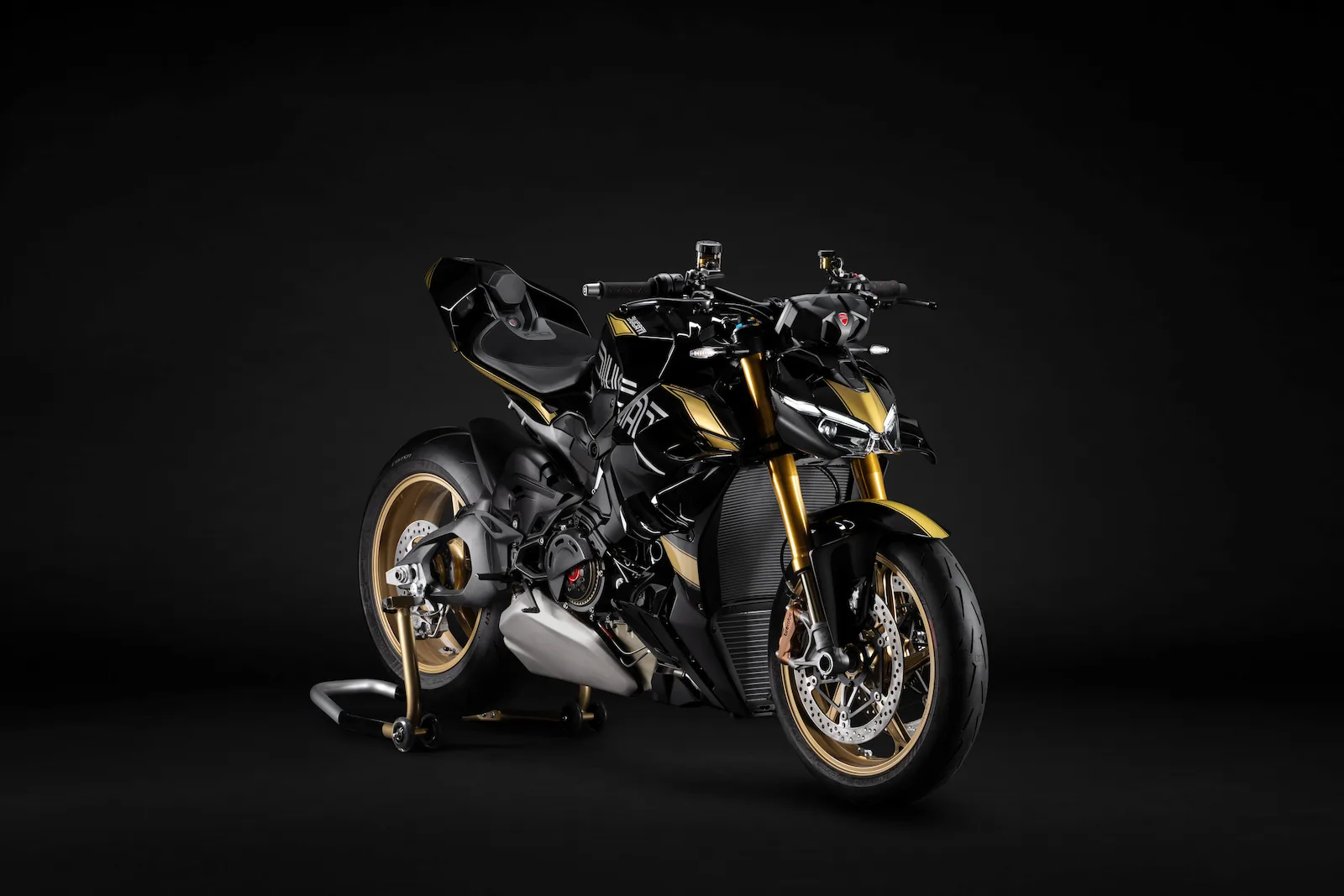
Streetfighter V4 S 100
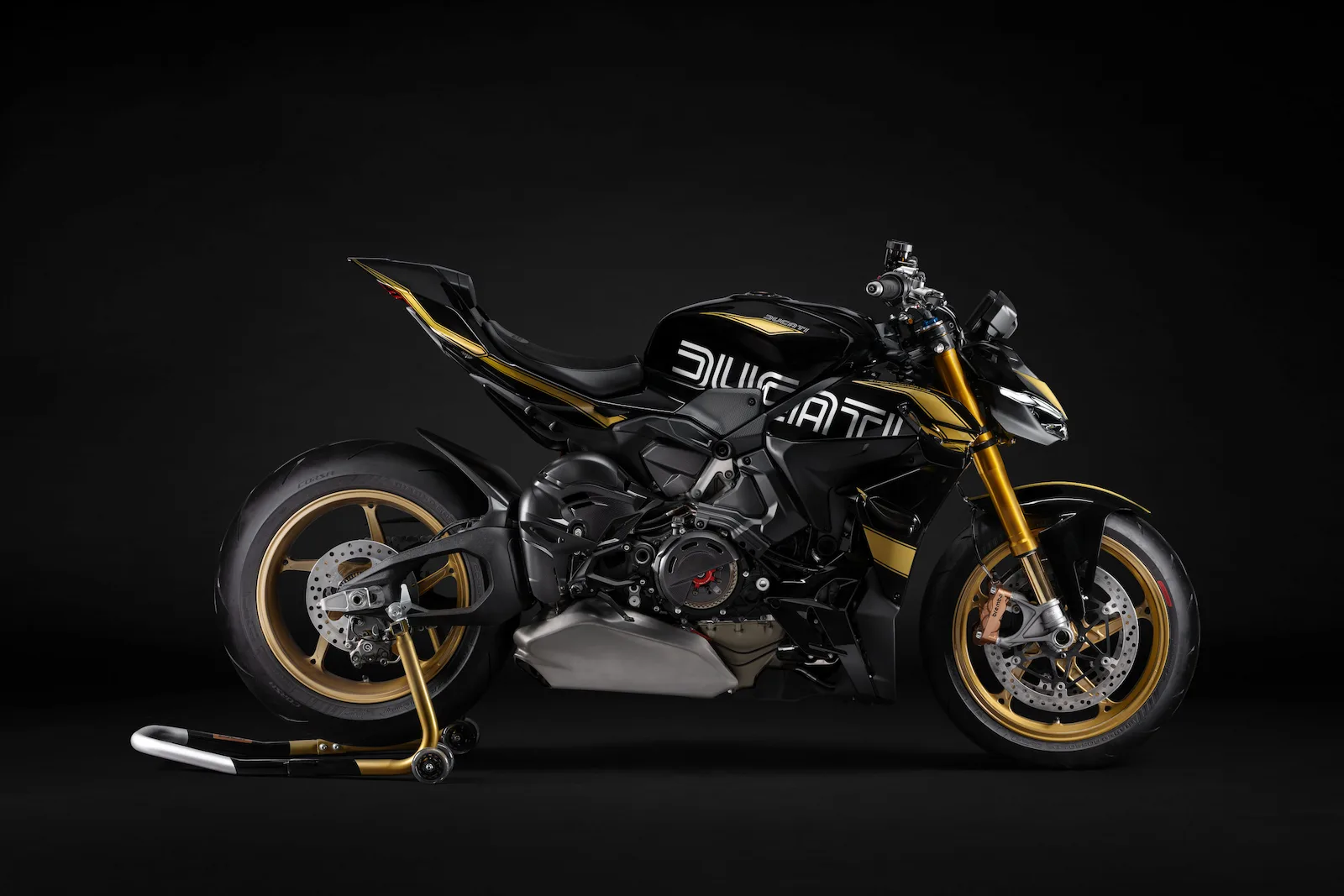
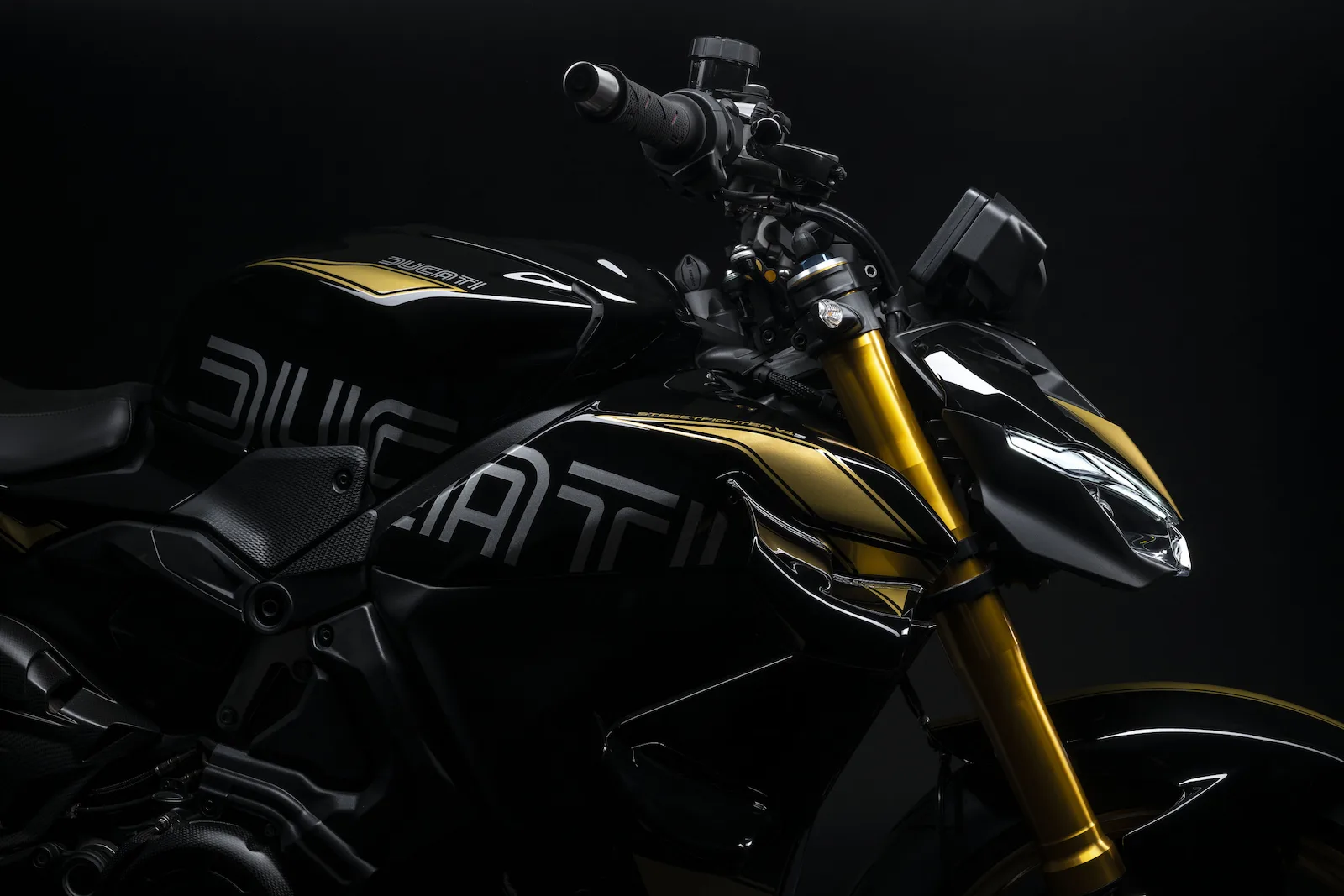
Livery source: the 1979 900 Sport Desmo Darmah, in the black and gold that was everywhere in racing in the 1970s and 1980s. Ducati calls the Darmah a Streetfighter before its time. Its invented, exotic-sounding name and the tiger head on its side panels reflected an Italian taste for faraway places, and that tiger appears again on the Streetfighter's undertail and on the matching helmet and jacket.
The bike gets an Alcantara seat with the Ducati 100 logo, a carbon-fiber rear mudguard, engine cover and exhaust, the dry clutch and a Centenary Bronze plate on the billet aluminum triple clamp. As on the Panigale V4 S 100, mirror and plate removal kits, an open clutch cover and a Centenary Bronze billet aluminum fuel cap crown come for track use, and it is delivered in a custom wooden crate.
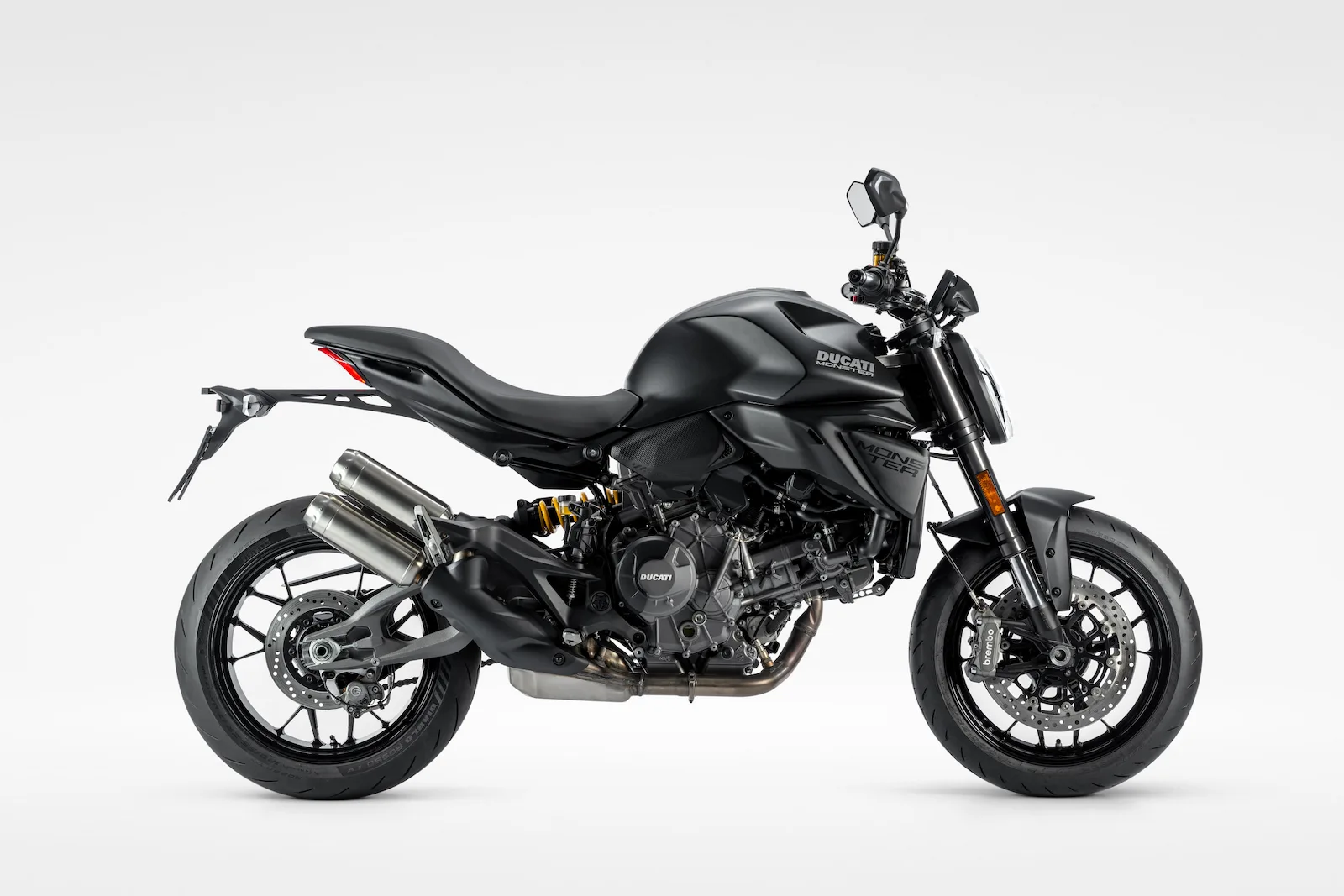
Monster 100
Livery source: the 2008 Monster S4Rs Tricolore, effectively the last of the first-generation Monster that Ducati built from March 5, 1993 until 2008, one of the best-known bikes in motorcycling.
The Monster 100 has the dry clutch with a carbon-fiber cover supplied in the package, an Alcantara seat with the Ducati 100 logo, a windshield and a seat cover kit that makes it look like a solo bike. The Centenary Bronze plate sits on the billet steering clamps, and the same color is used on the fuel cap ring and brake calipers.
XDiavel V4 100
Livery source: the special 750 Super Sport known as the California Hot Rod, on which Cook Neilson won at Daytona in 1977. Ducati says it was the first win for an Italian bike in a production-based race in the United States, and it lifted Ducati's profile and sales there at a time when the Berliner brothers' imported Scrambler was nearly the only Ducati Americans knew.
This one stands out for its leather seat with the Ducati 100 logo and a handlebar center section machined from solid, carrying the Centenary Bronze plate. It also has the dry clutch. A leather passenger seat, a Centenary Bronze fuel cap ring and an open clutch cover are included; the clutch cover is not approved for road use. It ships in a custom wooden crate.
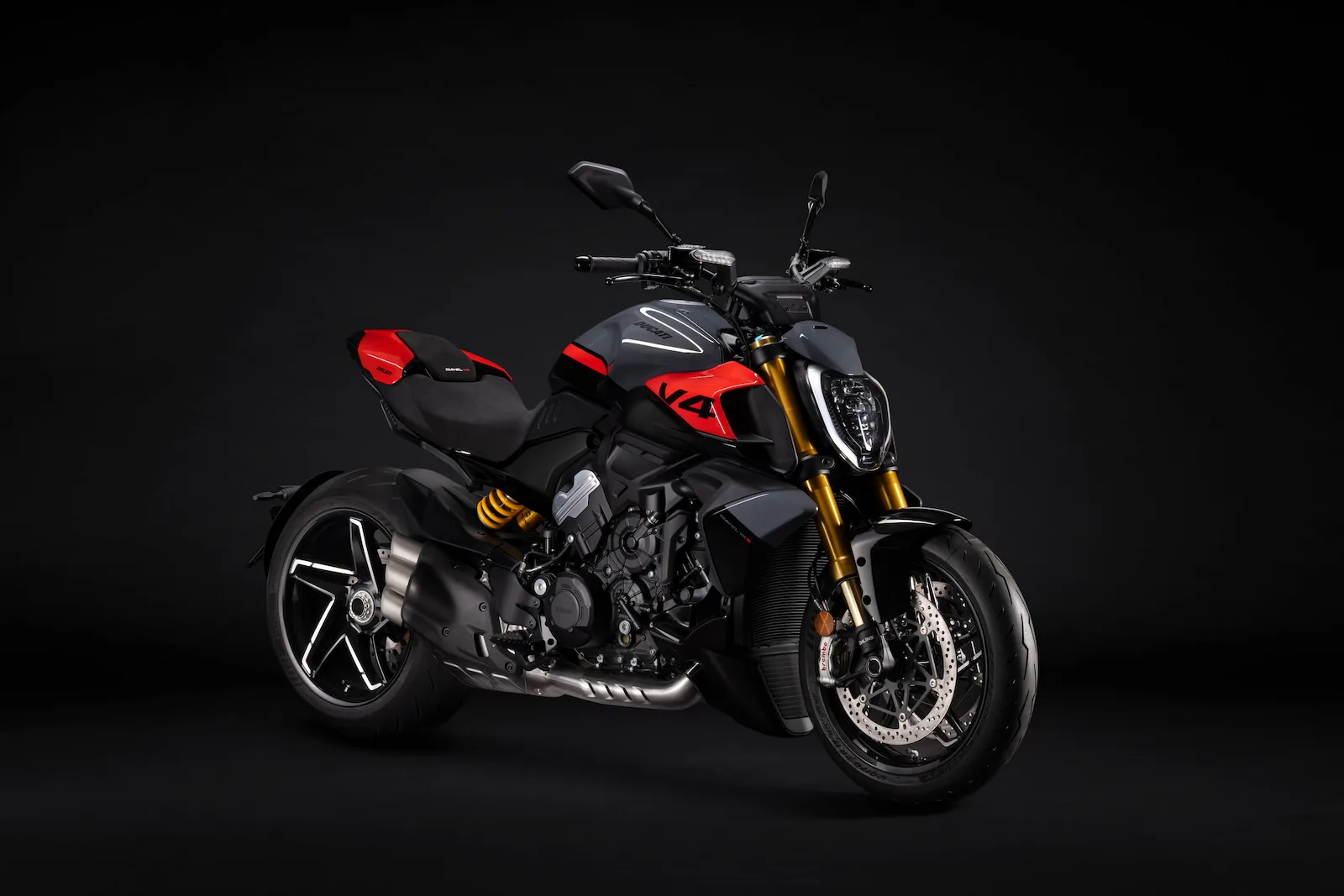
Diavel V4 RS 100
Livery source: the 1979 900 Replica, built after Ducati's 1978 Tourist Trophy win as the first road replica of a Ducati racer. Its green and red with white stripes copied the Isle of Man winner and became an early version of the Italian-flag look Ducati later used on some of its most exclusive sport bikes. The 900 Replica stayed in production for five years, until the end of 1984.
Based on the Diavel V4 RS with its Desmosedici Stradale engine, the 100 adds an Alcantara seat with the Ducati 100 logo, a handlebar center machined from solid with the Centenary Bronze plate, and a fuel cap rim in the same finish. An Alcantara passenger seat, a machined-from-solid fuel cap and an open clutch cover are included, and the release says some of these are not approved for road use. It comes in a custom wooden crate.
Multistrada V4 RS 100
Livery source: the 1979 500 SL Pantah, from a year of big technical changes in Borgo Panigale. It was the first Ducati with a trellis frame (quite different from the one Ducati has used for nearly fifty years) and its Pantah engine dropped the bevel-gear drive used since the 1955 Gran Sport Marianna. Riders liked it for being light and easy to ride, and its livery carried a Ducati logo drawn by car designer Giorgetto Giugiaro. Because the 100 is built on the top Multistrada V4 RS with the Desmosedici Stradale engine, its tail fairing also carries the Desmo logo.
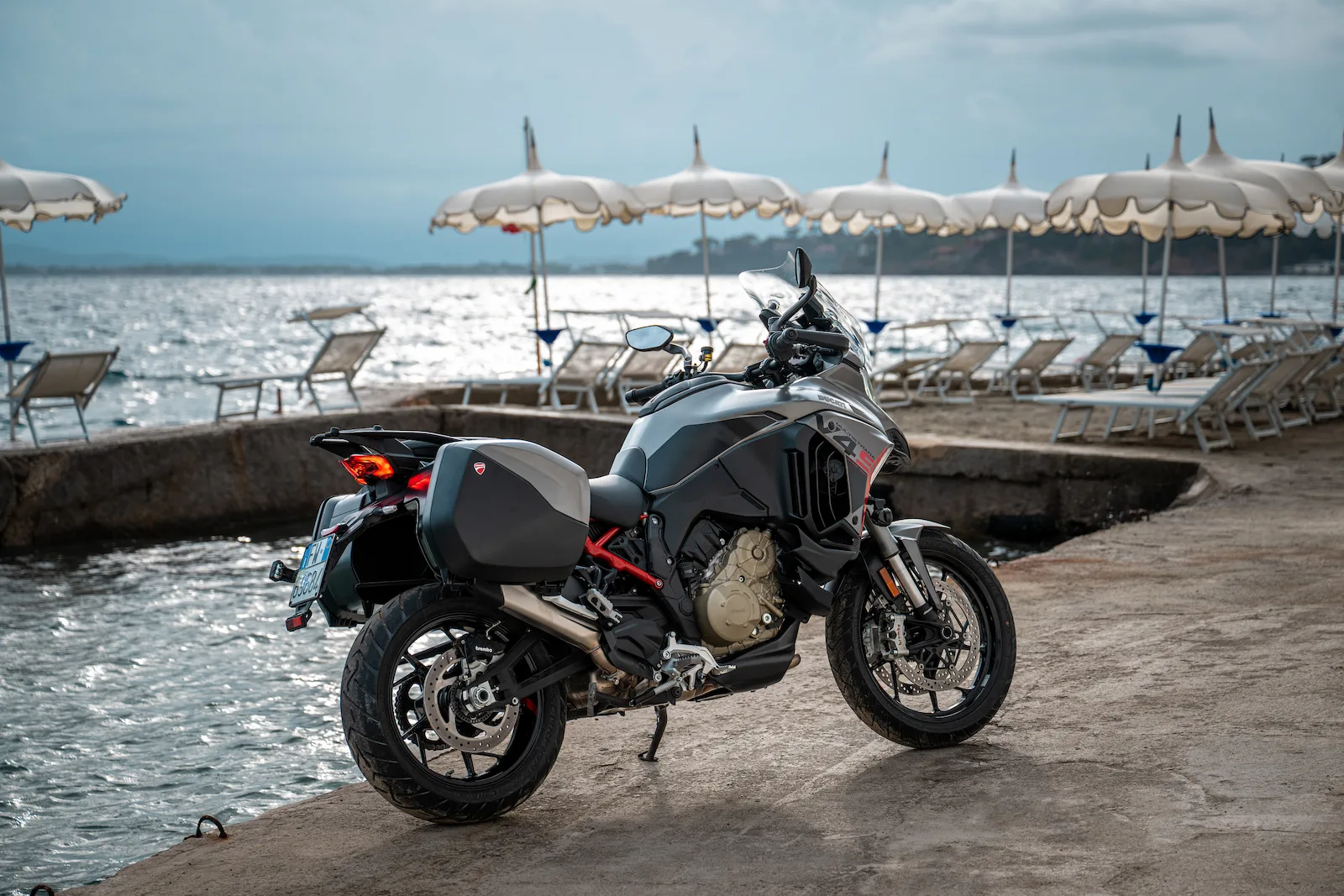
Equipment includes an Alcantara seat with the Ducati 100 logo and a Centenary Bronze plate, etched with name and number, on the handlebar clamps and billet aluminum triple clamp. A Centenary Bronze fuel cap ring and a carbon-fiber open clutch cover are included, neither of them road-legal. It also ships in a custom wooden crate.
Scrambler 100
Livery source: the 1962 250 Scrambler, the first Ducati Scrambler, built only for the US market. Ducati's first American importer, Joe Berliner, wanted a new model to sell in the States; Ducati was riding the publicity of Monetti and Tartarini's 1957 round-the-world trip, and Berliner asked for an off-road bike, something Borgo Panigale had never planned. The result was the 250 Scrambler.
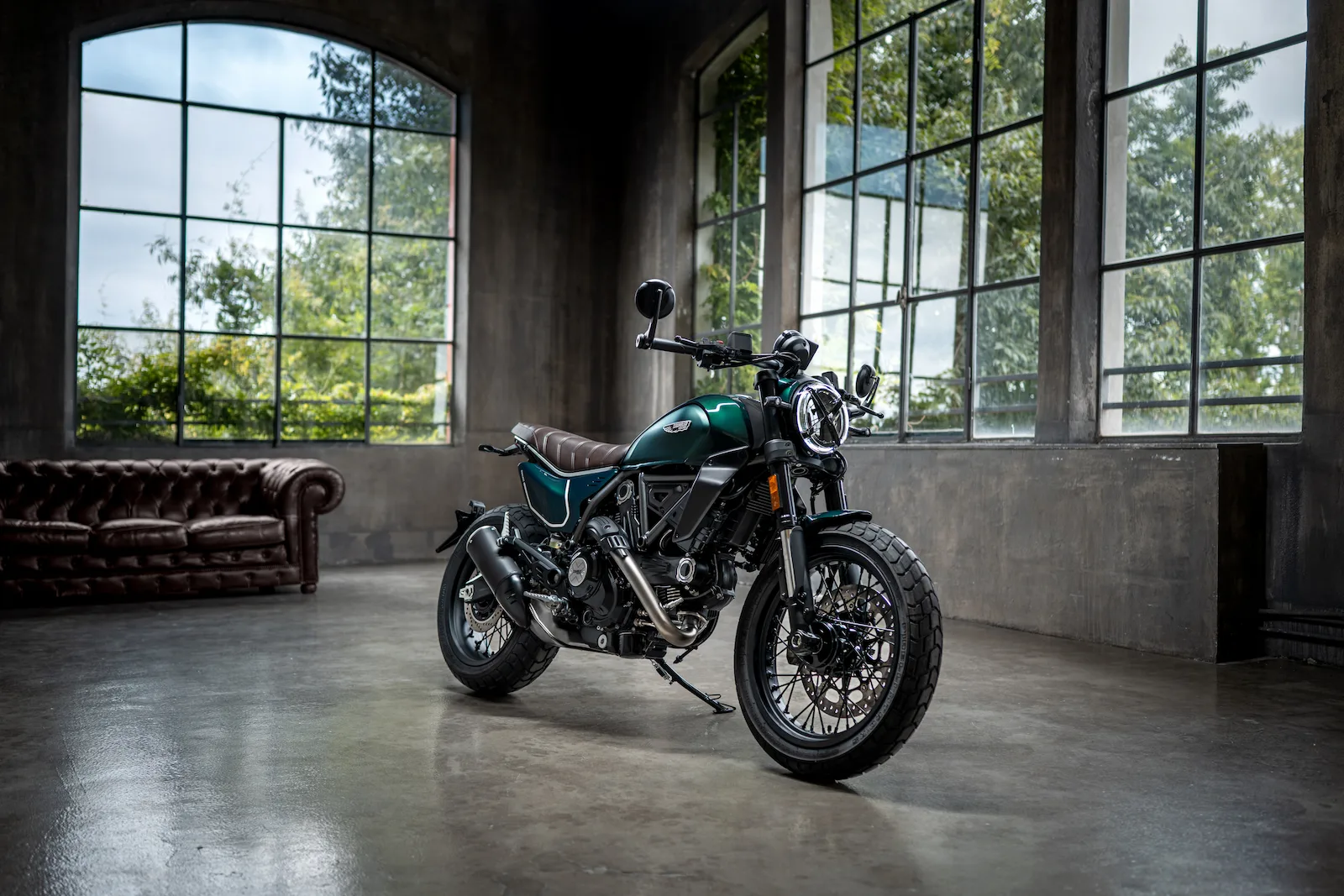
The Scrambler 100 uses the Scrambler Nightshift as its base and adds an Alcantara seat with the Ducati 100 logo, a Centenary Bronze plate on the billet steering clamps and a billet fuel cap with a Centenary Bronze ring.
Hypermotard V2 SP 100
Livery source: the Ducati 860 that raced the 24 Horas de Montjuïc. After the 1972 Imola win, Ducati saw production-based endurance racing as the way back to popularity and needed a twin bigger than the 750 to survive races like the Bol d'Or and Montjuïc. The 860 won on its 1973 debut as the prototype of what became the 900 Super Sport, and in 1975 Salvador Canellas and Benjamin (Min) Grau won the Catalan race again, this time in the bright colors of the NCR team run by Nepoti and Caracchi.
Built on the Hypermotard V2 SP, it keeps the SP's Öhlins suspension and forged wheels and adds an Alcantara seat with the Ducati 100 logo, a Centenary Bronze plaque on the handlebar clamps and machined aluminum triple clamp, and the dry clutch. A Centenary Bronze fuel tank cap and a carbon-fiber open clutch cover are included, both not approved for road use.
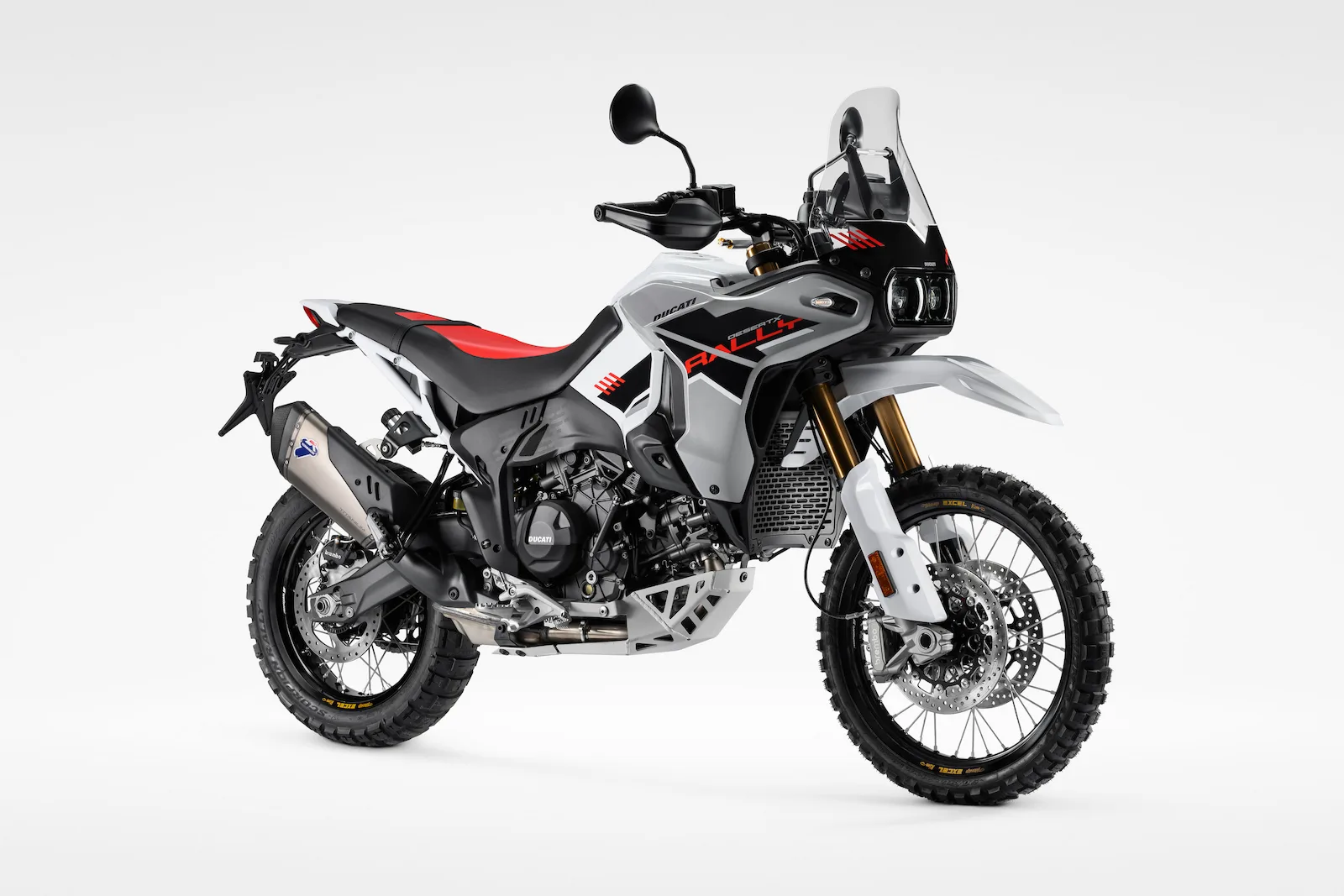
DesertX 100
Livery source: the 1981 Pantah Ice, a Pantah 500 with studded tires and no brakes, built for ice tracks. It was a product-placement stunt from the era when state holdings controlled both Ducati and Alfa Romeo: EFIM ran an Alfasud ice-racing series in the Alps, and the Pantah Ice bikes performed for the crowd between heats. The yellow with blue stripes chosen for the DesertX 100 comes from an Ice bike that was in the Ducati Museum until a few years ago.
The DesertX 100 gets an Alcantara seat with the Ducati 100 logo and a Centenary Bronze plate, etched with name and number, on the handlebar risers of the billet triple clamp. A high front mudguard and an aluminum radiator grille add to its off-road look. A Centenary Bronze fuel cap and a headlight grille are included, neither approved for road use.