The full story
What it means for you
- PVD on panels this large is new for Harley: ask your dealer how to care for the finish, and what a replacement tank or fender would involve.
- Reset rear preload with the under-seat adjuster whenever you add a passenger or luggage.
- When the Michelin Scorcher 11 tires wear out, quote 160/60R18 front and 240/40R18 rear to your shop.
- Plan accessory wiring around the new spots: heated gear plugs on top of the rear fender under the seat, USB-C at the front left under the tank.
- With only 1,990 built, talk to a dealer early and keep the etched serial number with your paperwork.
More Harleys: our Harley-Davidson Bike Dossier.
What changed for 2025
Fat Boy Gray Ghost
- Updated
Engine
Milwaukee-Eight 114 (2024 Fat Boy 114)Milwaukee-Eight 117 Custom, 101 horsepower (75 kW), 122 lb-ft (171 Nm)
- Updated
Suspension
Recalibrated for rider comfort
- New
Electronics
Selectable Ride Modes (Road, Rain, Sport) and Rider Safety Enhancements (C-ABS, C-TCS, C-DSCS, TPMS)
- New
Lighting
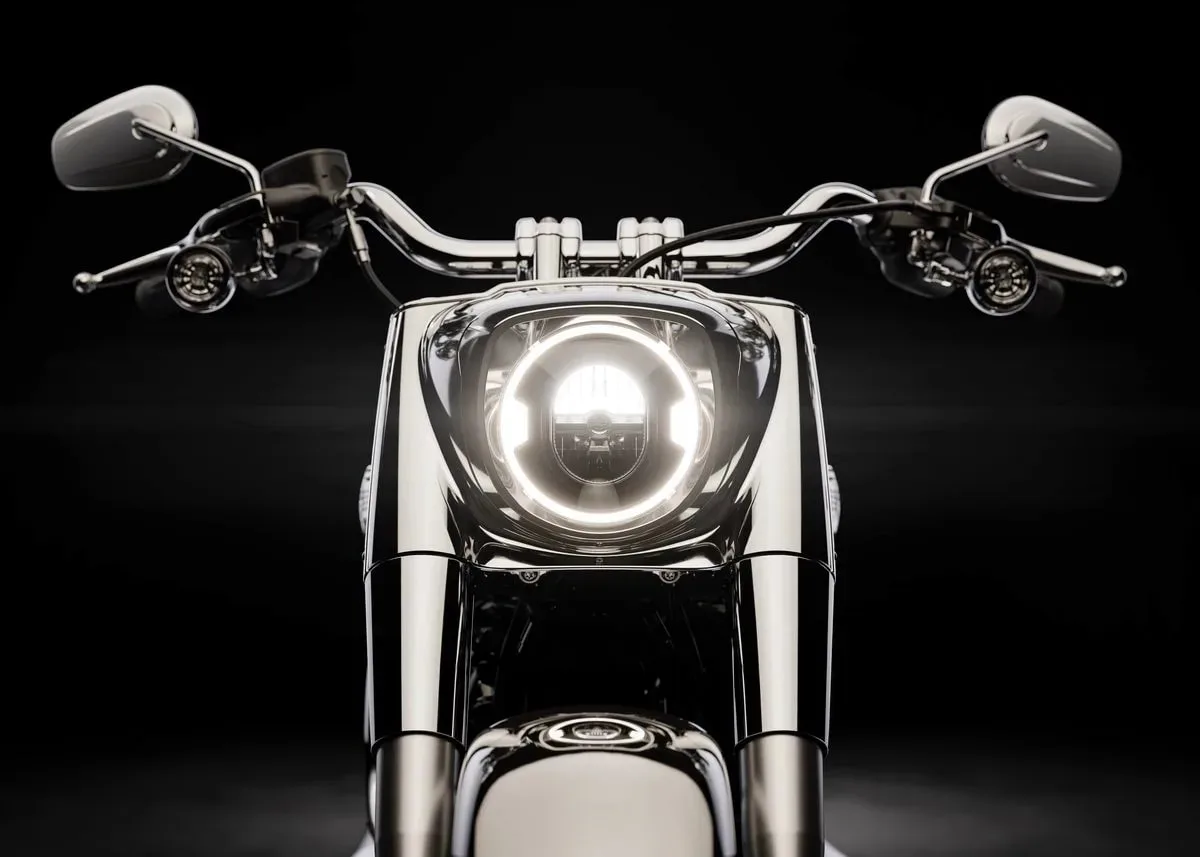
All-LED headlamp, tail and brake lights and signals
- Updated
Power port
USB-A portUSB-C port, front left beneath the fuel tank
- Updated
Heated gear connectors
Behind a side panelRear fender top, under the seat
- New
Instrument
5-inch console-mounted analog speedometer above a multi-function LCD
- Color only
Finish
Reflection (PVD) fuel tank and fenders, bright silver powder-coat frame, yellow accents
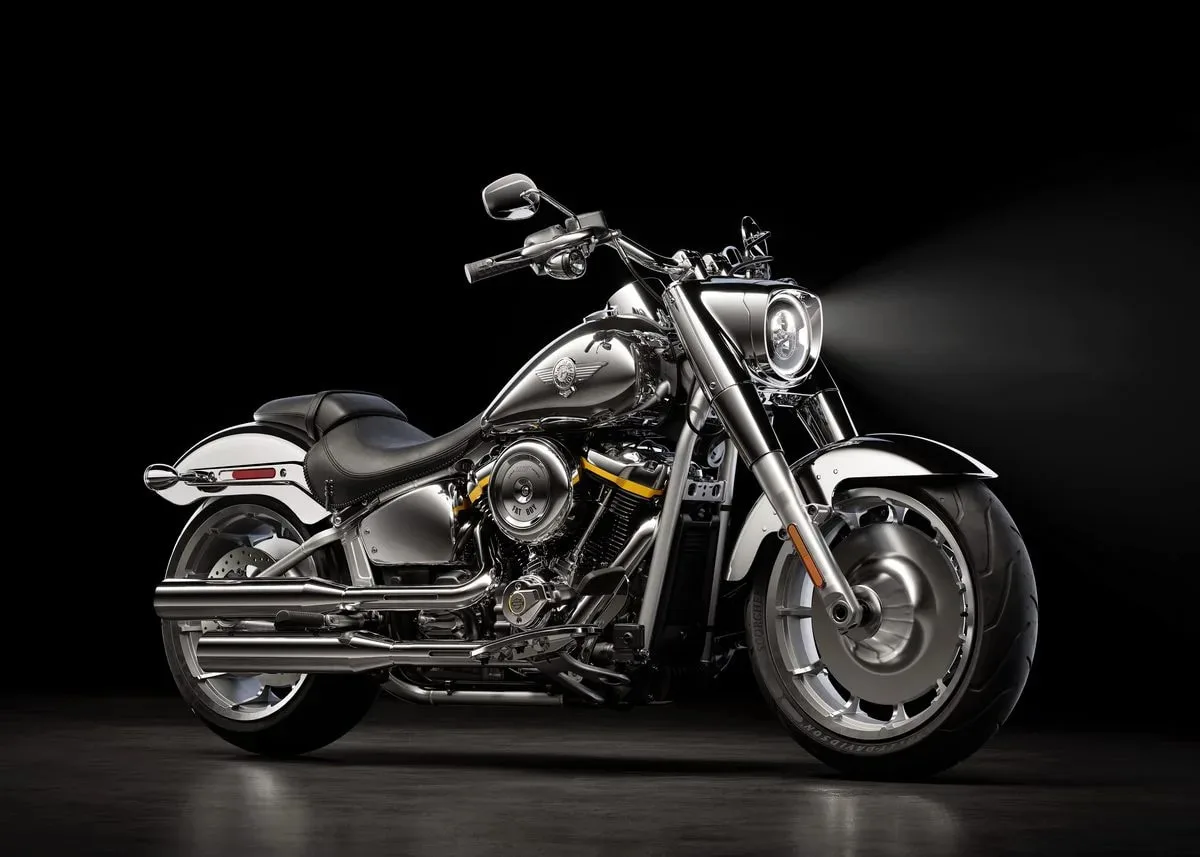
The Fat Boy Gray Ghost marks 35 years since the Fat Boy arrived in 1990. It is the fifth model in Harley-Davidson's Icons Motorcycle Collection: a serialized run of 1,990 bikes worldwide, a number that points back to that first year, at a U.S. MSRP of $25,399. The draw is a mirror-like Reflection finish on the tank and fenders that makes the whole bike look chrome-dipped, over the updated engine, suspension and electronics of the 2025 Fat Boy.
The Reflection finish
Instead of chrome plating, Harley uses physical vapor deposition (PVD), also called thin film coating. In a vacuum, an aluminum alloy is turned into vapor and laid down on the part; the alloy gets a positive charge and the tank or fender a negative one, which draws the coating onto the metal. A standard clear coat is applied afterward.
Harley had used PVD only on small pieces such as tank medallions and exhaust shields; this is its first production model with PVD on parts this big. The point is durability as much as looks: Harley says the coating covers more completely than chrome, so these parts meet corrosion standards chrome could not.
Styling details
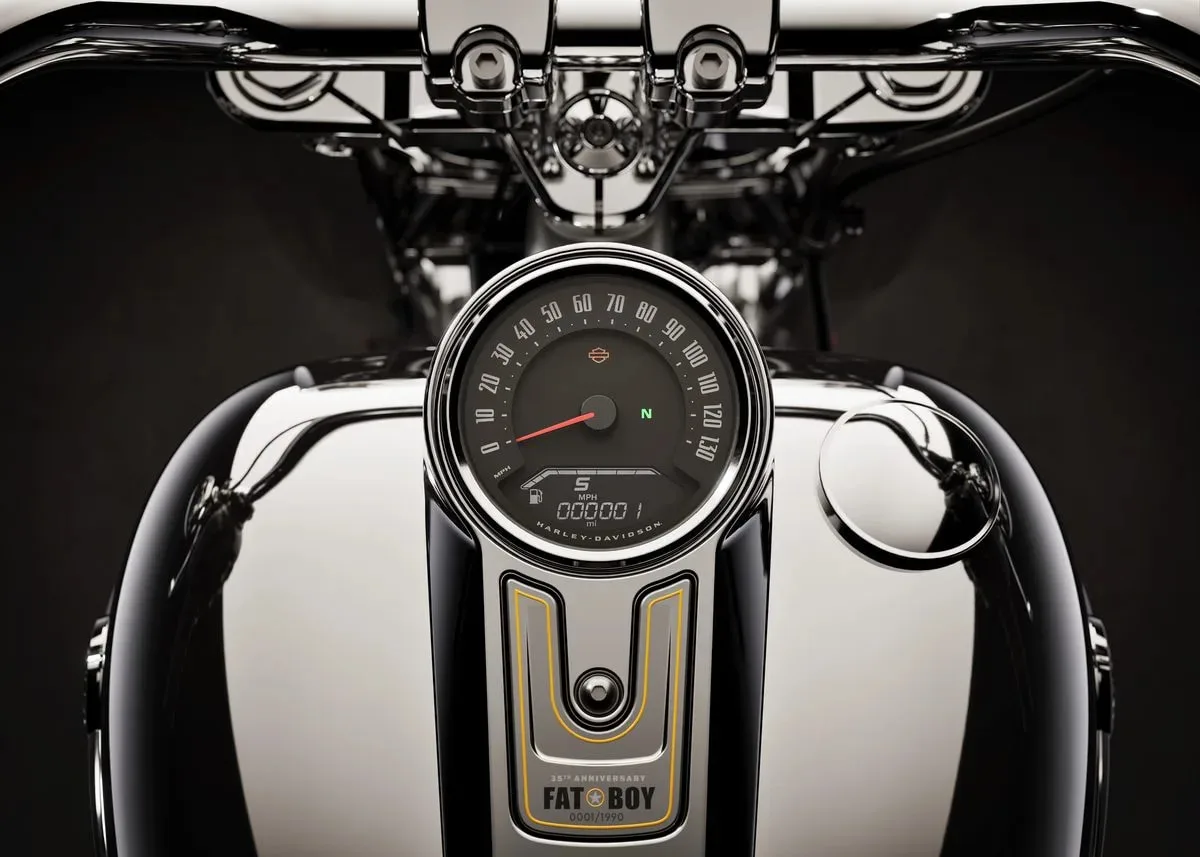
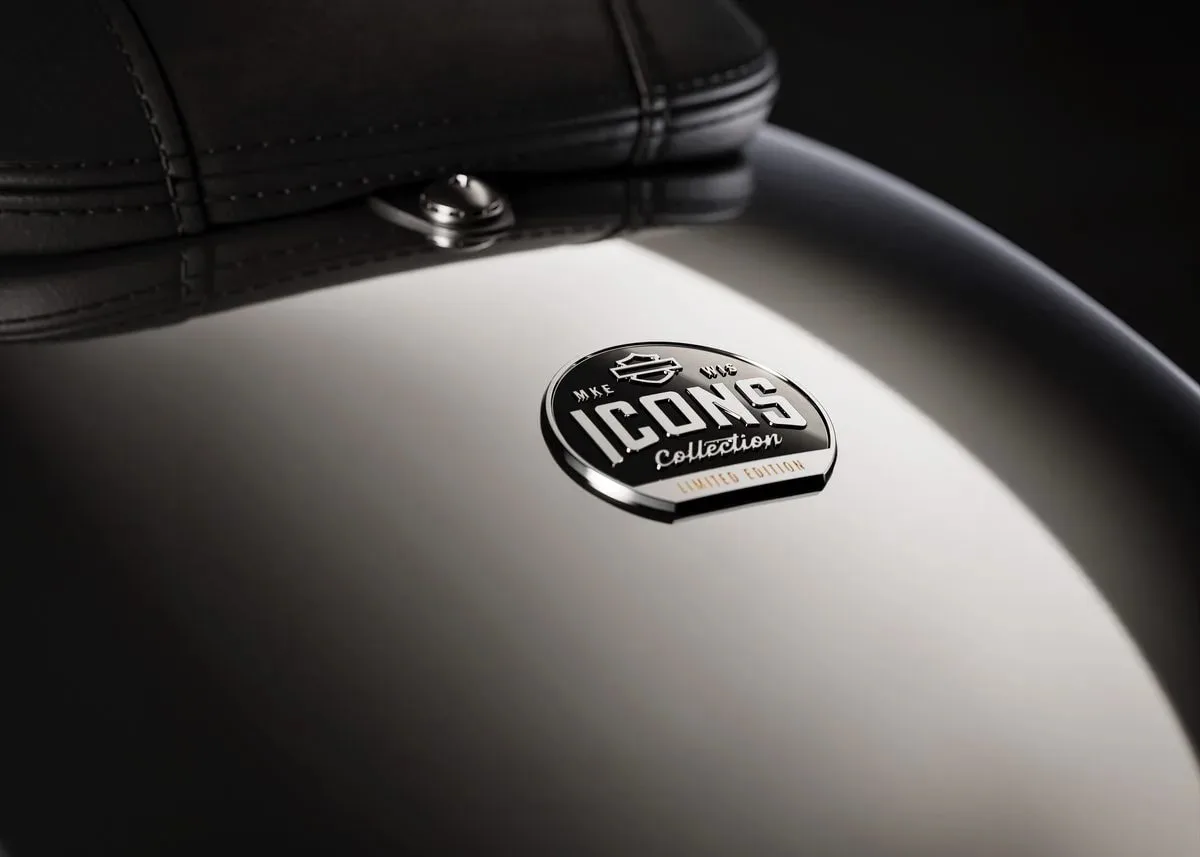
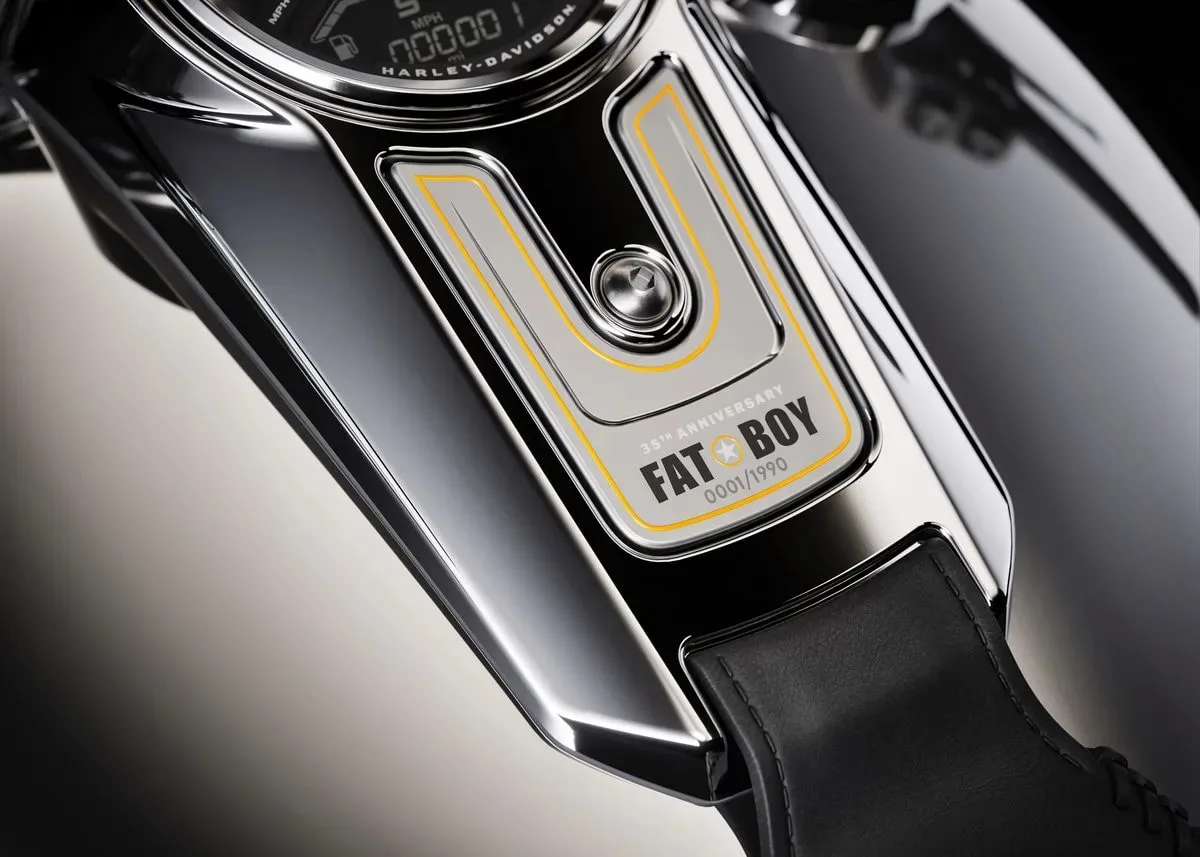
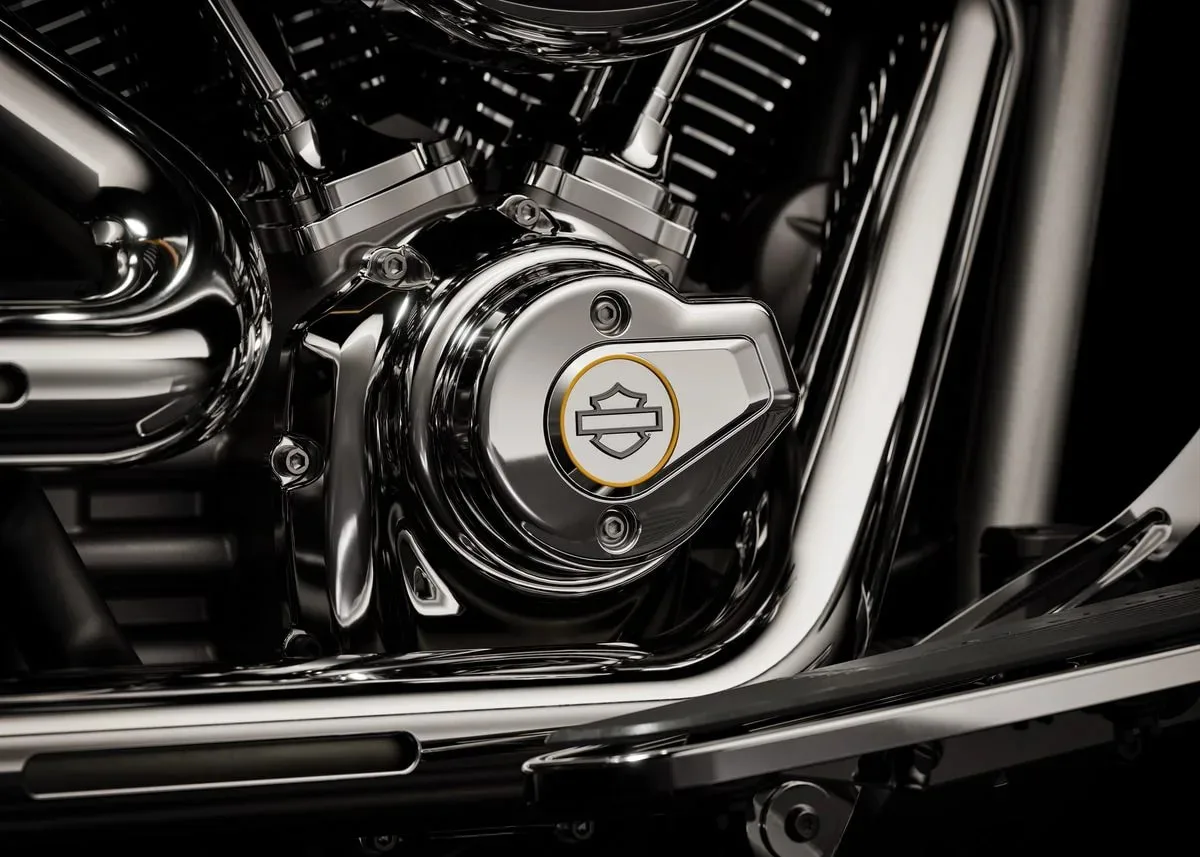
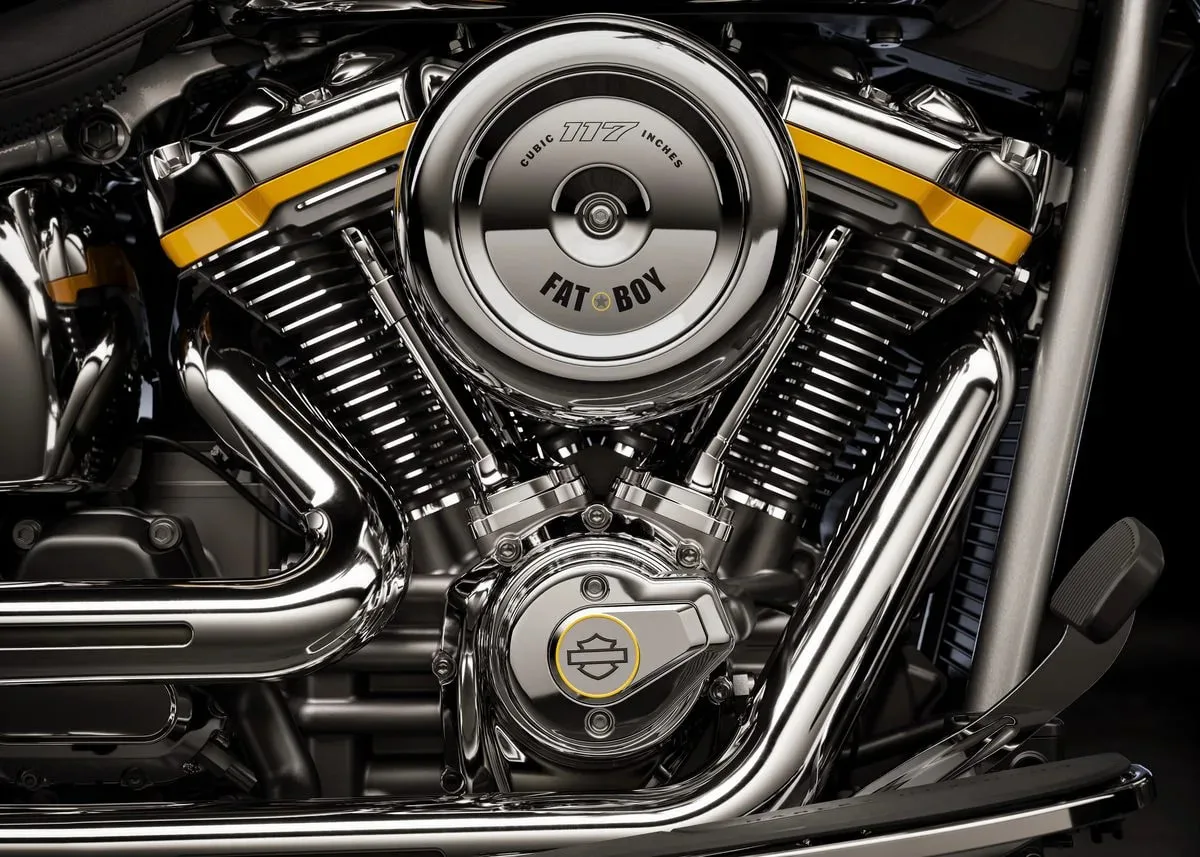
The bright theme continues with chrome side covers and a frame in bright silver powder coat. Several cues come straight from the 1990 bike: a round air cleaner and yellow trim on the lower rocker covers, the powertrain covers and the tank console insert. Leather adds period feel: a laced, tasseled seat valance and a laced black tank strap. Three-dimensional tank medallions recreate the original winged graphic, the console insert is etched with each bike's own serial number, and an Icons Collection medallion sits on the rear fender.
Engine and exhaust
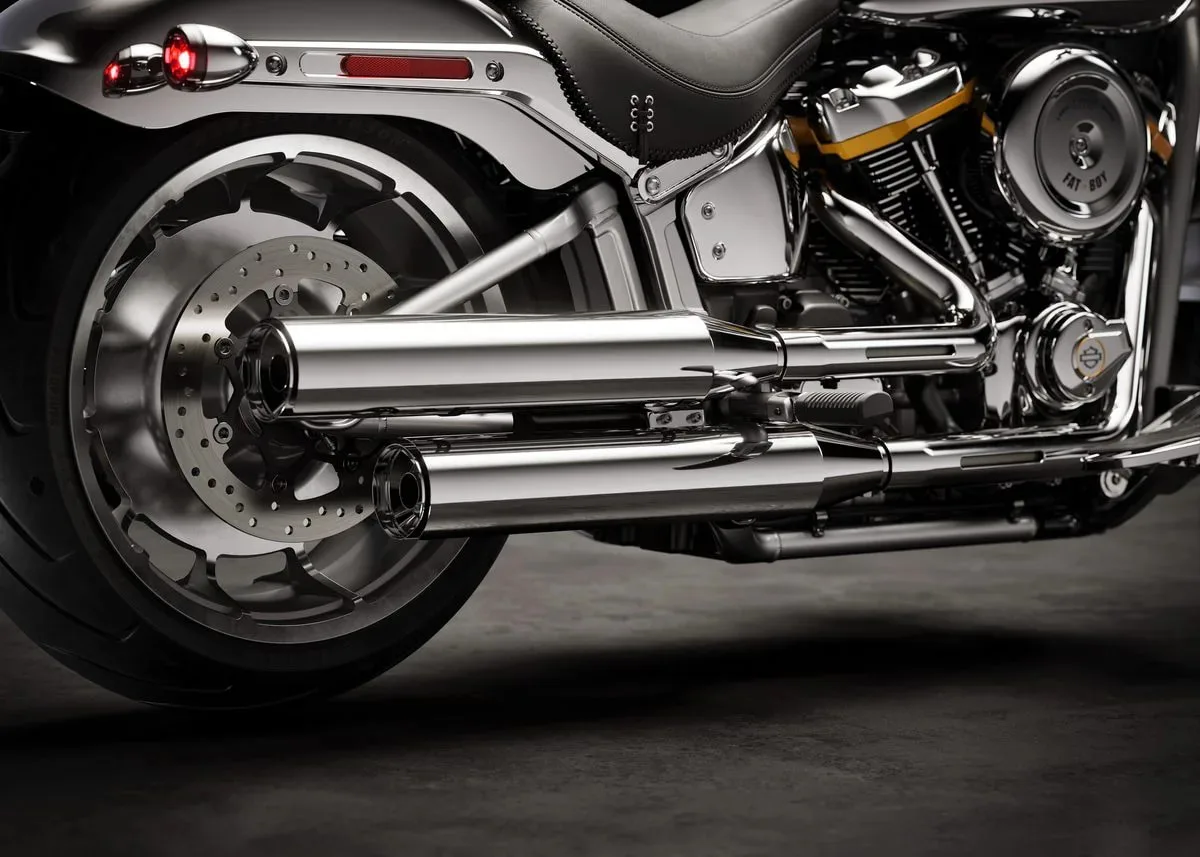
Power comes from the Milwaukee-Eight 117 Custom, which makes 101 horsepower (75 kW) with peak torque of 122 lb-ft (171 Nm). Harley puts the gain at 7 percent in horsepower and 3 percent in torque over the 2024 Fat Boy 114. The four-valve heads get a reshaped combustion chamber, oval intake ports and lower-profile seats for the intake valves, for better performance and fuel economy. Exhaust is a 2-into-2 system with a catalyst in each pipe, and the mufflers use a lightweight material that tames high frequencies and brings out the low ones.
Oil from a frame-mounted cooler also runs through passages in the heads, which Harley says keeps you cooler at low speed and in hot weather.
Suspension, wheels and tires
The suspension is recalibrated for comfort. Up front are 49 mm forks with dual-bending valves, for a planted front tire and a smooth ride. At the rear, a hydraulic preload adjuster under the seat lets you set the shock for the load you carry and the road you are on.
The wheels are Lakester cast aluminum, a design only the Fat Boy gets, and they wear Michelin Scorcher 11 tires: 160/60R18 at the front and 240/40R18 at the rear.
Electronics and rider aids
Road, Rain and Sport ride modes set how the bike delivers power and how much the electronics step in. Harley's Rider Safety Enhancements package adds straight-line and cornering versions of ABS, traction control and Drag Torque Slip Control, plus tire pressure monitoring, for surprises and bad roads.
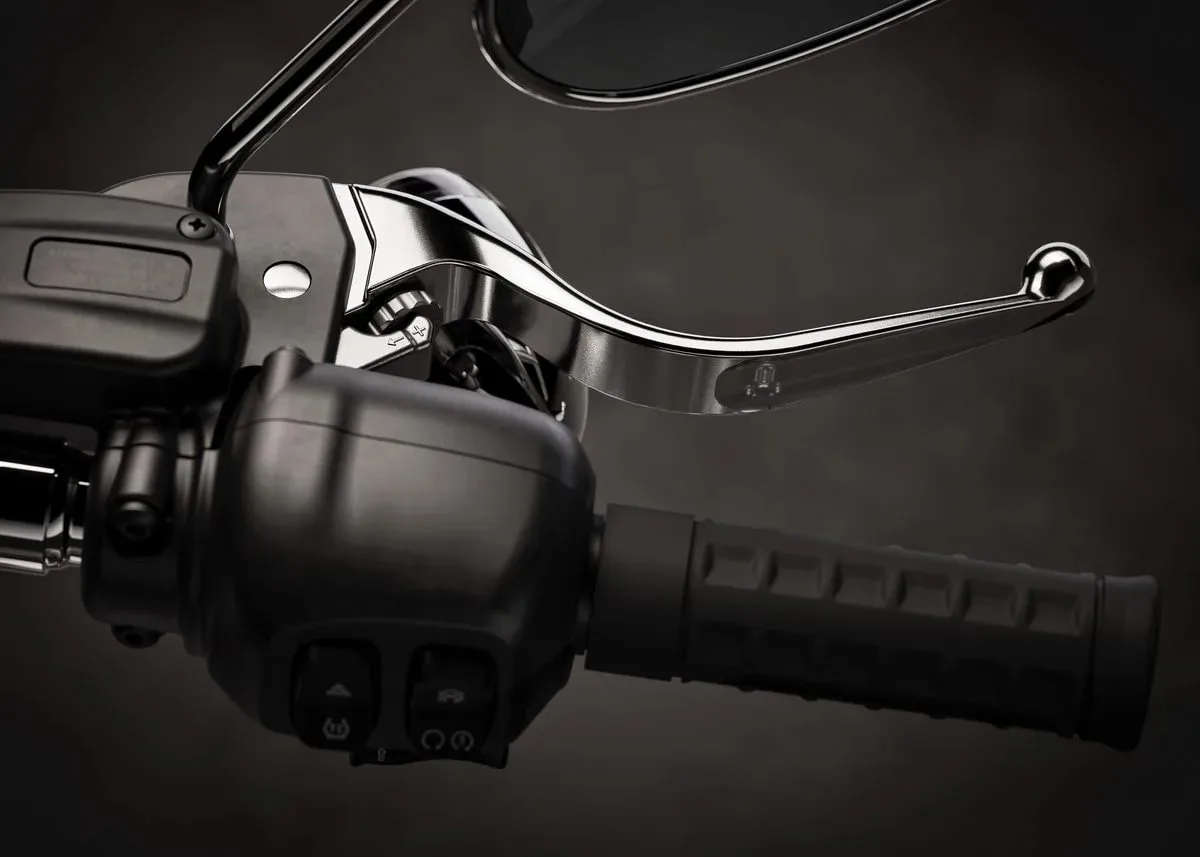
Lighting is all LED, so drivers see you sooner. A USB-C port, front left under the tank, replaces the old USB-A port. The heated gear connectors used to hide behind a side panel; now they sit on top of the rear fender under the seat, where you can actually reach them. The 5-inch console instrument puts an analog speedometer above a multi-function LCD screen, which you scroll with the Trip button on the hand control.
35 years of the Fat Boy
Harley says the Fat Boy was meant to have a short life. Instead it has run 35 years, through three powertrain generations and a full Softail chassis redesign. It grew from the Lowboy, a 1987 Softail custom built at Harley-Davidson Montréal, and was shaped by Harley's stylists under Willie G. Davidson and Louie Netz. Davidson wrote that "the wheels are the defining characteristic" of the 1990 bike, which came in Fine Silver Metallic with yellow trim, the recipe the Gray Ghost echoes. The 2020 30th Anniversary edition was capped at 2,500 bikes.
Price and production
The $25,399 U.S. MSRP leaves out tax, title, registration, destination, surcharges, accessories and dealer charges, and can change.
The release gives no weight, seat height, fuel capacity, brake hardware, transmission details or on-sale date; ask a dealer, and ask how many Gray Ghosts they expect.