The full story
What it means for you
- At $14,999 and on sale now, it is Kawasaki's flagship naked without a supercharger.
- Expect relaxed highway cruising: about 4,000 rpm at 62 mph in sixth.
- Use the remote preload adjuster when you carry a passenger or bags.
- Voice command and navigation in the app need a paid license.
- The release gives no power, torque or weight figures; ask your dealer or wait for Kawasaki's spec sheet before comparing.
What changed for 2026
Z1100 SE ABS
- New
Model
New largest-displacement Z model
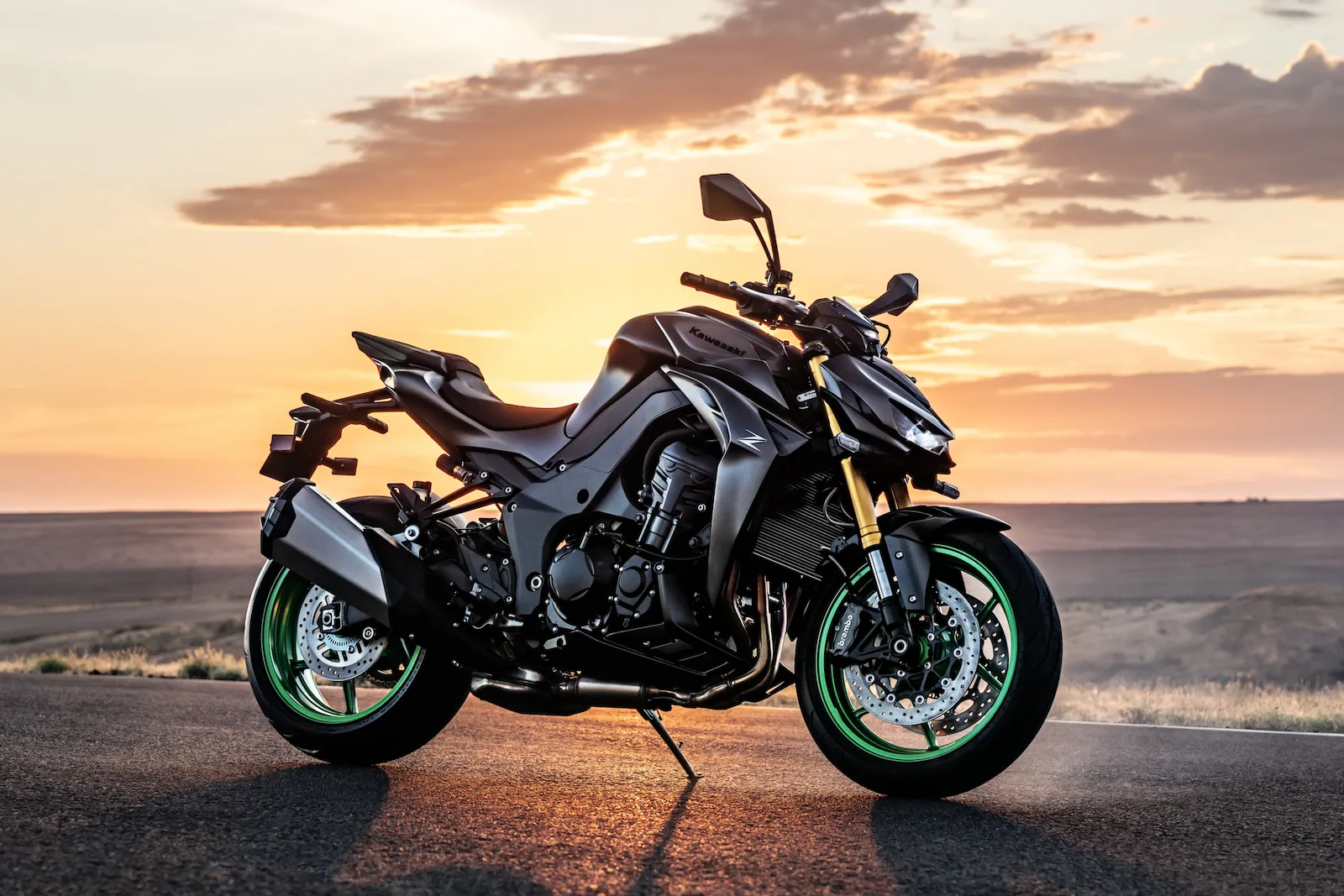
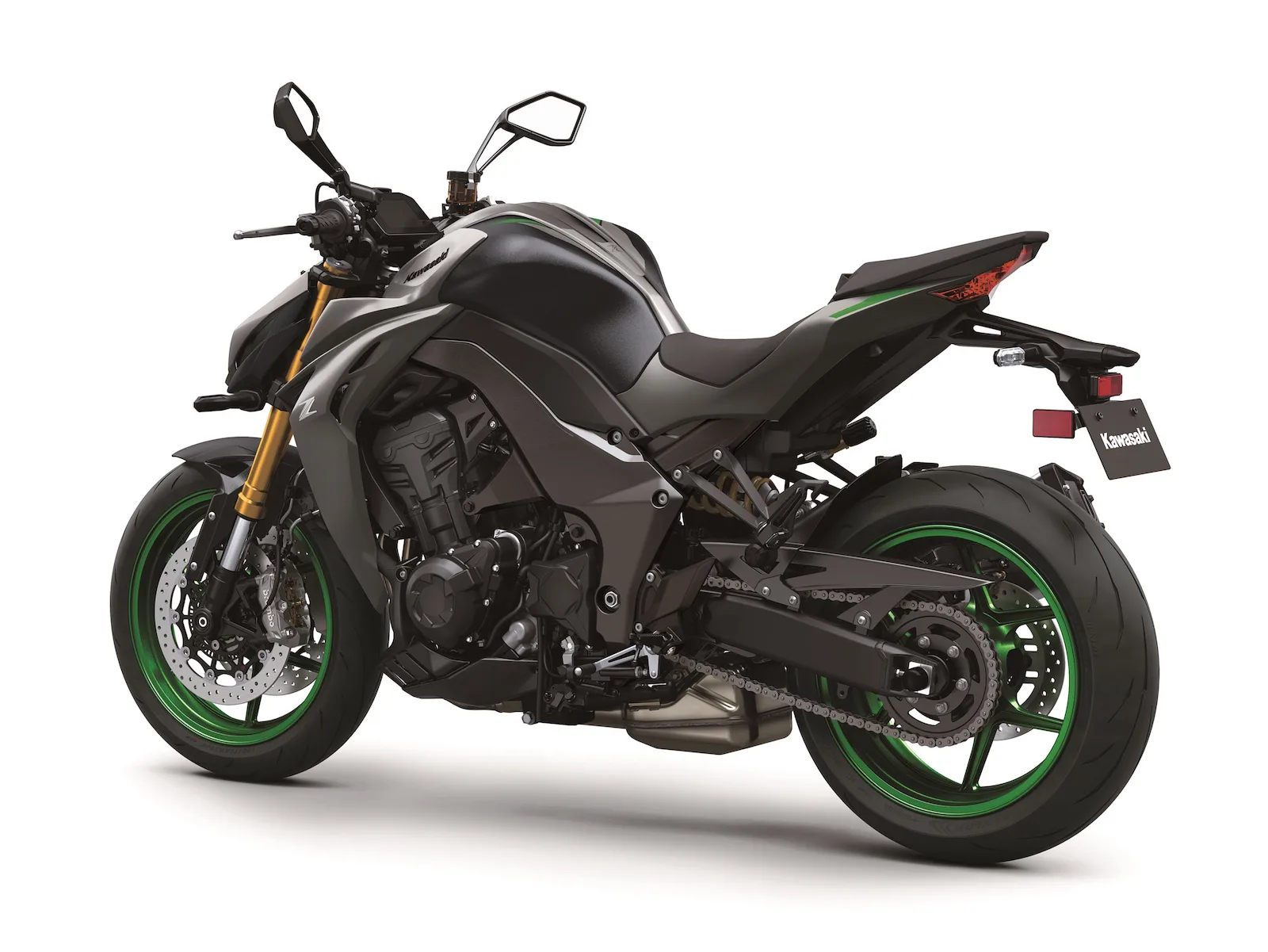
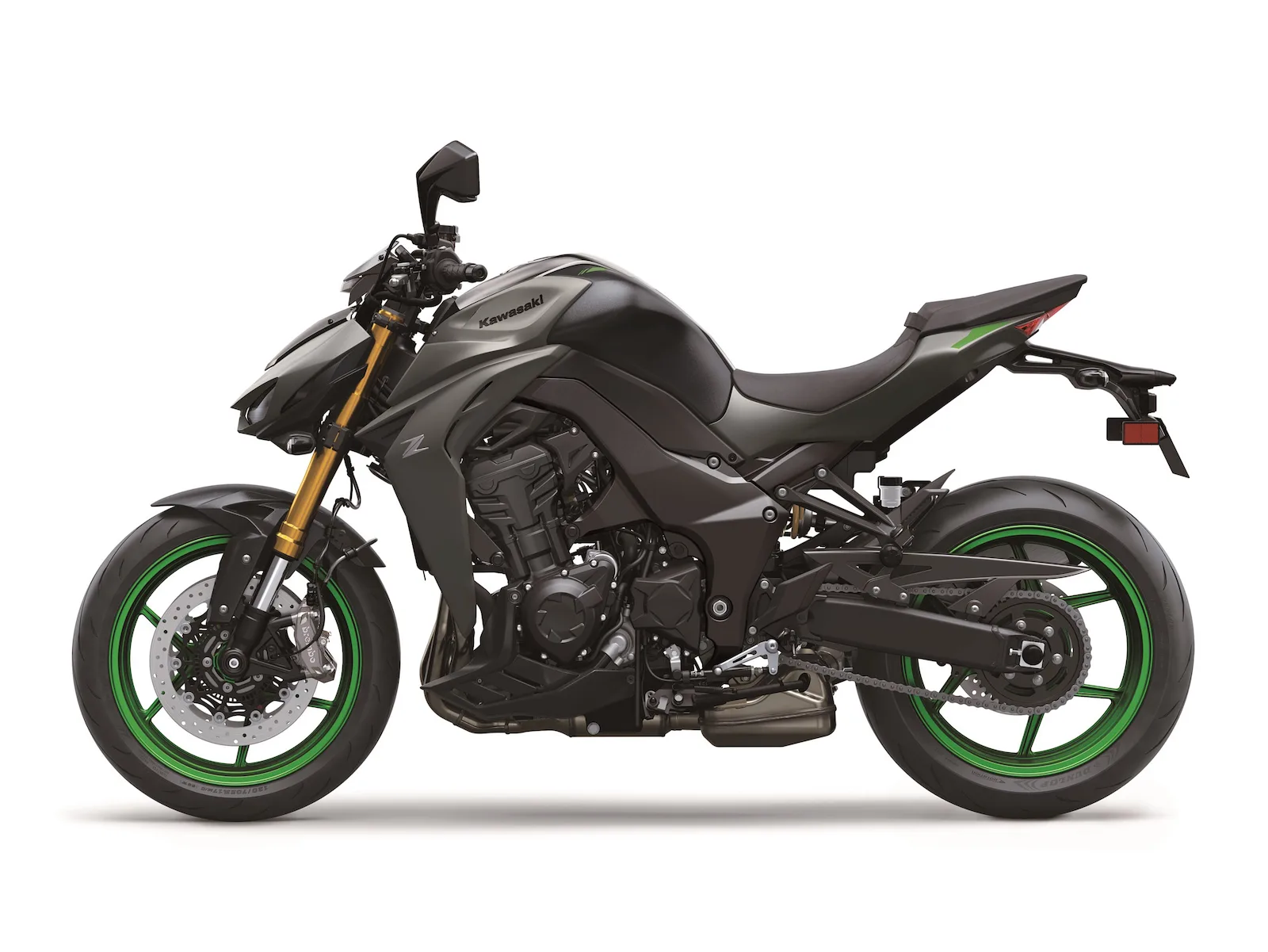
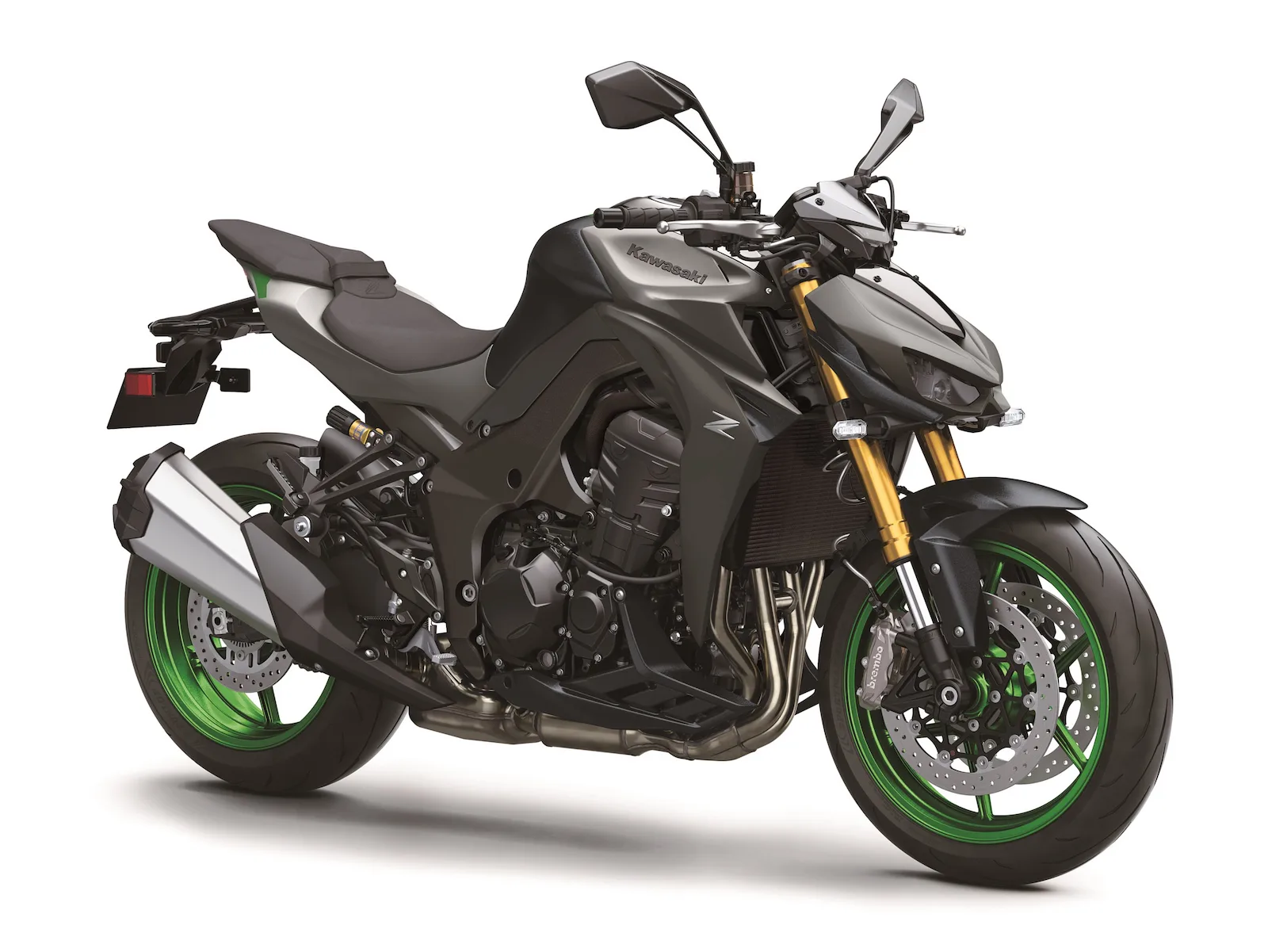
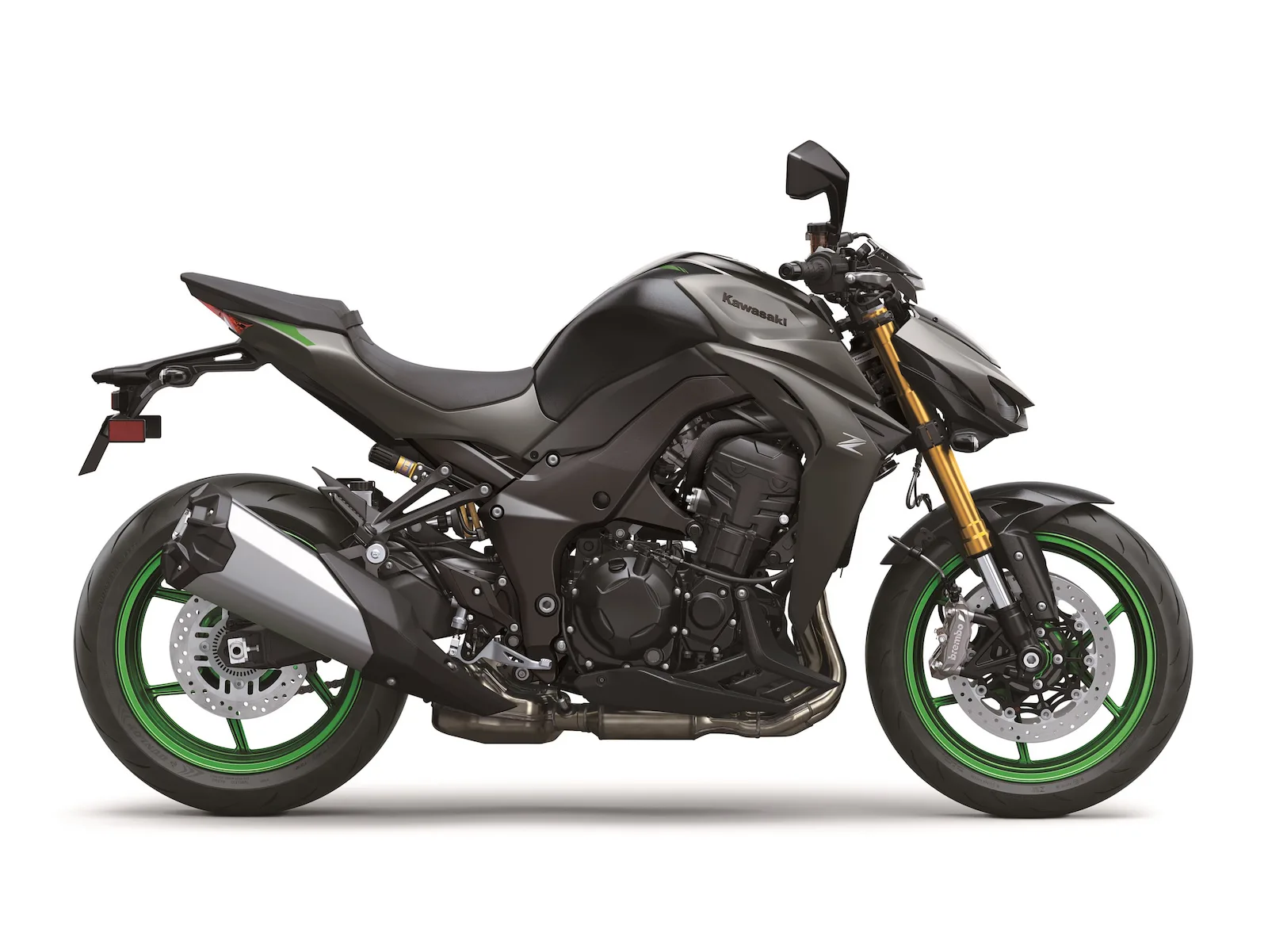
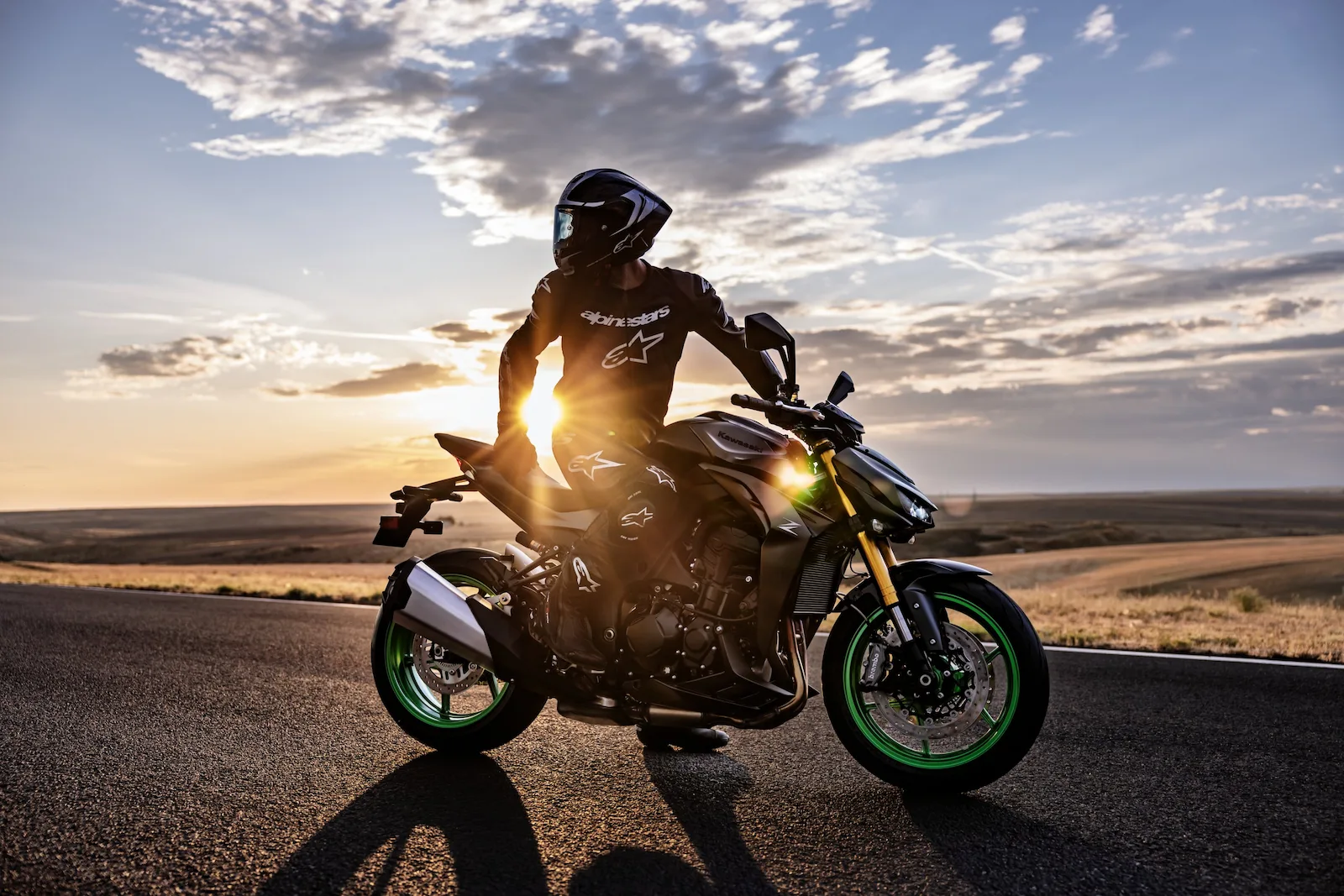
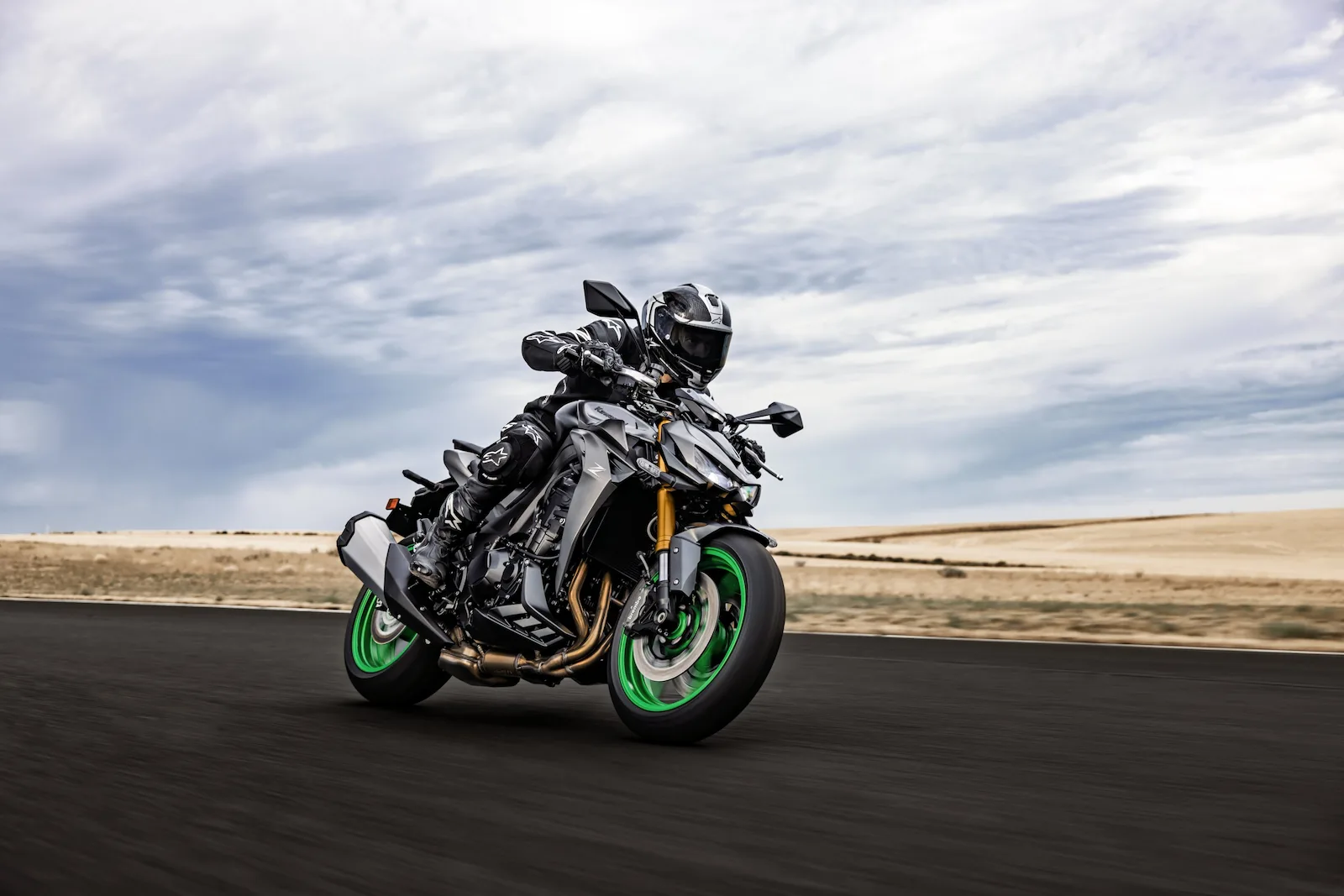
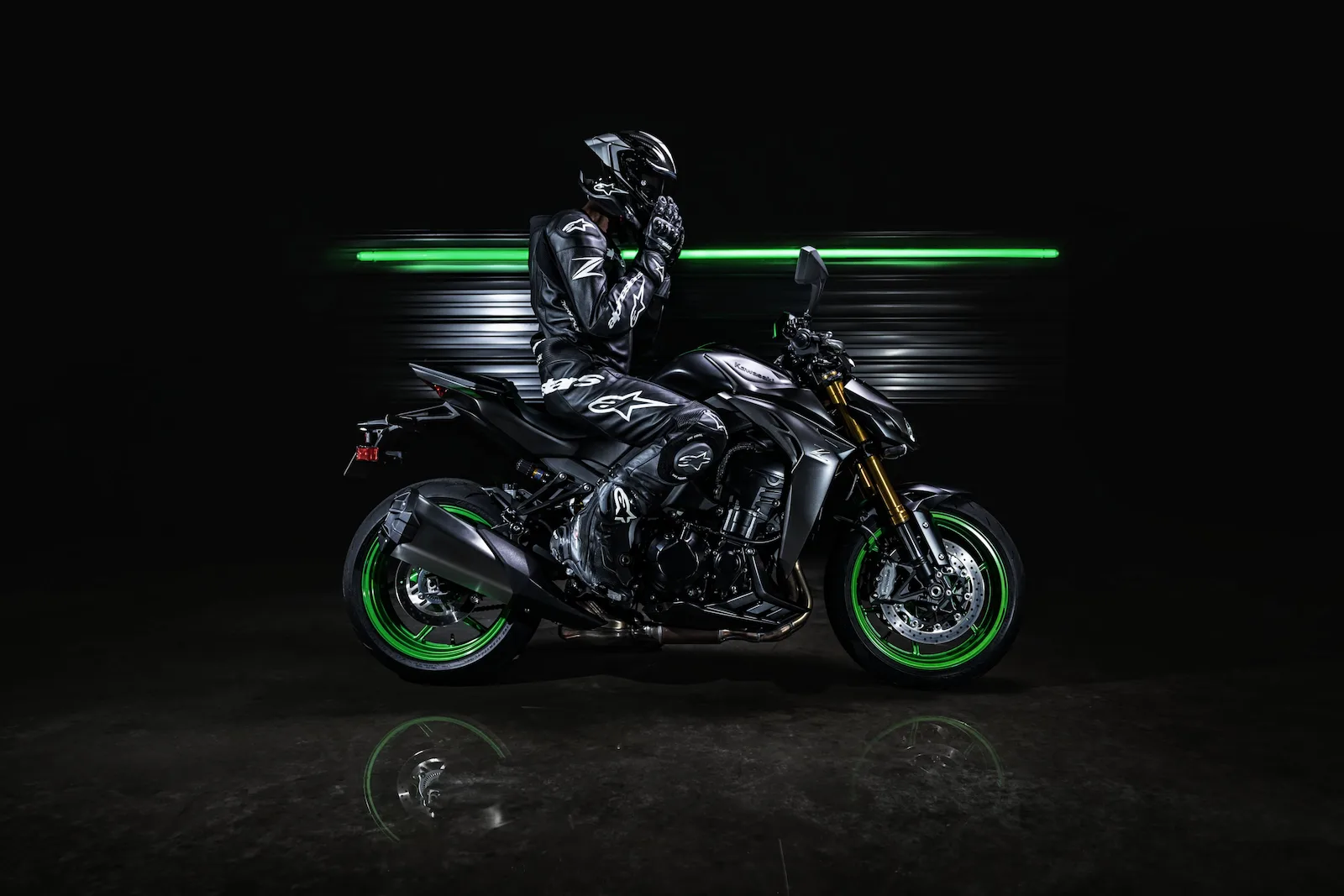
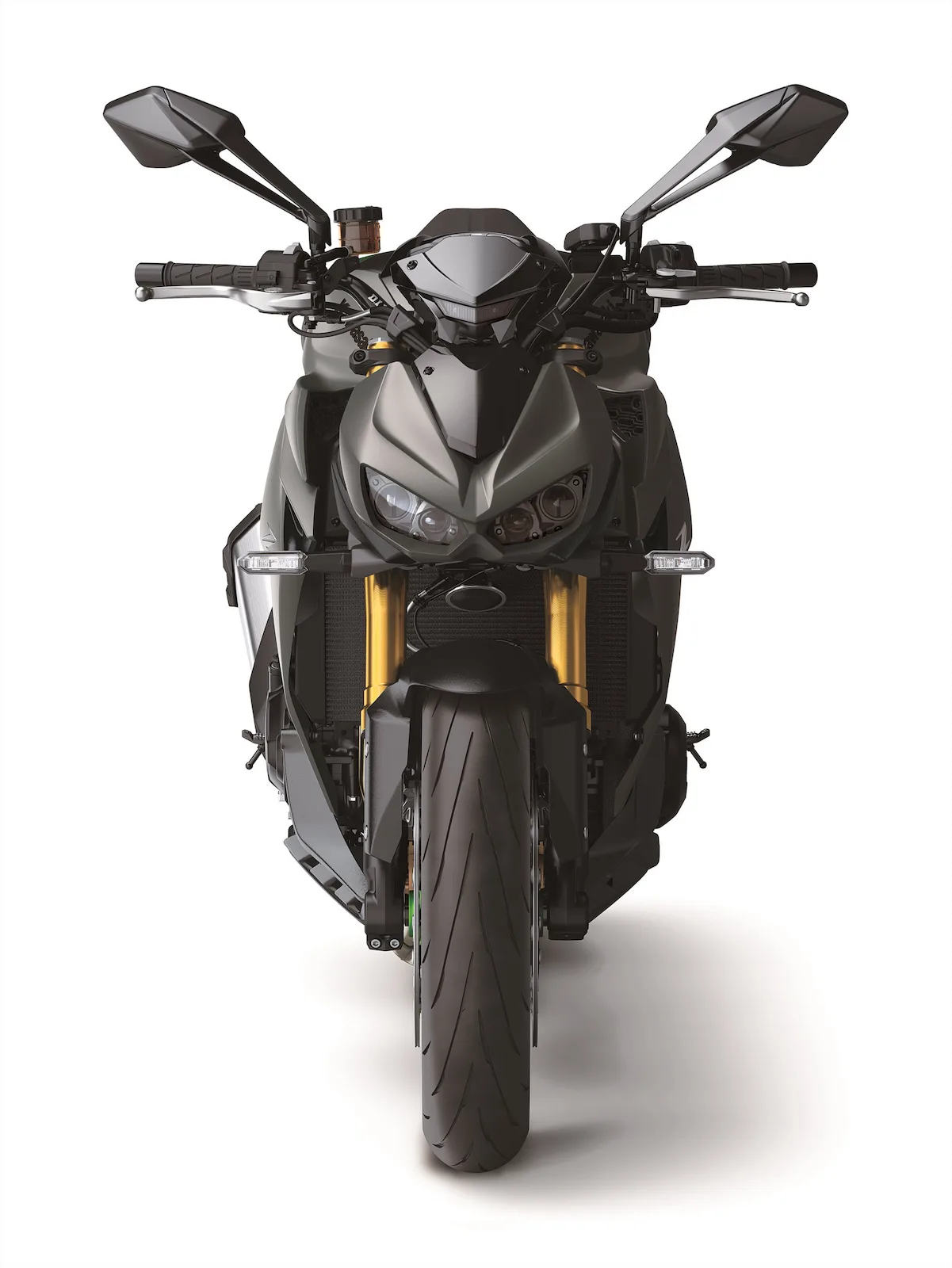
Kawasaki calls the Z1100 SE ABS the top of its Supernaked range. It is the biggest-engined Z ever, built around a 1,099cc in-line four, and it wears the sharp, predatory sugomi styling of the Z family. The SE package brings premium hardware: an Öhlins S46 rear shock, Brembo M4.32 front calipers with braided lines and a handlebar USB-C outlet. Electronics are extensive, with an IMU behind cornering management, three-mode traction control, Kawasaki's intelligent ABS, riding modes, an up-and-down quick shifter and cruise control. The riding position stays upright, so the bike is aimed at riders who want a fast, twisty-road machine without the crouch of a sportbike. It costs $14,999 in Metallic Matte Graphenesteel Gray/Metallic Matte Carbon Gray and is available now. The release does not list horsepower, torque or weight.
Engine
The liquid-cooled DOHC 16-valve four measures 1,099cc with a 77.0 x 59.0 mm bore and stroke, chosen for strong torque low and in the middle of the rev range, where most street riding happens. The ECU and electronic throttle valves give a smooth, immediate response at walking pace and when you ride hard, and Kawasaki promises an intake howl and strong over-rev at the top.
Breathing is through 38mm downdraft throttle bodies and intake ports shaped to speed up airflow at low and medium revs for more torque and better economy. The cams, valve lift and springs are specific to this engine, the flywheel smooths response at low revs, and the piston shape and passages between cylinders cut pumping losses up high.
All six gear ratios are tuned for the bike, with tall fifth and sixth gears for relaxed highway riding: at 62 mph in sixth the engine turns about 4,000 rpm. A secondary balancer gear calms vibration without removing the four's character. A large radiator handles cooling, and the 4-2-1 exhaust uses joint pipes and an under-engine pre-chamber for performance and low mass, with three catalyzers and dual O2 sensors for emissions and a high-mounted silencer. The race-derived Assist & Slipper Clutch lightens the lever and stops rear-wheel hop on hard downshifts.
Cornering management and IMU
KCMF uses Kawasaki's dynamic modeling software and a compact IMU to watch engine and chassis data through every part of a corner, adjusting brake force and power to keep transitions smooth and help you hold your line. On this bike it oversees KTRC, which manages grip and wheel lift, and KIBS, which helps with braking in corners and controls pitching.
The IMU weighs just 40 g. It measures acceleration along three axes plus roll and pitch rates, and the ECU calculates yaw, giving a picture of the bike's attitude in six degrees of freedom. That lets the rider aids respond more precisely when you brake, turn and accelerate.
Traction control
KTRC has three modes. Mode 1 lets the rear tire slip a little for maximum drive and adapts to camber and slope even without IMU input. Mode 2 balances performance and safety, and Mode 3 gives the most help on slippery surfaces. In Modes 2 and 3 the system trims ignition timing and power when it sees too much slip. Every 5 milliseconds the software reviews how fast each wheel is turning, what the rider is doing and how the chassis is behaving, and you can switch the whole system off if you want full manual control. For most street riding, Mode 2 is the sensible default; Mode 3 is the one to pick on wet or broken pavement.
KIBS braking
KIBS is a supersport-grade ABS that combines data from the ABS and engine ECUs: both wheel speeds, front caliper pressure, throttle, revs, clutch and gear position. That allows very fine control of brake pressure, a natural lever feel and light, unobtrusive pulses. Under hard stops it controls how quickly pressure builds to keep the rear wheel down, reduces kickback, accounts for engine braking on downshifts so ABS does not trigger needlessly, and uses the IMU to manage braking when you trail brake or brake mid-corner.
Riding modes, quick shifter and cruise control
Integrated riding modes bundle KTRC and power settings: Sport for punchy response and light traction control, Road for everyday use, Rain for softer power and more traction control, and a manual Rider mode where you set each system yourself. You can switch modes on the move from a left-bar button.
The contactless quick shifter works both ways: it briefly retards ignition for clutchless upshifts and blips the engine to match revs on downshifts. Electronic cruise control on the left bar holds speed up and down hills, adjusts with plus and minus buttons and cancels when you brake, use the clutch, shift or roll the throttle closed.
Dash and connectivity
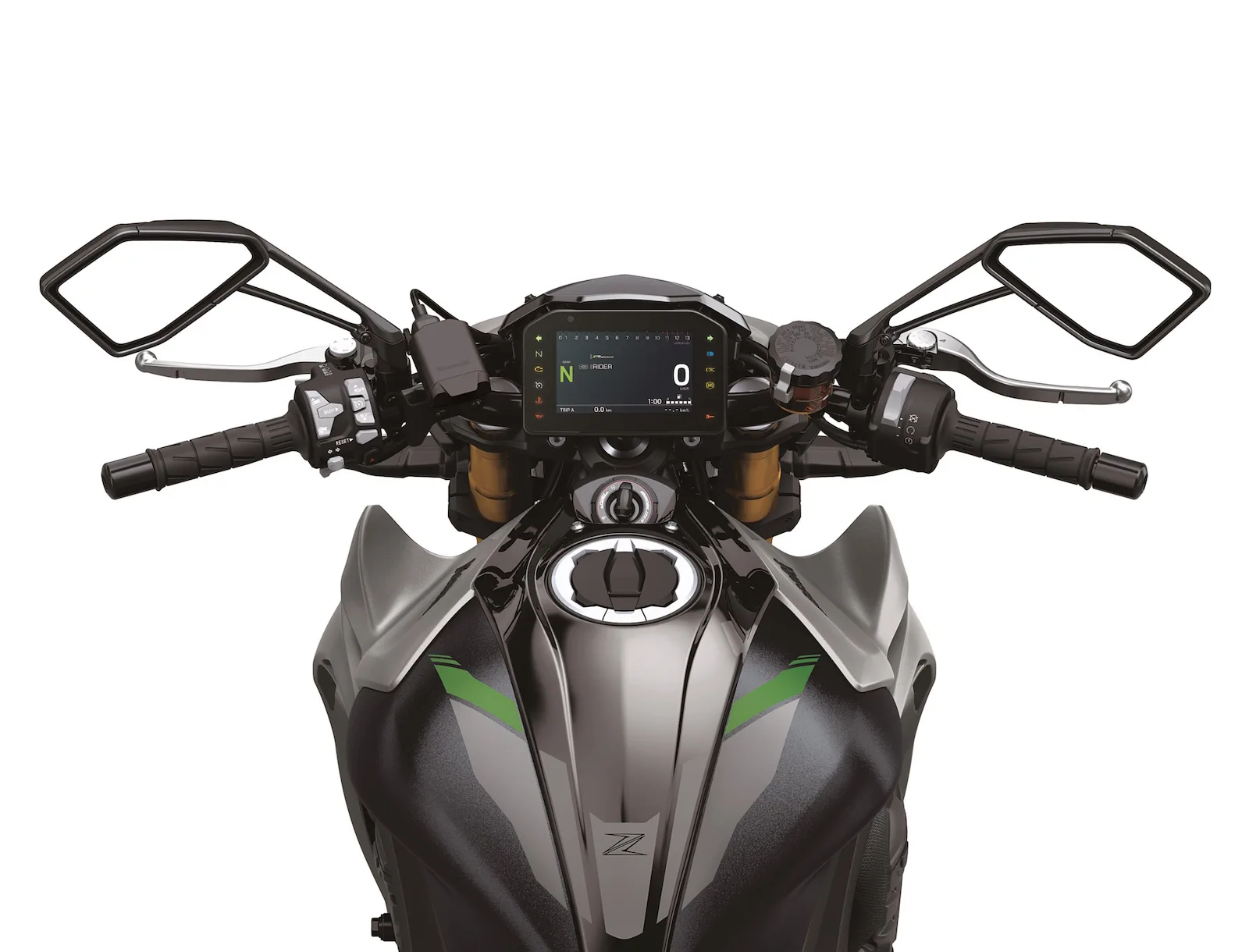
The cockpit is built around a 5-inch display with a premium, high-tech look. The 5-inch color TFT adjusts its background and brightness to the light automatically or manually. Type 1 shows a bar tachometer with clean vehicle data; Type 2 uses a hexagonal tach with either a lean-angle display or turn-by-turn navigation in the center, plus live acceleration and braking readings and ride logging. It shows speed, gear, fuel economy, battery voltage, riding mode and service and oil-change reminders, and with RIDEOLOGY THE APP MOTORCYCLE it displays calls and messages.
The app shows fuel, odometer and maintenance reminders on your phone, logs GPS routes and performance data, lets you change settings and preset riding modes and aids like the quick shifter, and offers route planning with destinations and waypoints. Voice command and navigation require a purchased license.
Chassis
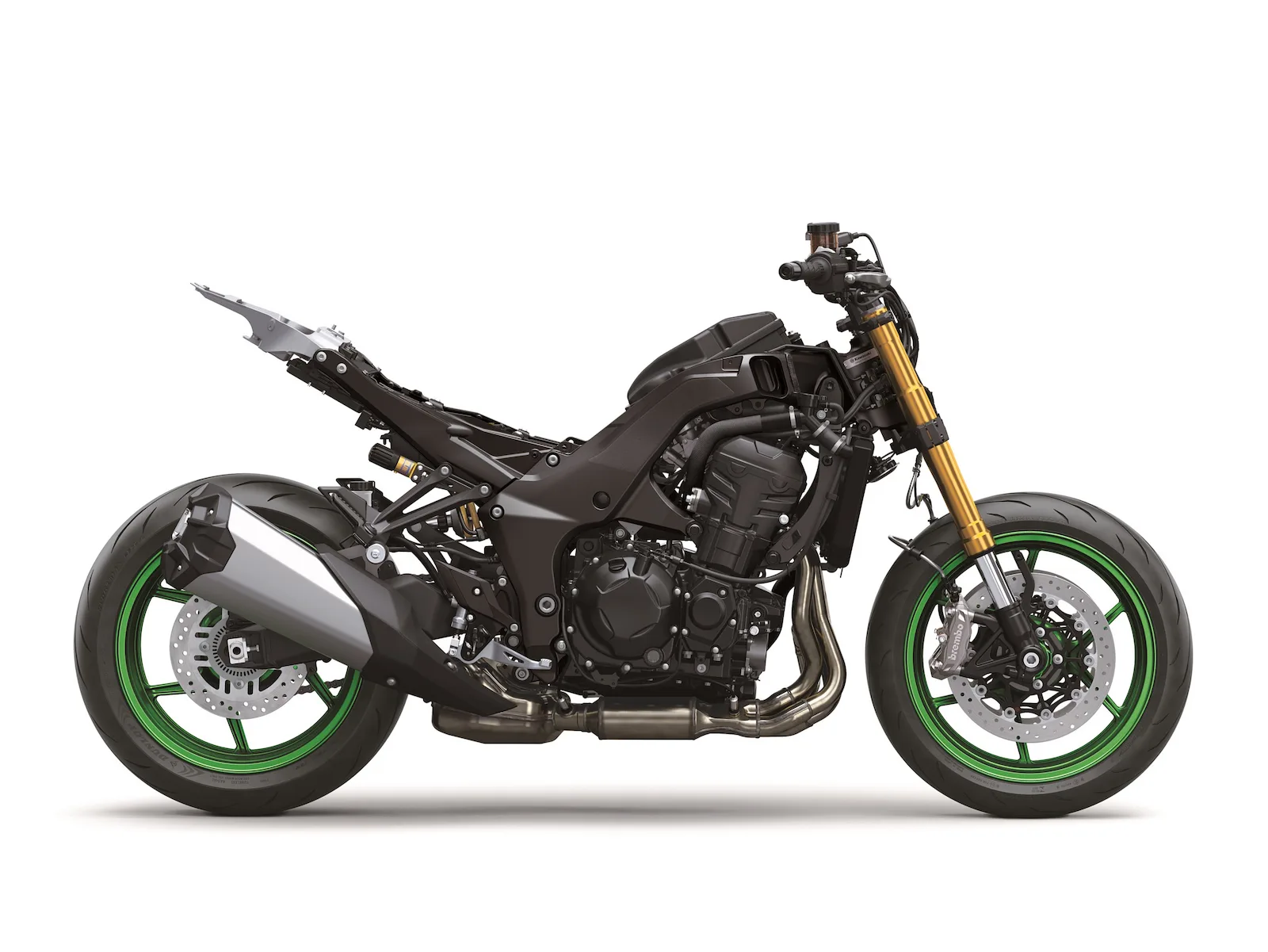
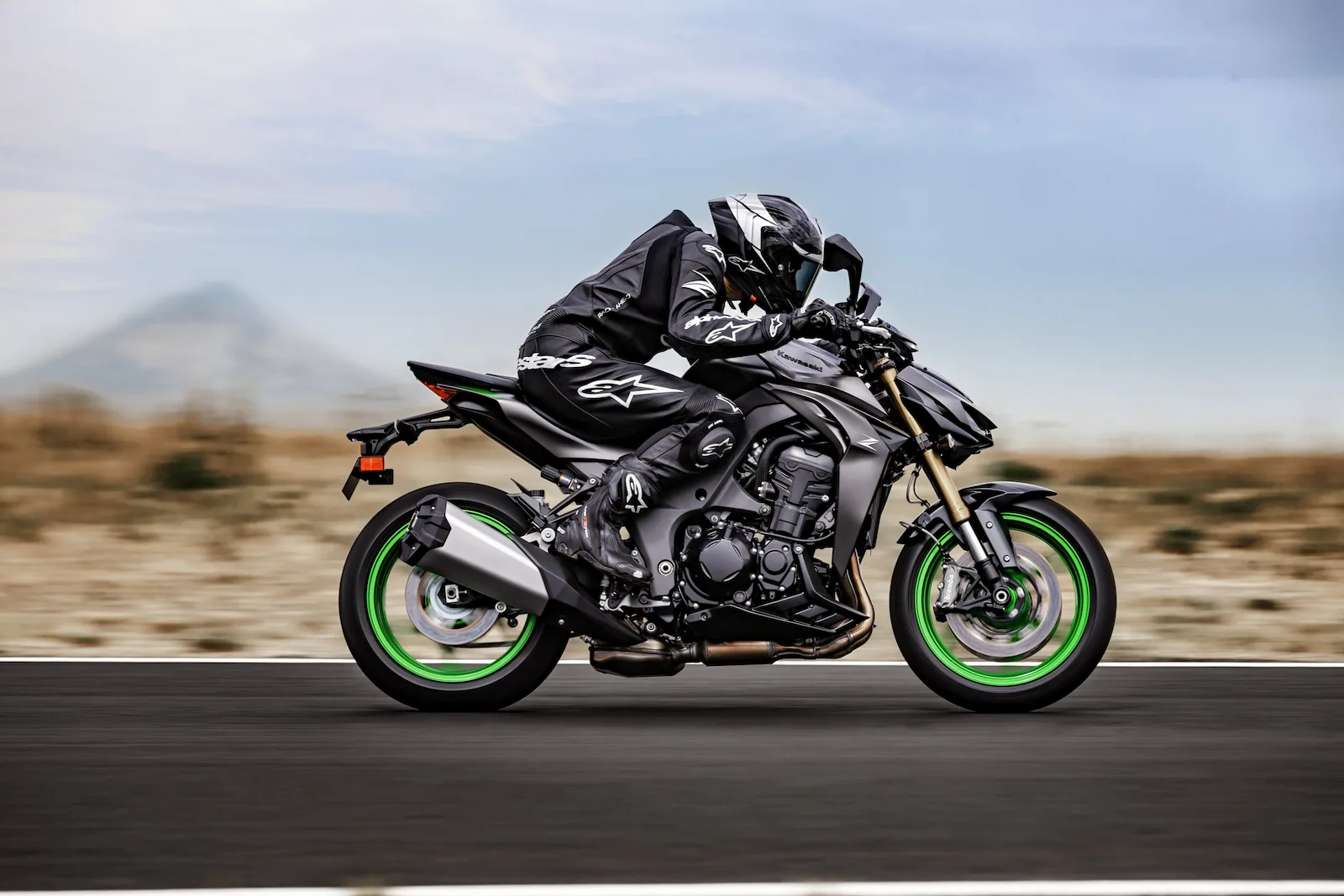
The aluminum twin-tube frame runs its beams over the engine, which keeps it narrow between your knees while stiff and light. The engine is a stressed member with four mounts, three solid and one rubber at the upper rear of the crankcase, so you feel what the engine is doing without excess vibration. Kawasaki worked hard on mass centralization: the big pre-chamber of the exhaust sits under the engine and the back-link rear shock is mounted horizontally, which frees space below the motor and keeps weight low, the downdraft throttle bodies and a three-piece aluminum subframe keep things compact. The main frame is a five-piece casting with open C-section side members for stiffness and a clean finish, a low-friction steering stem seal helps at low speeds, and a slim subframe narrows the seat so you can reach the ground more easily.
Suspension
Up front is a Showa SFF-BP fork, which splits jobs between the legs: preload on the left, damping on the right, with springs in both. Its large damping piston keeps internal pressure low for smoother action early in the stroke and good stability as weight shifts under braking. All adjusters for preload, compression and rebound sit on the fork caps.
At the rear, the horizontal back-link shock sits above the swingarm, away from exhaust heat. The SE gets an Öhlins S46 shock with an aluminum single-tube body, a 46mm piston and separate oil and gas chambers, and a remote preload adjuster lets you set it up for a passenger or luggage without tools. Kawasaki says the fork copes well with heavier loads, which suits hard riding, and together the front and rear give the bike its direct, confident feel on a fast road.
Brakes and wheels
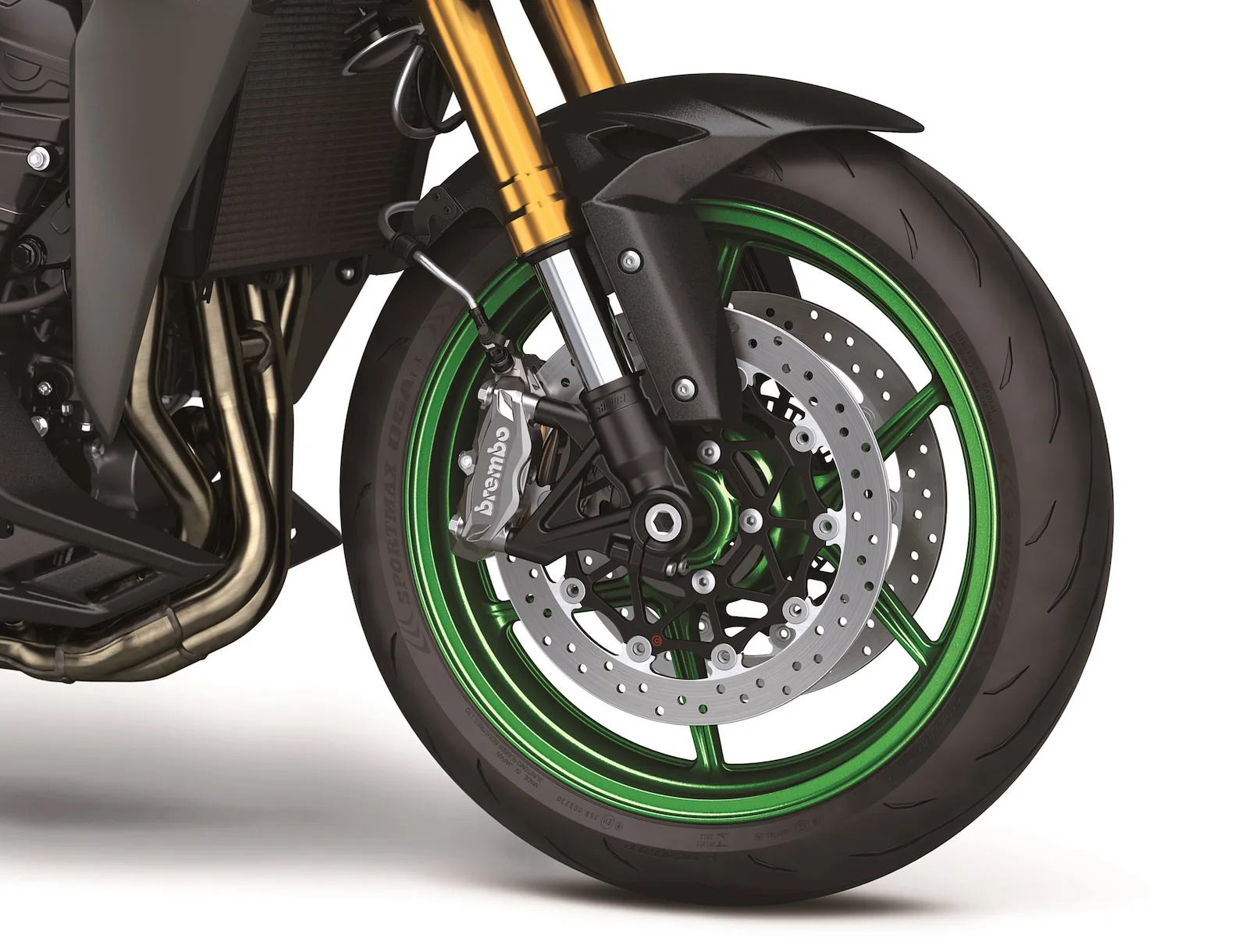
Brembo M4.32 front calipers, with 32mm pistons top and bottom, grip dual 310mm Brembo discs through braided lines for strong initial bite and precise feel. At the back, a single-piston slide caliper works on a 260mm disc. Light six-spoke wheels carry Dunlop Sportmax Q5A tires in 120/70ZR17 and 190/50ZR17 sizes, which Kawasaki says grip in wet and dry and stay consistent as they wear. The discs are round, the front reservoir is clear, and conventional rear axle adjusters keep chain service simple.
Ergonomics and styling
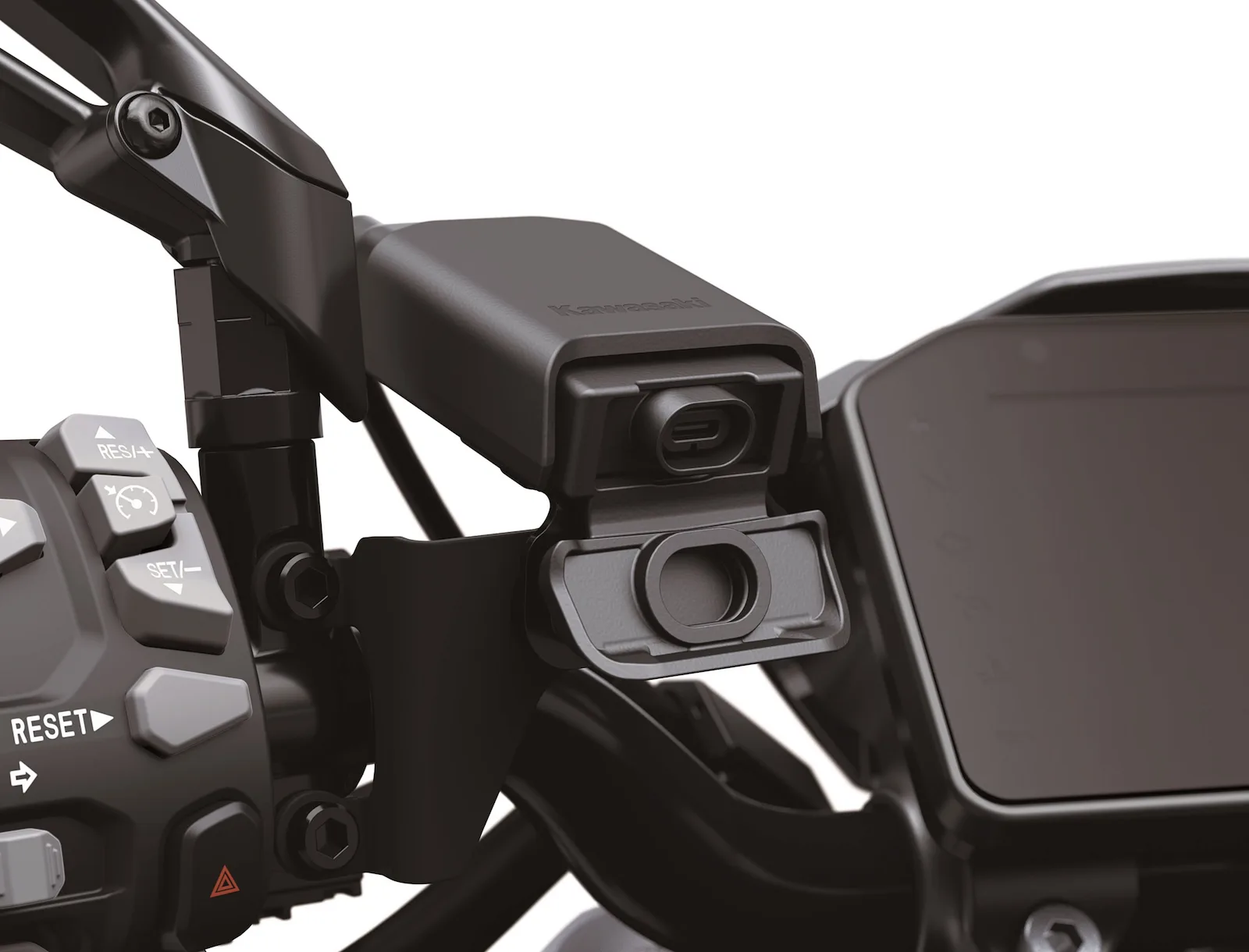
A wide, forward-mounted aluminum fat bar, rigidly mounted, makes the bike easy to flick and puts you in an active, commanding position. The sculpted tank, seamless joins between tank, seat and side covers, supersport-style pegs, luggage hooks on the passenger peg stays and new switchgear complete the cockpit, plus a USB-C outlet on the bar.
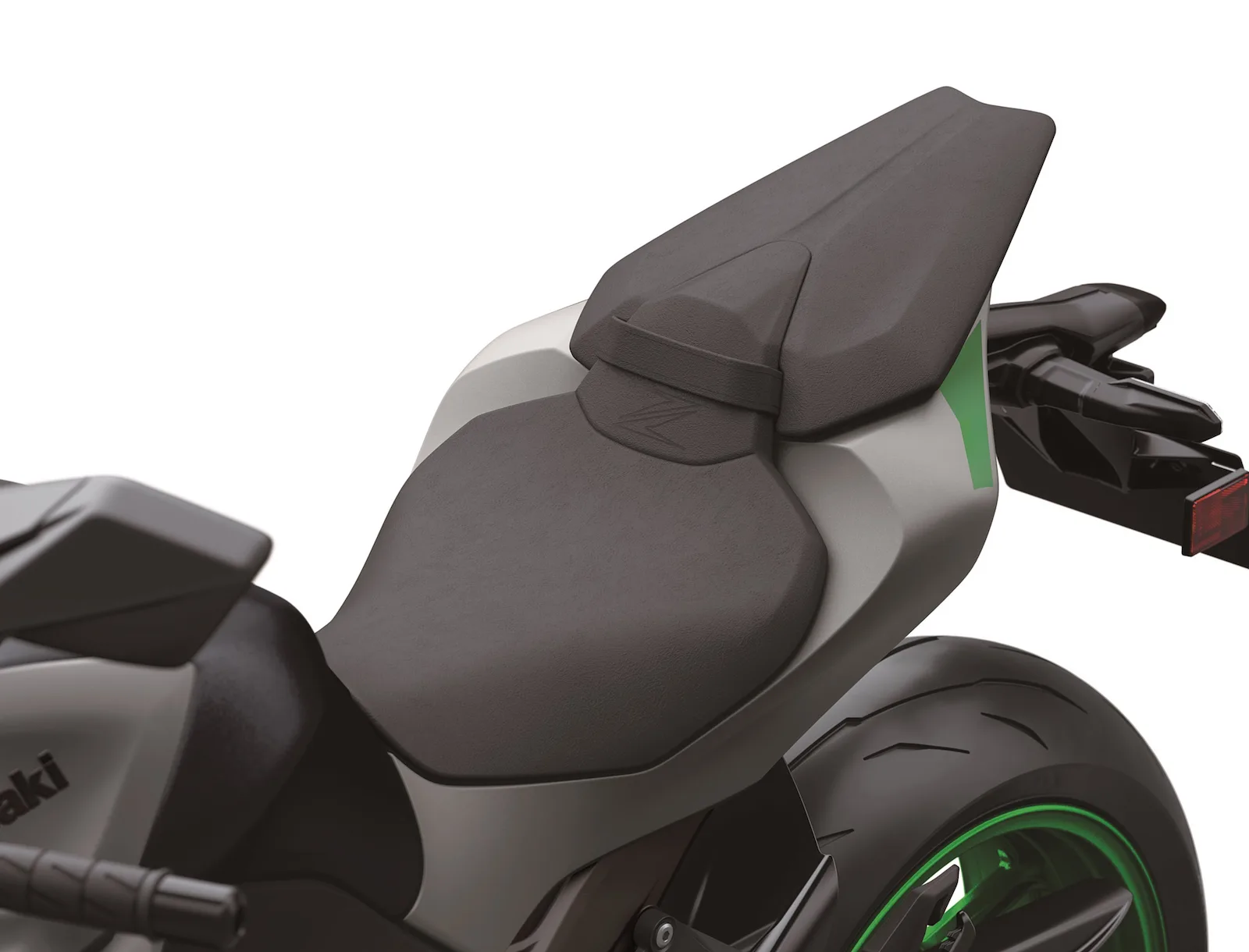
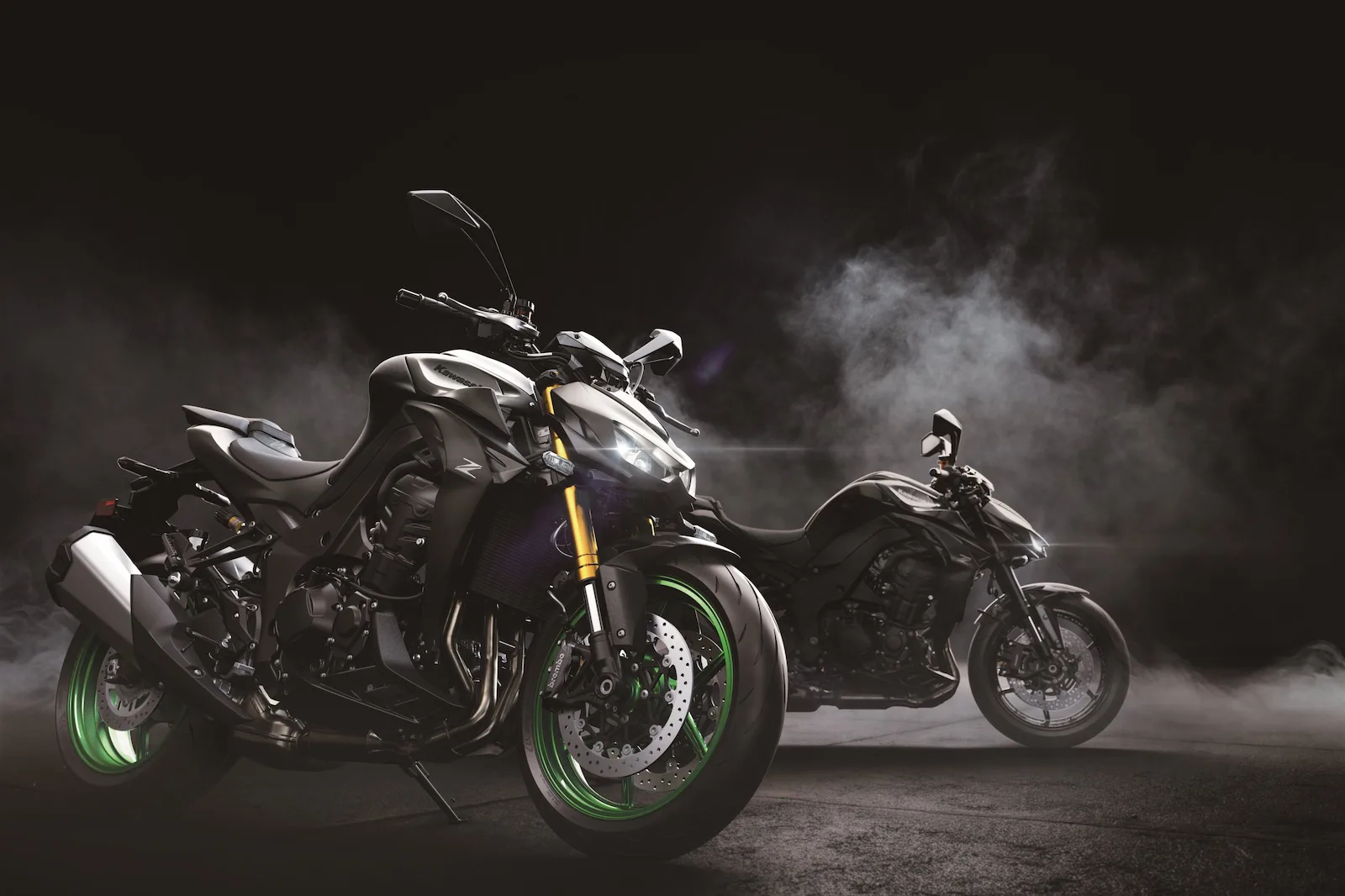
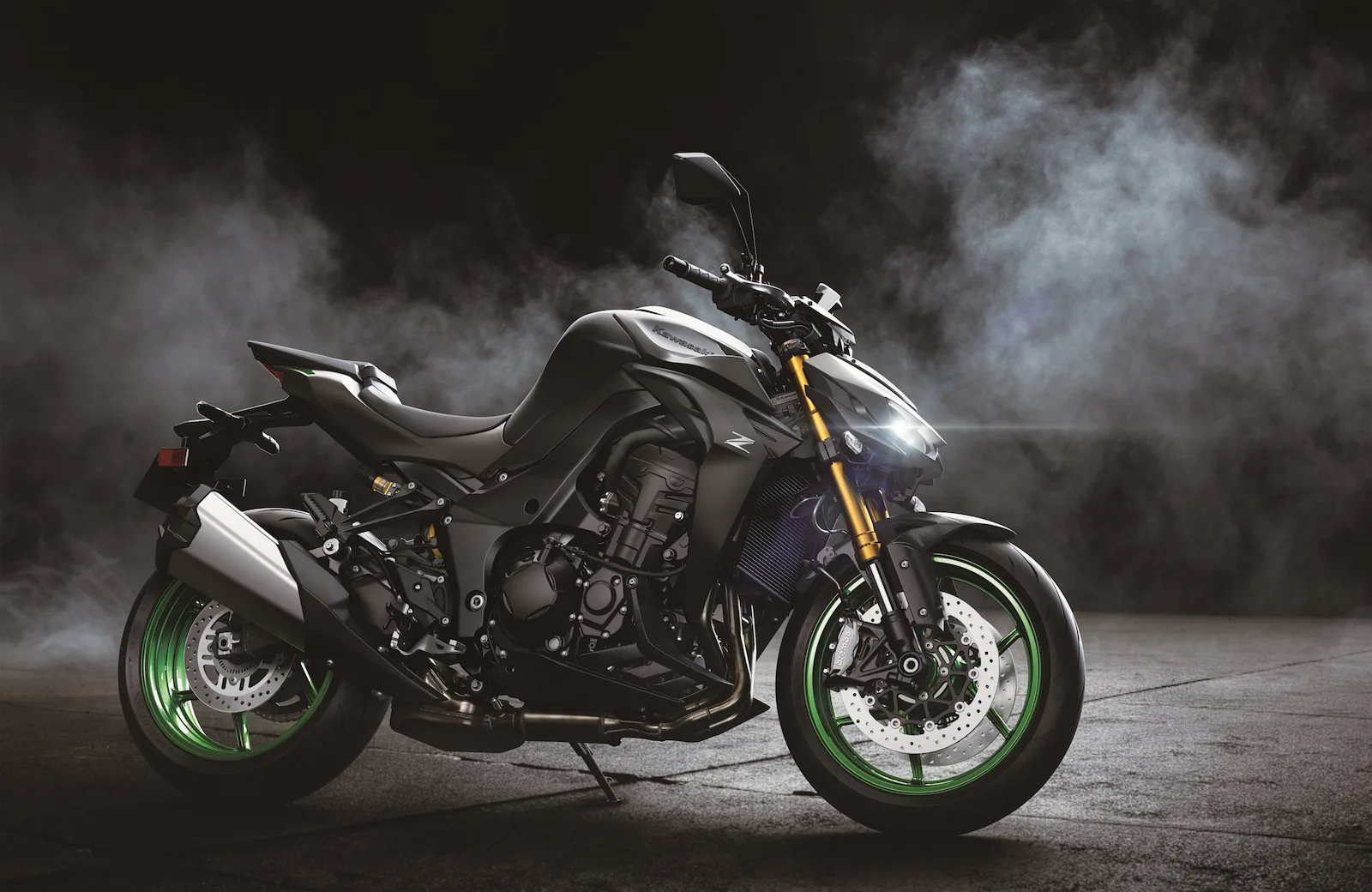
The styling leans hard into sugomi: mass pushed toward the front, a short flicked-up tail and sharply sculpted bodywork and engine covers. The slim, reflector-less LED headlight sits low; all four LED bulbs light together on high beam, with a separate position light. A low, wide meter cover frames the 5-inch TFT, shrouds wrap the engine, the under-cowl has fin-like details, and a single-sided exhaust blends into the bodywork. Finishing touches include a brushed bar with black alumite, LED tail and plate lights, and a Z-pattern seat with a cowl-style pillion pad.