The full story
What it means for you
- Choosing a version: the SE is for riders who want better brakes and rear suspension; the CAFE is for wind protection and a lower 32.2” seat.
- Cruise control and the quick shifter are now standard on all three, a big plus for long rides.
- Shorter riders: the ERGO-FIT Low seat cuts 25mm.
- If you change sprockets, note the new 43-tooth rear.
- Navigation and voice command in the app need a paid license.
What changed for 2026
Z900RS
- Updated
Engine
10.8:1 compression11.8:1 compression, new cams, Electronic Throttle Valves
- New
Electronics
IMU, KCMF, KQS, cruise control, smartphone connectivity
- Updated
Exhaust
Megaphone-style silencer 70mm longer
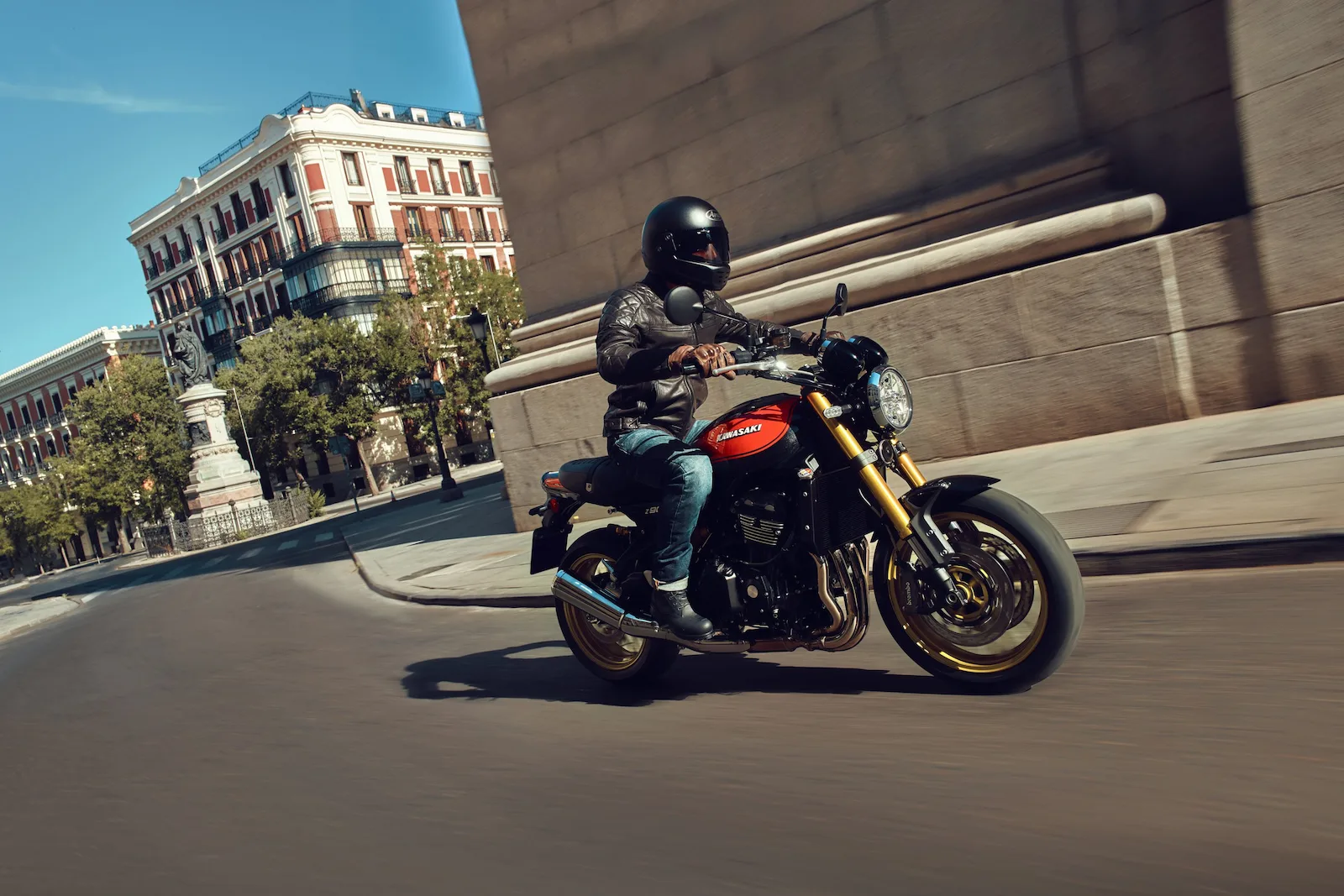
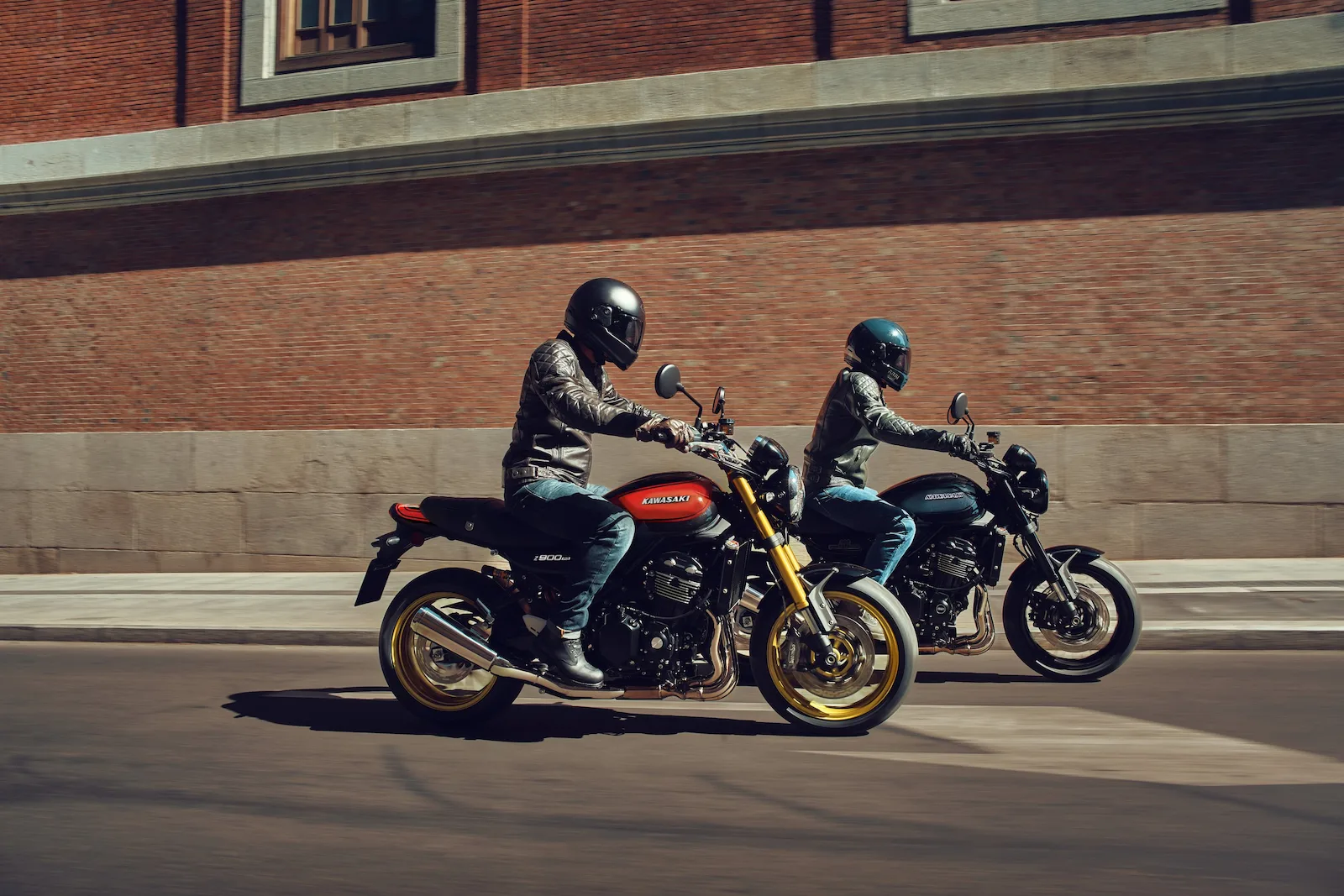
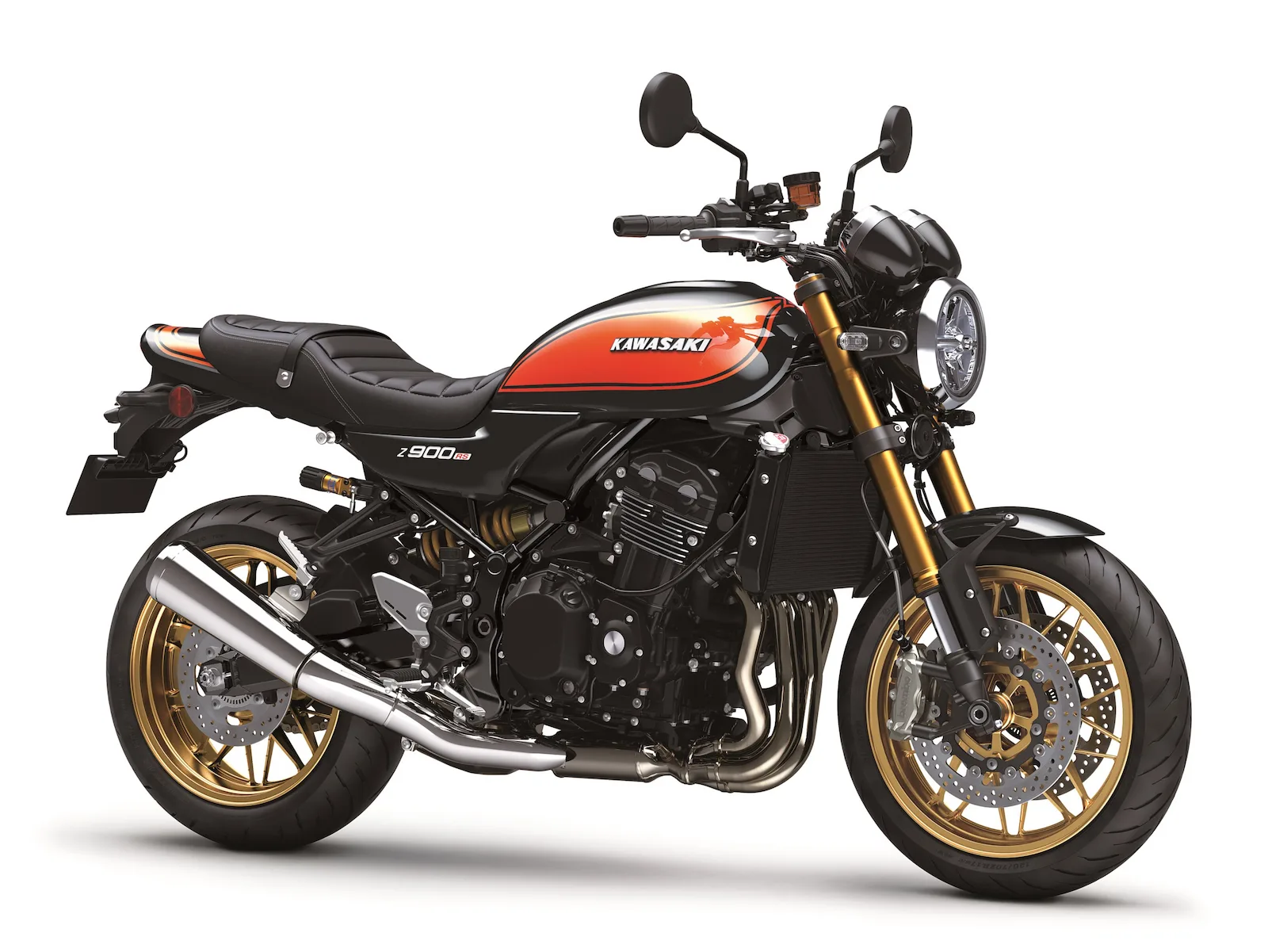
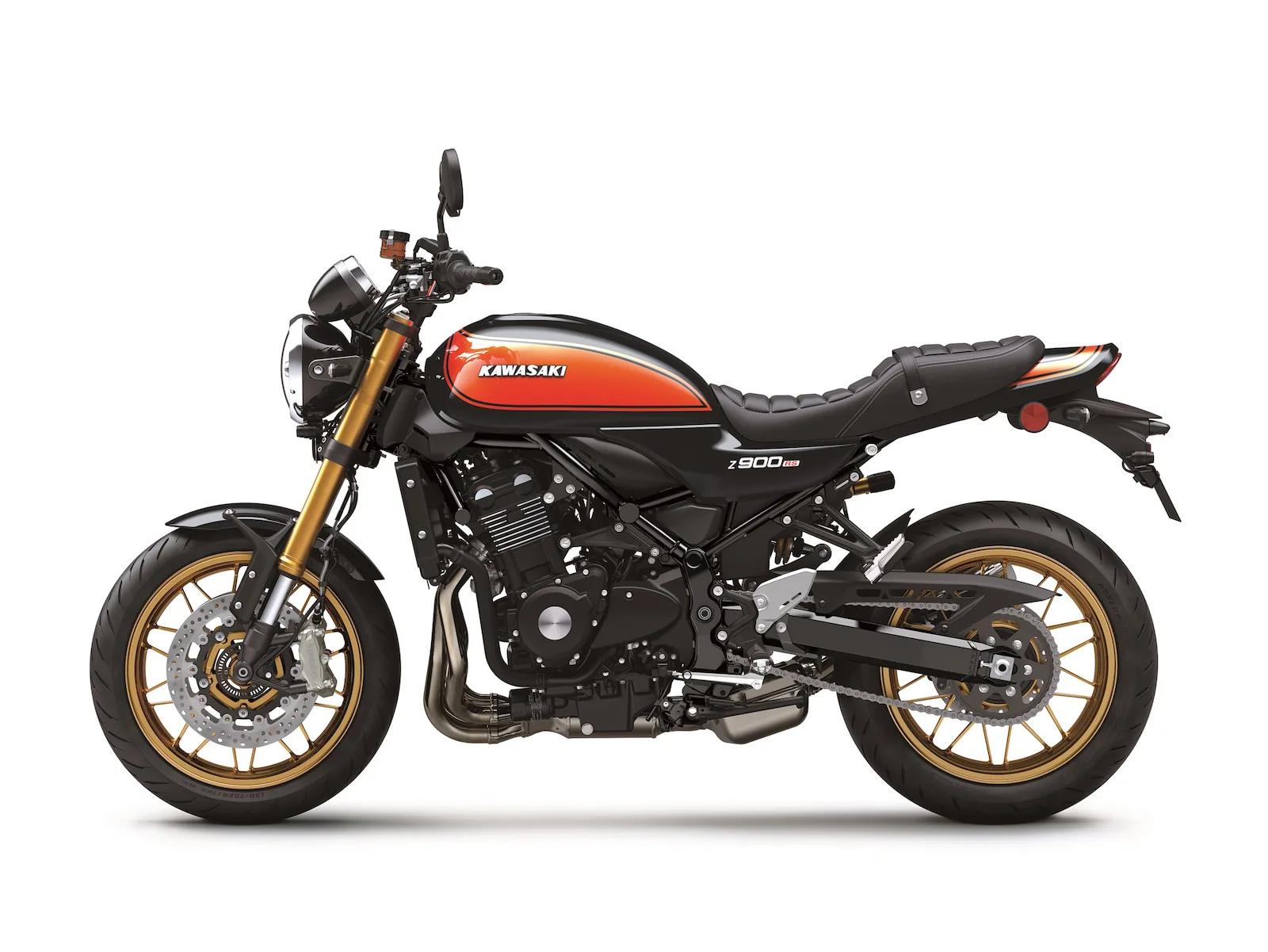
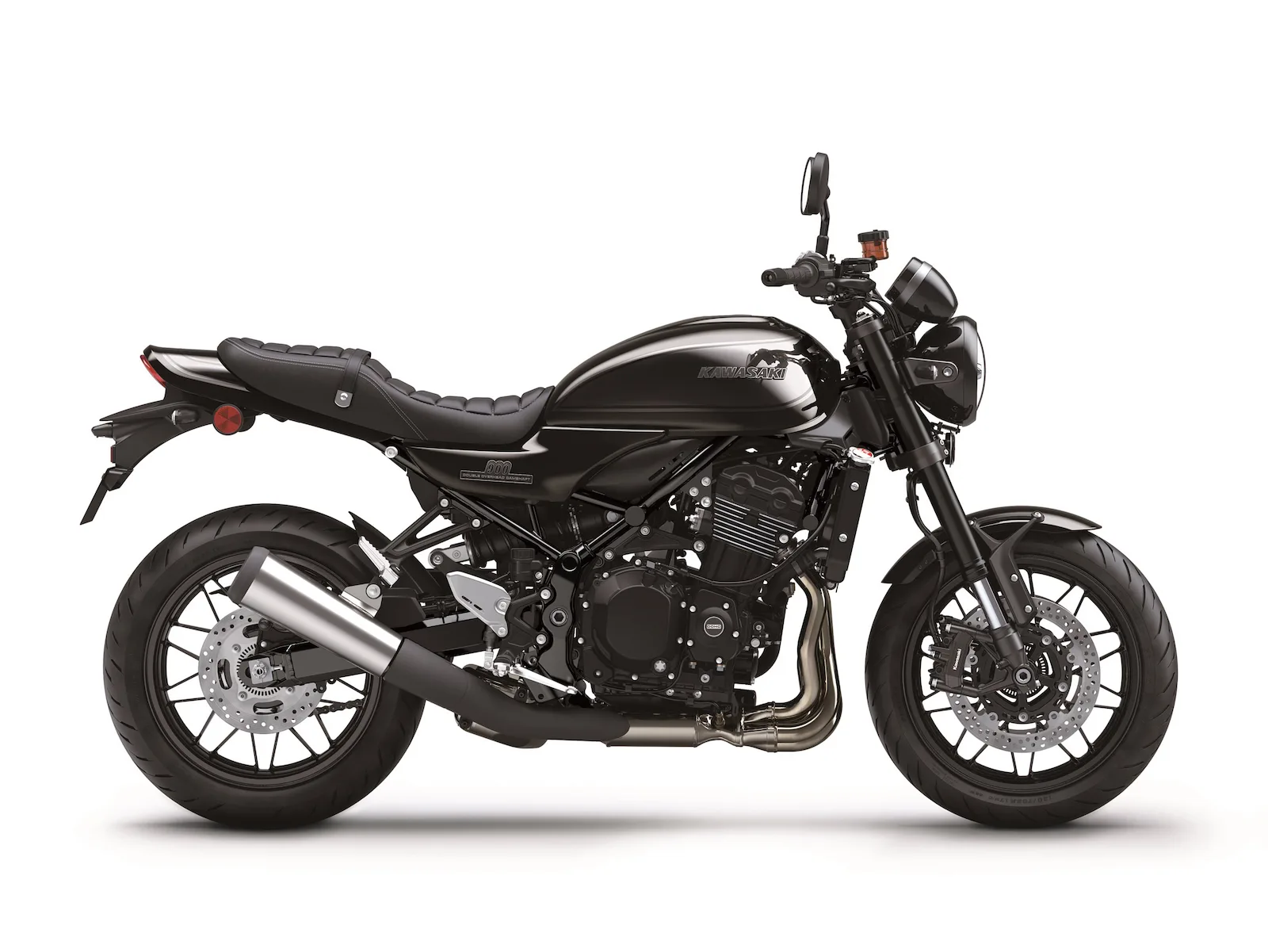
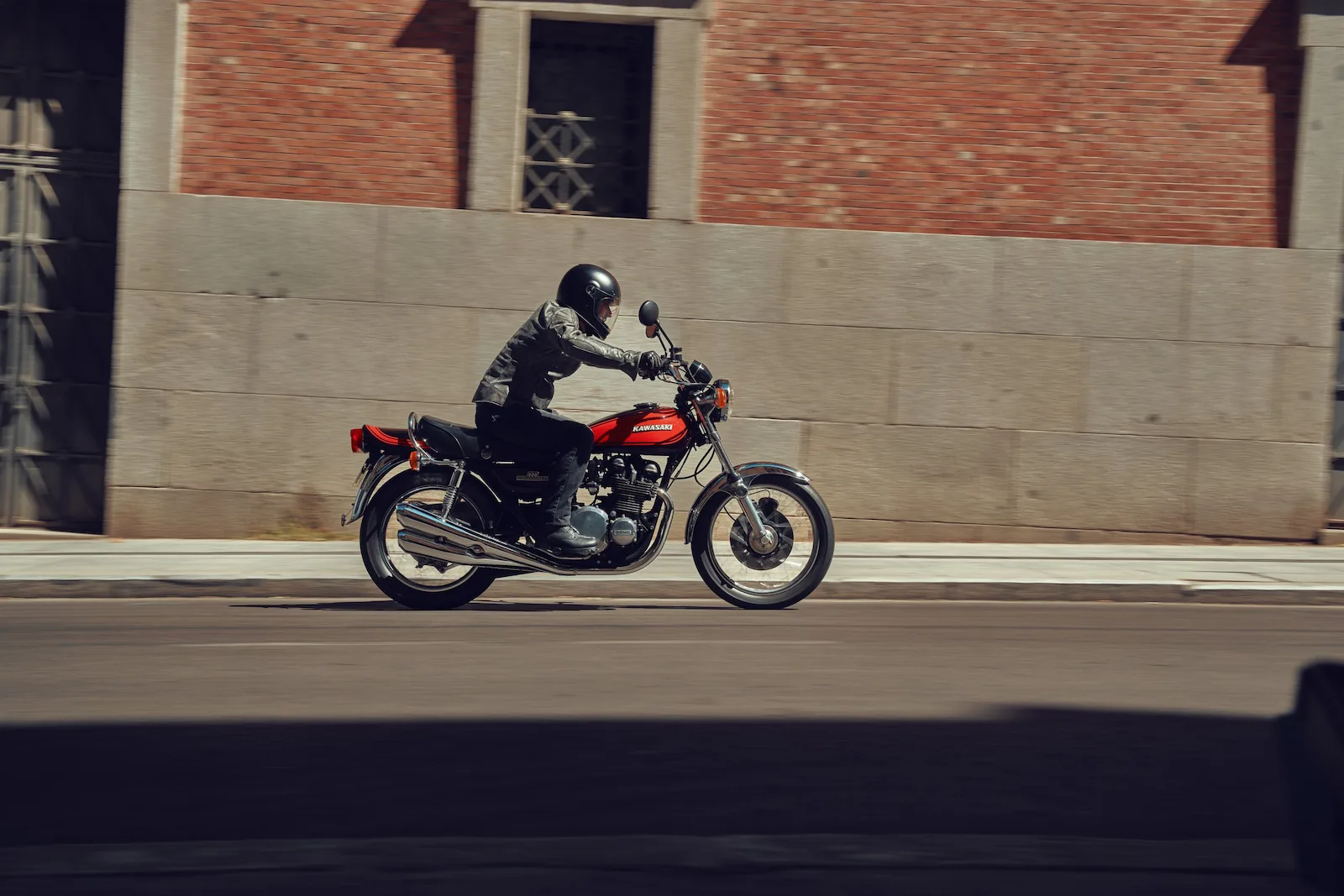
Since 2018 the Z900RS has been Kawasaki's way of selling the look of the 1970s Z1 with modern performance, and for 2026 the whole family gets a major update. The 948cc in-line four gains higher compression, new cams and electronic throttle valves. That makes room for an IMU-based electronics package with cornering management, traction control and IMU-linked ABS, a quick shifter that works both ways, and cruise control. A new megaphone-style muffler and reshaped header pipes sharpen the classic look, and a new smartphone link sits hidden behind a side cover. The lineup is the Z900RS at $12,899, the Z900RS SE ABS at $14,599 with Brembo brakes and an Öhlins shock, and the Z900RS CAFE ABS at $13,299 with its front cowl and drop bars. The release lists all three as available now, though it also mentions a limited order period beginning in November. It gives no power, torque or weight figures.
Engine
The liquid-cooled, DOHC, 16-valve 948cc four has been reworked for more top-end performance while staying easy in everyday use. New cams have more duration and lift, and compression rises to 11.8:1 from 10.8:1. Downdraft throttle bodies shorten the intake path, the airbox and funnels are tuned for the Z900RS feel, and the valves measure 29mm intake and 24mm exhaust for a livelier mid-to-high rpm character.
Electronic throttle valves with 36mm bores let the ECU control air and fuel precisely for smooth response, linear acceleration and better economy, and they make the quick shifter and cruise control possible. Inside, cast pistons made with a process that gives forged-like stiffness reduce reciprocating weight, a V-groove on the second ring land cuts blow-by and oil use, open-deck die-cast cylinders save weight, and passages between cylinders reduce pumping losses. The crank has about 10% less flywheel mass so the engine revs more freely.
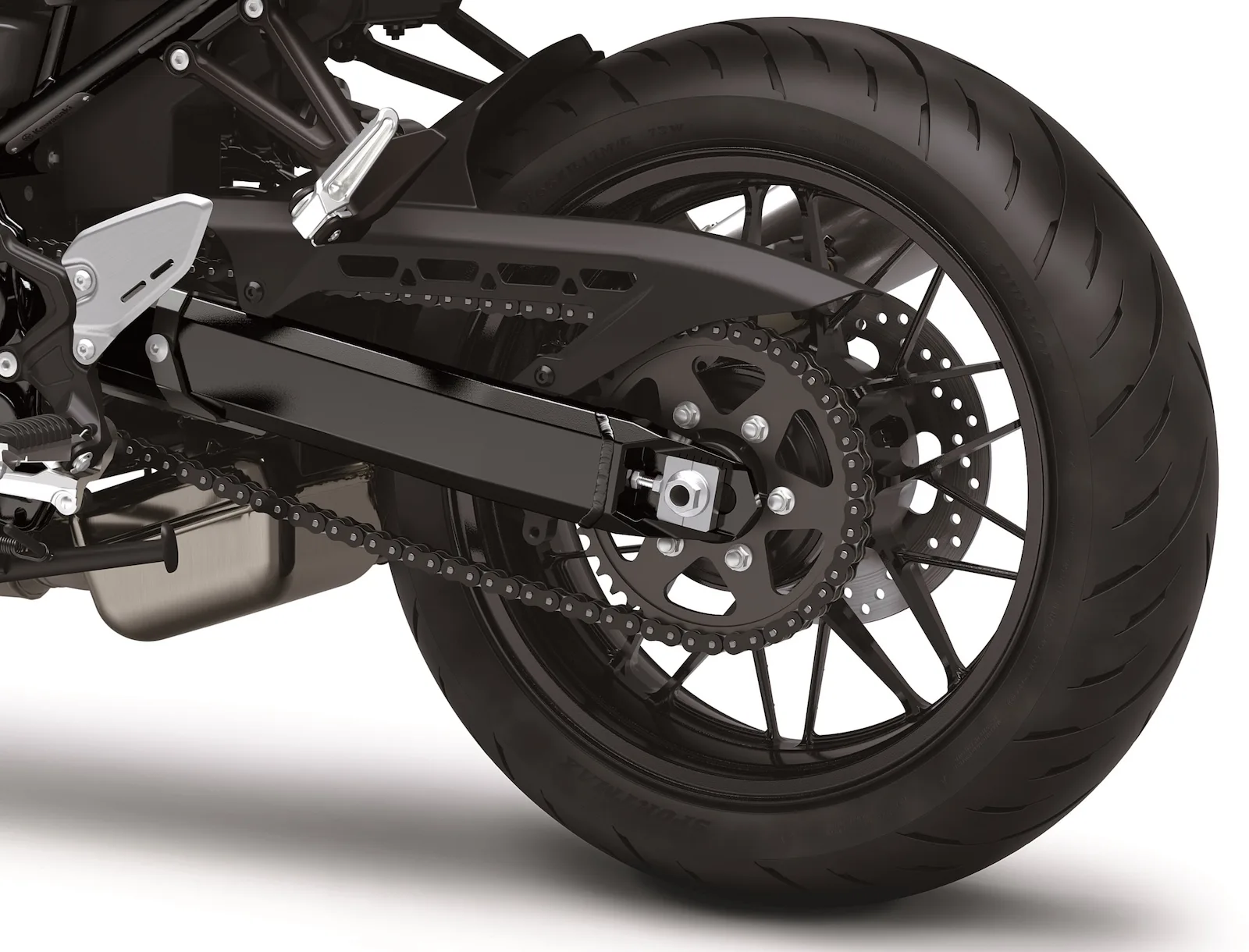
The ECU softens throttle response low in the revs and lets the engine pull hard at the top. A secondary balancer trims vibration but keeps some pulse for character. Gearing is shorter overall: the ratios sit closer together and the rear sprocket now has 43 teeth, which holds the engine in its strongest rev range on twisty roads and sharpens acceleration. The Assist & Slipper Clutch lightens the lever and limits rear-wheel hop when you downshift hard.
Exhaust and sound
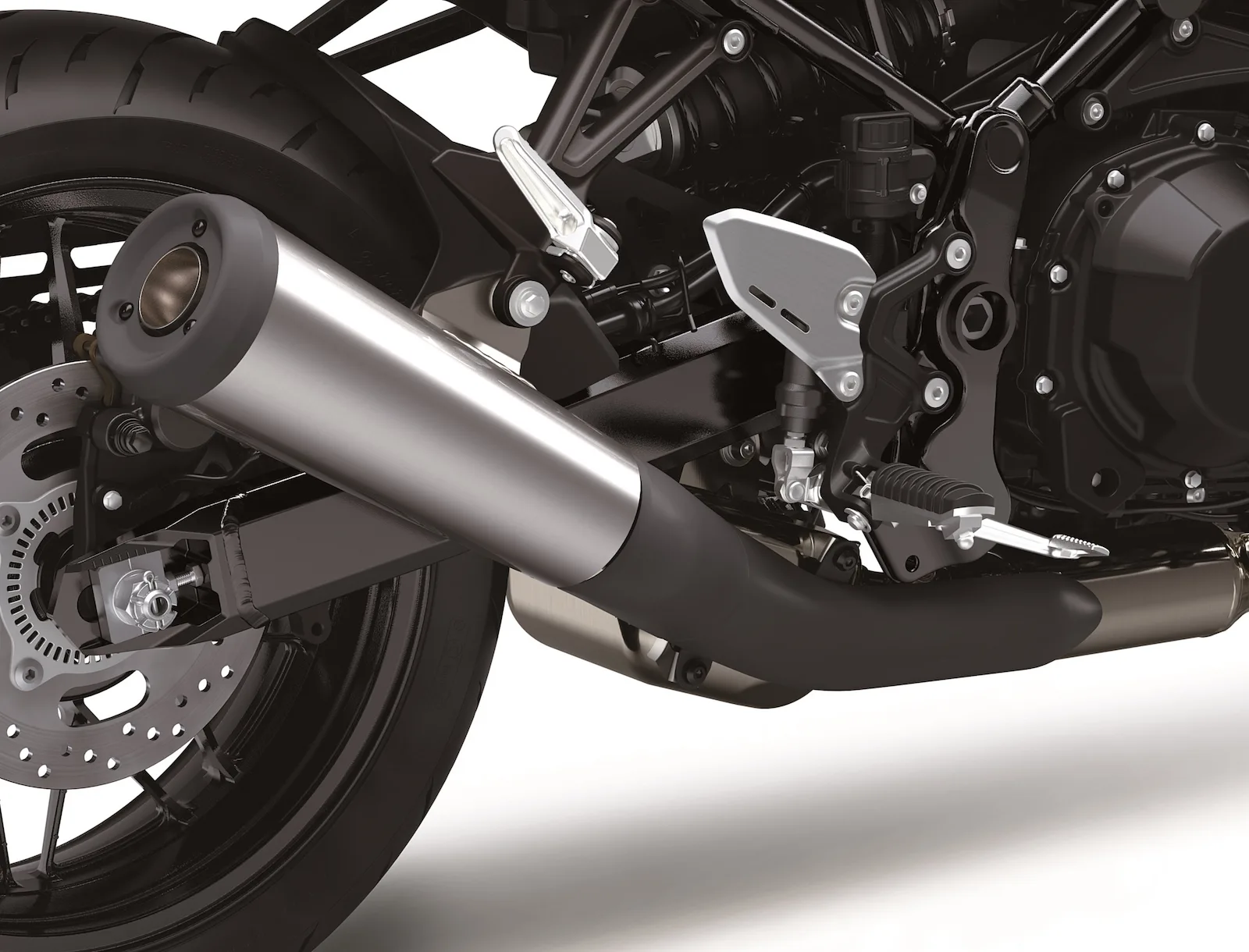
The 4-into-1 exhaust has a stainless pre-chamber and a new megaphone-style silencer that is 70mm longer than before, for better proportions. The dual-wall headers now sweep further forward, look more muscular and resist discoloring, with a narrower inner pipe for low and midrange torque. The compact pre-chamber runs cooler and is joined by a sub-catalyst for lower CO₂ and better economy. Kawasaki left out connector pipes and exhaust valves to keep the lines clean, and every stainless part gets a three-stage buff.
Engineers spent a long time on the sound, aiming for the moments when riders notice it most: a deep, vintage 4-into-1 tone at idle, a low pulse when cruising and a growl under acceleration, achieved through changes to the packing, fiber density and perforation inside the silencer.
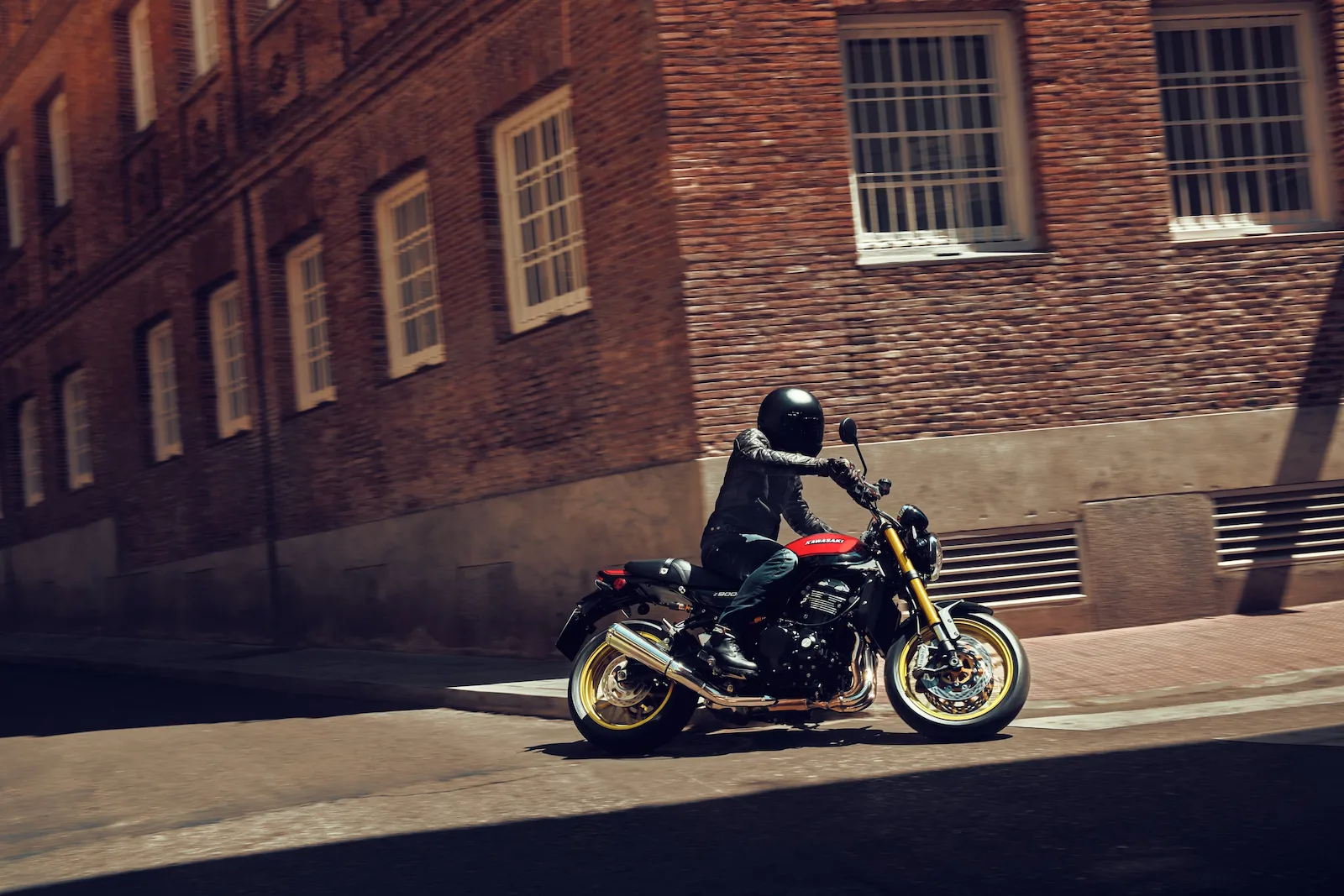
Electronics: IMU, cornering management, traction control, quick shifter and cruise
A six-axis IMU measures acceleration in three directions plus roll, yaw and pitch. KCMF uses it to manage brake force and power from corner entry to exit, working with KTRC and an enhanced ABS that uses IMU data to manage pitching and braking in corners.
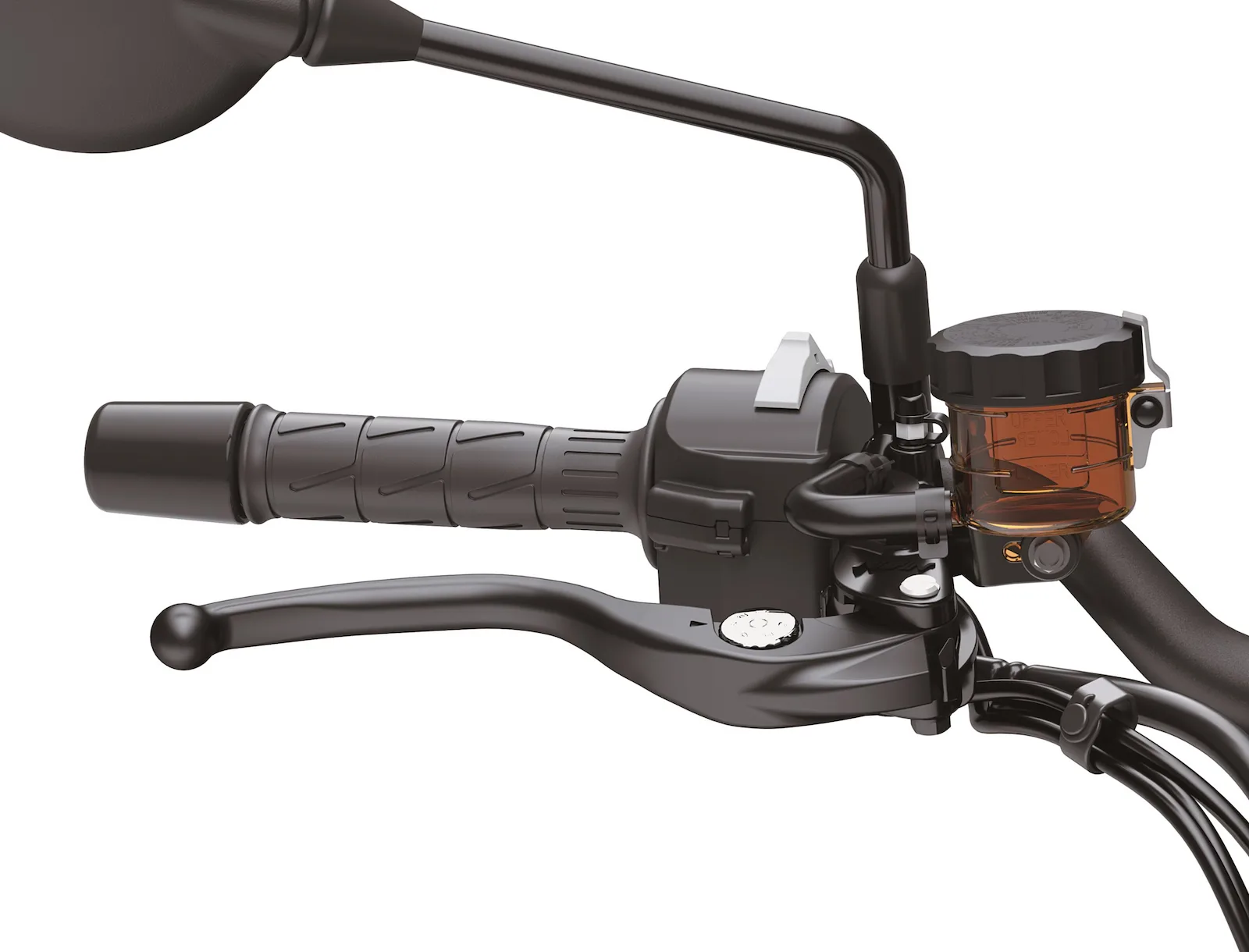
KTRC has two modes: Mode 1 is light and sporty and maximizes drive out of turns; Mode 2 cuts power earlier for short slippery patches such as rail tracks or manhole covers, or long stretches of wet pavement, cobbles or gravel. The KQS quick shifter gives clutchless upshifts and downshifts, uses a contactless sensor and works from as low as 1,500 RPM. Cruise control runs from the left bar, holds speed on hills, adjusts with plus and minus buttons, and cancels when you brake, use the clutch, roll the throttle closed, shift into 1st or 2nd, or when traction control intervenes strongly.
Instruments and connectivity
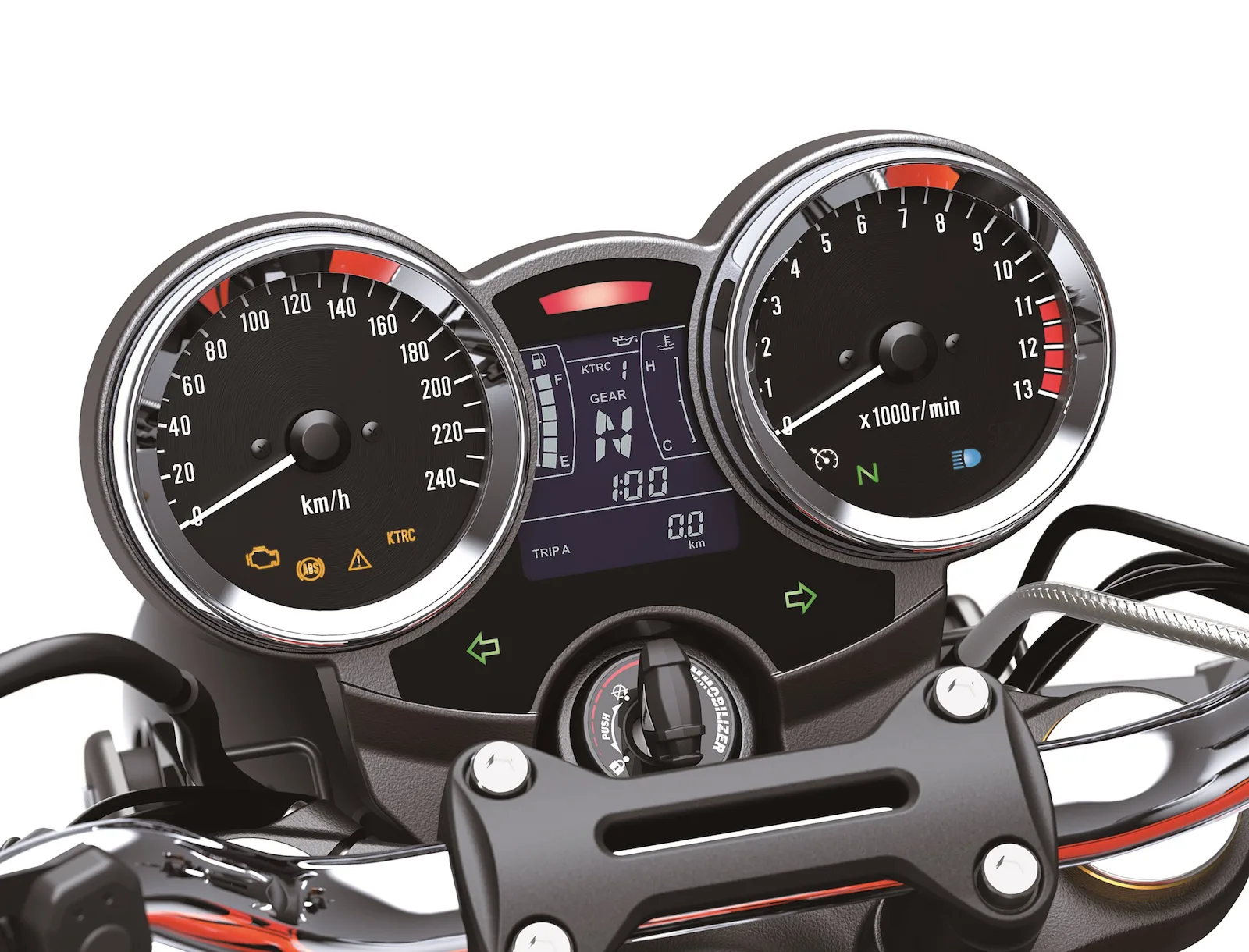
The cockpit keeps the twin analog-style dials for speed and revs in bullet-shaped housings with spindle-finished faces, plus a multi-function LCD now in a negative white-on-black layout. A Bluetooth unit hidden inside the right side cover adds phone connectivity without cluttering the dash. The LCD shows gear, odometer, two trip meters, fuel level and range, consumption, coolant and air temperature, clock, cruise status, app connection and an Economical Riding Indicator.
RIDEOLOGY THE APP MOTORCYCLE shows fuel, odometer and maintenance schedule on your phone, logs GPS routes and riding data, displays call and message alerts on the dash and lets you set the clock. Navigation and voice command, with destination search, waypoints and route ordering, require a purchased license.
Chassis
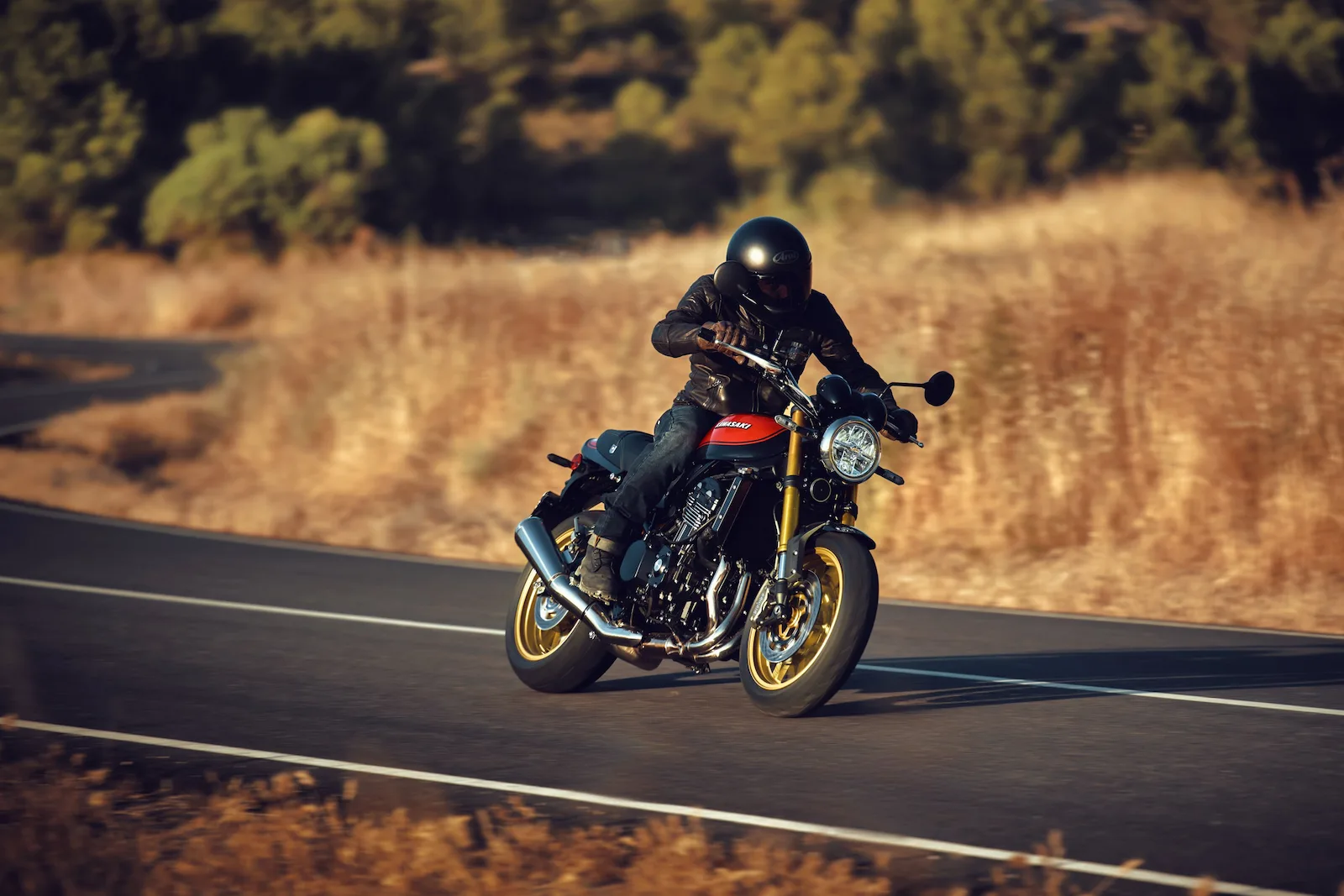
The trellis frame, designed with Kawasaki's analysis tools around the slim teardrop tank, is high-tensile steel with straight tubes. Compared with the more aggressive Z900, the RS raises the front and lowers the rear for a more neutral stance. A specific upper triple clamp with a 34mm offset reduces trail for light steering, the engine is solidly mounted at five points as a stressed member, and an extruded aluminum swingarm keeps unsprung weight down. The twin-tube subframe allows a low seat and limits vibration through it. Kawasaki's aim is a bike that is stable yet nimble and comfortable yet engaging, as happy rolling through town as it is on a winding back road.
Suspension
The 41mm inverted fork is fully adjustable, with 12-way compression, 10-way rebound and stepless preload. At the rear, a horizontal back-link shock replaces the Z1's twin shocks; it sits above the swingarm, away from exhaust heat, and offers stepless rebound and preload adjustment. It is the same type of layout Kawasaki uses on its supersport and supernaked bikes, and engineers chose it because they were not willing to give up modern handling for the sake of period-correct twin shocks. The result is a suspension package that is comfortable on a lazy weekend ride and still capable when you push on a fast road.
Brakes and wheels
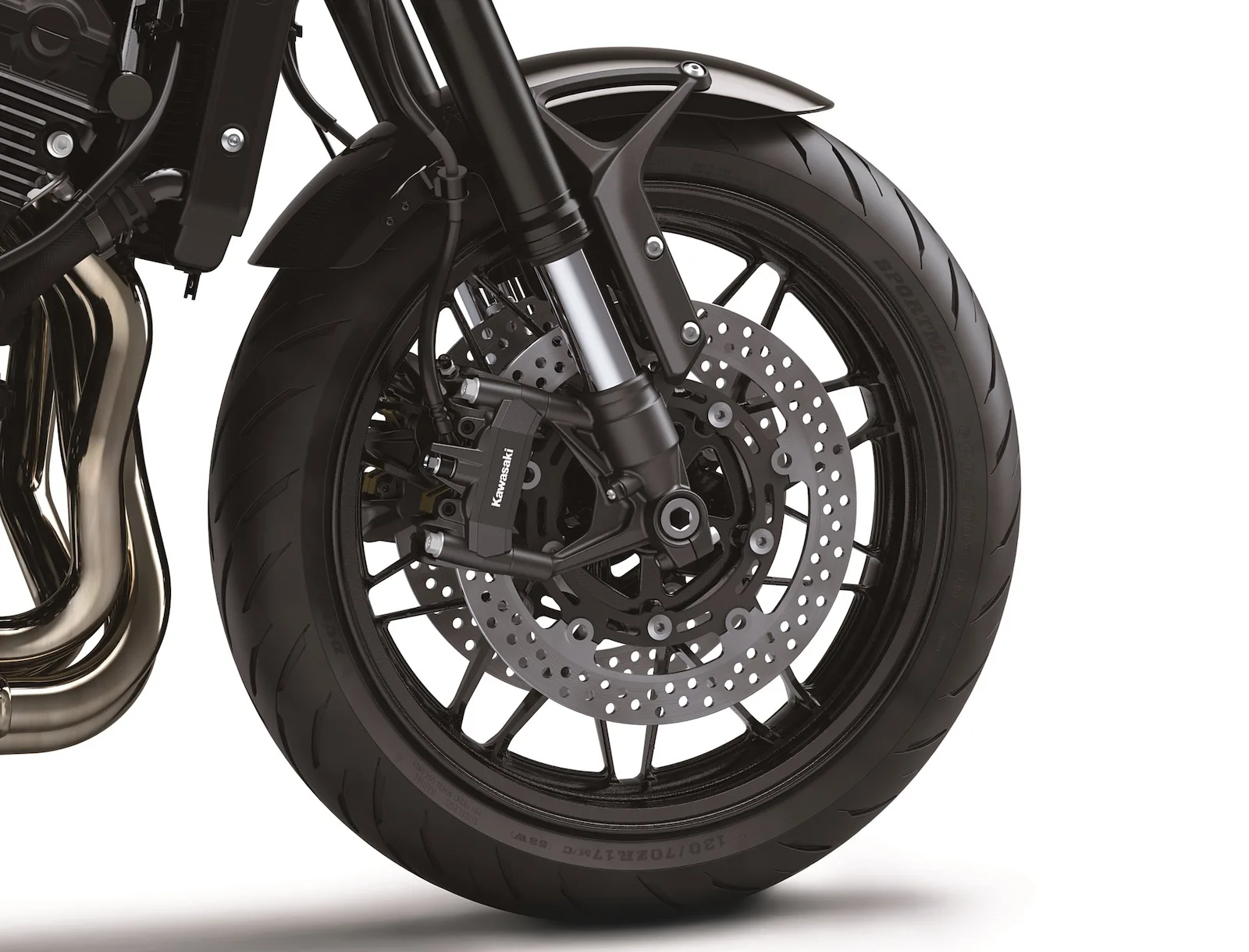
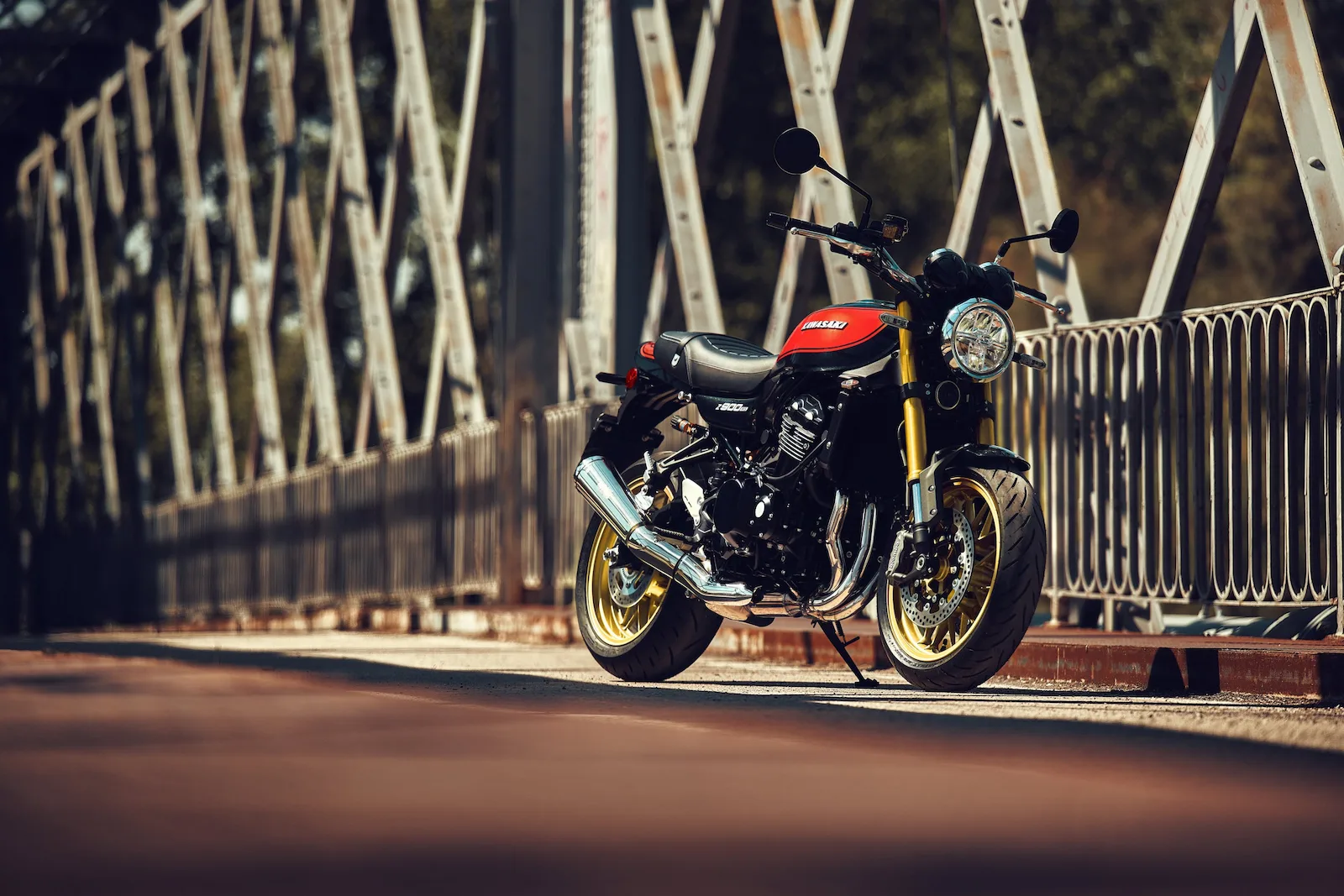
Up front, 300mm discs are gripped by opposed four-piston radial monobloc calipers with a radial master cylinder for strong initial bite and good modulation. A 250mm rear disc uses a single-piston slide caliper, sintered pads are used front and rear, and a compact Nissin ABS unit is standard. The cast wheels mimic classic wire wheels with flat, machined spokes and are optimized for low weight, fitted with Dunlop SPORTMAX GPR-300 tires for grip and stability. The ABS unit is small and light, so it adds safety without changing how naturally the bike handles.
Ergonomics
The new riding position is relaxed and suits both town and country roads. A wide, flat rubber-mounted bar and a 35º steering angle help with low-speed turns. The tank narrows at the back for knee grip, and the slim engine and frame keep your feet close together. Seat height is 32.8” with a slim front, the stepped seat suits a passenger, and the seat comes off without tools to reach the battery, fuses and tool kit. The footpegs have vibration-damping pads and both levers adjust.
Styling
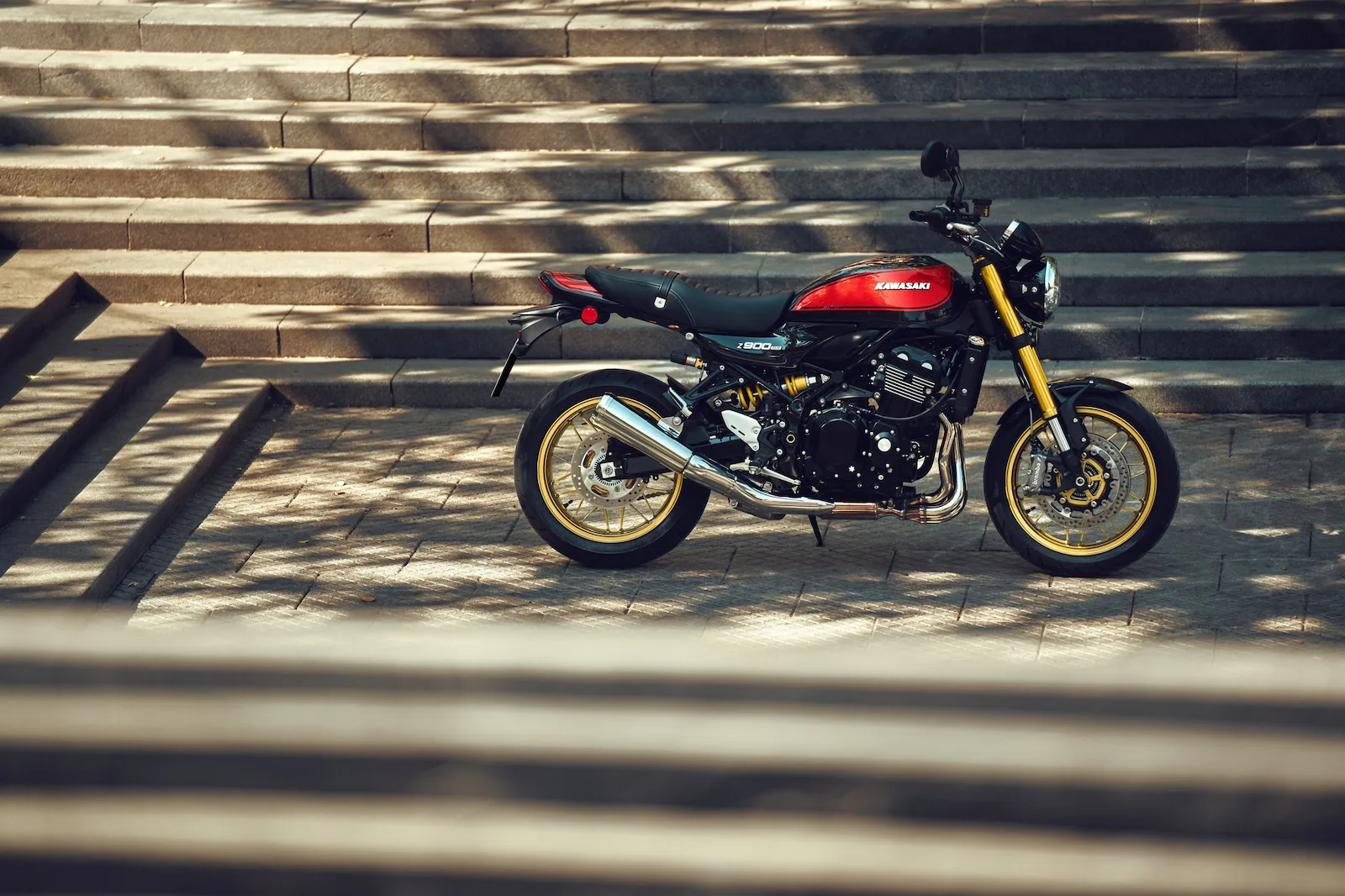
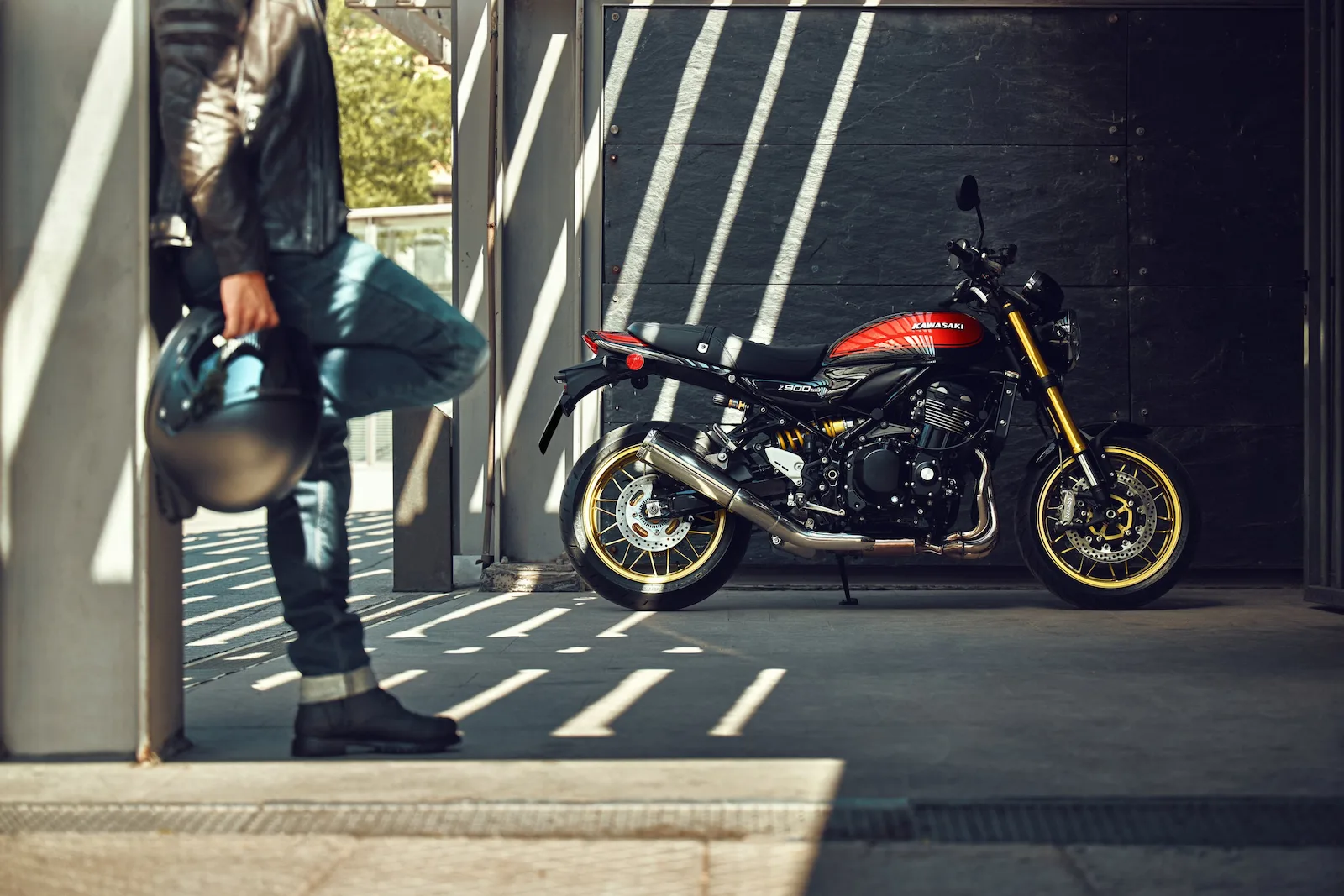
The teardrop tank is the centerpiece and sets the proportions of the seat and tail. It holds 4.4 gallons, extends behind the side covers and has no knee cutouts, keeping its curves clean. The engine's fins recall air-cooled cylinders, the black die-cast covers carry subtle Z1 motifs, and forged aluminum controls for shifting and rear braking add quality. Kawasaki also paid attention to small things such as bolt coatings, wire routing and die-cast aluminum parts, and the side covers and knee grip panels use premium materials. Rounded lines set the RS apart from the sharp-edged Z supernakeds, so it reads as retro without looking dated. A 170mm LED headlight with a chrome ring and six chambers mimics an old bulb lamp, with round mirrors, a three-piece fender stay, double-stitched seats, an oval LED taillight, LED turn signals and luggage hooks.
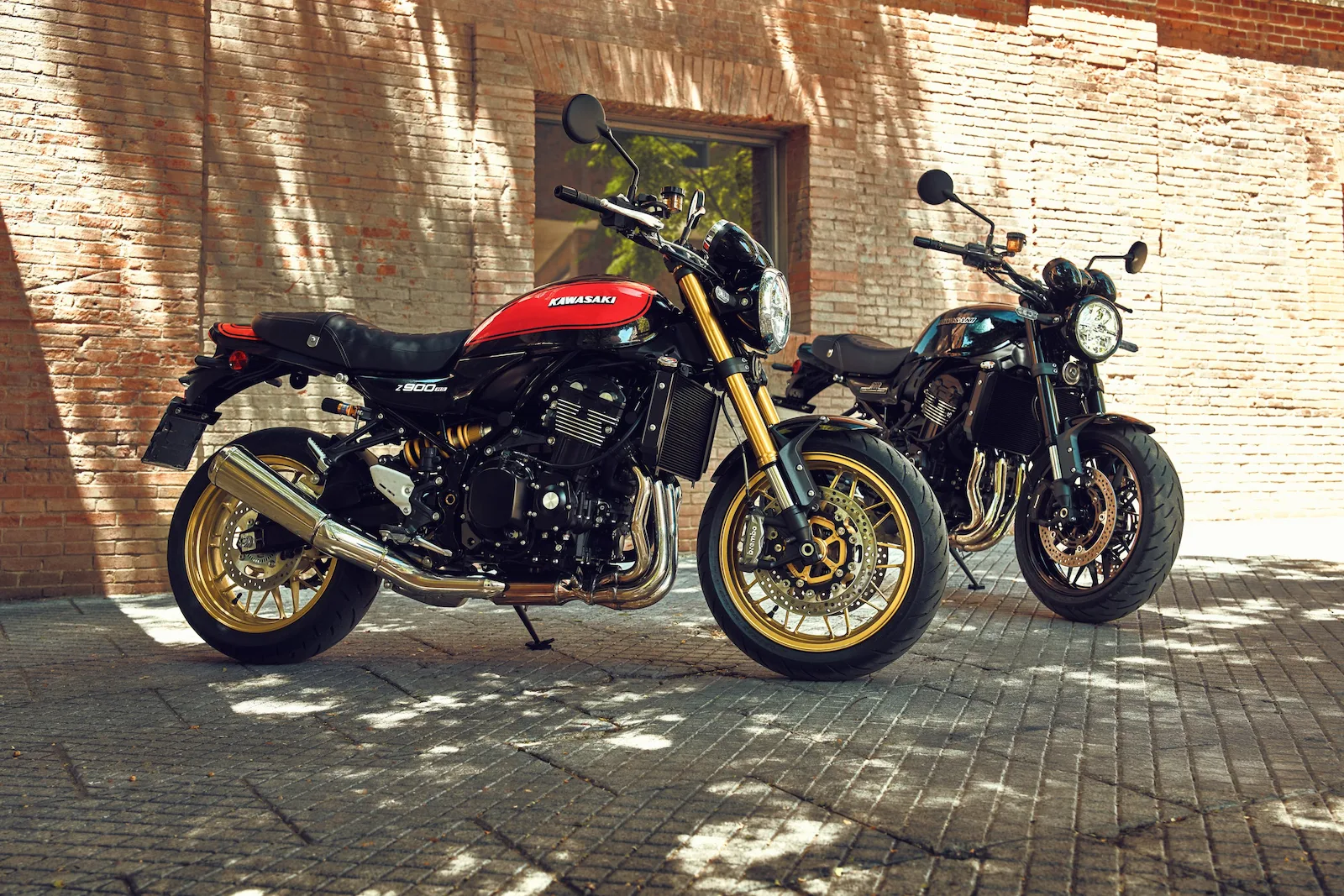
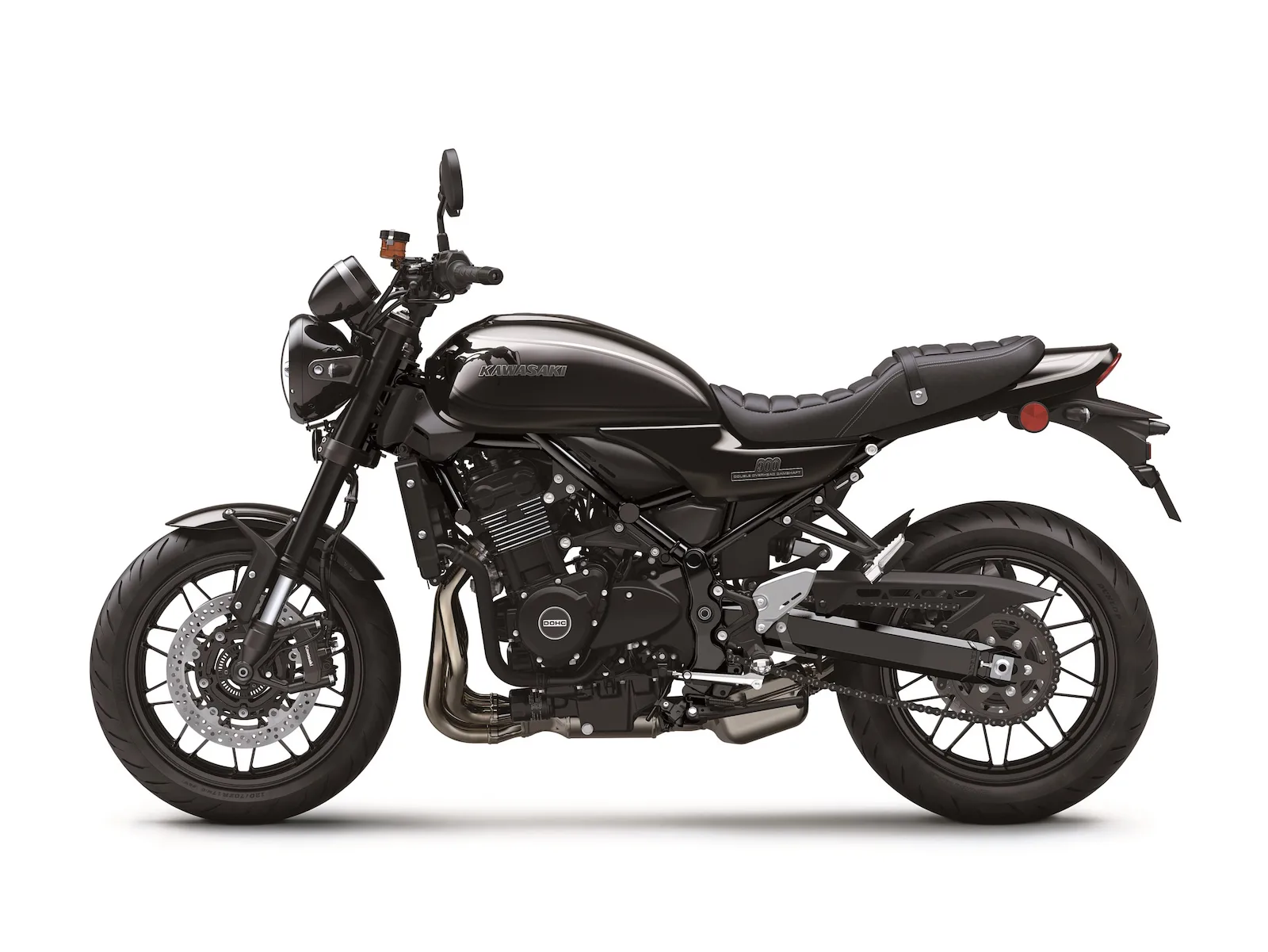
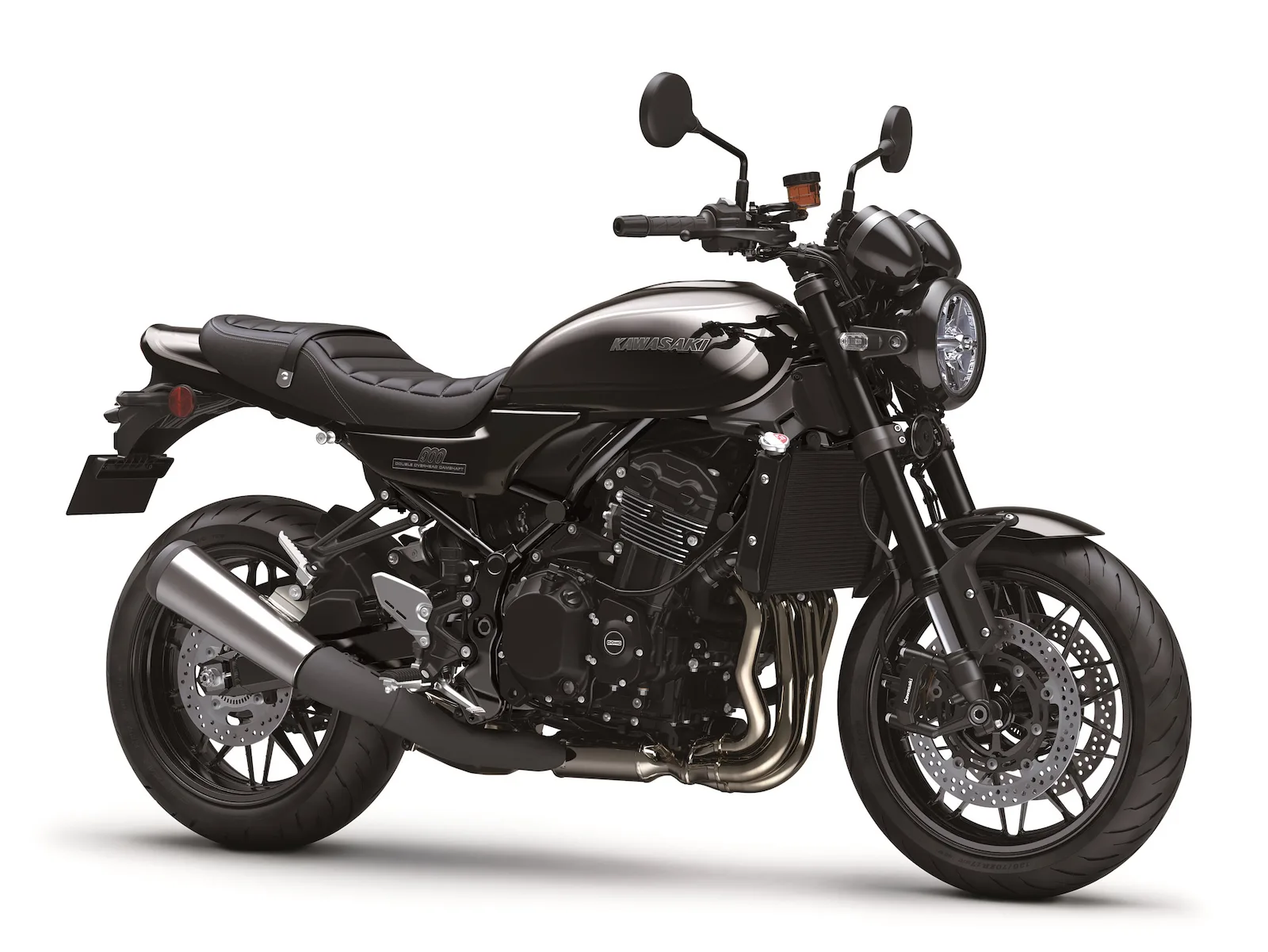
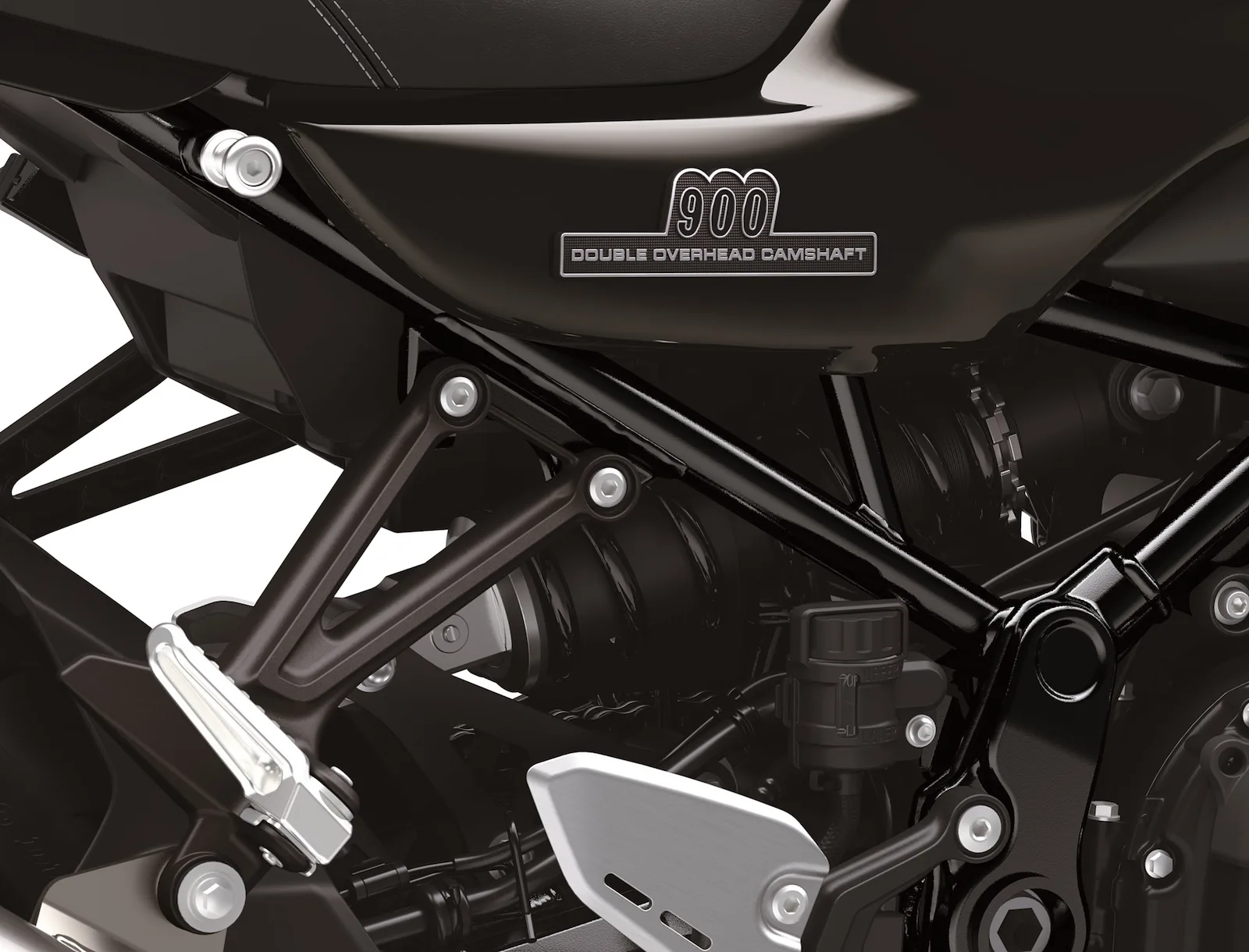
Colors include Candy Tone Red, a single-coat pearl version of the 1975 Z1/Z2 candy finish with film graphics, and the new Black Ball Edition. That one is almost all black, with a metallic black Fireball graphic that only appears in the light, black trim from the meter bezel to the wheels, 'Double Overhead Camshaft' side cover badges, DOHC engine badges and a matte black silencer cap and heat guard. The release lists the base Z900RS in Ebony for 2026.
Z900RS SE ABS
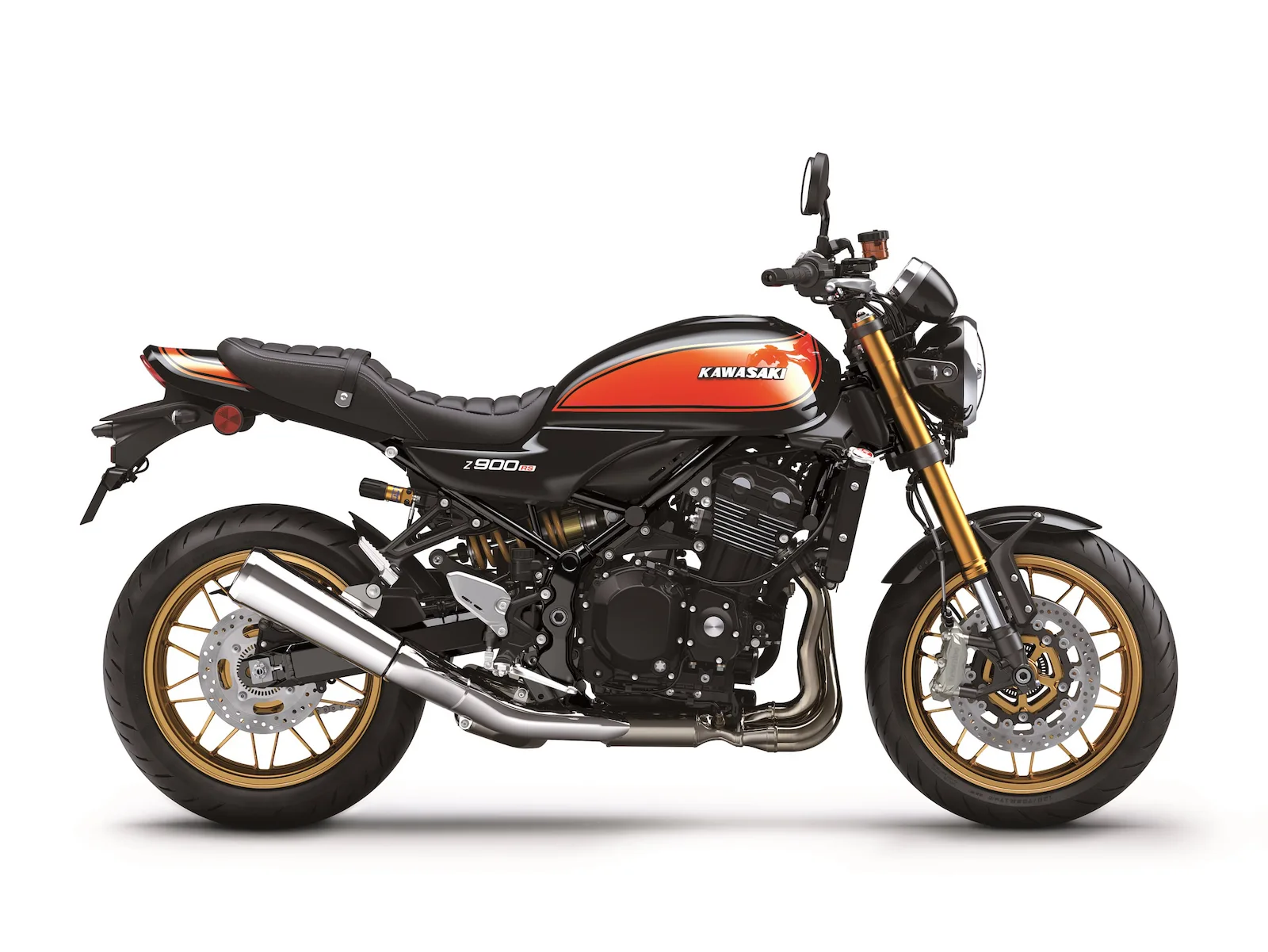
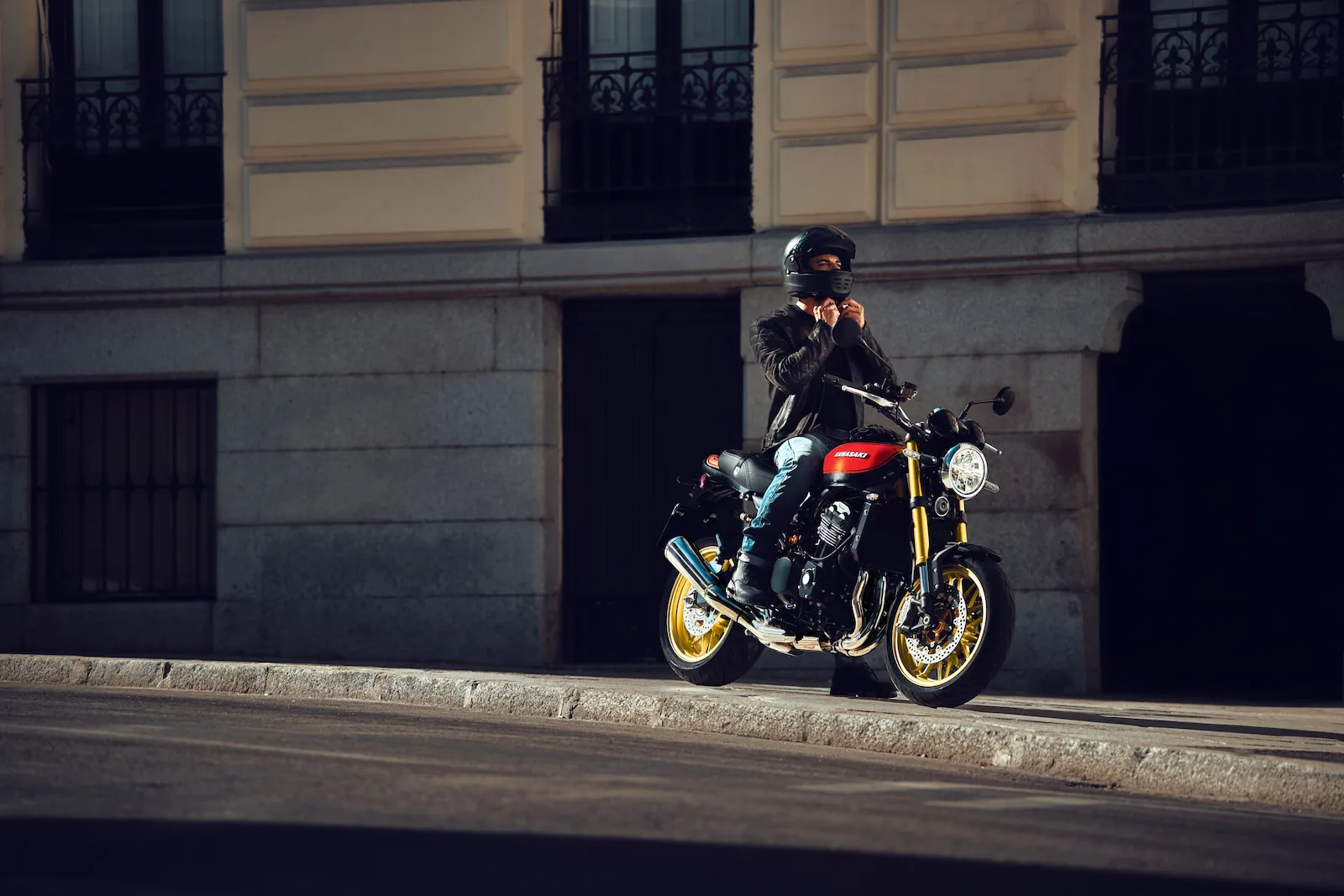
The SE adds a Brembo brake package with M4.32 radial monobloc calipers on the 300mm discs, a smaller Nissin radial master cylinder and braided steel lines, plus an Öhlins S46 rear shock with an aluminum single-tube body, 46mm piston, floating piston and double-lip seal. Kawasaki tuned the fork settings to suit the Öhlins shock so the two work as a pair, the shock gets a remote preload adjuster, and the fork tubes and shock are gold. A USB Type-C outlet sits on the right bar. It wears a new Fireball scheme: metallic black with bright orange graphics, gold wheels and red RS letters. Kawasaki contrasts it with the original 2018 SE: the 2026 version uses metallic black bodywork so the orange graphics and gold hardware stand out. It costs $14,599 in Metallic Spark Black.
Z900RS CAFE ABS
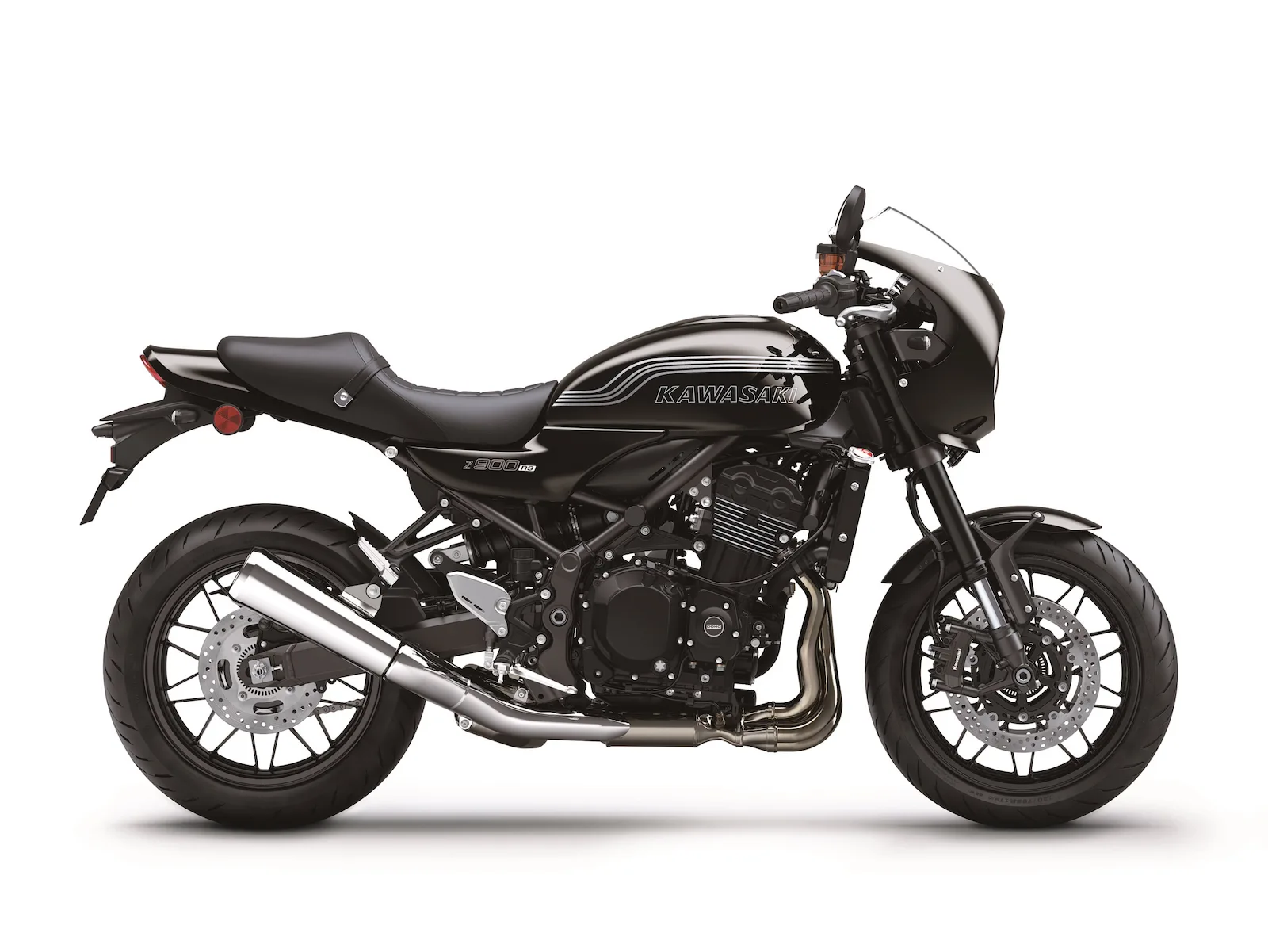
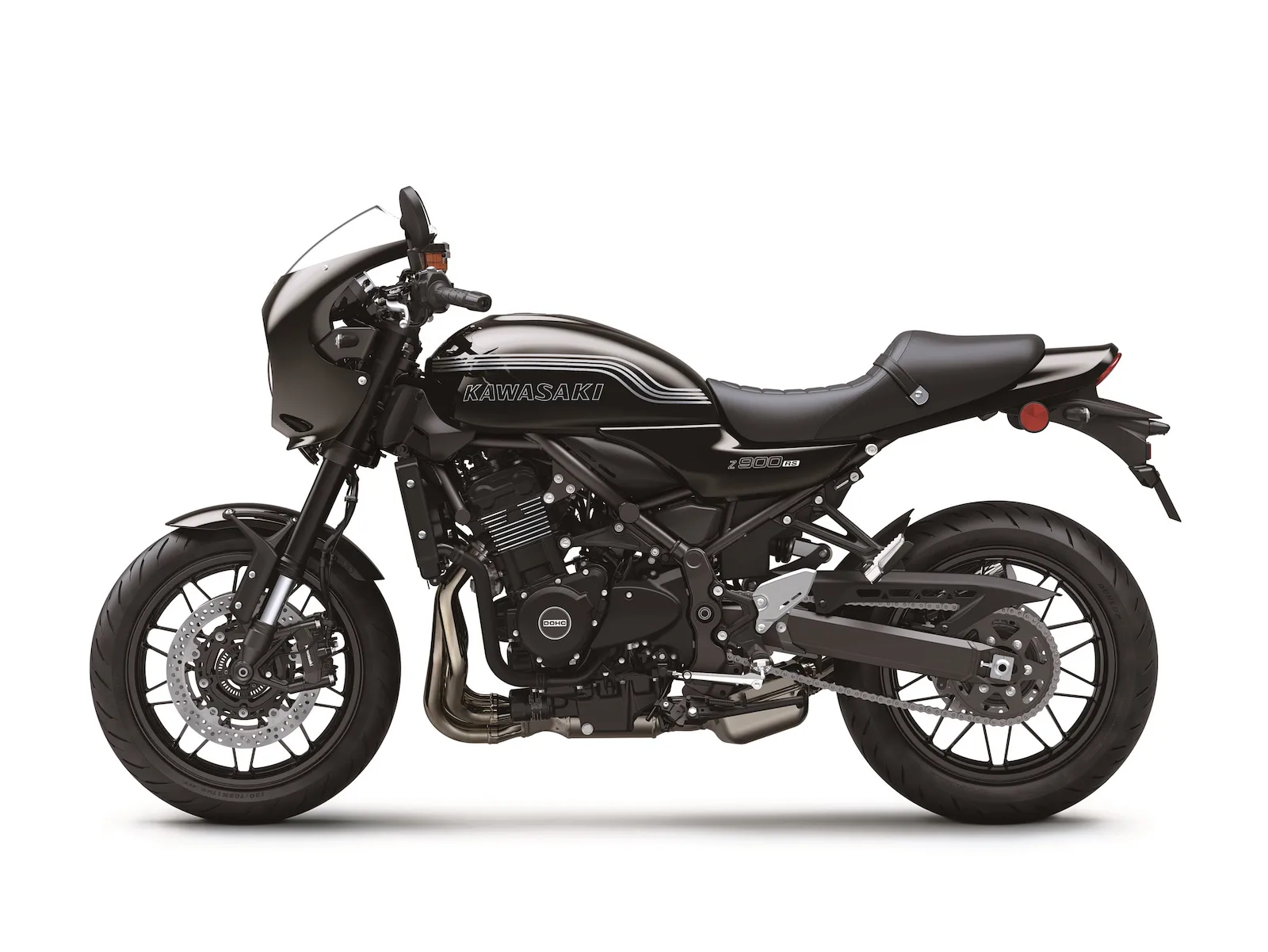
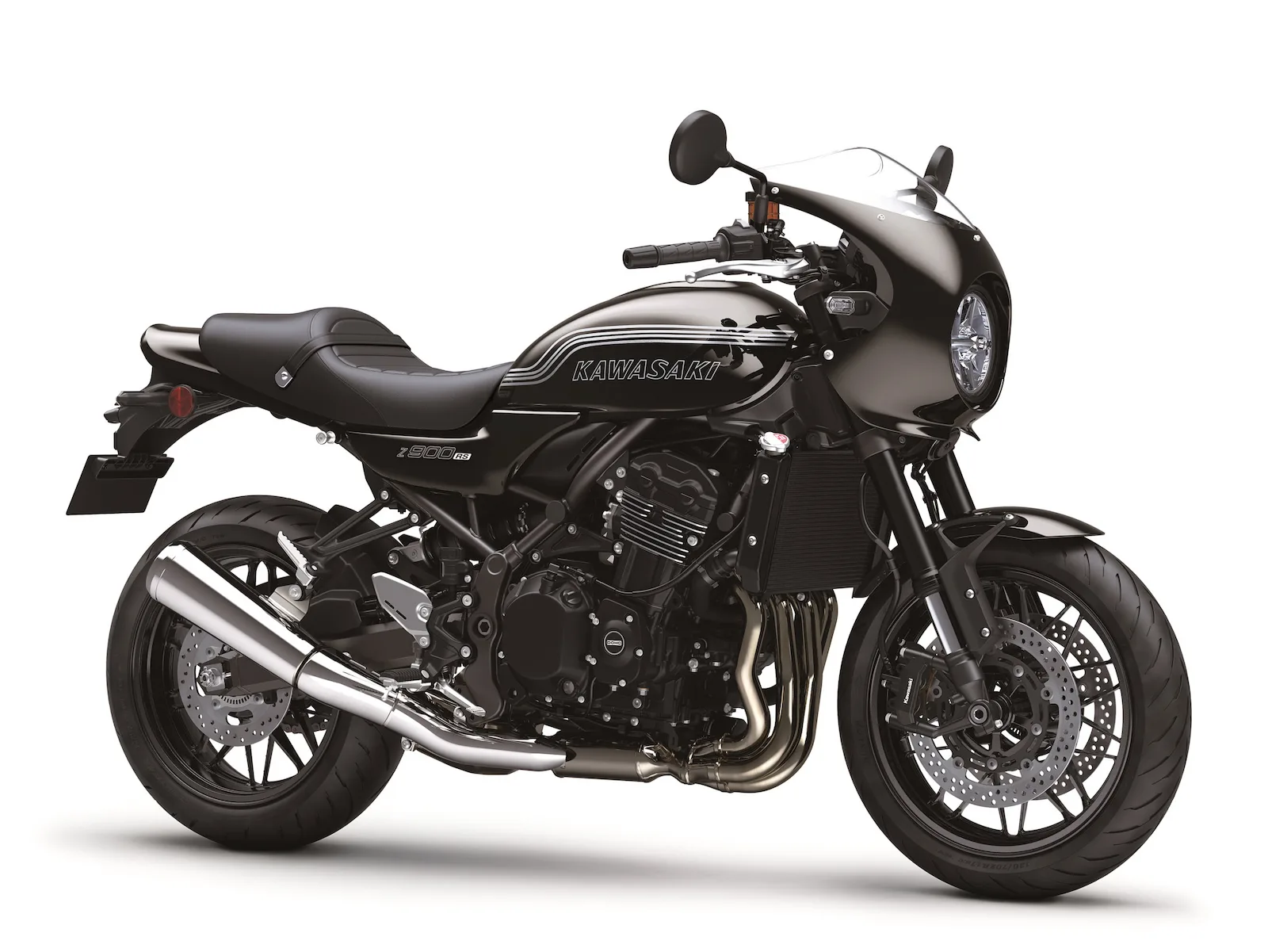
The CAFE ABS adds a front cowl for a sportier look and real wind protection, black drop bars, and a custom seat with a bigger step and a 32.2” seat height. The silencer and heat guard get a refined finish, graphics appear only on the tank in a nod to the rainbow line of Kawasaki's Mach series, and the tank logo is a smooth pearlescent transfer rather than a raised badge. The graphics are made only of pearlescent materials, so the base paint shows through for an unusual effect, and the side cover badges get black lettering to match the outline logo on the tank. It costs $13,299 in Ebony.
Accessories
Kawasaki Genuine Accessories include ERGO-FIT Low and High seats, the low seat 25mm lower, both two-tone with double stitching; a USB Type-C outlet; heated grips; a tank pad; indicator and meter covers; fork caps; a radiator screen; axle and frame sliders; a center stand with grip; and a chromed grab bar.