The full story
What it means for you
- Price is not in the release. Ask an authorized KTM dealer, since KTM says bikes reach dealers in March 2026 after February production.
- With new bodywork, seat, windshield, headlight and footpeg positions, do not assume luggage mounts, screens, seats or peg kits from an earlier Super Adventure fit; check part numbers first.
- Book a test ride in both AMT modes. Try manual shifting with the paddles and foot lever, then fully automatic, and decide which suits your riding before you buy.
- Because ACC and its warnings rely on the front radar, keep the sensor area clean and unobstructed, and learn how Dynamic, Street and Group Ride settings behave before using them in traffic.
- The release prints no power, torque, weight, seat height or tank figures; wait for KTM's full spec sheet if those numbers decide your purchase.
What changed for 2027
KTM 1390 Super Adventure S EVO
- Updated
Engine
1,300 cc1,350 cc with CAMSHIFT technology
- New
Transmission
Automated Manual Transmission (AMT)
- Updated
Frame
Reworked frame stiffness
- Updated
Ergonomics
Footpegs 8 mm lower and 10 mm wider; new seat
- Updated
Suspension
Previous-generation WP SATLatest-generation WP SAT with PWM sensors and through-rod fork
- Updated
Styling
New bodywork, LED headlight, windshield and storage compartment
- New
Dashboard
V80 TFT 8” portrait touchscreen
- New
Navigation
Built-in navigation with offline routing
- Updated
Electronics
ACC with Stop & Go, Brake Assistance, Collision and Distance Warning
- Updated
Radar
More compact 5th-generation Bosch front radar
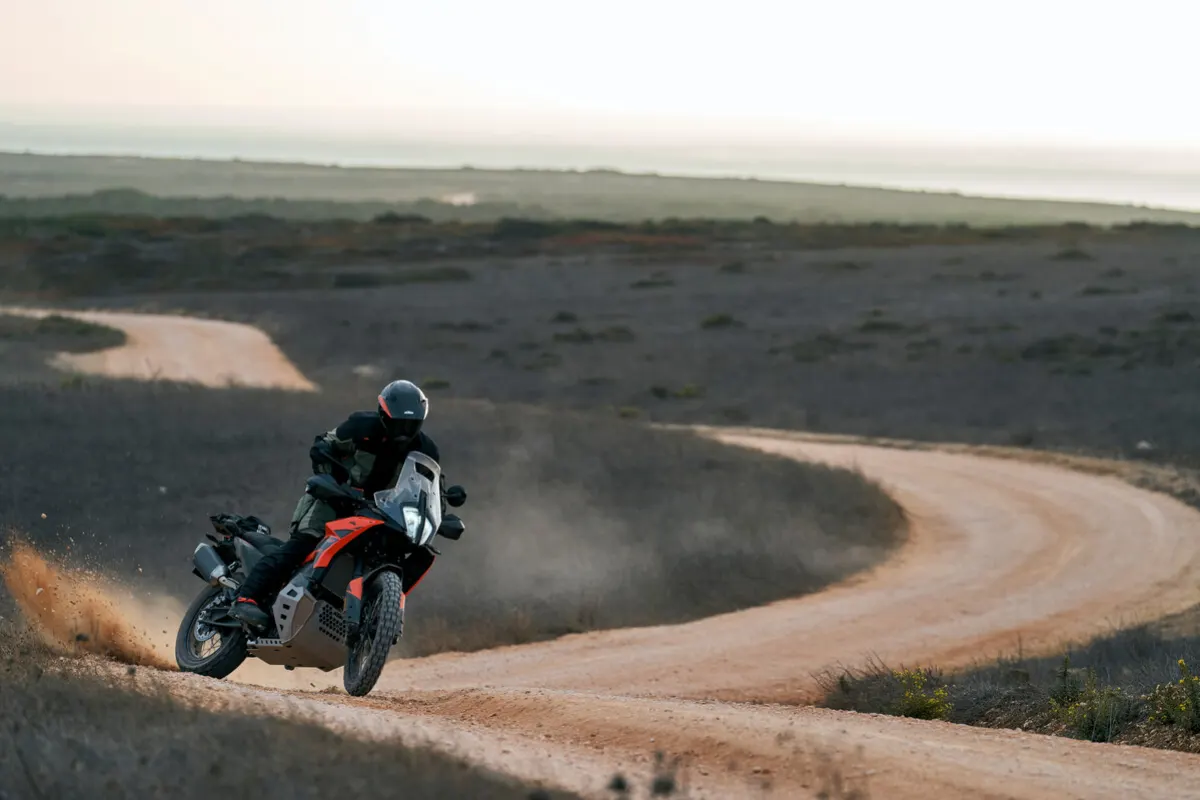
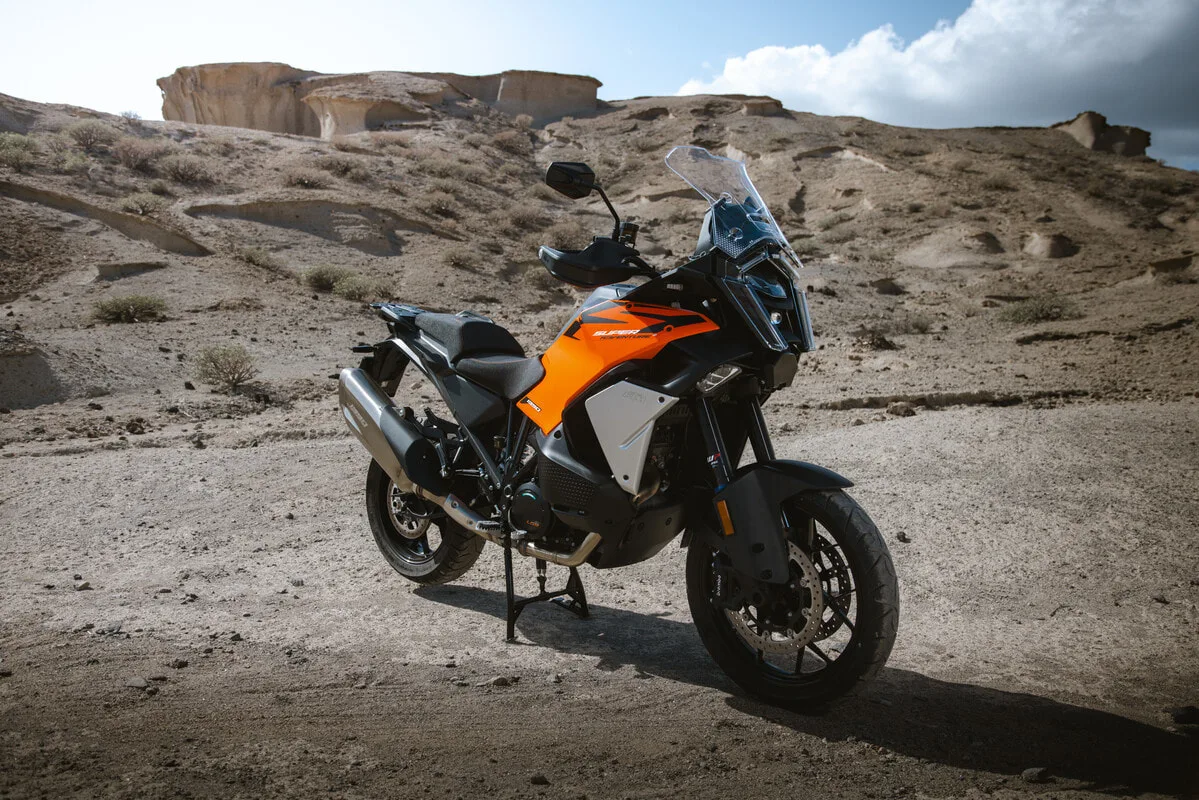
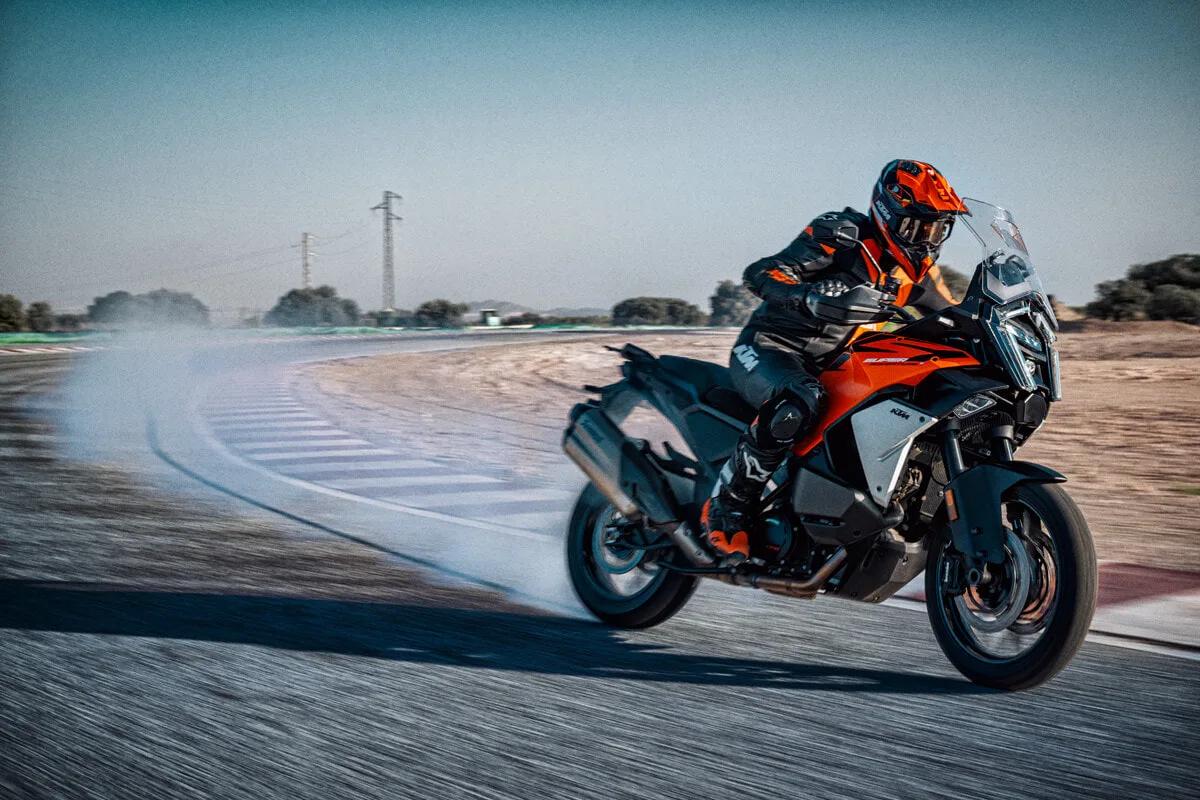
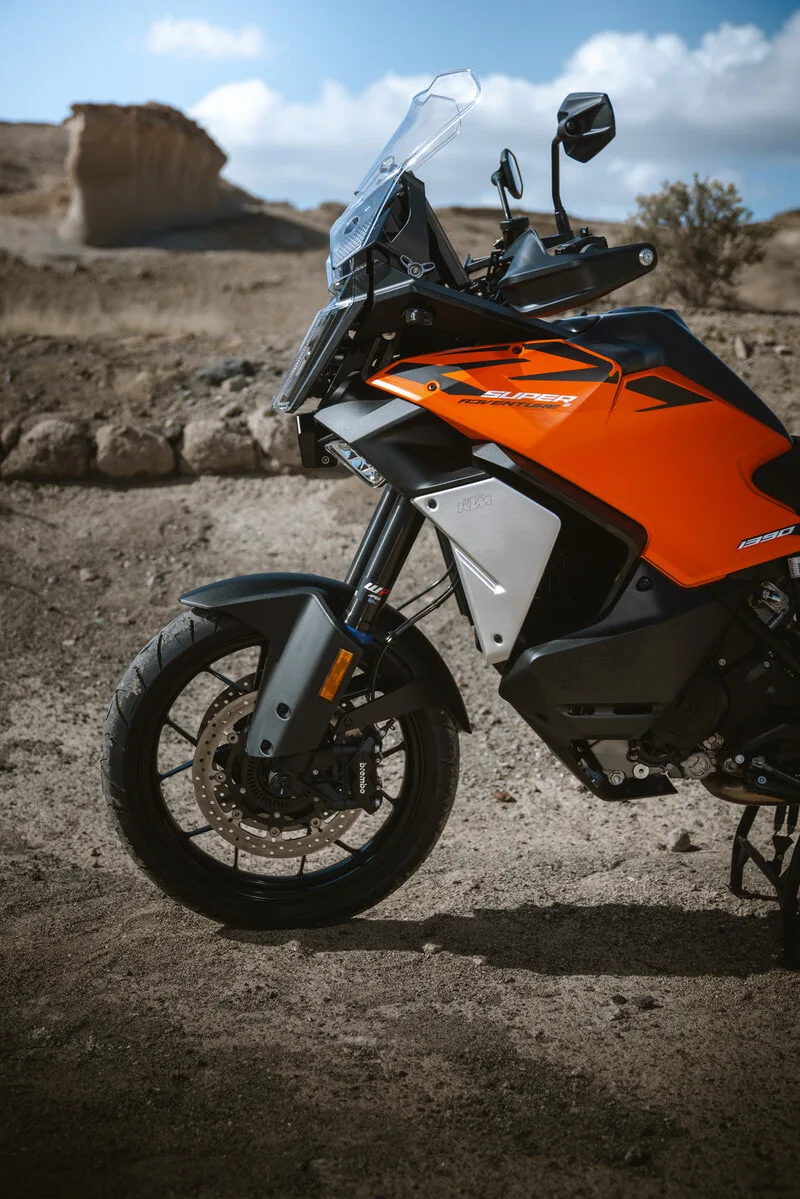
KTM has revealed the 2027 1390 Super Adventure S EVO, the flagship of its Super Adventure family and, by KTM's own description, its most technologically advanced adventure bike. The headline items are a bigger engine with variable valve timing, an Automated Manual Transmission that no other KTM gets, a new 8-inch portrait touchscreen with built-in navigation, and an adaptive cruise control that can now bring the bike to a full stop in traffic.
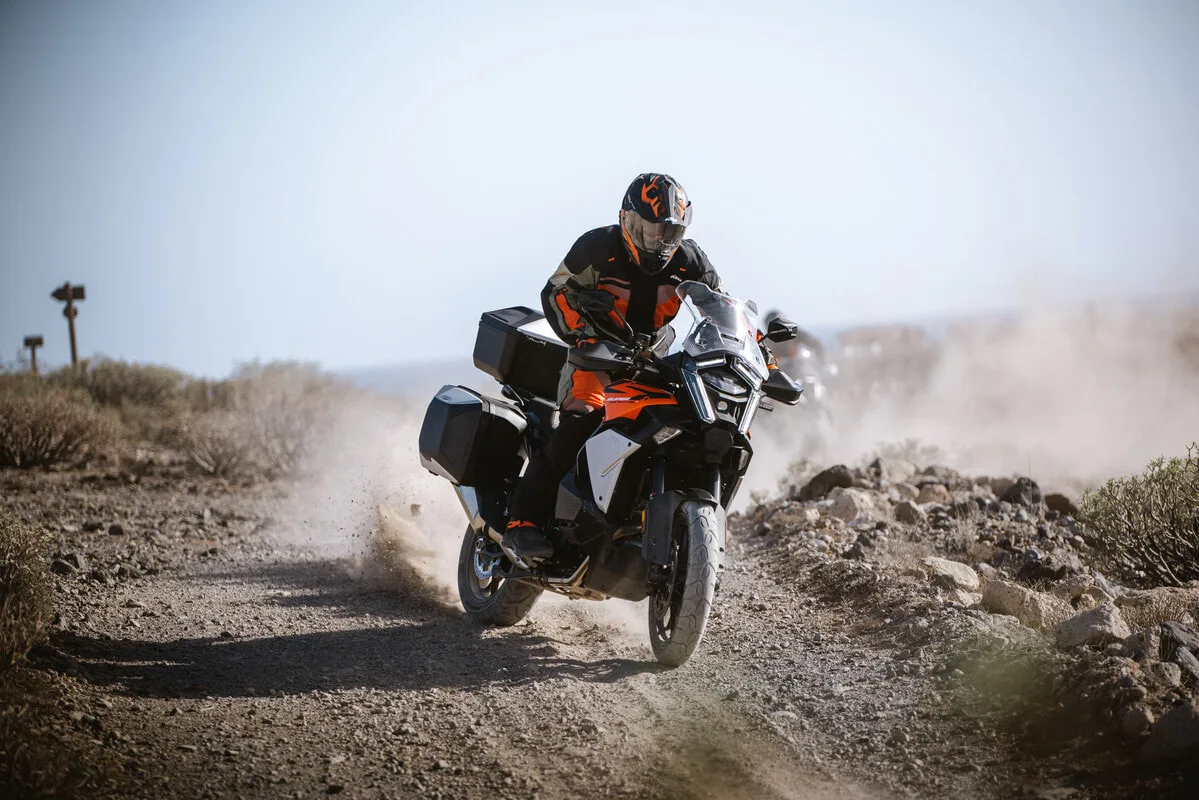
This is a bike for riders who cover long distances on pavement and graded dirt and want every electronic aid available. Production in Austria starts in February, and KTM says authorized dealers will have bikes in March 2026. The release does not list a price, horsepower, torque, weight, seat height or fuel capacity.
Engine: more displacement and CAMSHIFT
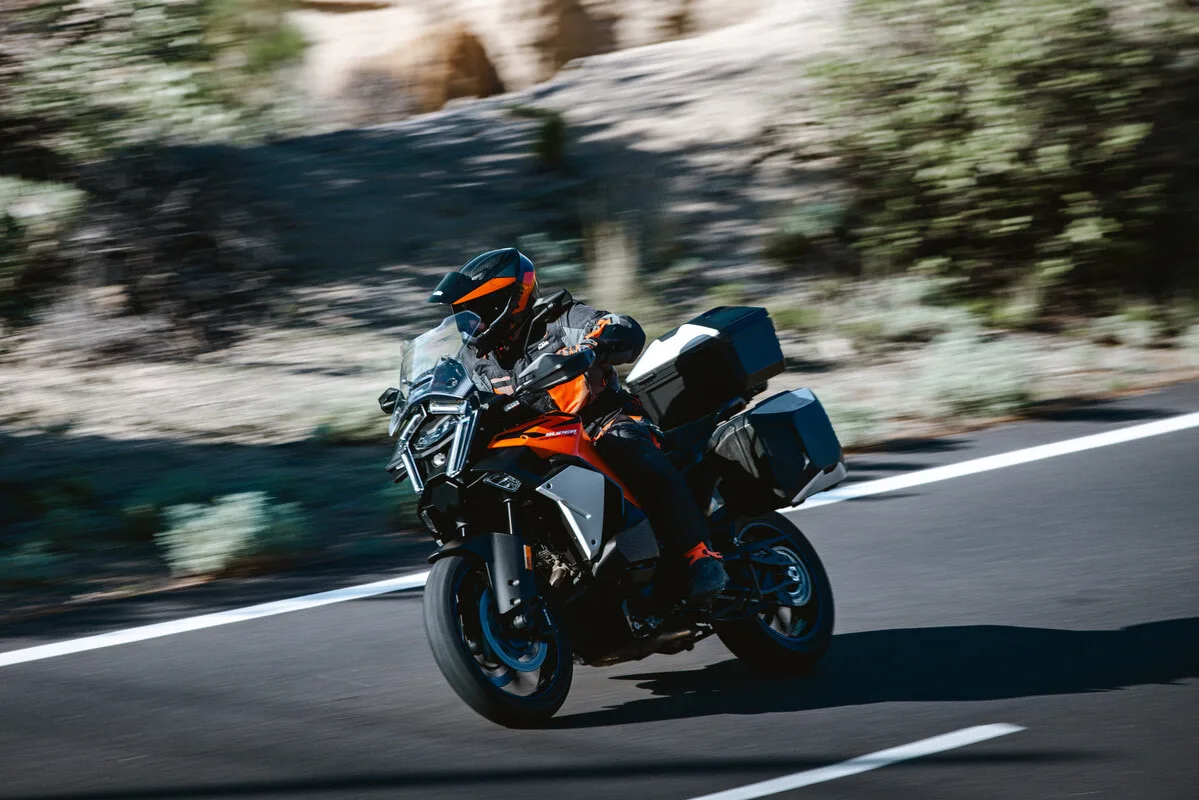
Displacement grows from 1,300 to 1,350 cc, and KTM says power and torque both rise, though the release prints no output figures. Reworked internals and a new system KTM calls CAMSHIFT do the work. As revs climb, the intake cams slide sideways so the valves open further and stay open longer, letting more fuel and air into each cylinder for peak power. Lower in the rev range the cams return to a milder profile with less lift and shorter timing.
For a rider, that should mean a softer, more controllable pull when you are filtering through town or picking your way down a rough road, with the full top end still there on an open highway. KTM also credits the system with lower emissions and fuel use, without giving numbers.
Transmission: KTM's first AMT
The Automated Manual Transmission is new to KTM and limited to this model. You can shift it yourself with the foot lever or with paddles on the handlebar, or leave it in fully automatic mode and simply twist the throttle. KTM first showed it as a prototype ridden by Johnny Aubert at the Red Bull Erzbergrodeo, during its Iron Road Prologue, and calls it one of its most innovative engine projects of recent years. KTM points readers to its separate digital press kit for the full technical story of the AMT and the wider Adventure range.
Practically, the AMT lets the same bike suit different riders: someone who wants to click through gears on a fast road, and someone who would rather not work a clutch on a long commute or a slow, technical climb.
Chassis, suspension and ergonomics
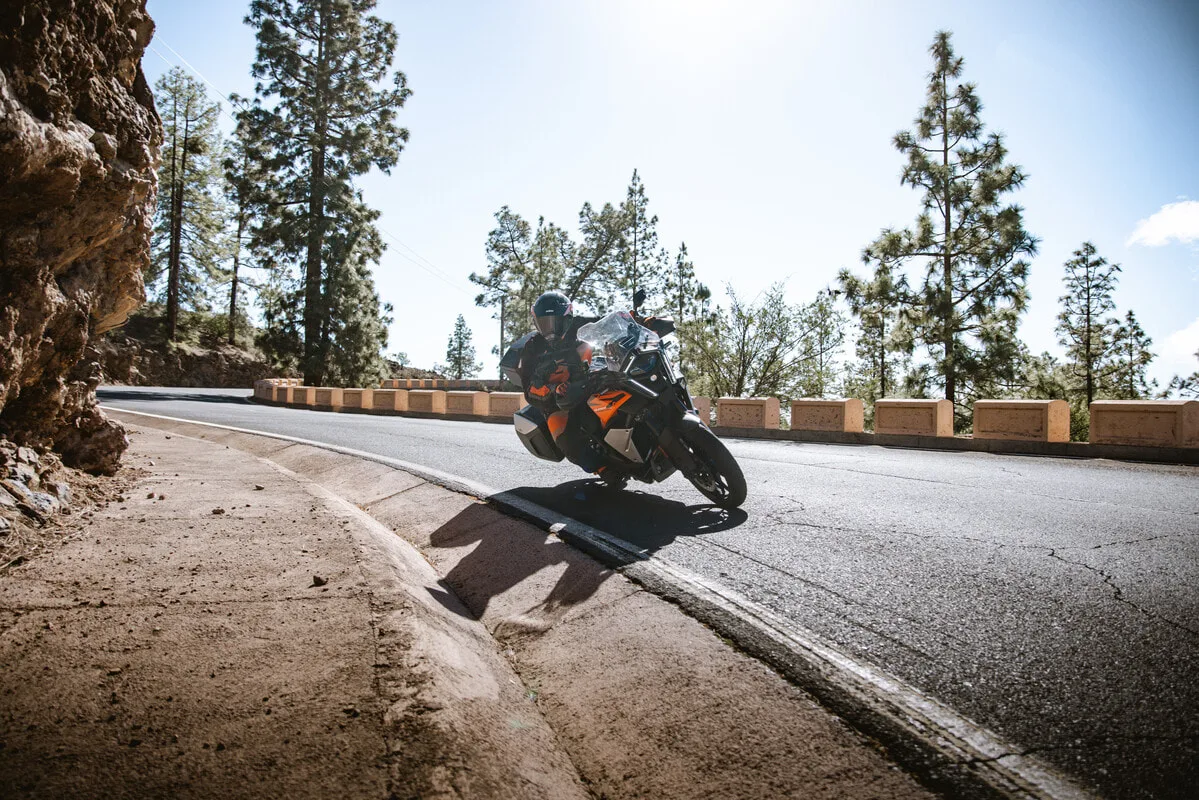
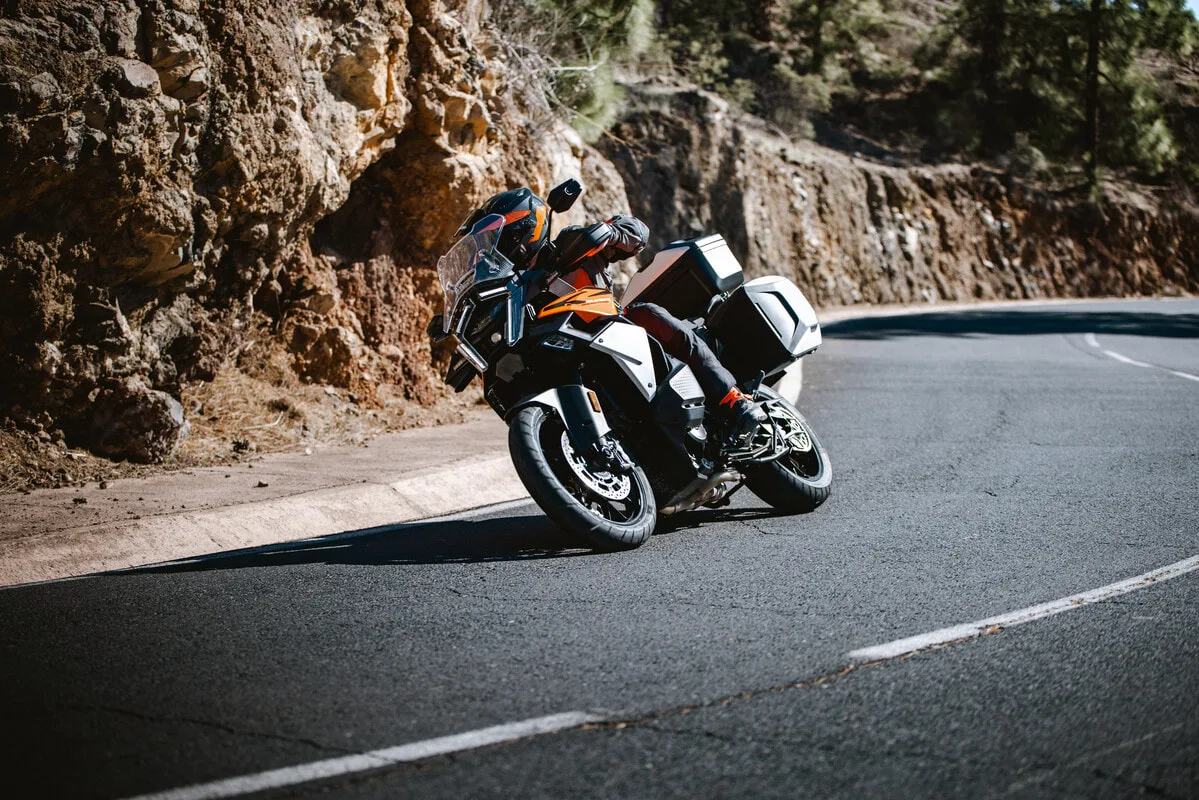
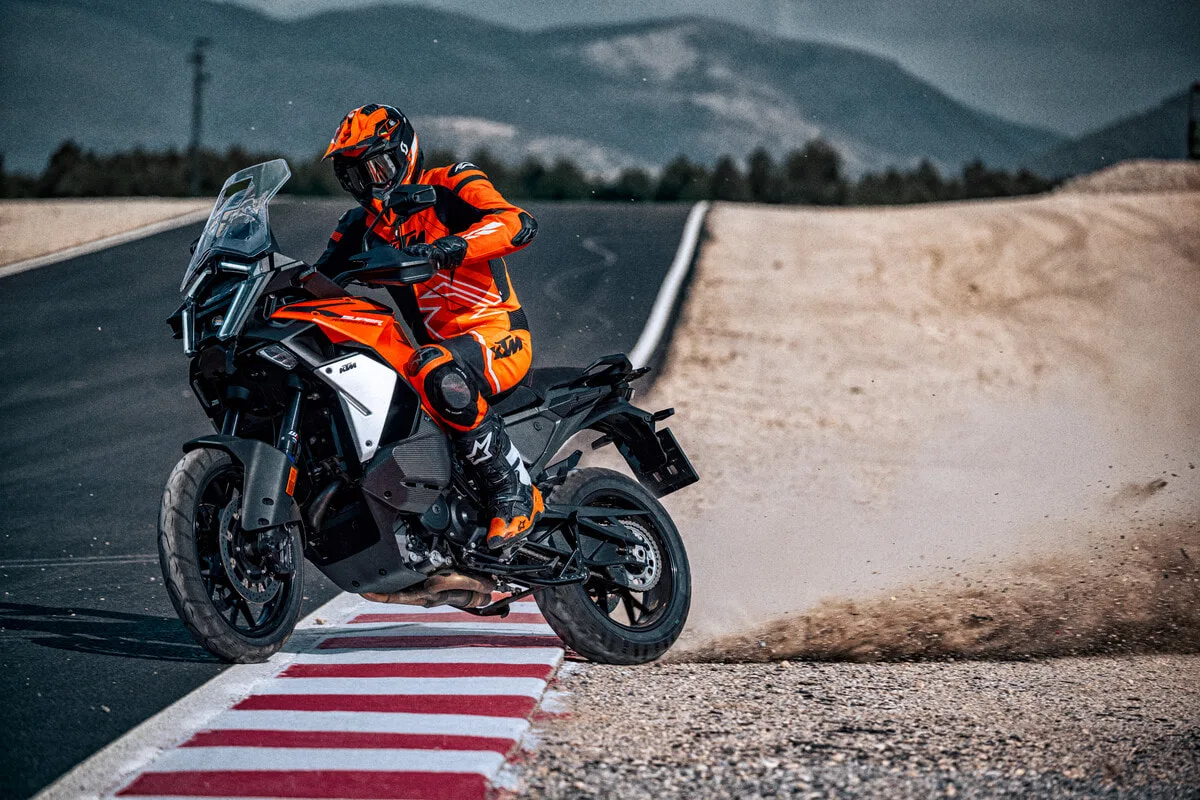
KTM has changed the frame's stiffness to sharpen handling and keep the bike steadier at speed. The footpegs move 8 mm lower and 10 mm further out, which opens up the knee angle; taller riders and anyone doing long days in the saddle should feel the difference.
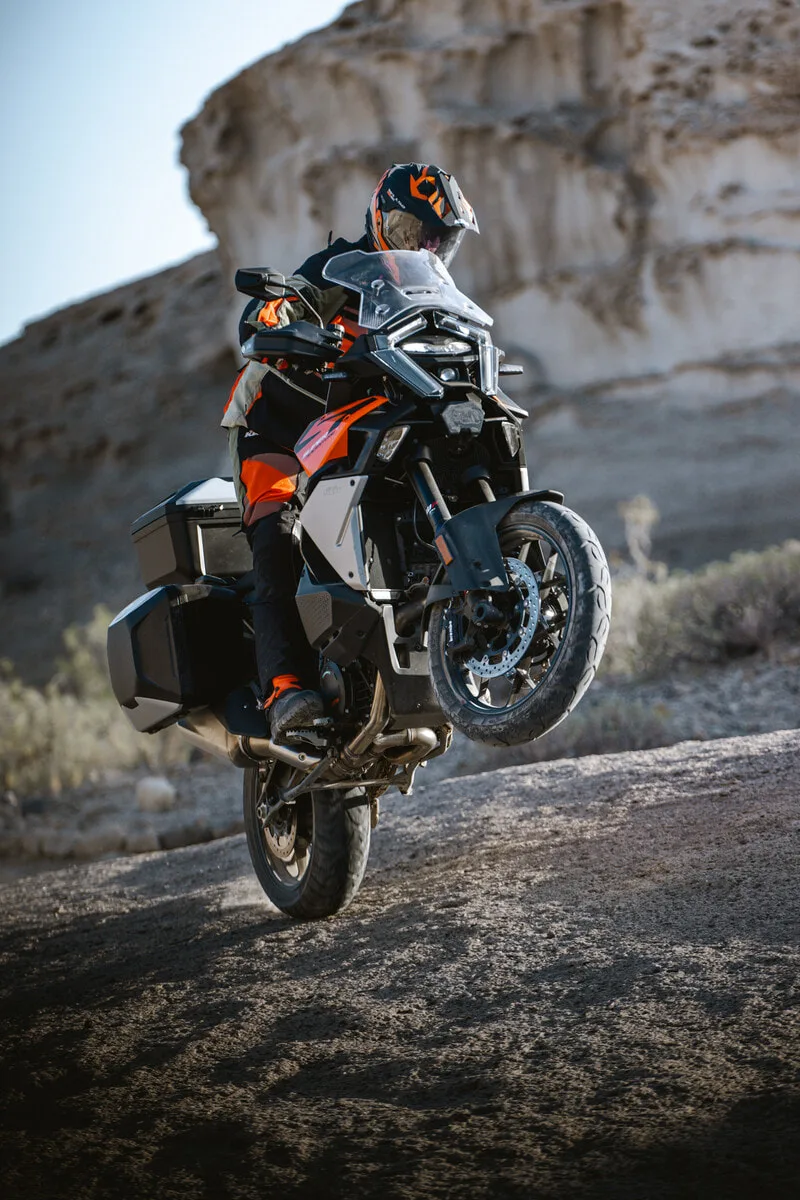
Suspension is the newest generation of WP Semi-Active Technology (SAT). KTM says it now reacts more precisely and holds its damping more consistently over fast, repeated hits, thanks to updated PWM (Pulse Width Modulation) sensors plus a through-rod fork that mixes ideas from open-cartridge and closed-cartridge designs. On washboard gravel or broken pavement, that is where a semi-active setup earns its keep.
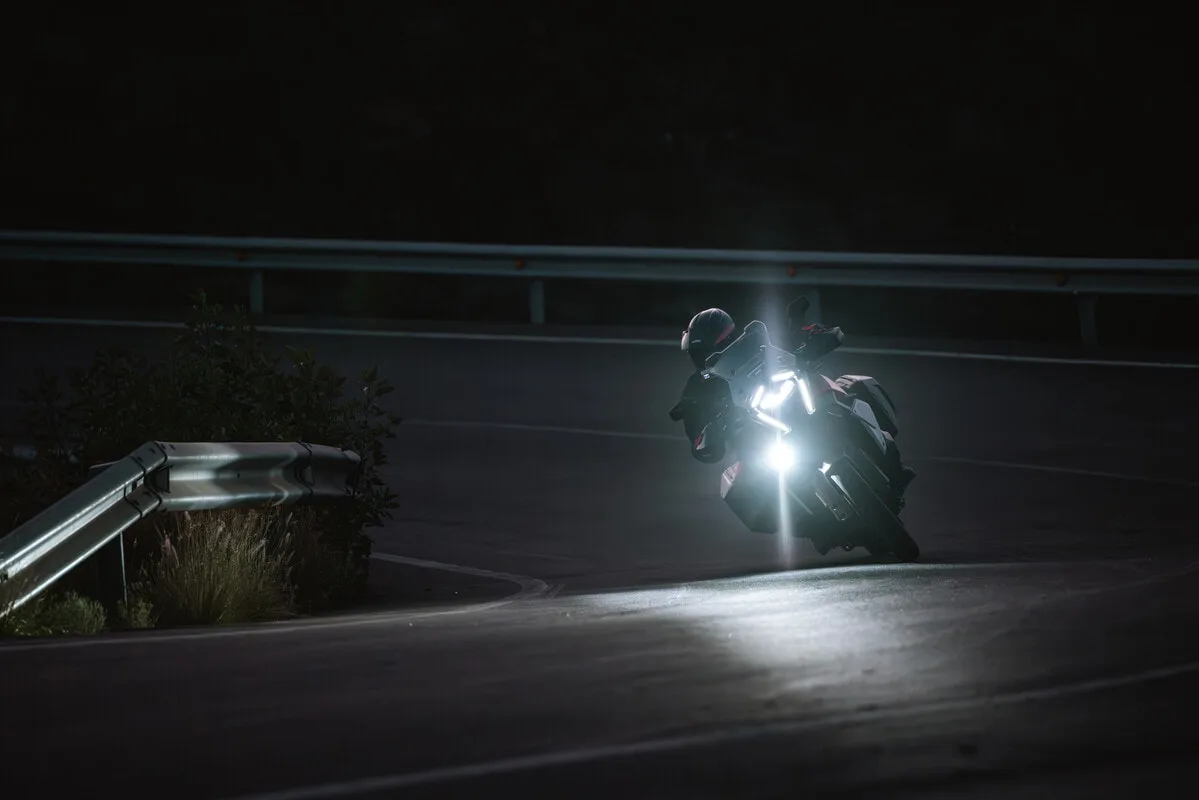
The bodywork is new as well, with a redesigned seat, an all-new LED headlight, a new windshield and a storage compartment.
Dashboard, navigation and ride modes
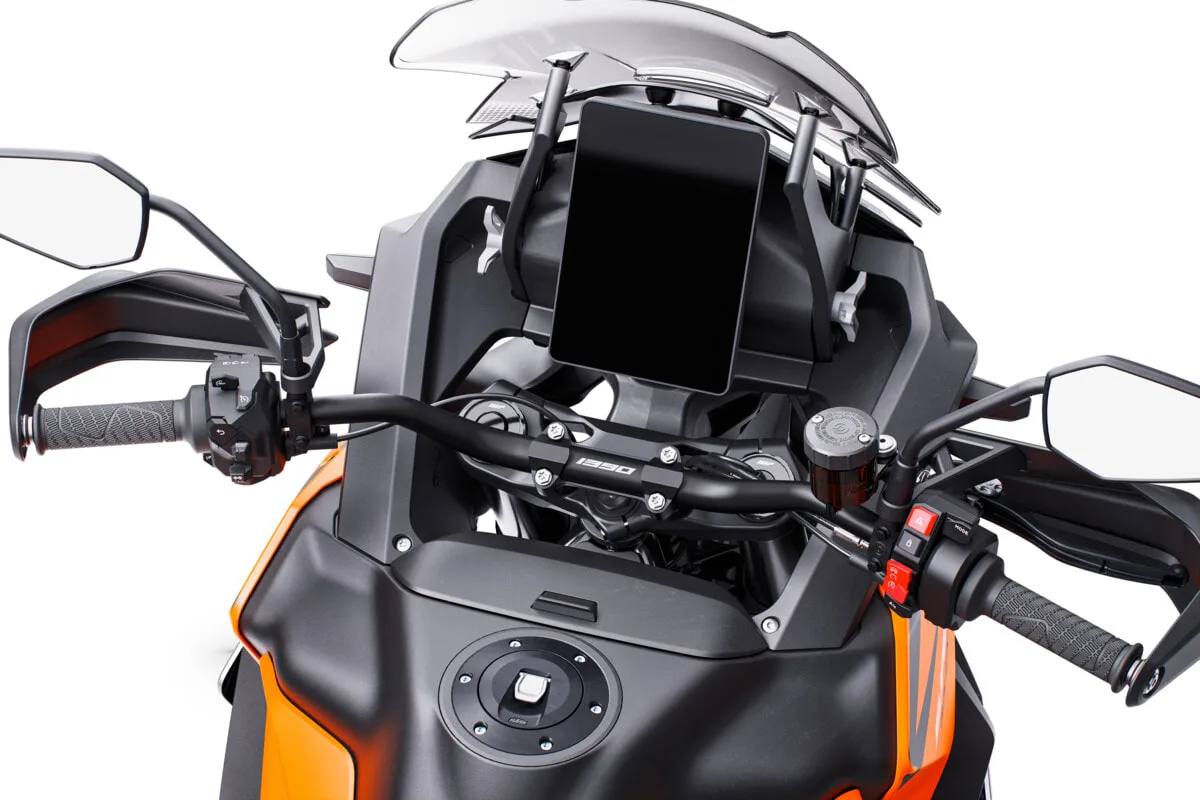
The cockpit is built around KTM's new V80 TFT, an 8-inch touchscreen mounted upright in portrait orientation and backed by a new electronic and electrical architecture. Inductive touch sensing means it should respond through thick winter gloves, and a coating that fights reflections, glare and fingerprints is meant to keep it readable in sun.
The screen brings new ride modes and connectivity. Navigation lives inside the bike's own connectivity unit, so maps work without a phone: you get route planning with waypoints, point-to-point routes, offline routing and saved home and work locations. Pair a phone over Wi-Fi and you add online search and routing, live traffic and other connected features.
Adaptive cruise and radar
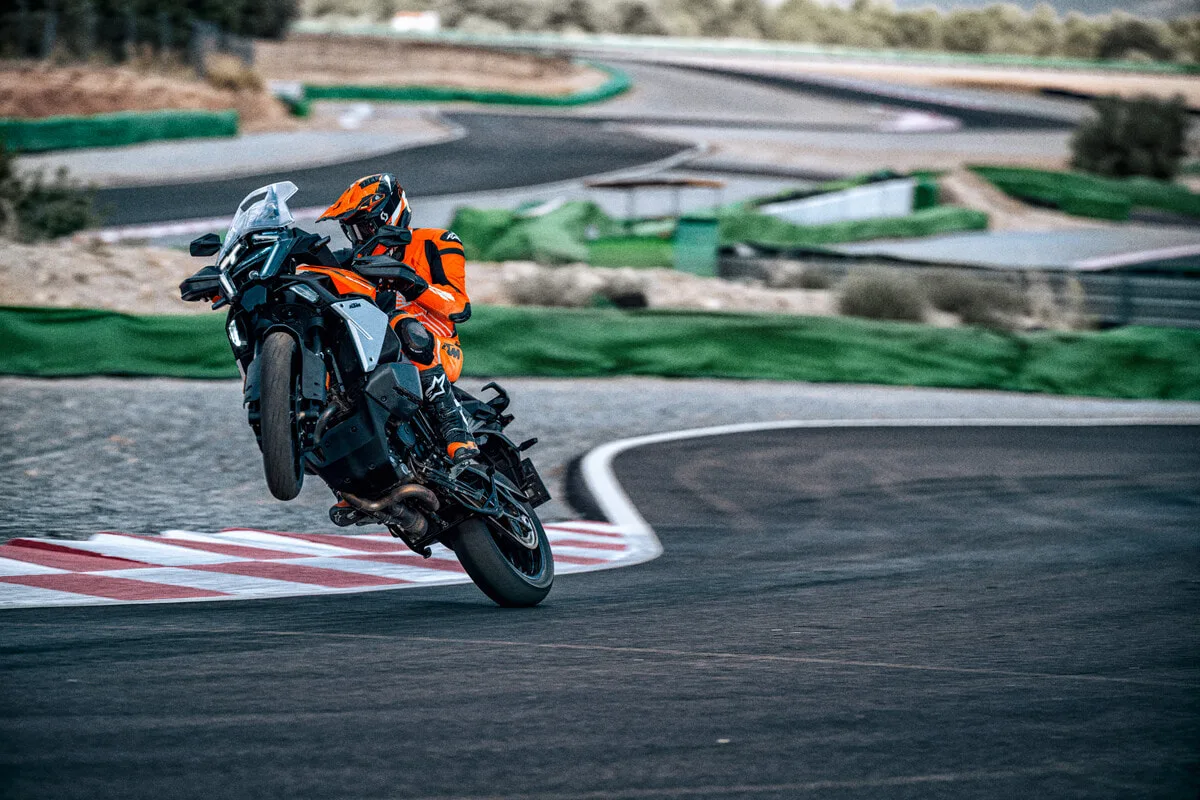
Adaptive Cruise Control (ACC) gains Brake Assistance, Collision Warning and Distance Warning. Paired with the AMT, it also offers ACC Stop & Go: if the vehicle in front halts, the bike stops completely, and when traffic moves again a button press or a twist of the throttle gets you rolling.
All of this runs on a standard Bosch front radar, now in a more compact 5th-generation unit. KTM lists optimized performance, better detection of trucks, a higher top operating speed and revised cancellation thresholds, along with Dynamic, Street and Group Ride functions; the release does not give figures for any of them.