The full story
What it means for you
- Shopping new: the 2026 bike adds power, cornering ABS and traction control, cruise control and standard connectivity at a revised, lower price, so compare it closely with any leftover earlier Trident 660 before you buy.
- Set up the shock: the new Showa rear unit adjusts for preload and rebound. Set preload for your weight plus any passenger or luggage first, then fine-tune rebound.
- Parts and accessories: the frame, tank, seat, headlight, bars and exhaust all change for 2026, so do not assume older Trident 660 bodywork or accessories fit until the part number confirms it.
- Restricted licences: European A2 riders can have a dealer fit the conversion kit, and Australian and New Zealand riders get LAMS versions.
For earlier years, specs and owner notes, see our Trident 660 Bike Dossier.
What changed for 2026
Trident 660
- Updated
Engine
95PS at 11,250rpm, 14PS more than the previous generation; 68Nm at 8,250rpm
- Updated
Redline
Raised by 20% to 12,650rpm
- Updated
Intake
Three individual 44mm throttle bodies, larger airbox, revised cylinder head, new tune
- Updated
Exhaust
Revised system with 3-into-1 header, updated catalyst, compact underslung silencer
- Updated
Transmission
Updated shafts, revised ratios, recalibrated Triumph Shift Assist
- Updated
Frame
Revised frame
- New
Suspension
New Showa RSU with preload and rebound adjustment, 130mm travel
- Updated
Bodywork
Redesigned wider tank, new split seat, new headlight and mount
- Updated
Ergonomics
New wider handlebars
- Color only
Colors
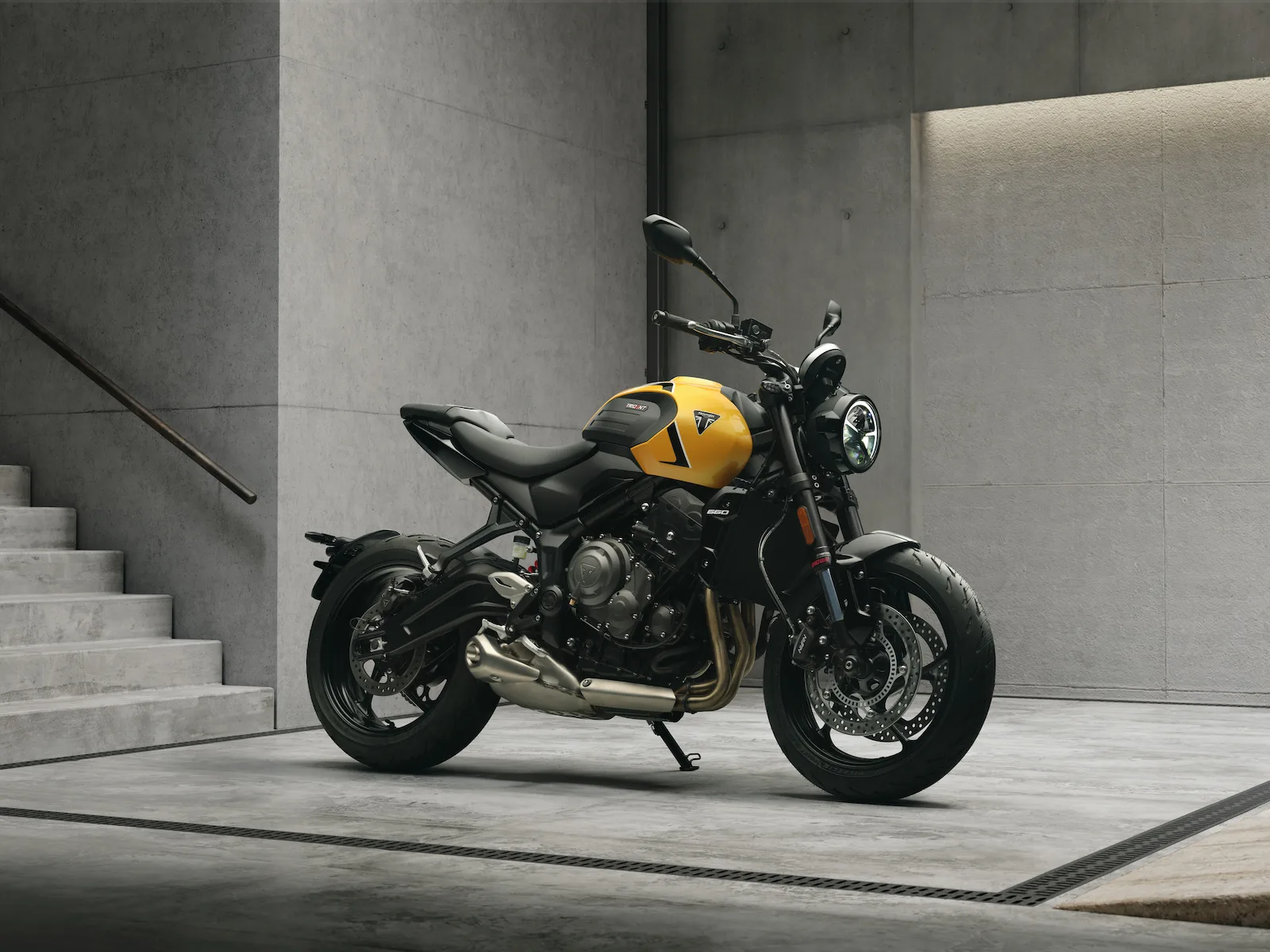
Cosmic Yellow, Stone Grey, Snowdonia White
- Updated
Price
Revised price, from £7,795 on the road
Triumph announced a long list of changes for its Trident 660 naked bike in January 2026. Now that those revised bikes are landing in showrooms, the company has given them a lower sticker as well: the 2026 Trident 660 starts at £7,795 on the road. This is a pricing statement rather than a fresh launch, but it is a good moment to recap what the 2026 bike brings, because the update is broad: more power and a higher redline, a reworked frame and rear shock, new bodywork and more standard equipment.
Triumph positions the Trident 660 as the way into its range, and the new price is aimed at newer riders shopping a busy middleweight roadster class. Chief Commercial Officer Paul Stroud said that on top of its extra power and capability, the bike "has gained a tempting new price", and he tied the move to the growth of Triumph's naked roadster line, which now also includes the all-new Trident 800.
Engine
The center of the update is the 660cc three-cylinder engine. Peak output is now 95PS at 11,250rpm, which Triumph says is 14PS more than the previous generation, and peak torque is 68Nm at 8,250rpm. The number that matters more on the road is the spread: Triumph says 80% of that torque is on tap from 3,000rpm until just short of 12,000rpm, so the bike should pull cleanly in whichever gear you happen to be in.
The gains come from inside the motor. Each cylinder now has its own 44mm throttle body, the airbox is bigger, the cylinder head has been reworked and the engine runs a new tune. The redline climbs by 20% to 12,650rpm, giving you more room to hold a gear before the next shift, while Triumph says the delivery stays smooth and linear for daily riding.
Sound gets attention too. The separate throttle bodies and the reworked intake add to the triple's induction note, and a compact silencer tucked under the bike finishes the system. Ahead of it sits a revised exhaust with a 3-into-1 header and an updated catalyst, which Triumph says keeps the bike within current rules without dulling its character.
Transmission and drivetrain
The six-speed gearbox gets updated shafts and revised ratios, and the Triumph Shift Assist quickshifter has been recalibrated so clutchless changes, both up and down, are quicker and smoother. When you do reach for the lever, a slip and assist clutch keeps the pull light and adds control, which pays off in stop-and-go traffic and on long days.
For riders on restricted licences, Triumph sells an A2 conversion kit as an accessory in Europe; a Triumph dealer installs it and can take it out later. Riders in Australia and New Zealand get LAMS versions.
Chassis, suspension and brakes
The frame is revised for 2026, and the rear shock is a new Showa unit with both preload and rebound adjustment and 130mm of travel. Up front, Showa 41mm upside-down big piston forks give 120mm of travel. The adjustable shock is the part owners will notice: you can add preload for a passenger or luggage, then tune rebound for a firmer, sportier feel on your favorite road.
Wheels are lightweight cast aluminium on Michelin Road 5 tyres. Stopping comes from twin 310mm discs and two-piston Nissin calipers, with braided lines and a lever you can adjust for span to suit your hand. The release does not describe the rear brake.
Ergonomics and styling
Seat height is 810mm and the bike is narrow where your legs drop to the ground, which helps when you are paddling it around a parking lot or waiting at lights. New, wider handlebars give more leverage, and Triumph quotes a wet weight of 195kg.
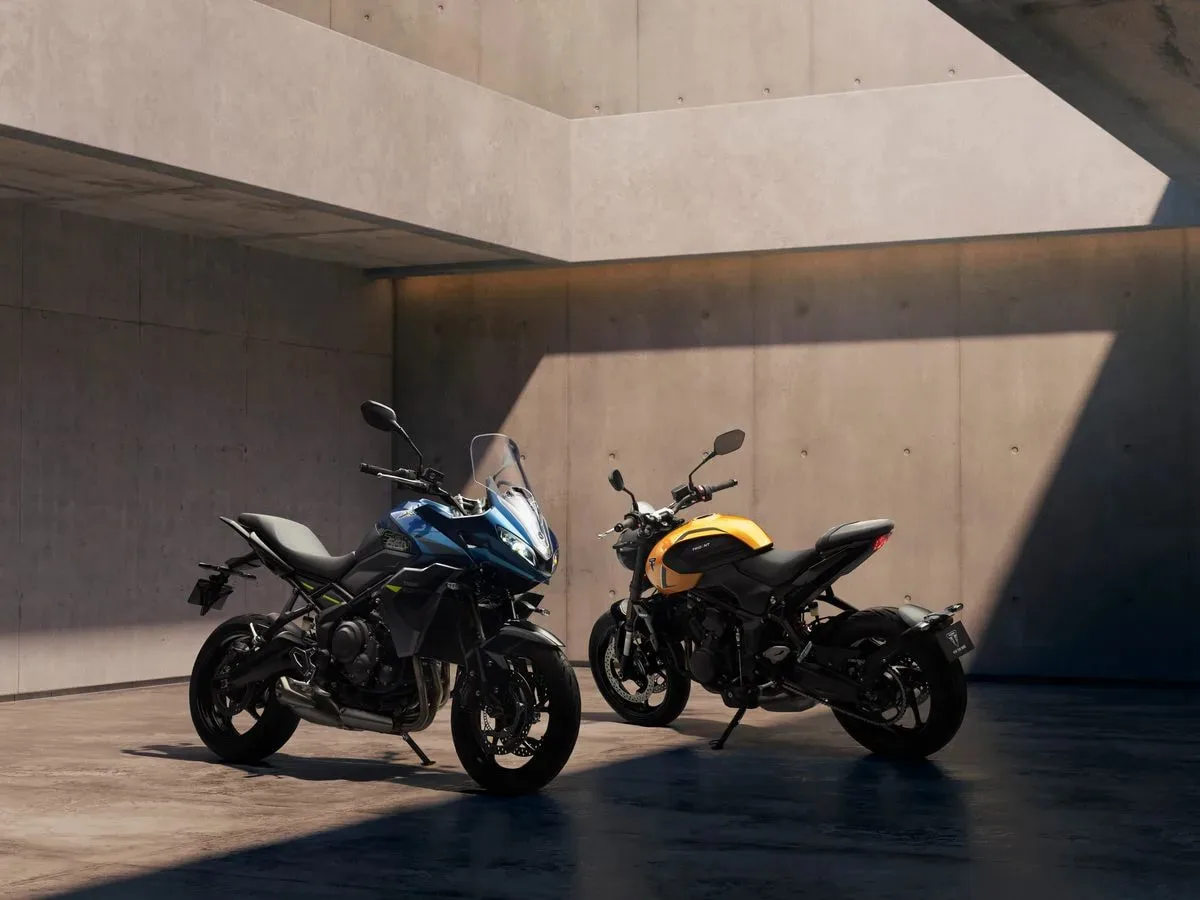
The look is beefier: a redesigned, wider tank with sharply cut knee recesses, a new two-piece seat for rider and passenger, a new headlight on an updated mount, and small Triumph logos on the bar clamp, filler cap, headlight and tail light, with the wiring and hoses tucked out of sight. Accessories include a solo seat cowl, a fly screen painted to match the bike and bar-end mirrors.
Electronics and connectivity
A ride-by-wire throttle makes three riding modes possible, Sport, Road and Rain, and each one changes throttle response along with the ABS and traction control settings. A six-axis IMU lets both systems work while the bike is leaned over (Triumph calls them Optimised Cornering ABS and Optimised Cornering Traction Control), and the traction control can be switched off. Cruise control is standard, which is useful on highway stretches.
The dash pairs a colour TFT with an LCD screen, and MyTriumph Connectivity is standard, so a paired phone gives you turn-by-turn directions, music and calls. Lighting is full LED, and the new headlight has a daytime running light built in.
Trims, prices and availability
There is a single Trident 660 model, priced from £7,795 on the road and available through Triumph dealers now. Three colours are listed: Snowdonia White is the standard paint, and the release lists Cosmic Yellow and Stone Grey for an extra £150 (confirm which colours carry the extra cost with your dealer). The release quotes only a sterling price; it gives no US price or US arrival date, so ask your local Triumph dealer.