2027 BMW M 1000 RR gets a third-generation M Motorsport frame as standard, around 1.3 kg lighter
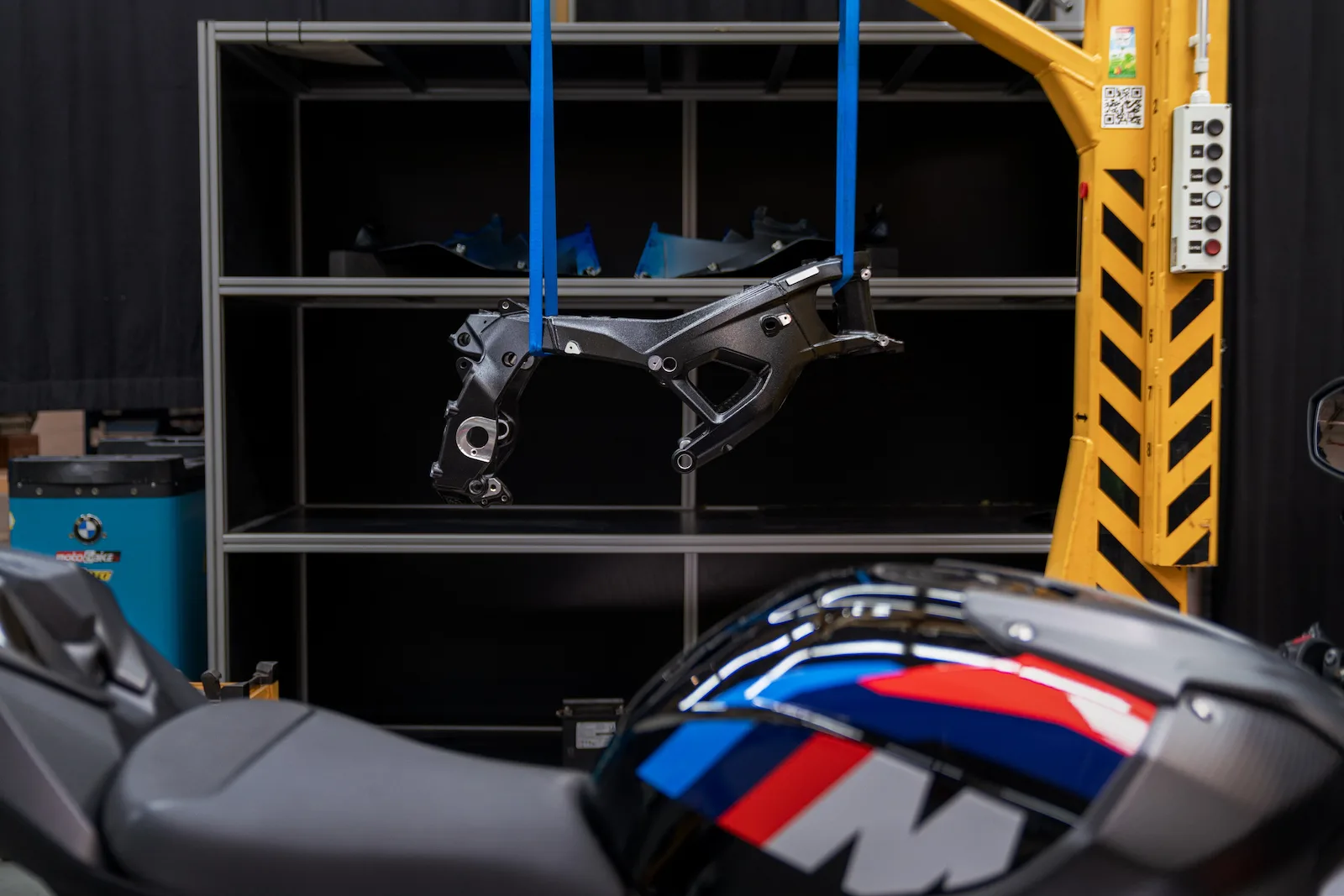
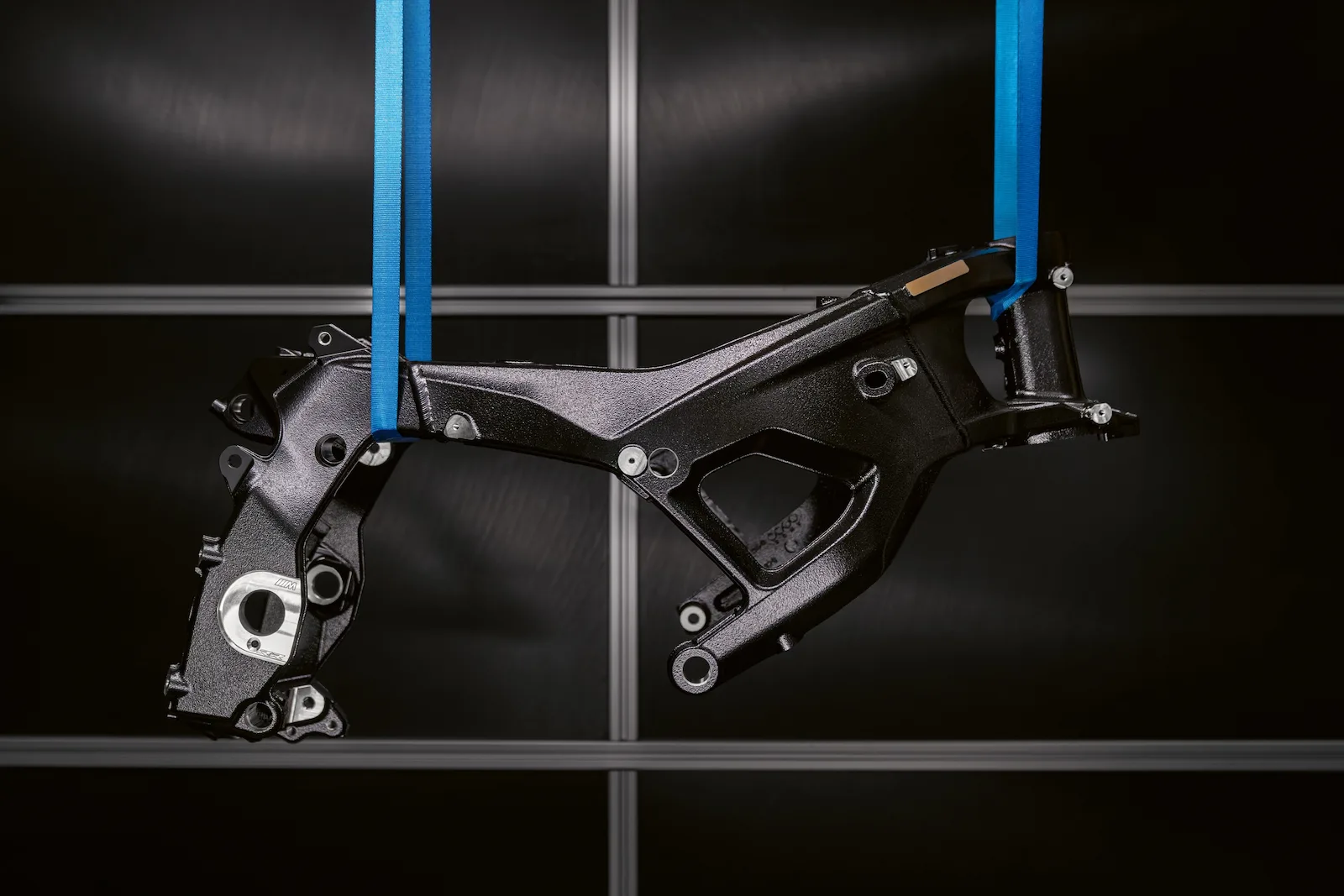
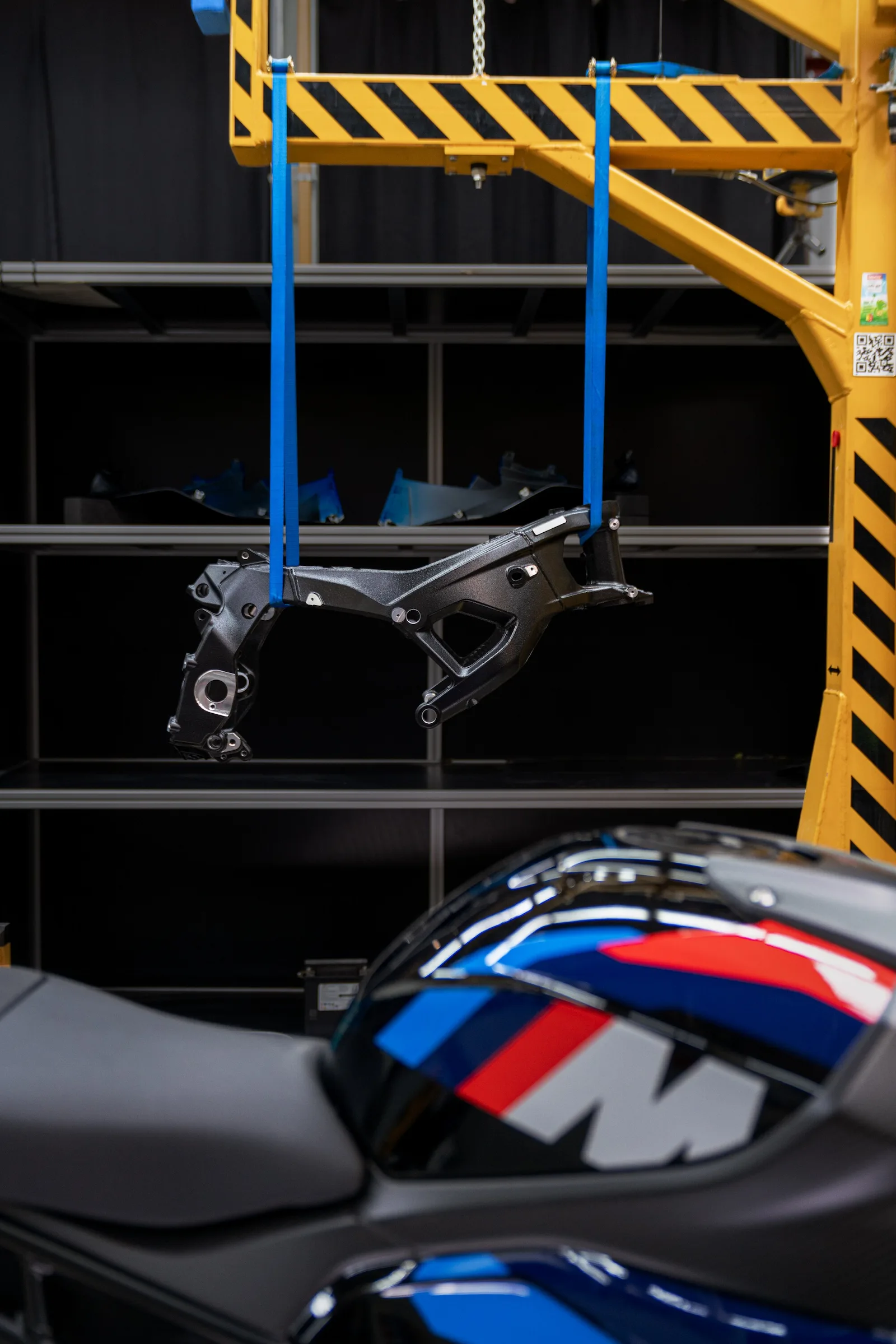
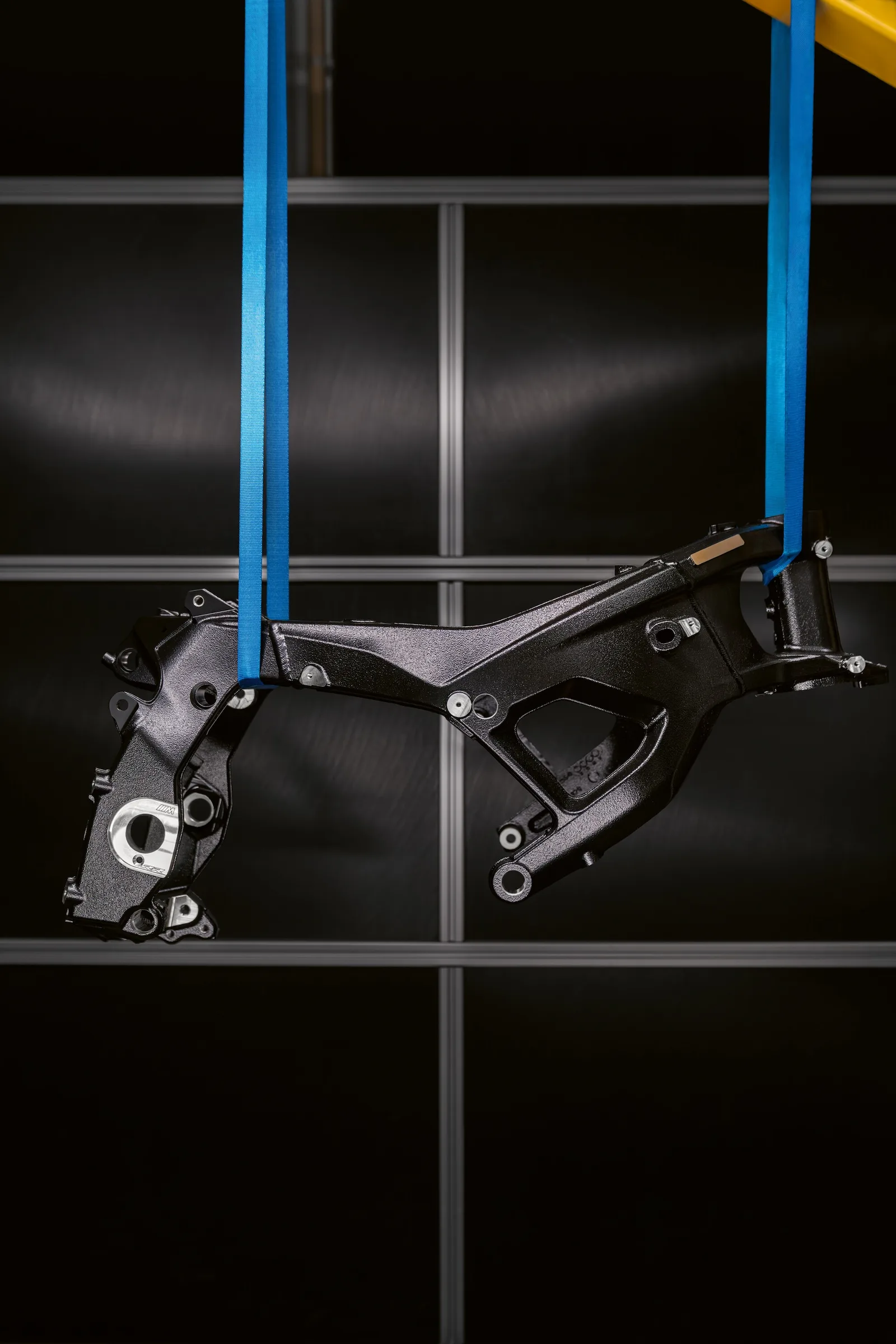
From model year 2027 the BMW M 1000 RR comes with the third generation of its M Motorsport aluminum frame: around 1.3 kg lighter, with walls up to 30 per cent thinner so BMW can tune where it flexes and where it stays stiff.
Released · By Cali Biker Club News· Our take: · 3 min read
The manufacturer's own words, credited and linked. This tab is kept out of search; our take is the page to share.
RACING TECHNOLOGY FOR THE ROAD: THE BMW M 1000 RR´S M MOTORSPORT FRAME.
BMW Motorrad ·
In short
Our summary, in our own words.
BMW Motorrad will fit the third-generation M Motorsport frame to the M 1000 RR as standard from model year 2027. It is around 1.3 kg lighter, with wall thicknesses reduced by up to 30 per cent for tuned flex, and is cast in Landshut and welded and machined in Berlin.
RACING TECHNOLOGY FOR THE ROAD: THE BMW M 1000 RR´S M MOTORSPORT FRAME.
2026-10-20
Motorsport technology from Munich, Landshut and Berlin.
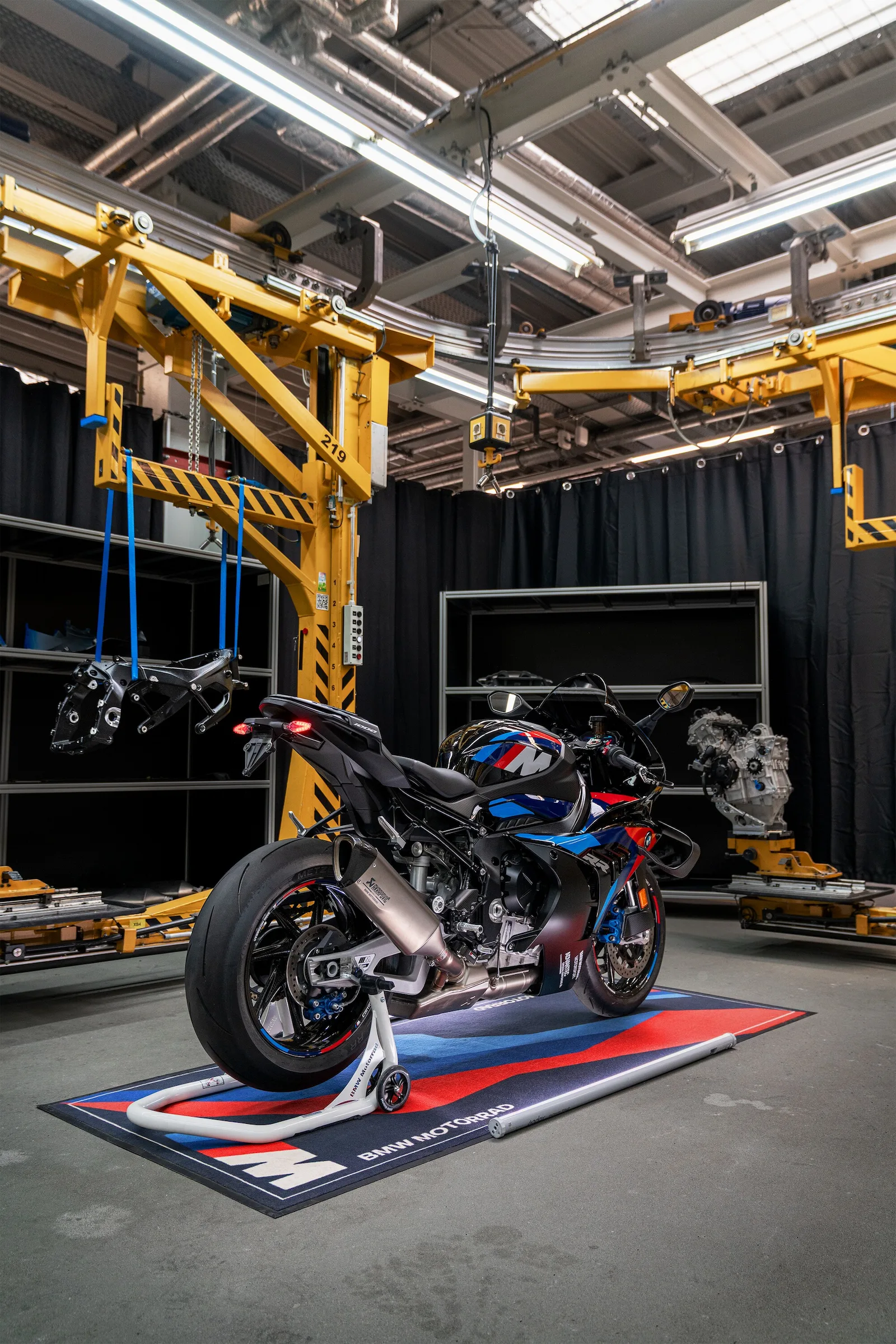
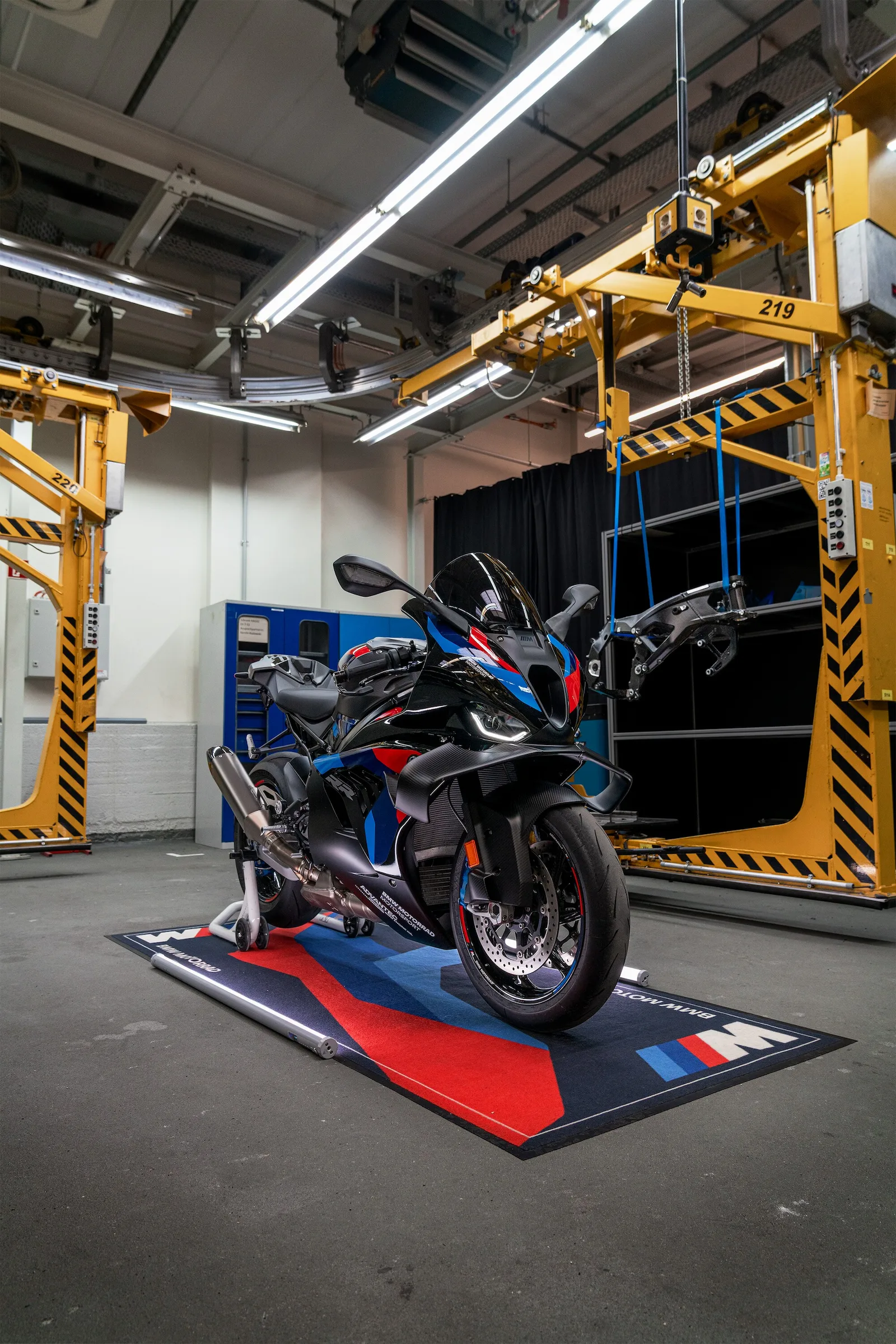
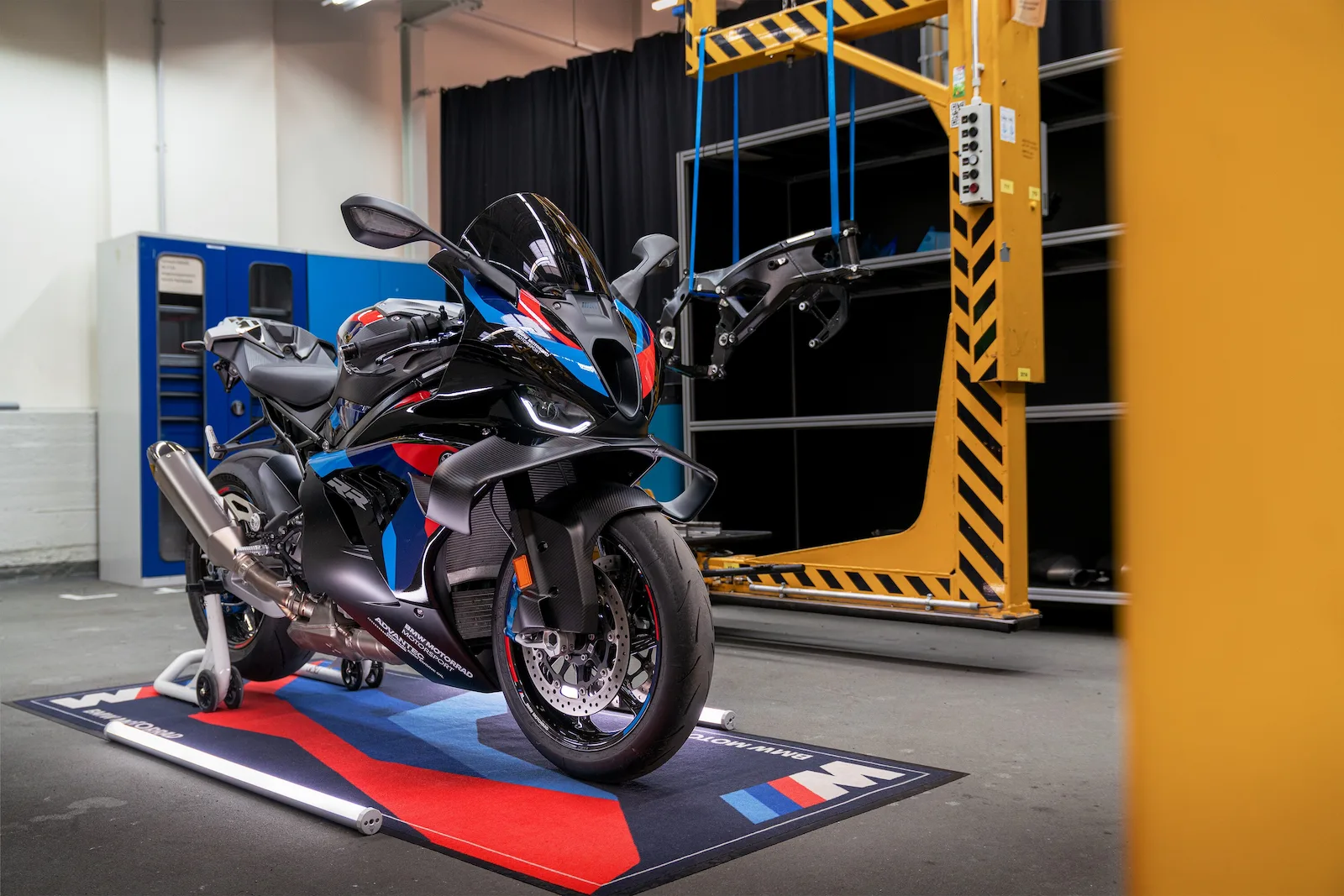
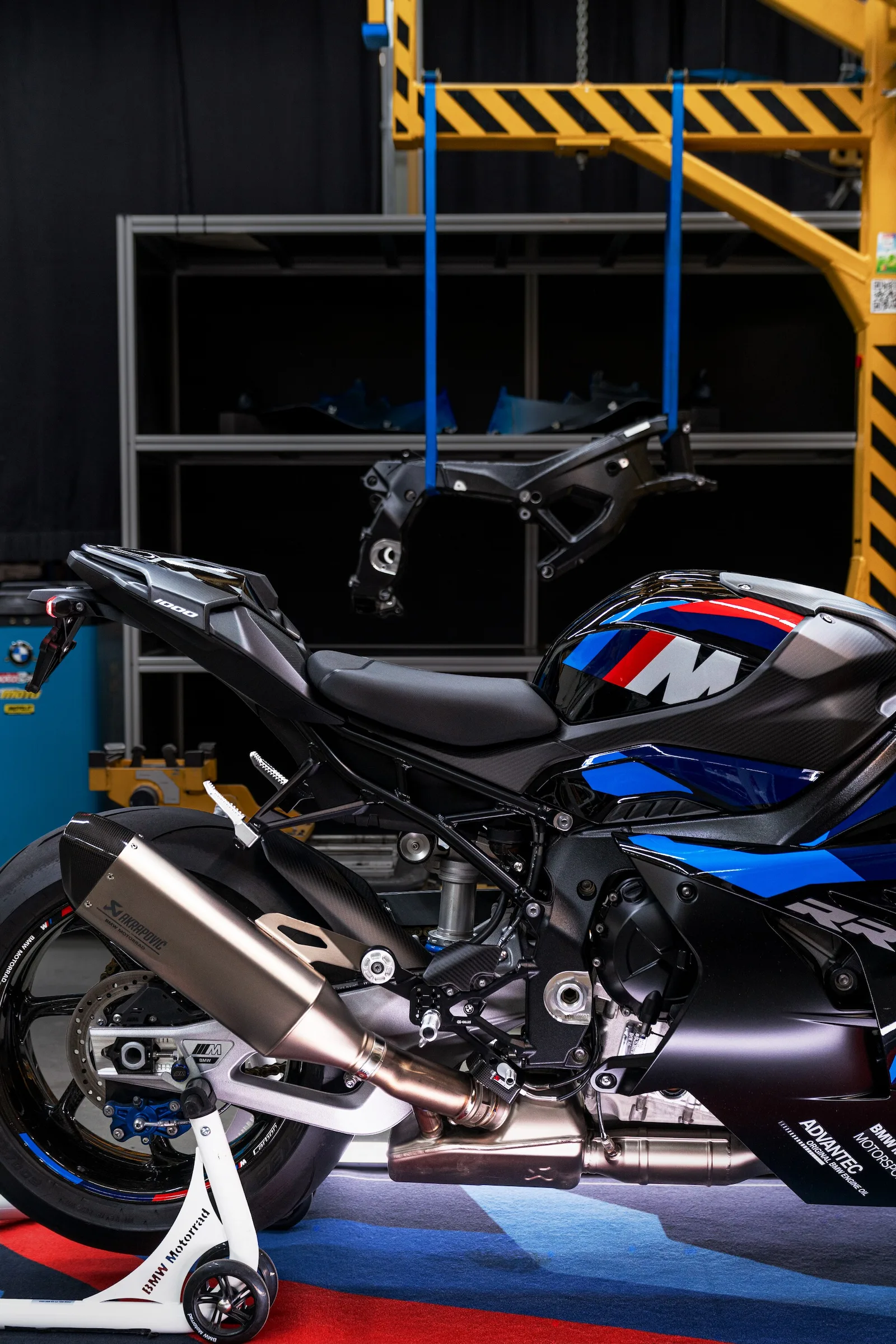
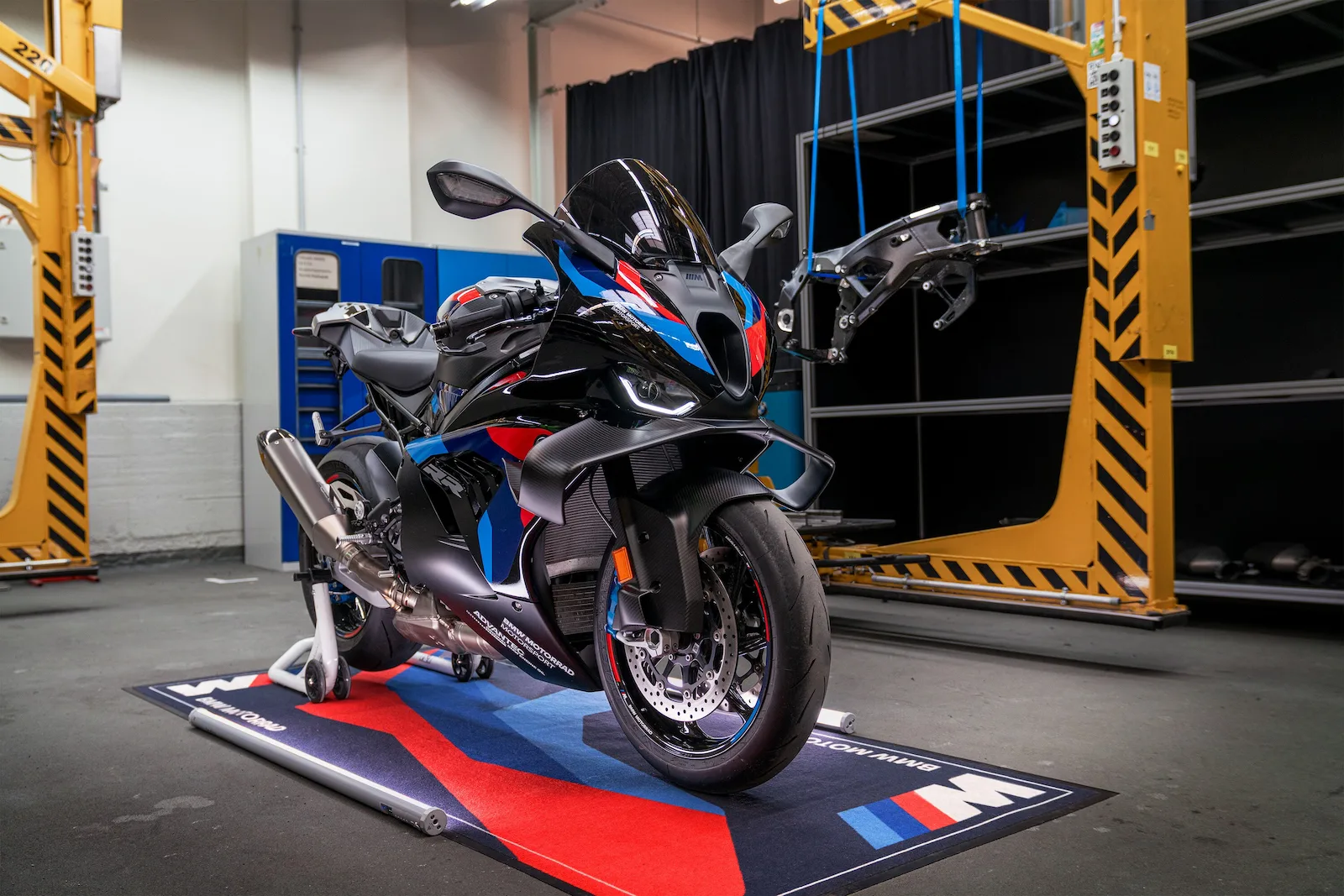
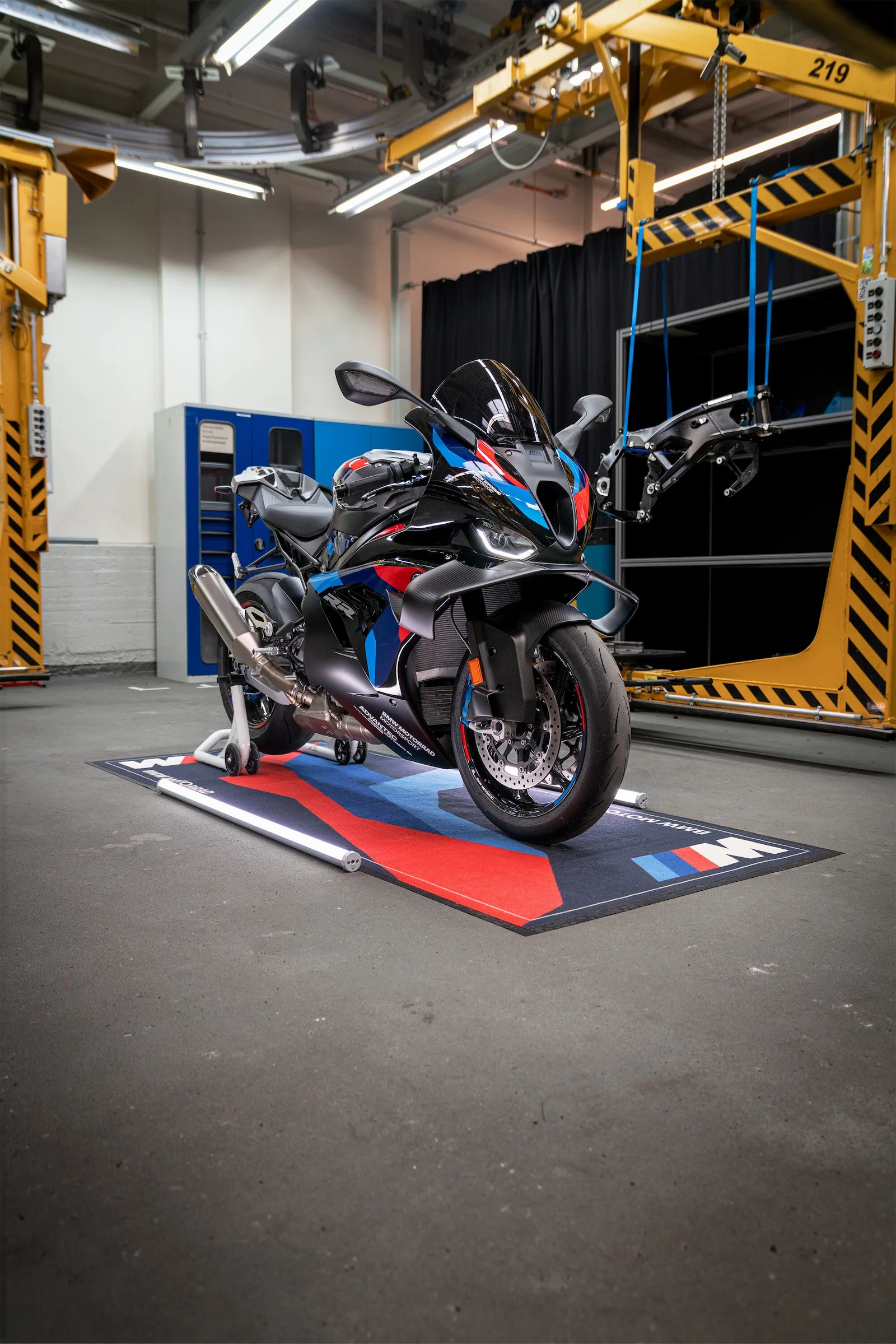
Motorsport expertise with direct customer benefits: From model year 2027, the third generation of the M Motorsport frame brings insights from international racing to the BMW M 1000 RR as standard – for more precise handling, clearer feedback and improved tyre contact.
Around 1.3 kg lighter than the previous version.
Precisely tuned stiffness and flexibility through wall thicknesses reduced by up to 30 per cent.
End-to-end digital development chain from simulation and testing through to reproducible series production.
Combined expertise across three locations: Development and testing in Munich, light-alloy casting in Landshut, and production and final quality inspection in Berlin.
Munich. BMW Motorrad is introducing the third generation of the M Motorsport frame in the BMW M 1000 RR. It combines insights from racing with digital development methods and highly specialised manufacturing processes.
Customers benefit from technologies developed and tested under the extreme demands of racing: the new aluminium frame is lighter and offers a precisely tuned balance of stiffness and flexibility. This enables more precise handling, clearer feedback and more consistent tyre contact – particularly during sporty riding and on the racetrack. From model year 2027, the new M Motorsport frame will be fitted as standard in the BMW M 1000 RR.
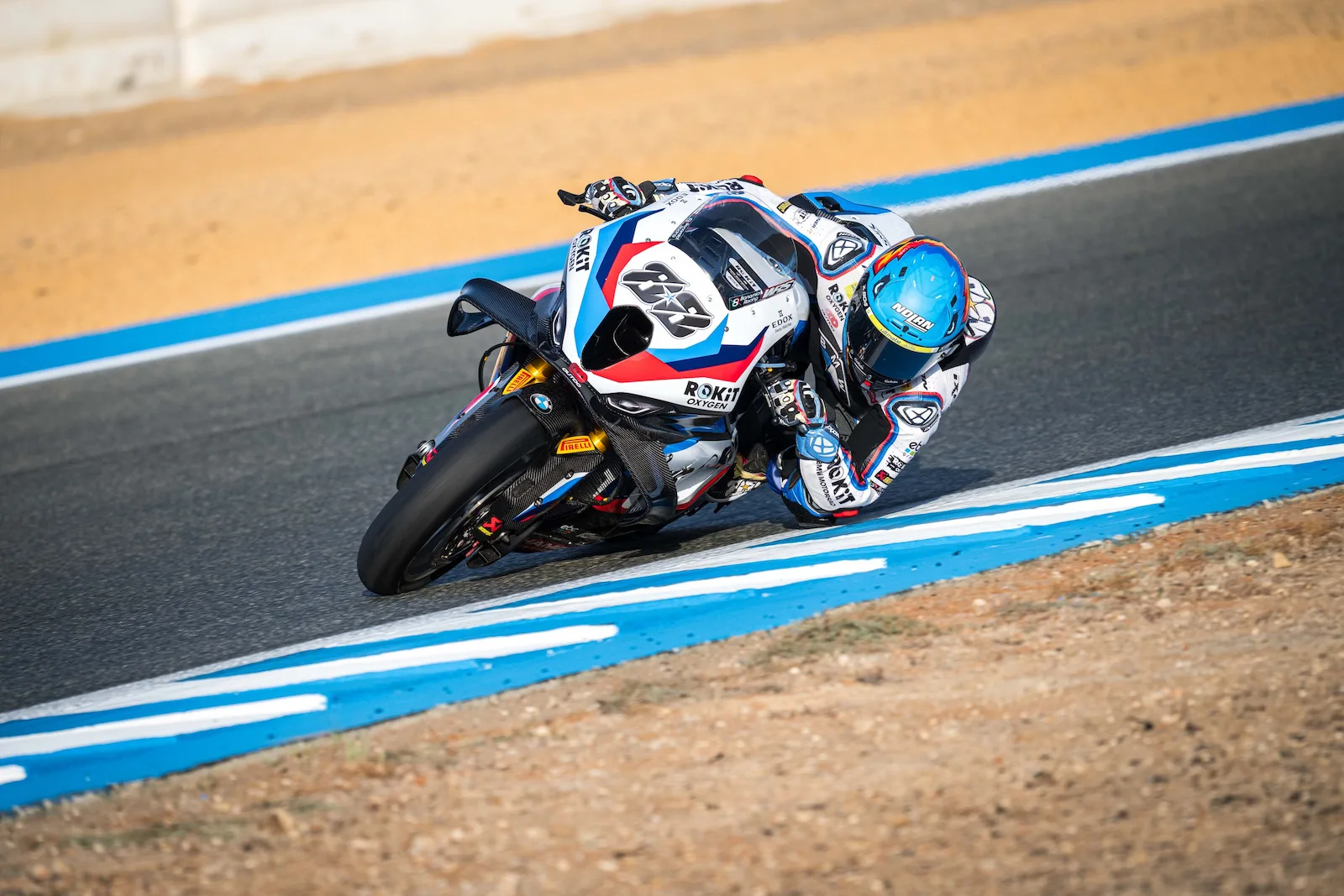
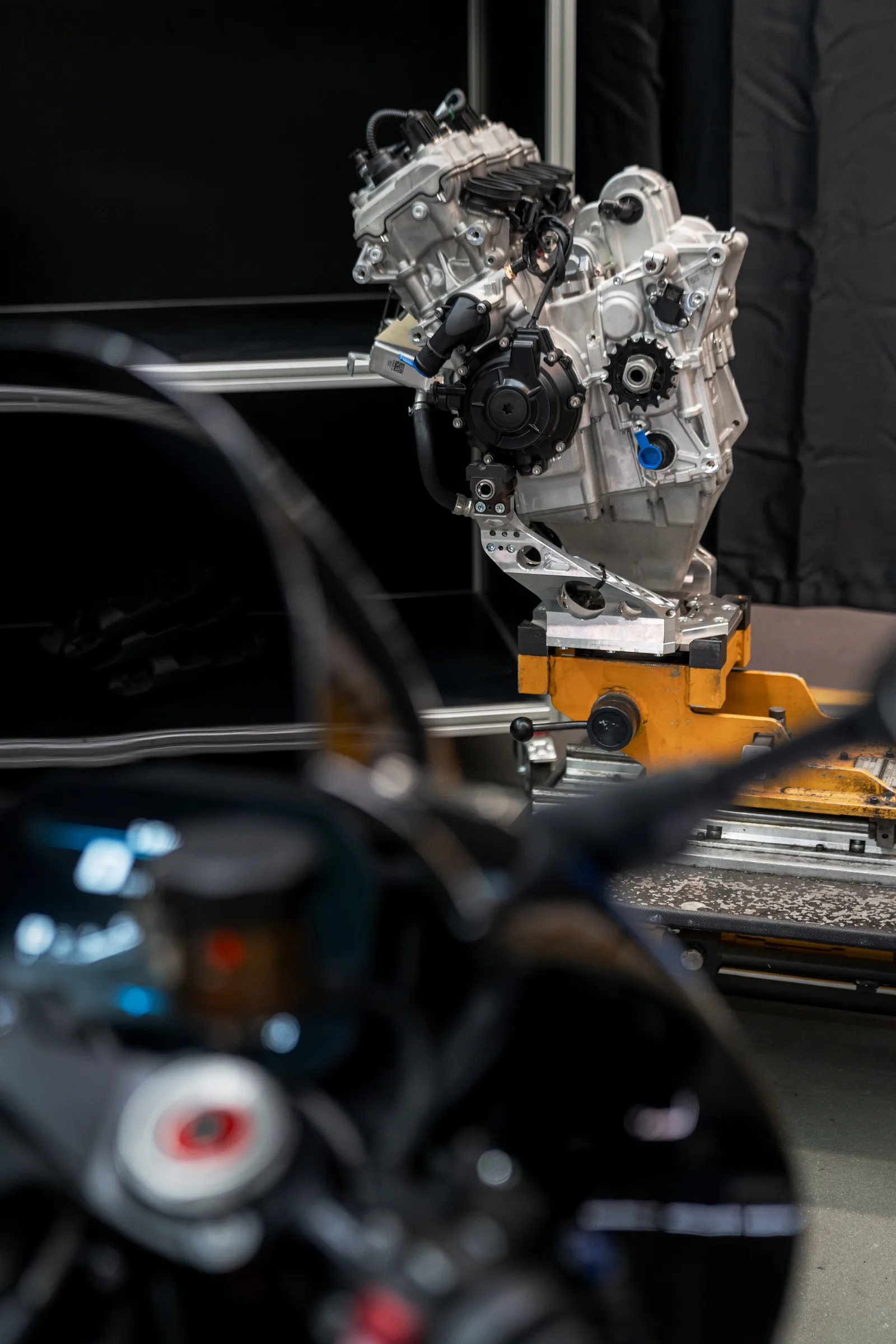
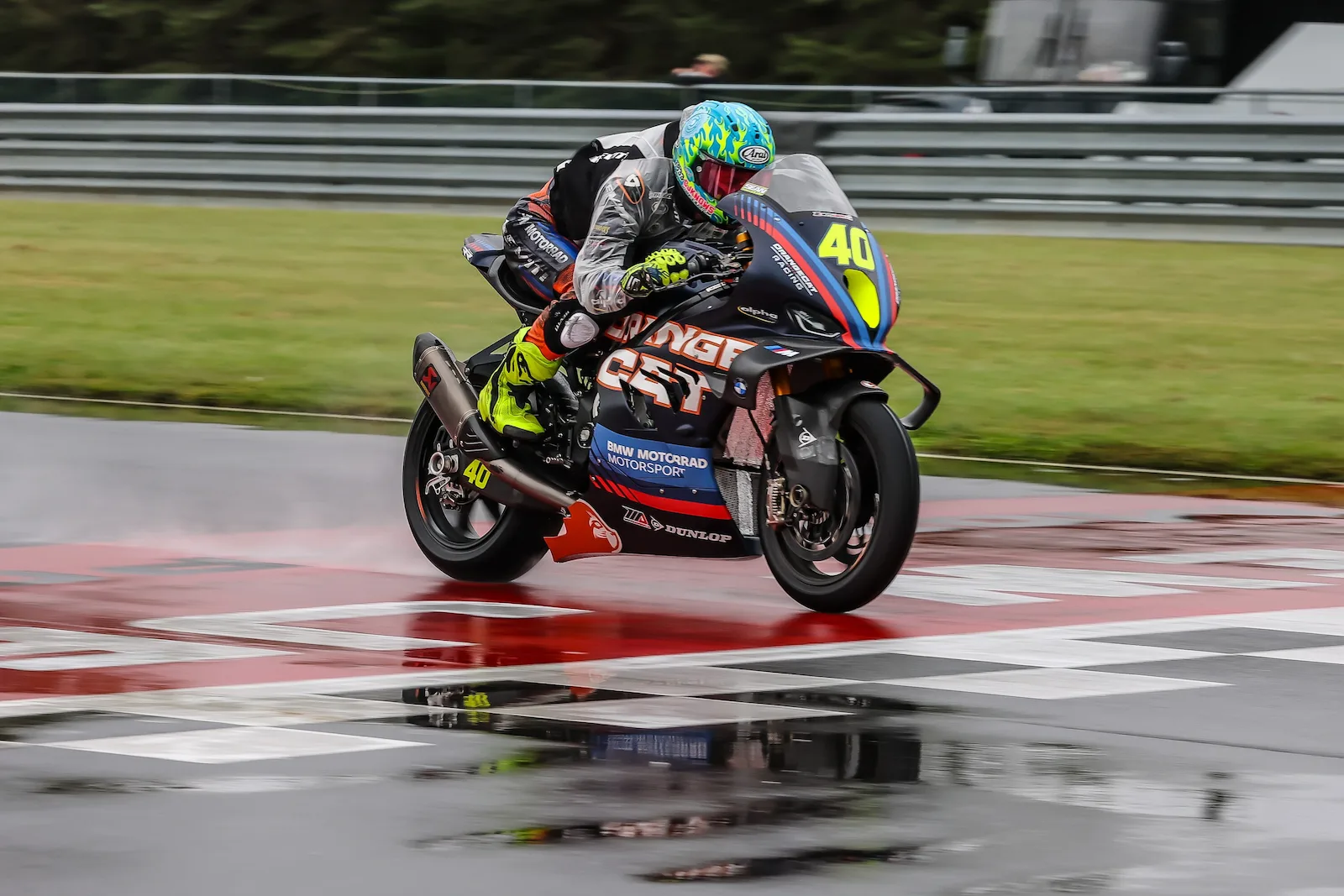
The frame is a key performance component for the BMW Motorrad factory teams, customer racing worldwide and the series-production M 1000 RR. Findings gained in competition feed directly into the design of the series-production component: braking, steering and drive forces are transmitted with precision, while the frame provides targeted support for tyre contact at lean. For customers, this transfer of motorsport technology means greater precision when turning in, more transparent motorcycle responses and greater confidence in demanding riding situations. At the same time, the production-based technology provides a high-performance platform for the BMW M 1000 RR across different racing series and circuit conditions.
“The new M Motorsport frame combines consistent lightweight construction with precisely tuned stiffness and flex characteristics. This provides the basis for precise chassis performance and maximum grip. From digital design and testing through to series production, the expertise of our Munich, Landshut and Berlin locations is seamlessly integrated. Our factory teams benefit from this just as much as BMW Motorrad customer racing teams worldwide.” — Sven Blusch, Head of BMW Motorrad Motorsport
Less weight. More precise feedback. Greater confidence.
Compared with the previous version, the third generation of the M Motorsport frame is around 1.3 kg lighter. The lower weight enhances agility and facilitates rapid changes of direction. Wall thicknesses reduced by up to 30 per cent also enable targeted tuning of the stiffness and flex characteristics. At lean, the frame can flex laterally to a defined degree, supplementing the suspension in absorbing inputs from the road surface. Riders benefit from more consistent tyre contact, improved feedback and more even wear characteristics. Longitudinally, the chassis retains a high level of stiffness to ensure the precise transmission of braking and drive forces and predictable motorcycle response even under high loads.
Digital development. Series-ready production.
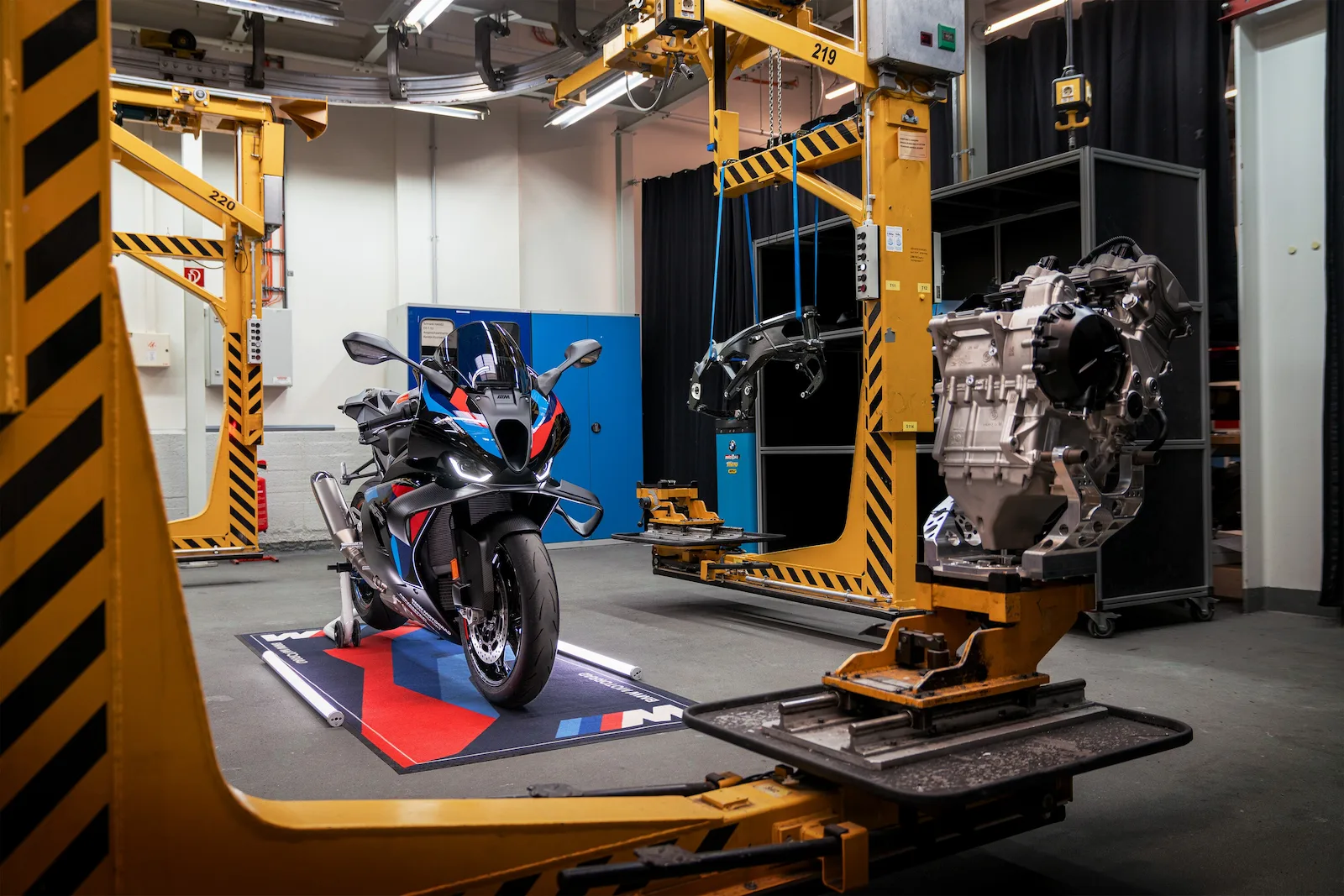
Combining lightweight construction, defined flex characteristics and reproducible component quality requires a closely integrated process chain. To achieve this, BMW Motorrad brings together chassis development, simulation and testing in Munich, light-alloy casting expertise in Landshut, and motorsport expertise at the Berlin motorcycle plant. The frame is welded, coated and machined in Berlin. This transforms digital development data into a series-ready high-performance component.
At BMW Motorrad Development in Munich, the geometry, wall thicknesses and stiffness distribution are designed digitally and then validated in simulations, on test rigs and in riding tests. The approved production data form the basis for manufacturing the four cast components – steering head, left and right side sections, and rear section – at BMW Group Plant Landshut.
Light-alloy casting from Landshut.
BMW Group Plant Landshut specialises in lightweight construction and component production within the production network. Four complex, thin-walled aluminium castings for the M Motorsport frame are produced there using the low-pressure casting process. The process enables controlled mould filling and consistent component quality for demanding geometries.
Thin-walled components. Digitally validated.
In low-pressure casting, molten aluminium is fed into the mould in a controlled manner. This reduces turbulence and air inclusions. Temporary quartz sand cores create the cavities specified by the design. Even before the tooling is manufactured, a core-shooting simulation digitally maps the flow behaviour, packing density and curing of the sand-air mixture. This allows the shooting nozzles and vents to be designed precisely and process reliability to be assured at an early stage. In the cold-box process, the intricate sand cores are produced, cured and positioned precisely in the casting mould. After casting, the cores are removed, followed by machining and comprehensive quality inspection. X-ray inspection, wall-thickness measurements and coordinate measurements ensure the internal quality and dimensional accuracy of the components before they are delivered to BMW Group Plant Berlin for further production.
Precision finishing in Berlin.
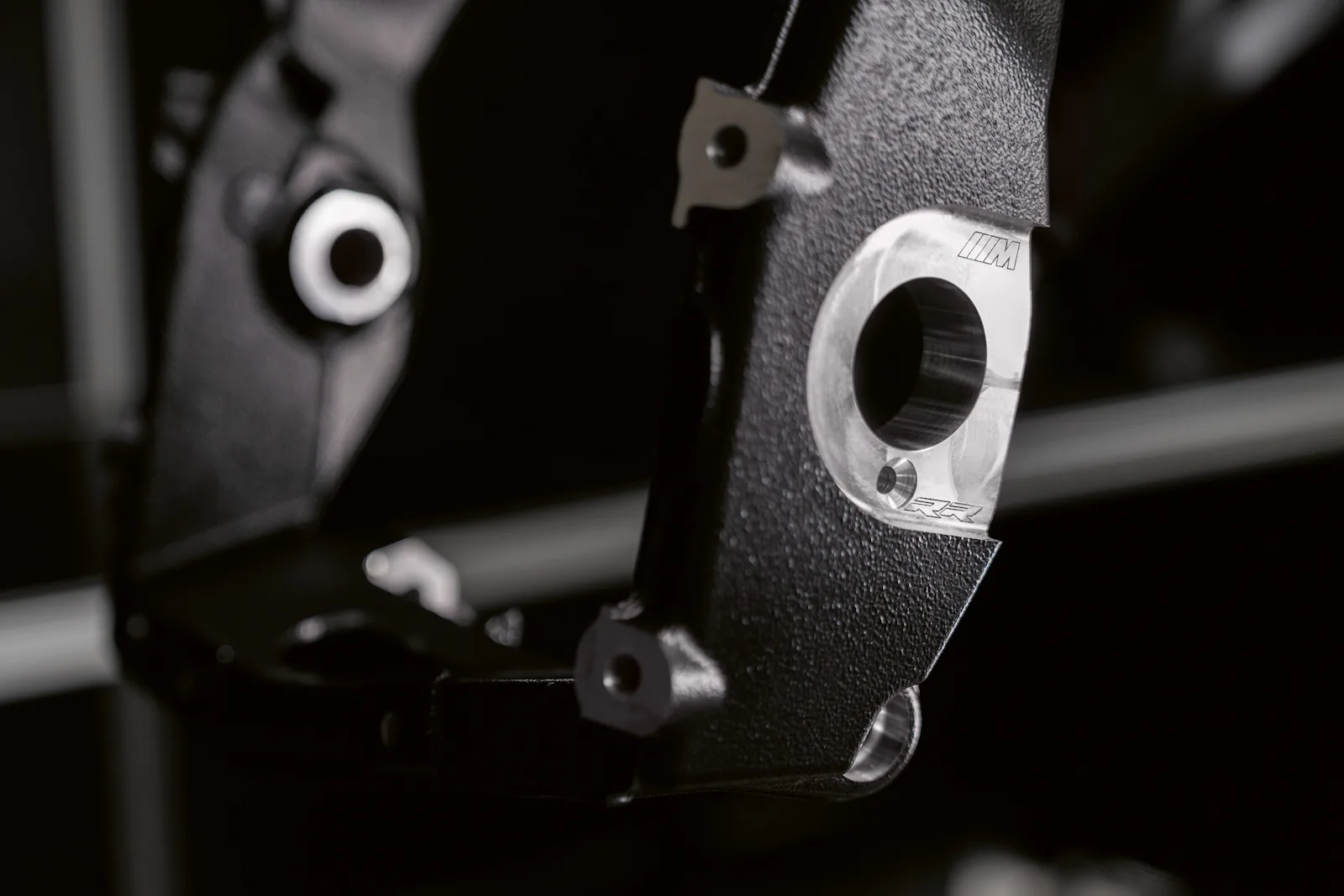
BMW Group Plant Berlin is the lead plant for BMW Motorrad’s international production network. There, the four cast components are positioned with precision and joined to form the frame using TIG welding. Subsequent cathodic dip coating provides uniform corrosion protection – including in enclosed cavities. During final milling, functional surfaces and mounting points are machined to their final dimensions. A further coordinate measurement confirms the dimensional accuracy of the complete frame before it is approved for assembly in the BMW M 1000 RR.
Q&A
What makes the new M Motorsport frame special?
The third generation combines consistent lightweight construction with precisely tuned stiffness and flex characteristics. It transfers insights from international racing, together with digital development and highly specialised manufacturing processes, to series production.
When will the new frame be introduced?
The new M Motorsport frame will be fitted as standard in the BMW M 1000 RR from model year 2027.
How much weight has been saved compared with the previous version?
The third generation is around 1.3 kg lighter than the previous version.
What dynamic riding benefit does the tuned flexibility provide?
At lean, the frame can flex laterally to a defined degree and supplement the suspension in absorbing inputs from the road surface. This supports tyre contact, feedback and even wear characteristics. Longitudinally, the chassis retains a high level of stiffness for the precise transmission of braking and drive forces.
How is the high component quality assured?
Simulations, test-rig testing and riding tests accompany the development process. In production, core-shooting simulation, X-ray inspection, wall-thickness measurements and coordinate measurements, among other measures, ensure process reliability, internal quality and dimensional accuracy.
What roles do the Munich, Landshut and Berlin locations perform?
Chassis development, digital design, simulation and testing take place in Munich. BMW Group Plant Landshut produces the four thin-walled aluminium castings using the low-pressure casting process. BMW Group Plant Berlin contributes its many years of motorsport expertise: the components are welded, coated, finish-machined and measured there before being approved for assembly.
Who benefits from the new frame technology?
The new frame technology provides a high-performance technical platform for BMW Motorrad factory teams and customer racing teams worldwide. At the same time, customers of the series-production BMW M 1000 RR benefit from development derived from motorsport.
The BMW Group Newsroom publishes BMW Motorrad's releases, photos and media kits openly (no login; the old PressClub redirects there) and its Legal Notice limits the material to press use, with no commercial use (read 2026-11-21). Owner decision 2026-11-21 to publish BMW Motorrad's releases with credit: we host credited copies of the photos shown on each release page ("Photo: BMW Motorrad"), on news pages only, and embed (never re-upload) official BMW Motorrad YouTube videos.
All 13 photos
Official press photos, credited to BMW Motorrad. Swipe or use the arrows.
F 800 GS · F 900 GS · F 900 GS Adventure · F 900 R · F 900 XR · R 12 nineT · R 12 S · R 12 G/S · R 1300 R · R 1300 RS · R 1300 RT · R 1300 GS · R 1300 GS Adventure · S 1000 R · S 1000 RR · S 1000 XR · M 1000 R · M 1000 RR · M 1000 XR · K 1600 B · K 1600 B Grand America · K 1600 GTL
Cali Biker Club News covers new models, recalls, rider technology and service news for riders researching the bike they own or may buy. We work from official manufacturer press materials, credit and link every source, and write in our own words.
Our stories are written with AI assistance and checked against the official manufacturer release before they are published.
 BMW Motorrad
 BMW Motorrad
 BMW MotorradNew modelNew bikes
 BMW MotorradNew bikes2027
 KawasakiNew bikes2027
 DucatiUpdated
 TriumphNew model VideoNew bikes2027
 KTMNew bikes2027