The full story
What it means for you
- Ask your dealer to confirm the torque figure and tank capacity before you plan range or compare bikes; the release prints 87 ft-lb and 68 ft-lb at 7,000 rpm, and 4.8 gallons and 8 US gallons.
- If 34.6 in is too tall for you, budget for the lowered seat and suspension kit that brings the seat to 33 in.
- Use the remote preload adjuster when you load luggage or a passenger, and spend time with the separate fork-leg adjustments before a hard off-road trip.
- For long desert stages, the 2.1-gallon auxiliary tank and the Rally Info Mode with tripmaster are the pieces to look at first.
- Pick tires for how you ride: the stock Scorpion Rally Street is the all-rounder, and two other Pirelli Scorpion options are homologated.
- Long service intervals help running costs: valve checks every 28,000 miles, oil every 9,000 mi or two years.
What changed for 2026
DesertX
- New
Engine
890cc Ducati V2 with IVT, 110 hp
- New
Frame
Monocoque frame acting as airbox
- New
Suspension
New Kayaba fork; progressive-link rear suspension
- Updated
Brakes
Brembo M4.32, new 305 mm discs, dedicated pads, axial master cylinder
- New
Fuel tank
Slimmer, lighter polymer tank
- Updated
Ergonomics
Footpegs moved back, seat and handlebars forward
- Updated
Bodywork
Front end .8 in lower; higher front mudguard
- Updated
Electronics
New 5" TFT, DQS 2.0, six Riding Modes
- New
Price
$16,995
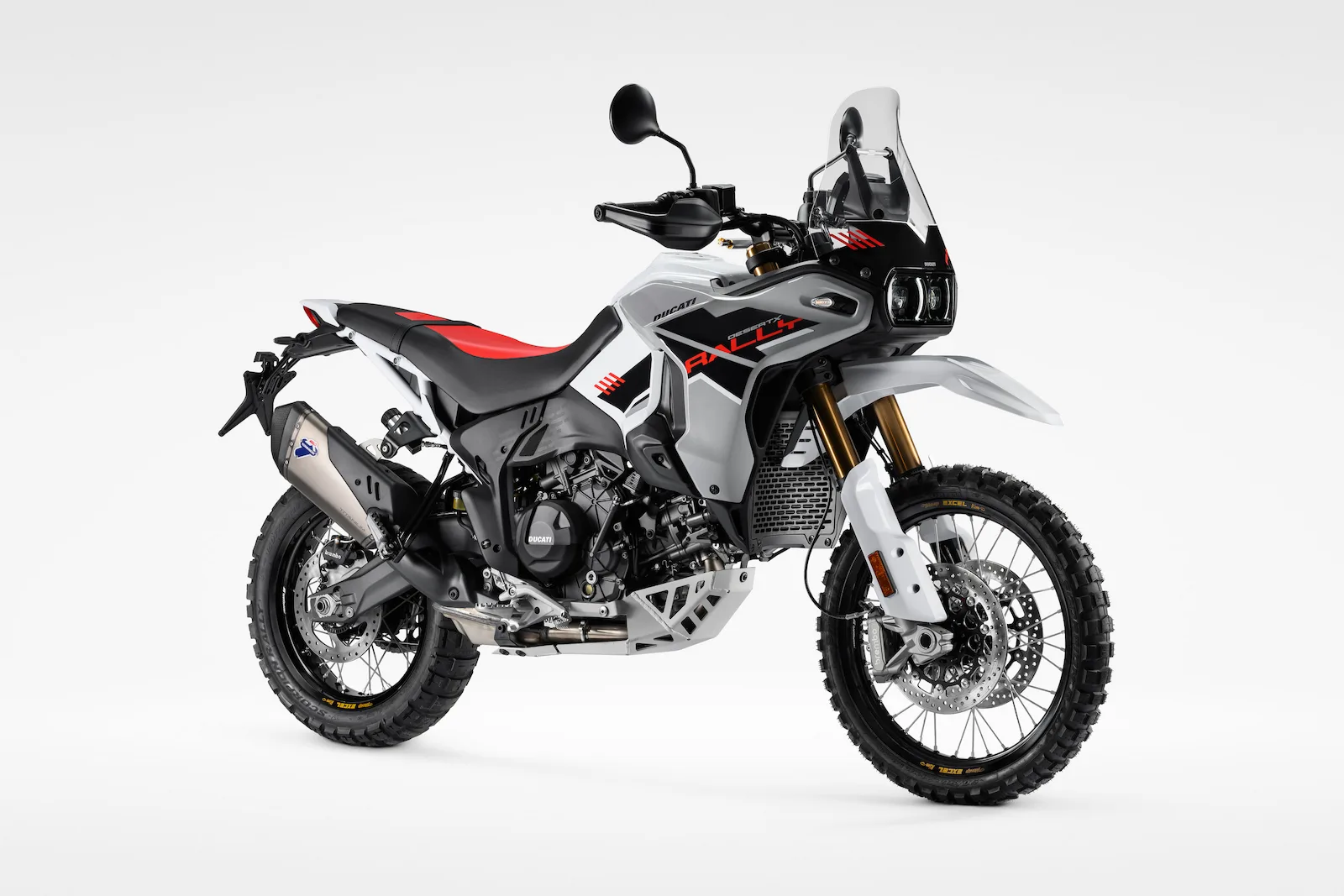
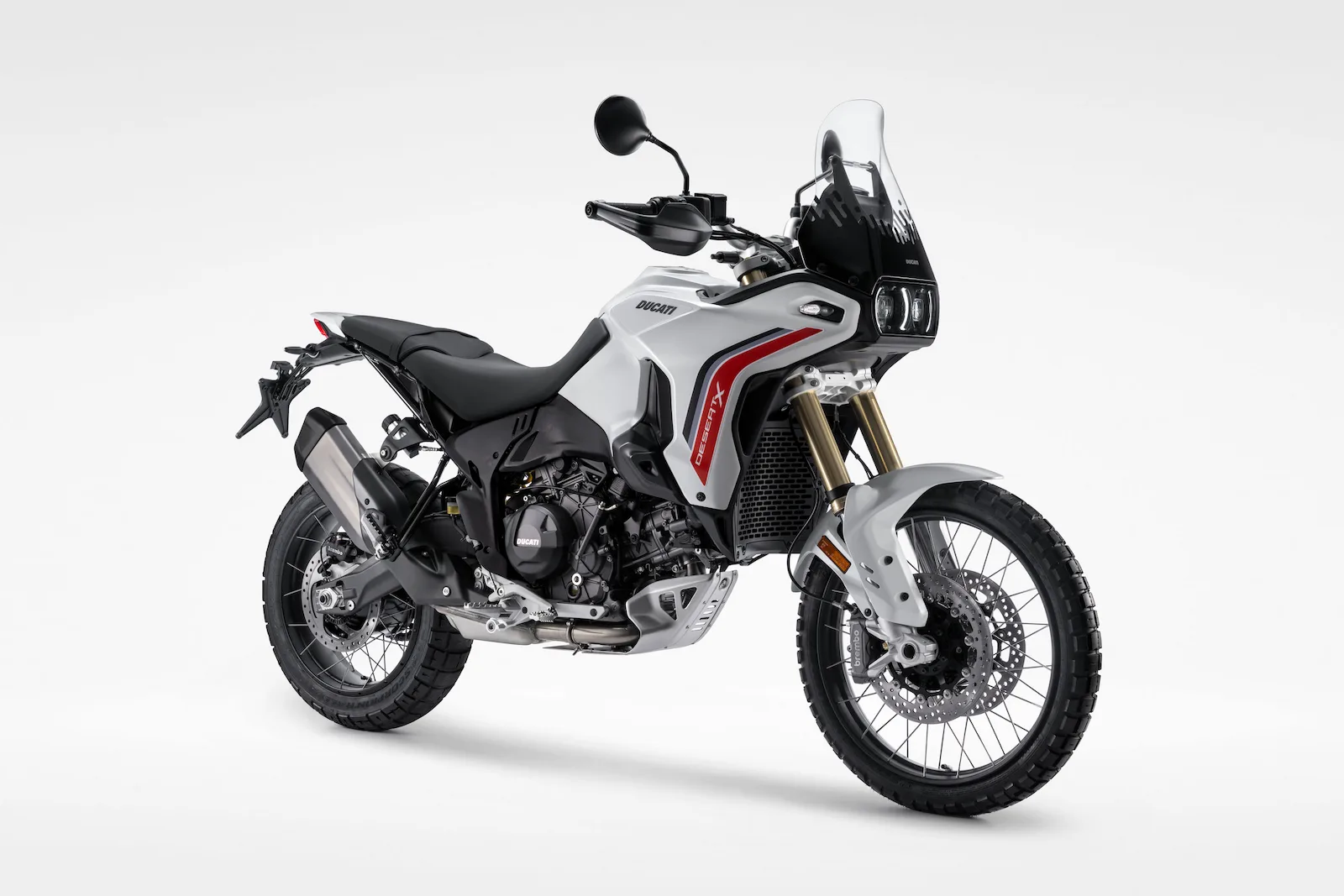
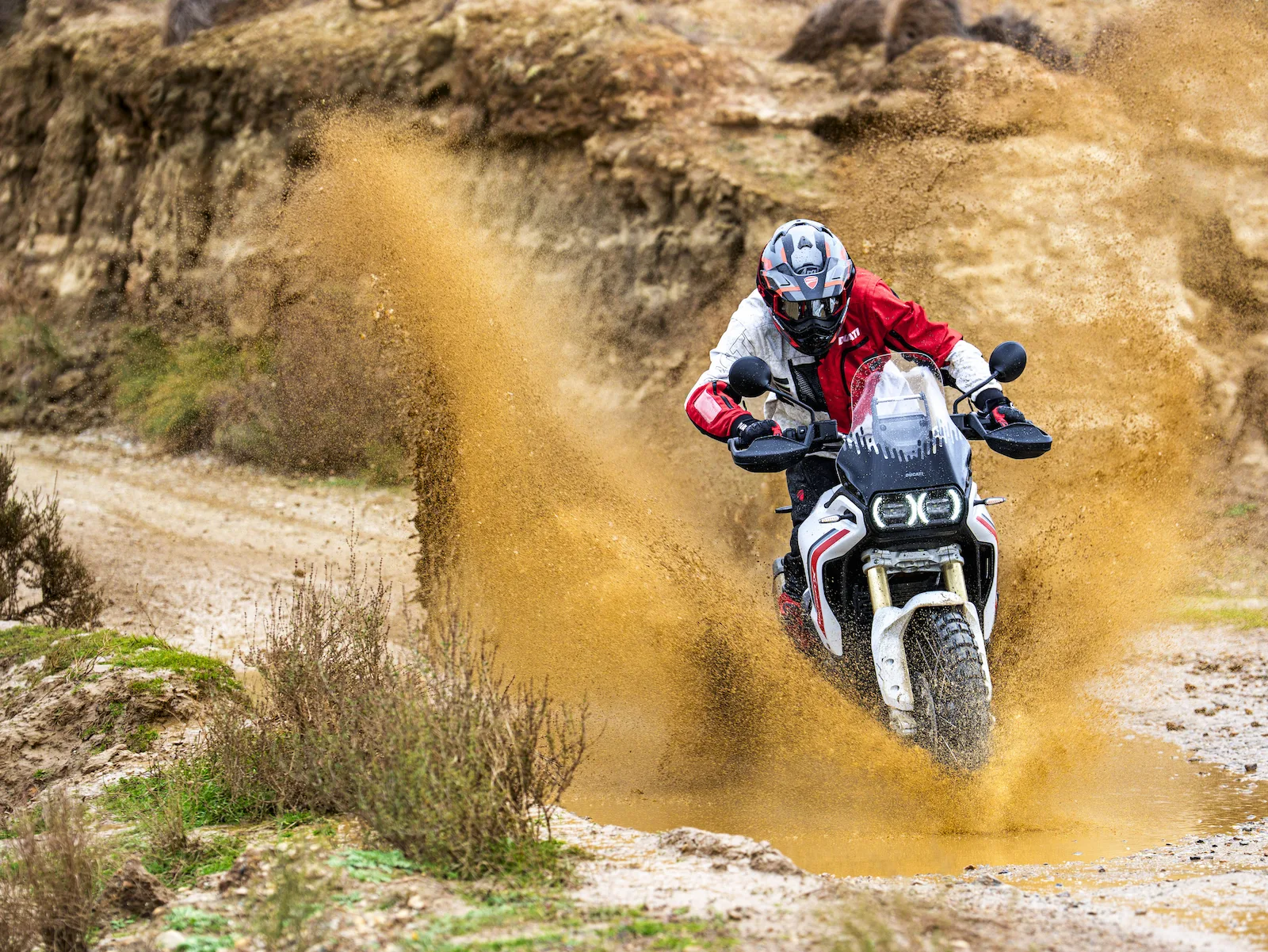
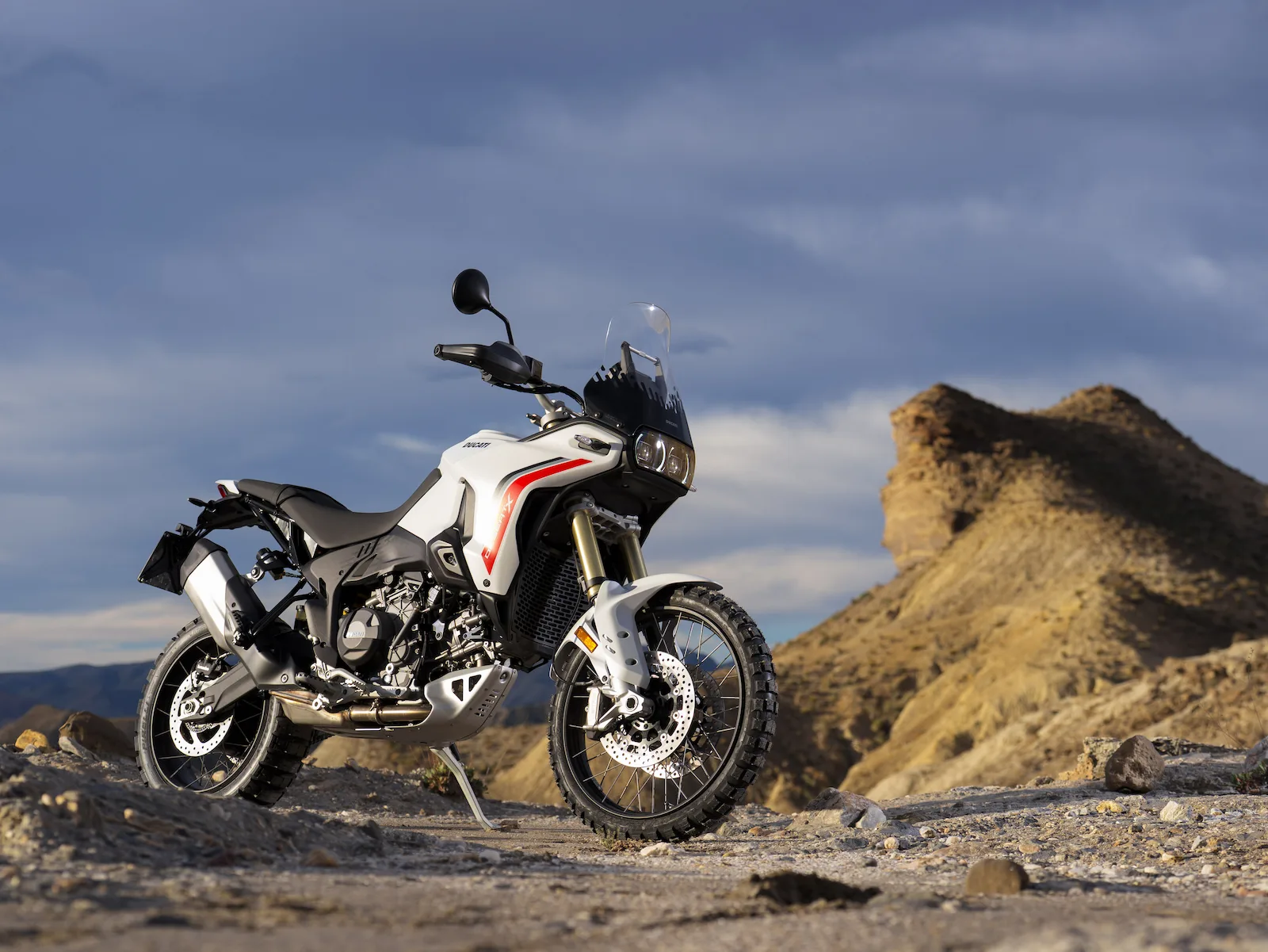
Ducati has redesigned the DesertX, its adventure bike for serious off-road riding, for a second generation. The 2026 model is built around the new 890cc Ducati V2 engine and a monocoque frame that uses the engine as part of its structure. Around that core come a new Kayaba fork, a rear shock on a progressive linkage, revised Brembo brakes, a slimmer polymer fuel tank, a riding position set up for standing, a new 5-inch TFT dash and an electronics package with two dedicated off-road modes. The 21-inch front wheel that defined the first bike stays.
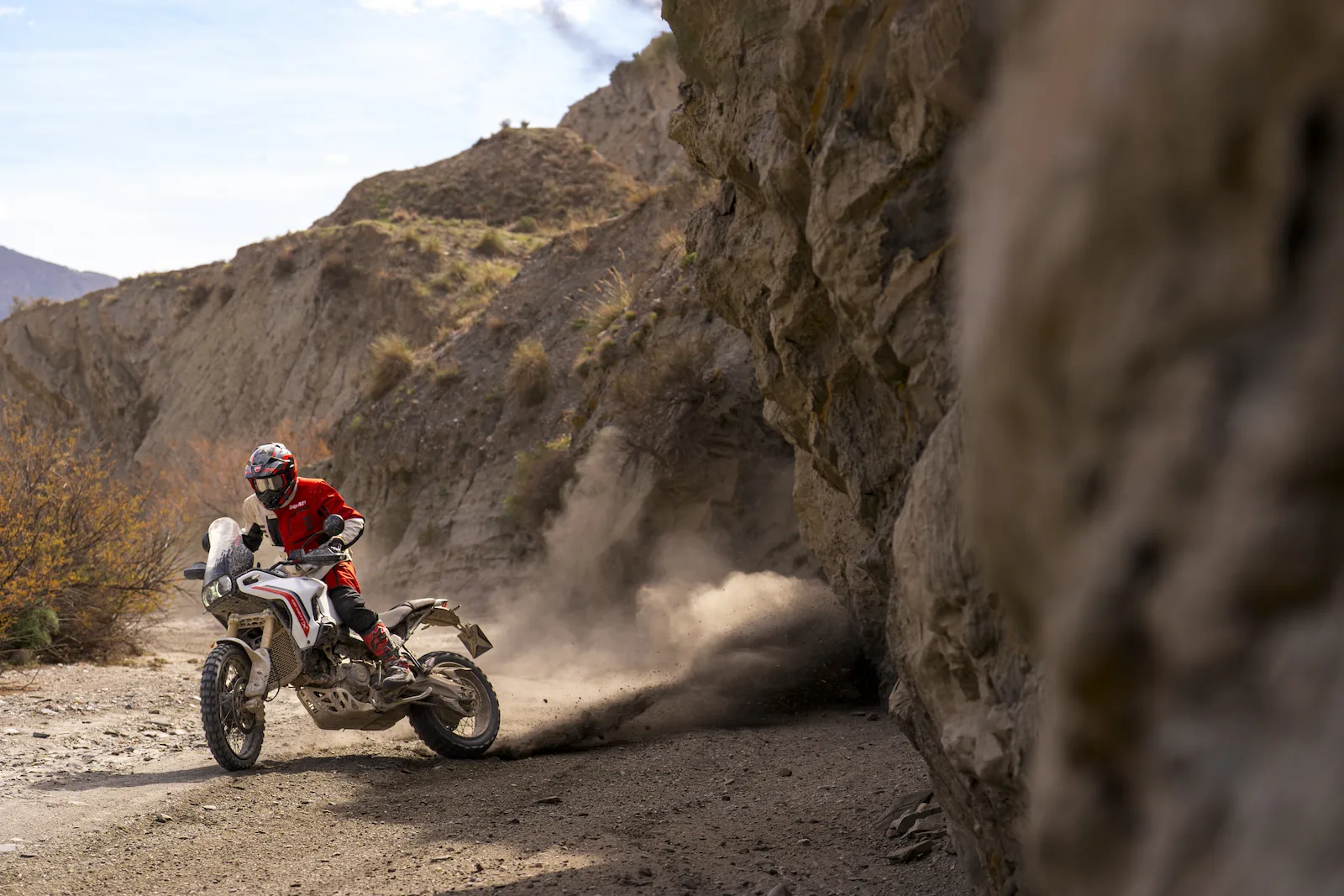
The original DesertX started as a concept at EICMA 2019 and went into production in 2021. Ducati says the new one draws on years of development and racing at events from the Erzbergrodeo and the Transanatolia to the Rally of Albania and the desert of the NORRA Mexican 1000 Rally, with the aim of making it better off-road without losing road manners.
In North America it arrives at dealers from July 2026 at an MSRP of $16,995, in one color: Matte Star White Silk. Two figures in the release are printed two different ways, maximum torque and fuel-tank capacity; both versions are given below so you can confirm them with a dealer.
Engine and gearbox
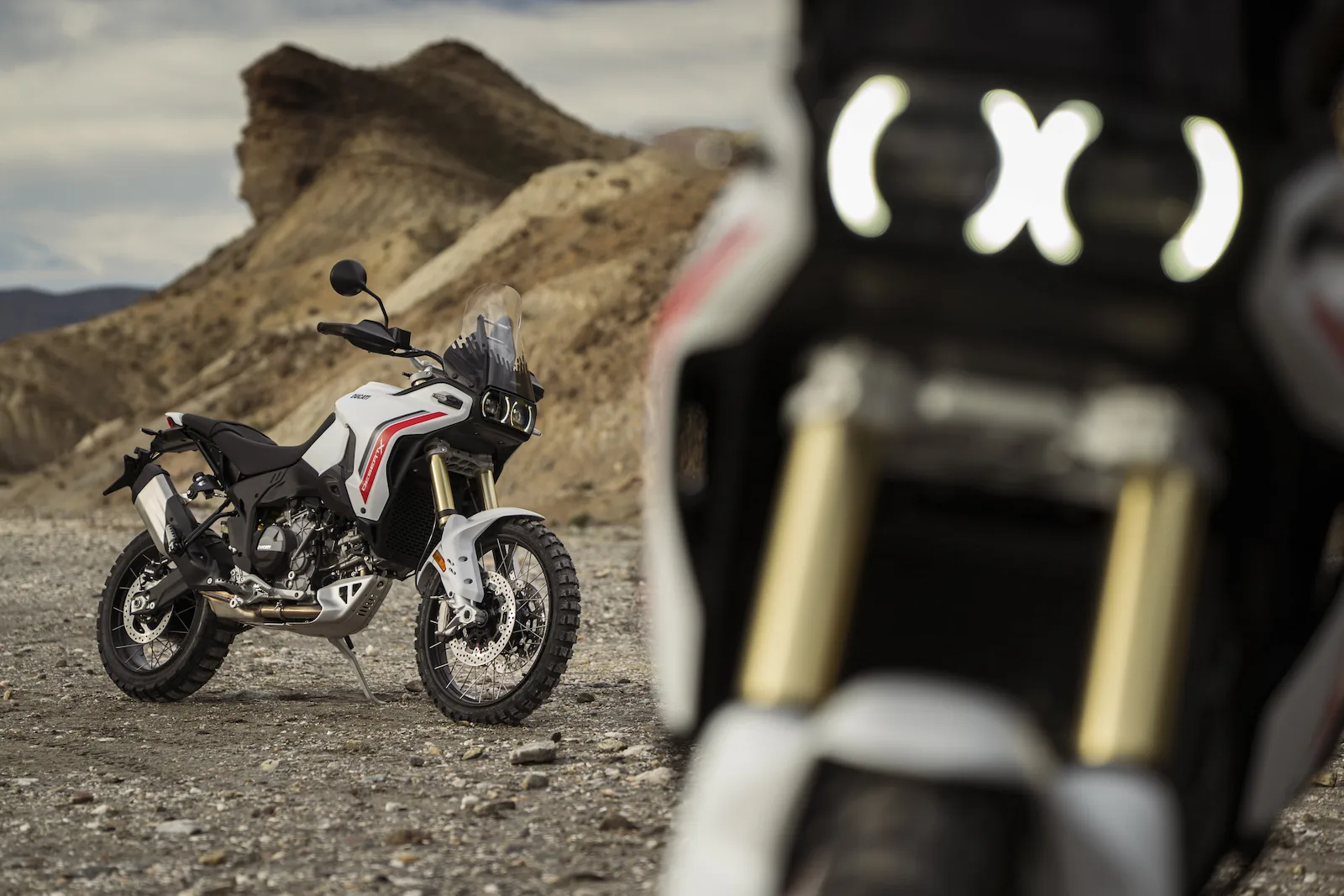
The 890cc V2 is, according to Ducati, the lightest four-valve-per-cylinder twin it has ever built. Its variable intake valve timing (IVT), which Ducati says no rival in the segment offers, is there to keep power available across the rev range and make throttle response quick whenever you open it. Peak power is 110 hp, which the equipment list places at 9,000 rpm.
Torque is where the release disagrees with itself. The engine section gives maximum torque as 87 ft-lb, while the equipment list at the end prints 68 ft-lb at 7,000 rpm. Ducati does not say which is correct. What the text does say is that the curve is fuller than the previous model's, with 70% of peak torque on tap at 3,000 rpm, which is what you feel when you drive out of a slow corner or up a rocky climb.
The gearbox ratios are specific to the DesertX. The first four gears are shorter to help you crawl over obstacles, and sixth is taller for lower fuel use and a calmer cruise on fast transit stretches.
Service intervals are long: valve clearance checks every 28,000 miles and oil changes every 9,000 mi or two years.
Frame and chassis
The monocoque frame was developed for this bike and doubles as the airbox, with the engine carrying load as part of the structure. Ducati says this makes the front of the bike compact and stiffer, for steering that feels natural. The airbox position also makes the air filter easier to reach, so you can pull it and clean it after every dusty ride.
Behind it sits a trellis subframe in Ducati's traditional style, laid out to leave engine parts easy to reach for service. The double-sided aluminum swingarm is also unique to the DesertX and sized for hard hits off-road.
Suspension
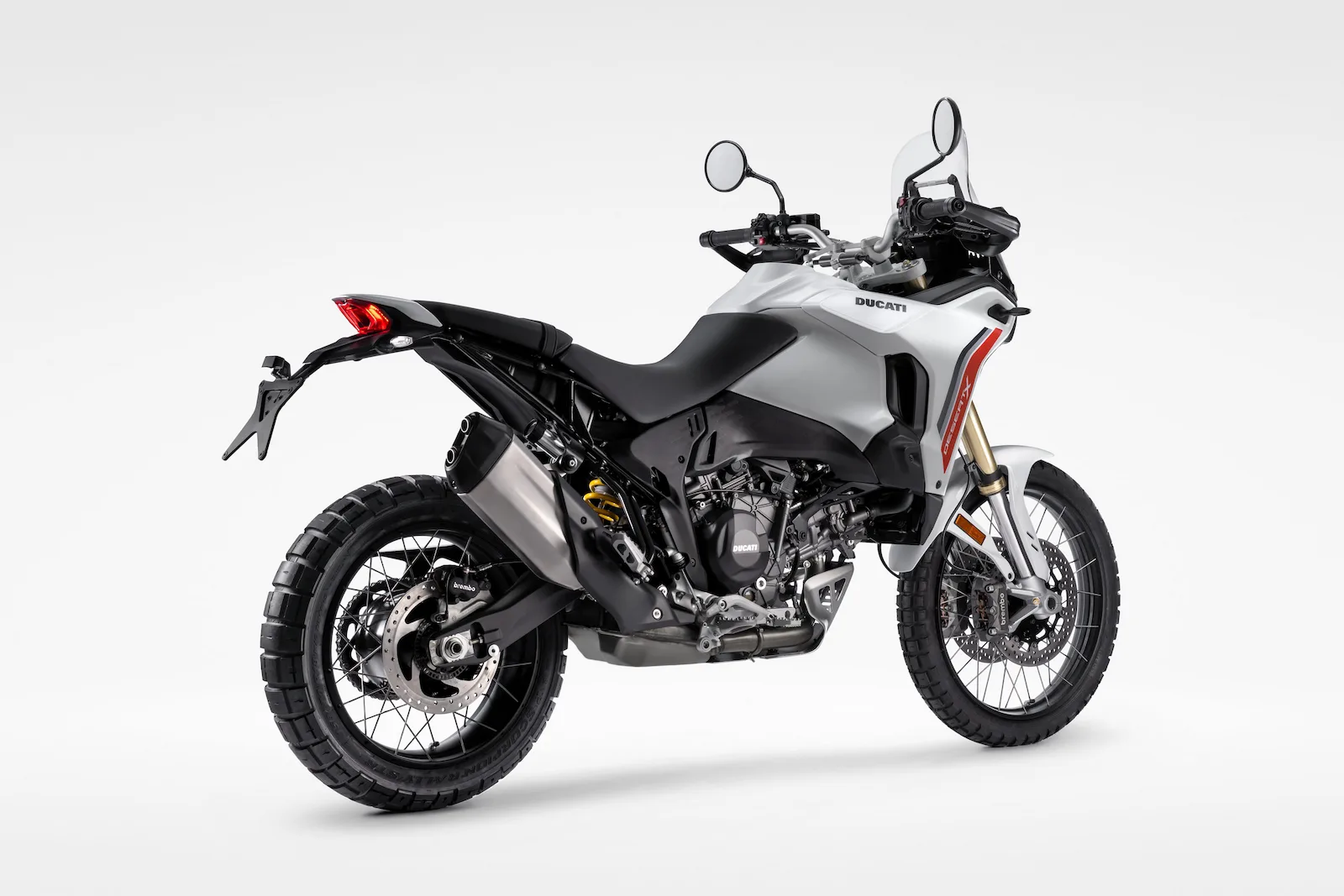
Up front is a new 46 mm KYB upside-down fork with 230 mm of travel. Ducati says it is smoother over rough ground than before, and it is fully adjustable with separate hydraulic settings in each leg, so an experienced rider can fine-tune how it reacts to obstacles.
The rear now uses a progressive linkage to a fully adjustable KYB monoshock with 220 mm of travel and a remote preload adjuster. Ducati says the linkage improves both comfort and off-road performance, and the remote adjuster makes it simple to add preload for a passenger or luggage.
Brakes, wheels and tires
Brembo supplies the front brakes: M4.32 monobloc calipers on dual 305 mm discs, with new dedicated pads and an axial master cylinder with a newly shaped lever. The goal is finer control on loose surfaces, where you need to brake without locking the front, while keeping enough bite for the road. The high front fender now fits without an extra kit.
The DesertX keeps a 21-inch front and 18-inch rear, both tubeless spoked wheels, on Pirelli Scorpion Rally Street tires in 90/90 and 150/70 sizes. Ducati has also homologated two other Pirelli Scorpion options, so you can pick a tire biased more toward dirt or toward pavement.
Ergonomics and bodywork
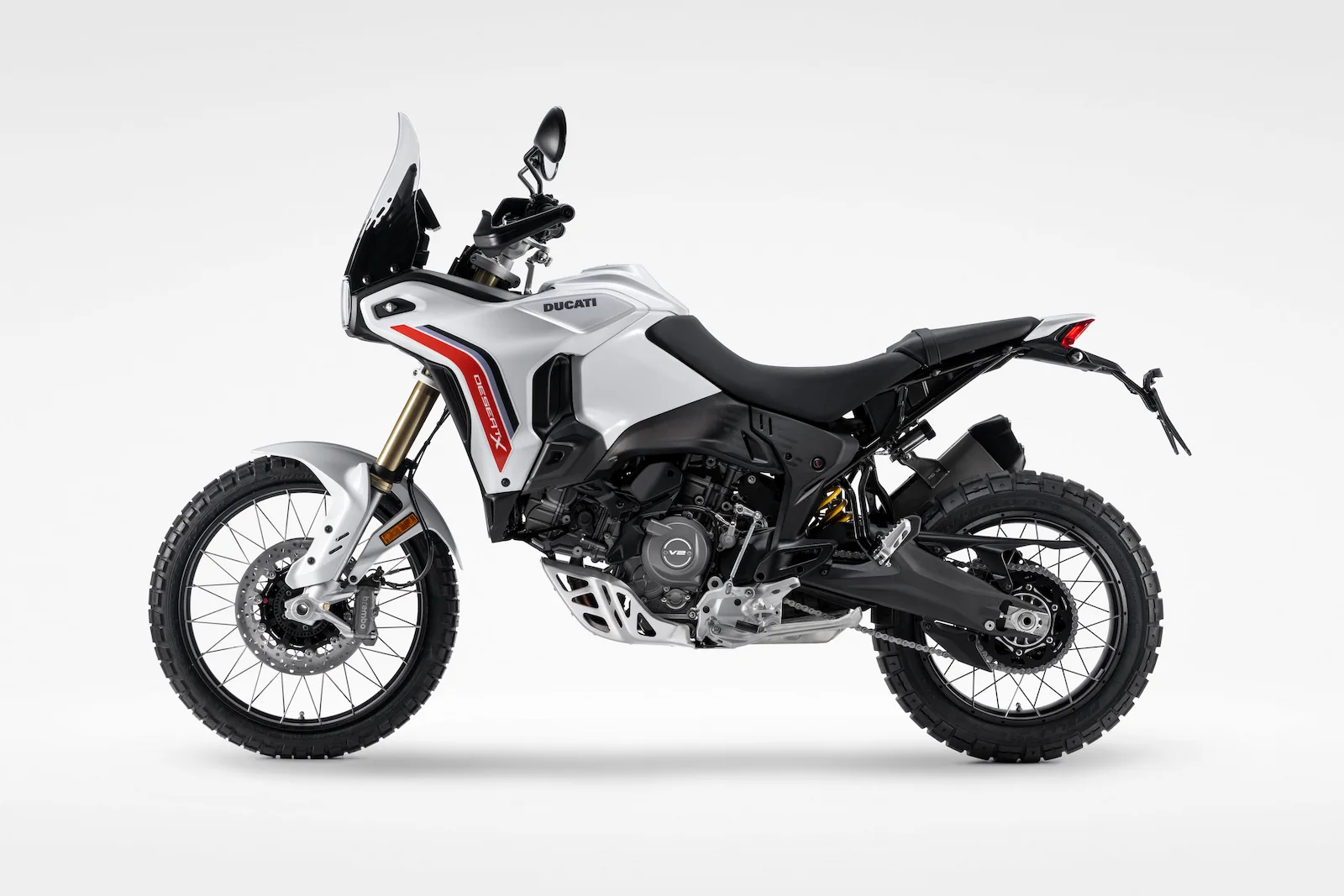
The riding position is set up for off-road work: a wide handlebar, a narrow waist between your knees and a light feel. Ducati moved the footpegs back and the seat and bar forward, so you sit less and stand more naturally, which helps control on dirt and in sporty road riding.
The new polymer tank is slimmer and lighter, which makes it easier to move around on the bike, and crash pads help it survive the kind of slow tip-over that happens off-road. It also places the fuel low, lowering the center of gravity. Its size is the second figure printed two ways: 4.8 gallons in the ergonomics text, but an 8 US-gallon tank in the equipment list.
Textured side panels give your legs more grip when standing. The front fender sits higher than on the previous model, leaving more room above the tire for mud to build up before it jams the wheel.
Seat height is 34.6 in, and you can bring it down to 33 in with the lowered seat and suspension kit. The equipment list gives a wet weight without fuel of 461 lb.
Electronics and rider aids
The electronics run off a 6-axis inertial measurement unit that reads roll, pitch and yaw as you ride. That data feeds the cornering ABS, traction control (DTC), wheelie control (DWC) and engine brake control (EBC), and you can set each to several levels.
There are six Riding Modes: Sport, Touring, Urban, Wet, and two for the dirt, Enduro and Rally. Each one comes with preset levels for every aid, and you can change them to suit how you ride.
Cornering ABS has four levels. Level 1 is for fast off-road riders, level 2 helps less experienced riders learn off-road braking while shortening stops on dirt roads, and levels 3 and 4 are tuned for the street. You can switch ABS off, but only in Enduro and Rally.
Ducati Quick Shift 2.0 gives quicker, more precise clutchless shifts and has no external sensor, so there is less to break or clog in mud and dust.
Dashboard, controls and lights
The new 5-inch TFT dash is mounted horizontally and comes with a utility bar as standard, which leaves room in the upper fairing for navigation gear and gives you a clearer view of the ground just ahead when standing. Two USB ports are standard. The dash resolution is printed two ways as well: 800 x 480 in the electronics text and 800 x 400 in the equipment list.
A new petal-shaped joystick on the left switchgear selects among three Info Mode layouts: Road, Road Pro and Rally, each switching between day and night display on its own. Rally turns the screen into a navigation display with a tripmaster.
Lighting is full LED with an additional light and dynamic turn signals, and Ducati Brake Light EVO is listed as standard, without further detail. The bike is ready for the Ducati Multimedia System, turn-by-turn navigation and Cruise Control, which the equipment list names as compatible rather than fitted.
Styling
Ducati calls the look form-follows-function. The front end sits .8 in lower than before, the fairing and headlight update the first bike's shapes, and ducts steer airflow to keep the rider more comfortable in the heat. The minimal tail leaves the progressive rear suspension in view and takes accessories such as side case frames, a passenger grab rail or the optional extra tank.
Ducati Performance accessories
The accessory list covers range, protection, luggage and electronics. A rear auxiliary tank adds 2.1 gallons of capacity and is shaped to take the first hit in a fall, shielding key parts. Radiator guards, a crash bar, a larger windscreen and reinforced hand guards add protection and comfort.
For luggage you can choose aluminum panniers with their own frames, or the Rackless soft bag kit developed with Mosko Moto for rougher trips. Electronics options include the Ducati Multimedia System for Bluetooth phone pairing and the Turn-by-Turn navigator, and Termignoni supplies an approved silencer with titanium liners and carbon end caps.
Price, color and availability
The 2026 DesertX comes in Matte Star White Silk only, with an MSRP of $16,995, and reaches North American dealerships starting July 2026.