By Cali Biker Club News · Published · 2 min read
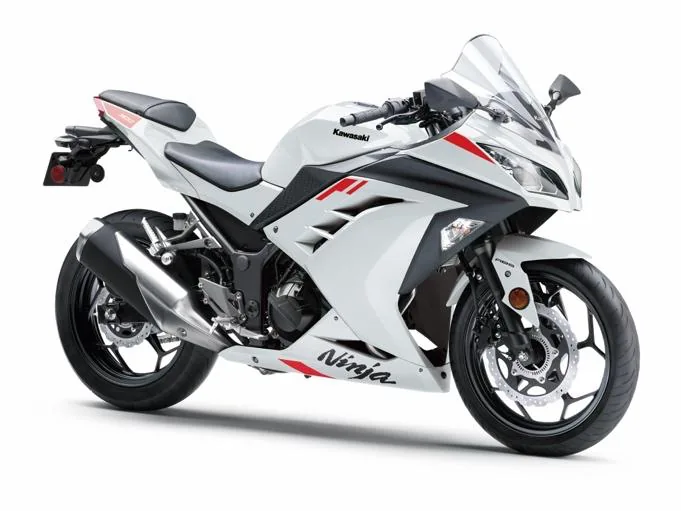
Kawasaki has brought back the Ninja 300 ABS for 2026 with its 296cc parallel twin, Assist & Slipper Clutch, standard ABS and a 30.9-inch seat. It costs $4,999 in Pearl Blizzard White and is available now.
Kawasaki has put the Ninja 300 ABS back in its US lineup for 2026. The release calls it one of the most popular entry-level sportbikes, and the recipe it describes is the familiar one: a small liquid-cooled twin, a steel frame, full Ninja bodywork and ABS as standard. If you are shopping for a first sportbike, or want a light bike for commuting, the headline is simple: it costs $4,999 and Kawasaki lists it as available now.
Here is what the release says about the engine, the chassis and the riding position, and what it means if you are deciding whether a 300 is the right first bike.
A 296cc twin built for an easy start
The engine is a 296cc liquid-cooled parallel twin with a 62.0 x 49.0mm bore and stroke and a 10.6:1 compression ratio. Kawasaki says it revs to a maximum of 13,000 rpm and describes a wide powerband. The release does not give horsepower or torque figures, so we are not quoting any.
- Fuel injection uses dual throttle valves, 32mm main and 40.2mm sub, for smooth and linear throttle response.
- A balancer shaft, partly rubber-mounted engine and a carefully shaped crank web are there to cut vibration.
- The aluminum cylinder has plated bores and an open-deck design, a construction Kawasaki compares to its Ninja ZX-10R and ZX-6R.
- A stainless steel 2-into-1 exhaust with a short silencer is tuned for low- to mid-range performance.
The Assist & Slipper Clutch is the feature newer riders will notice first. Kawasaki says it gives a light lever feel in normal riding and reduces back-torque on a sudden downshift, which helps keep the rear tire settled if you grab one gear too many.
Chassis, suspension and brakes
The frame is a steel-tube diamond design with high-tensile main tubes and gusseting, and the front engine mounts are rubber-mounted to reduce vibration. Up front is a 37mm telescopic fork. At the rear, Kawasaki's Uni-Trak linkage suspension uses a shock with five-step preload adjustment, set with the onboard tool kit. Kawasaki says the settings aim to soak up rough city pavement while firming up in corners.
Brakes are a 290mm front petal disc with a dual-piston caliper and a 220mm rear petal disc with a two-piston caliper, with ABS as standard. The 10-spoke wheels carry a 110/70-17 front and a 140/70-17 rear tire.
Seat, bars and the everyday details
Seat height is 30.9 inches, and the seat narrows near the tank so your legs reach the ground more easily. The handlebars are wide and raised, the clutch lever sits close to the bar, and the footpegs are aluminum. The fuel tank holds 4.4 gallons.
The dash pairs an analog-style tachometer with an LCD that shows speed, fuel level, a clock, the odometer, two trip meters and Kawasaki's Economical Riding Indicator, which lights up when you are riding in a fuel-efficient way. The styling borrows from the bigger Ninjas: dual headlights, built-in front turn signals, a floating-style windscreen and mirrors that fold in for parking.
What it means for you
- If this is your first bike: a low seat, a light clutch, the slipper function and standard ABS are the features that make the first months easier. Sit on one at a dealer and check that you can put your feet down with confidence.
- If you carry a passenger: the rear preload has five steps, so add preload before a two-up ride and back it off when you ride alone. Write down the stock setting first.
- Tires: the sizes are 110/70-17 front and 140/70-17 rear, which is worth knowing when you shop for replacements later.
- Price and timing: $4,999 in Pearl Blizzard White, available now according to Kawasaki. Ask your dealer about stock, since the release gives no delivery numbers.
Our Ninja 300 Bike Dossier covers the model in depth, and the Kawasaki news hub has the rest of Kawasaki's releases.
Written by Cali Biker Club News in our own words from the manufacturer's official release. Specs and prices are the manufacturer's; check the release for the full details.