Noticias de BMW Motorrad

Motos nuevasBMW Motorrad· M 1000 RR· 2027

2027 BMW M 1000 RR gets a third-generation M Motorsport frame as standard, around 1.3 kg lighter

From model year 2027 the BMW M 1000 RR comes with the third generation of its M Motorsport aluminum frame: around 1.3 kg lighter, with walls up to 30 per cent thinner so BMW can tune where it flexes and where it stays stiff.

Comunicado del · Por Cali Biker Club News· Nuestro análisis: · 3 min de lectura

Fuente: comunicado de prensa de BMW Motorrad

Correo
Foto: BMW Motorrad

En resumen

De un vistazo

Año modelo
2027

Novedades 2027

  • Standard from 2027: The third-generation M Motorsport frame is fitted to every M 1000 RR from model year 2027.
  • Lighter: Around 1.3 kg lighter than the previous version of the frame.
  • Tuned flex: Walls up to 30 per cent thinner let it flex sideways at lean while staying stiff lengthwise.
  • Four castings: Steering head, two side sections and rear section, low-pressure cast in aluminum in Landshut.
  • Built in Berlin: TIG welded, cathodic dip coated, finish milled and measured before assembly.

What it means for you

If you are buying an M 1000 RR, the third-generation M Motorsport frame is standard from model year 2027; check the model year on any bike you look at. · The release gives no price, no overall weight and no delivery date for the 2027 bike; ask your BMW dealer. · BMW does not say whether the new frame fits earlier M 1000 RRs, so do not assume frame-mounted parts or a replacement frame interchange with older bikes until a part number confirms it.

Las 13 fotos

Fotos de prensa oficiales, con crédito a BMW Motorrad. Desliza o usa las flechas.

La historia completa

What it means for you

  • If you are buying an M 1000 RR, the third-generation M Motorsport frame is standard from model year 2027; check the model year on any bike you look at.
  • The release gives no price, no overall weight and no delivery date for the 2027 bike; ask your BMW dealer.
  • BMW does not say whether the new frame fits earlier M 1000 RRs, so do not assume frame-mounted parts or a replacement frame interchange with older bikes until a part number confirms it.
  • Because the frame is designed to flex a set amount at lean, re-check your suspension setup on a 2027 bike rather than copying settings from an older one.
  • Track riders and racers get the same frame platform BMW uses in factory and customer racing.

Qué cambió para 2027

M 1000 RR

  • Actualizado

    Frame

    Previous version of the M Motorsport frameThird generation M Motorsport frame, around 1.3 kg lighter, wall thicknesses reduced by up to 30 per cent

BMW Motorrad has released details of one component rather than a whole new bike: the frame of the M 1000 RR superbike. Starting with model year 2027, every M 1000 RR gets the third generation of the M Motorsport frame as standard. BMW says it is around 1.3 kg lighter than the previous version, that wall thicknesses drop by up to 30 per cent, and that the result is sharper handling, clearer feedback and more consistent tire contact, above all when you ride hard or go to the track.

The release is aimed at M 1000 RR buyers and at racers, because the same frame serves the BMW factory teams, customer racing teams around the world and the road bike. Most of it explains how the frame is designed, cast, welded and checked across three German sites: Munich, Landshut and Berlin. It does not give a price, an overall bike weight, frame geometry figures, a delivery date or any other change to the 2027 M 1000 RR.
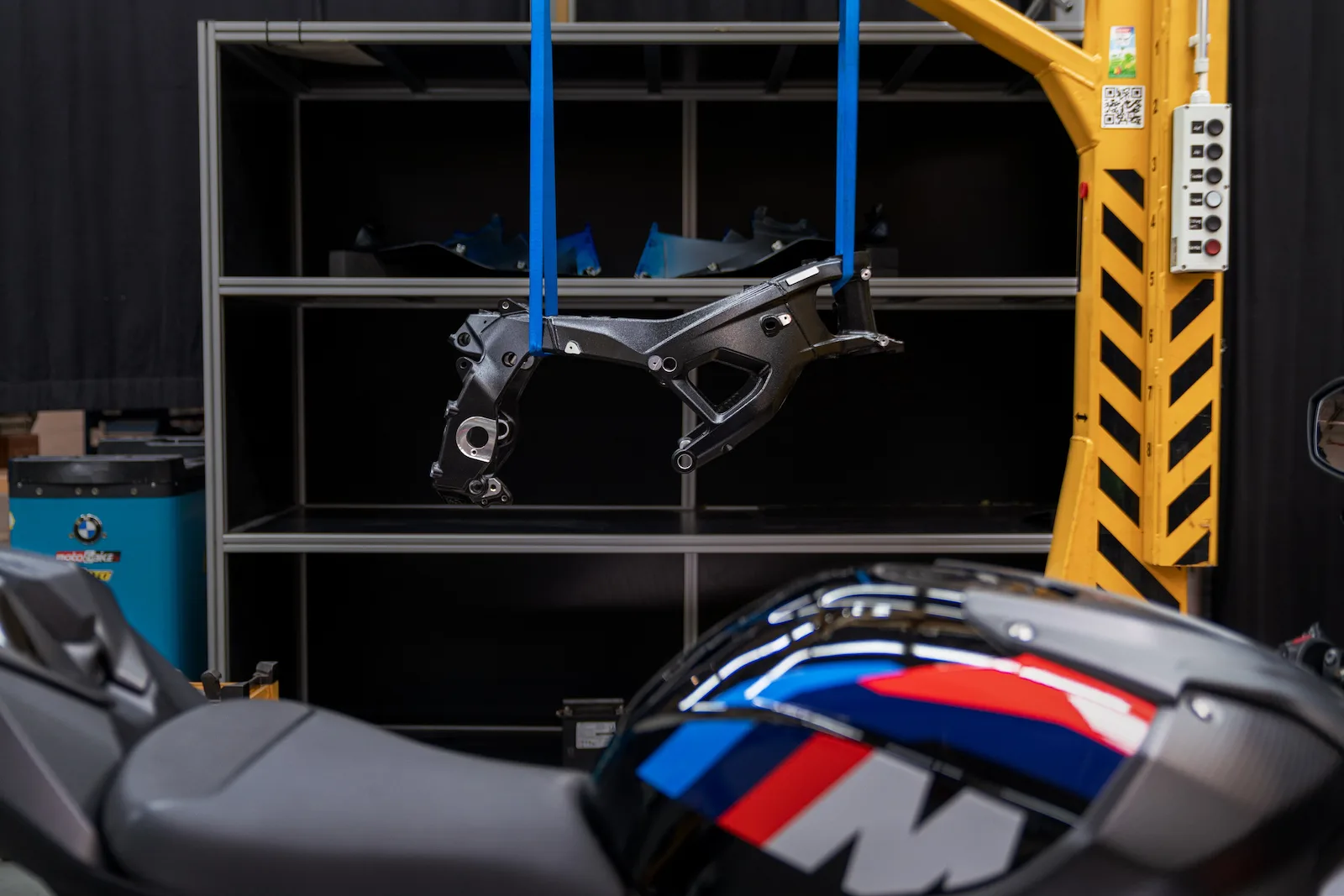
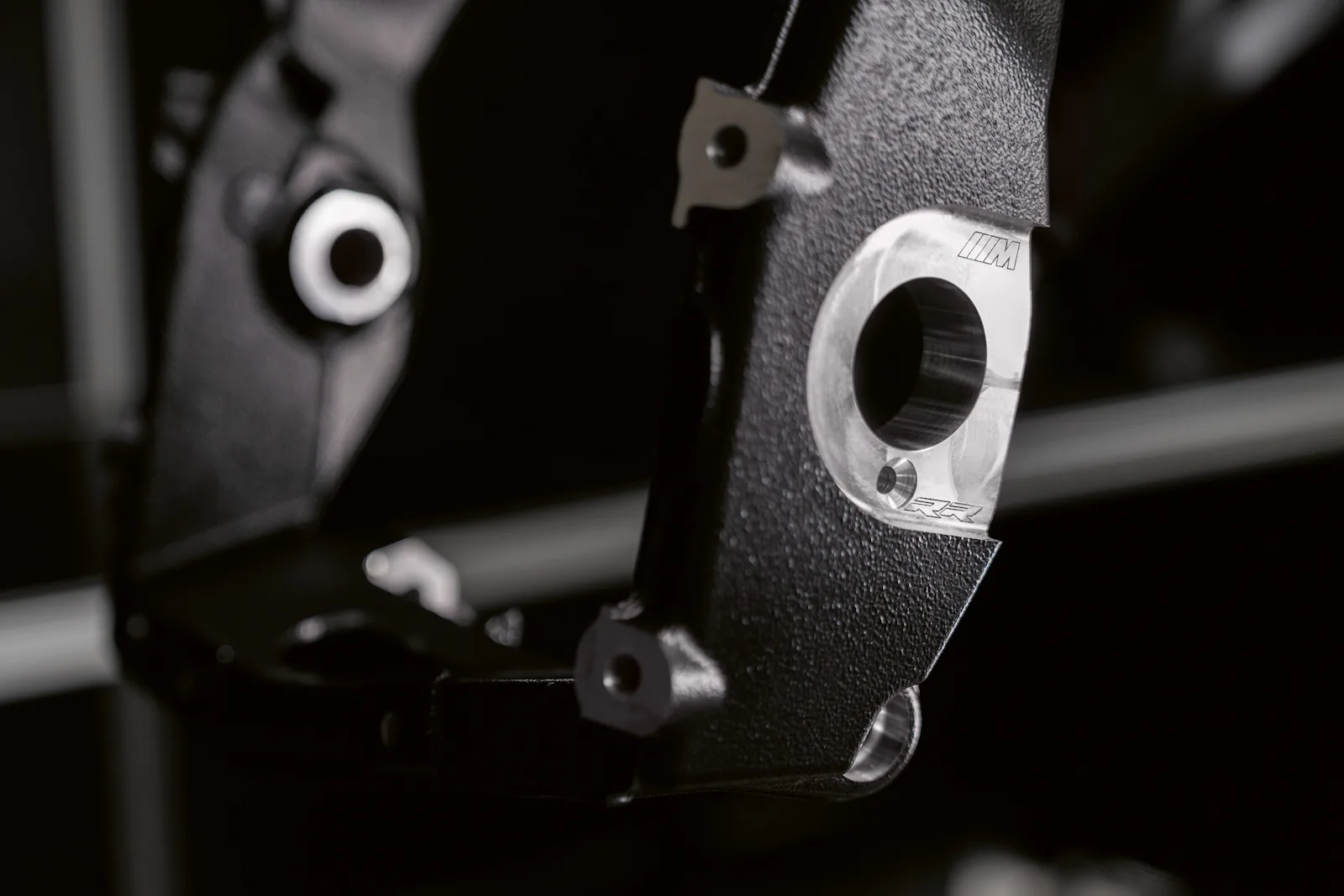
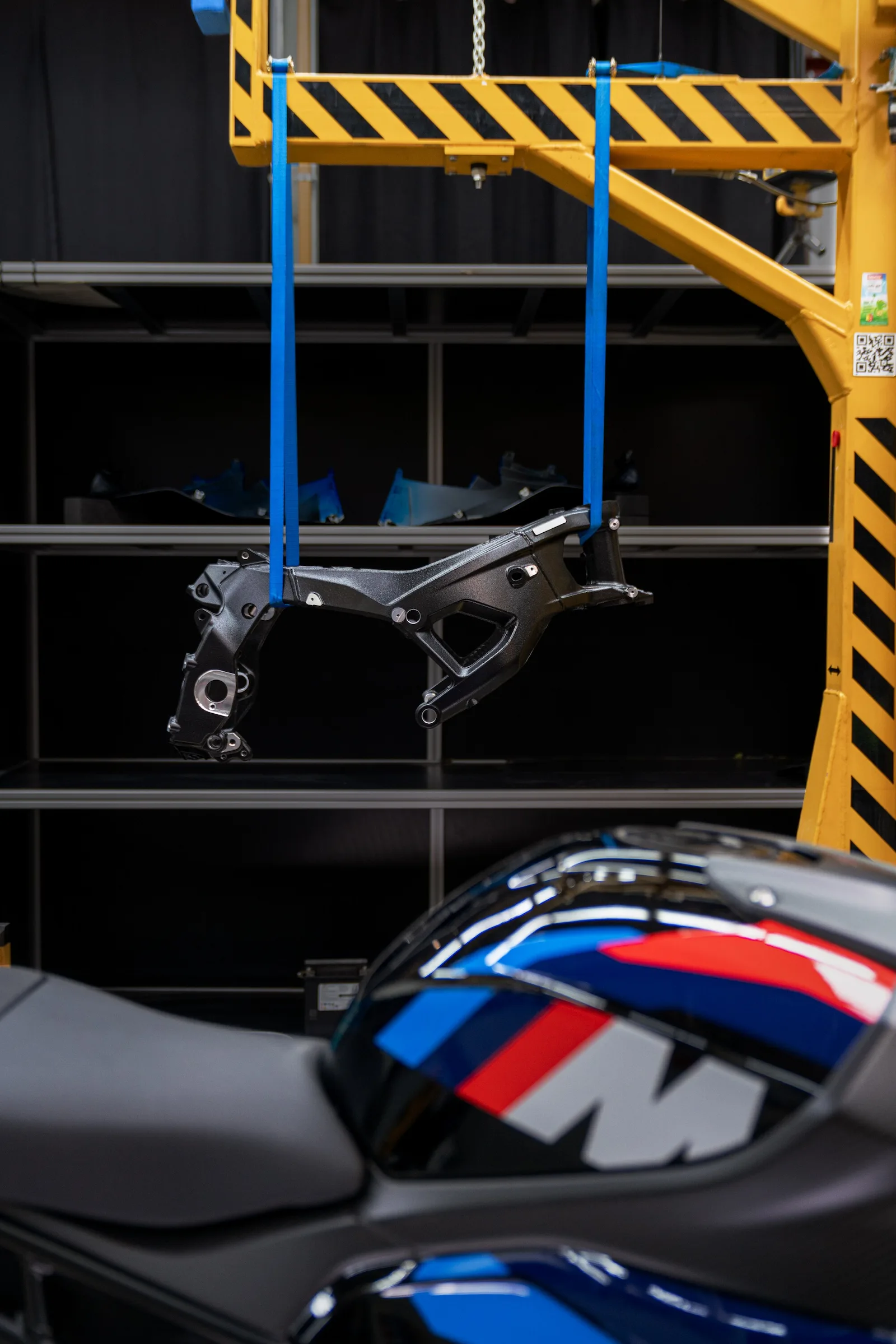
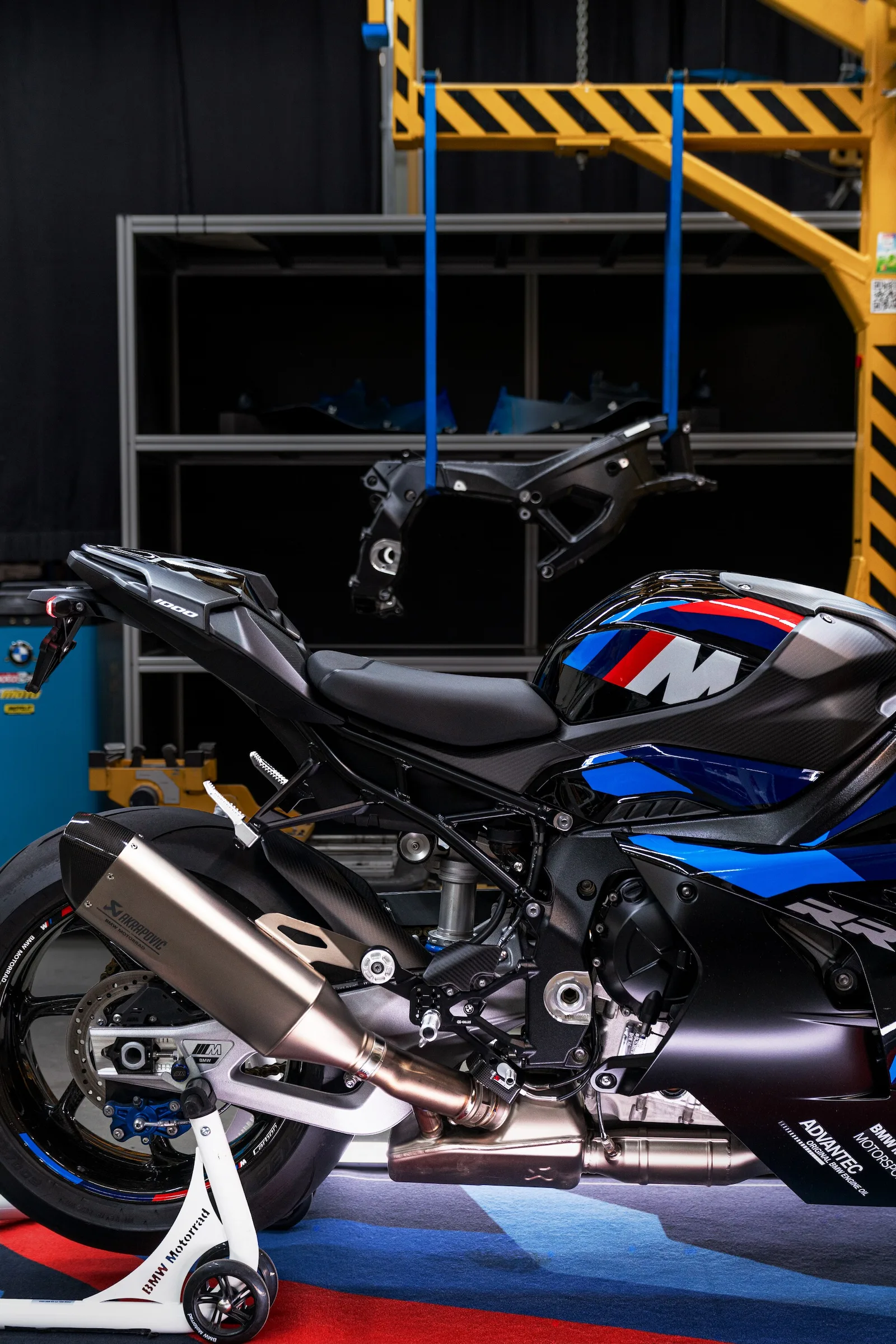
M Motorsport frame above the tank of an BMW M 1000 RR
M Motorsport frame above the tank of an BMW M 1000 RRFoto: BMW Motorrad

Weight, stiffness and flex

The headline number is the weight saving of around 1.3 kg. BMW says the lighter frame makes the bike more agile and quicker to change direction, which you notice most in chicanes and linked corners.

The more interesting part is how the thinner walls are used. With walls up to 30 per cent thinner, BMW can decide where the frame gives a little and where it does not. Leaned over, it is designed to flex sideways by a set amount, so it works alongside the suspension in soaking up bumps and ripples in the surface. BMW says that keeps the tire in more consistent contact, gives you better feedback through the bars and seat, and helps the tire wear more evenly.

Along the length of the bike, the frame stays very stiff. That is what keeps braking and drive forces going where they should, so the bike responds predictably when you are hard on the brakes into a corner or hard on the throttle out of it. BMW lists more precise turn-in, more transparent responses and more confidence in demanding situations as the gains for road riders.

From racing to the road bike

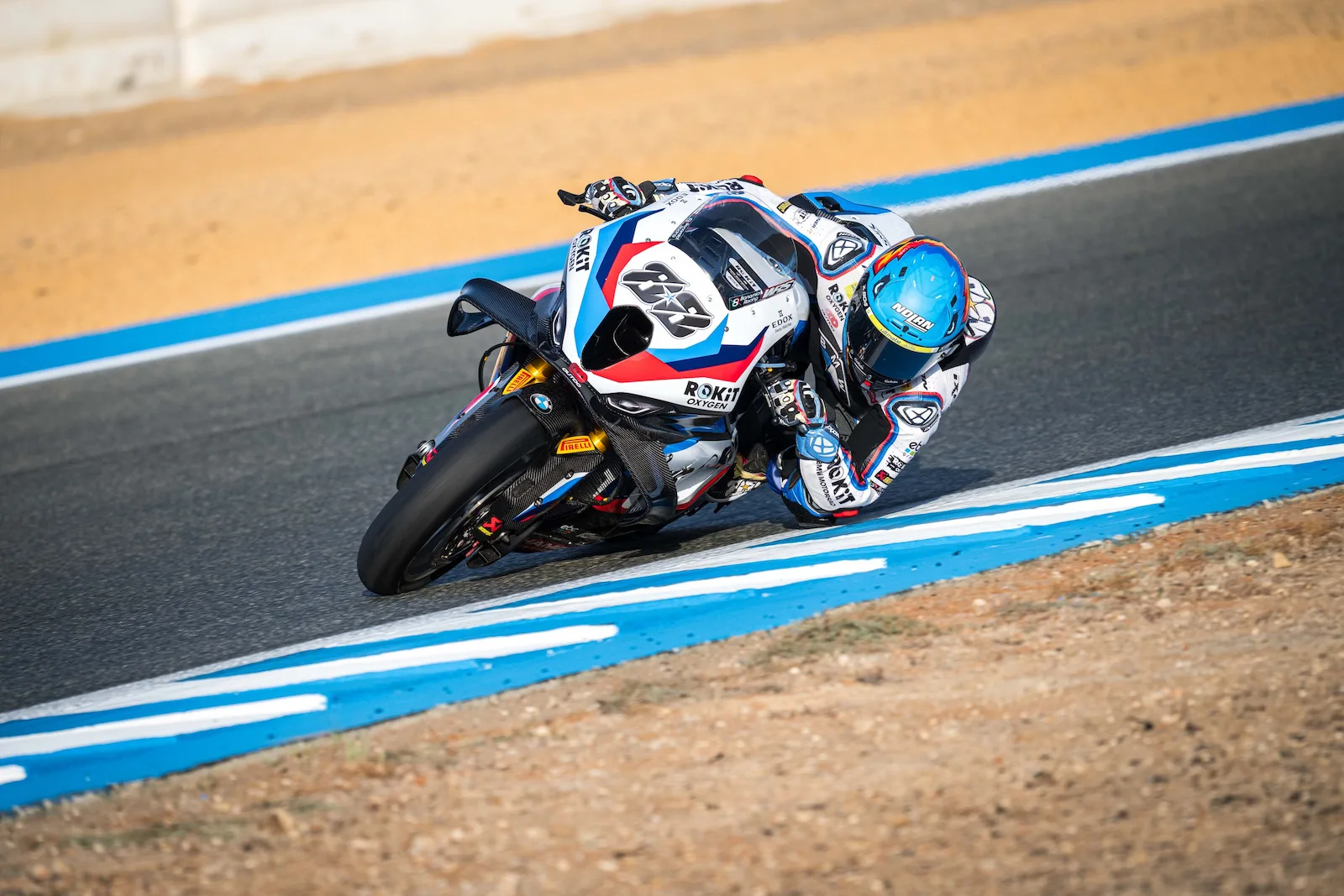
BMW describes the frame as a key performance part for its factory teams, for customer racing and for the series M 1000 RR, with lessons from competition feeding straight into the production design. Head of BMW Motorrad Motorsport Sven Blusch says the frame pairs light construction with tuned stiffness and flex as the base for precise chassis behavior and grip.

For racers, the point is that a production-based frame gives the M 1000 RR a strong starting platform across different racing series and circuits. For road owners, it means the frame under your tank comes from the same development as the one under the race bikes.
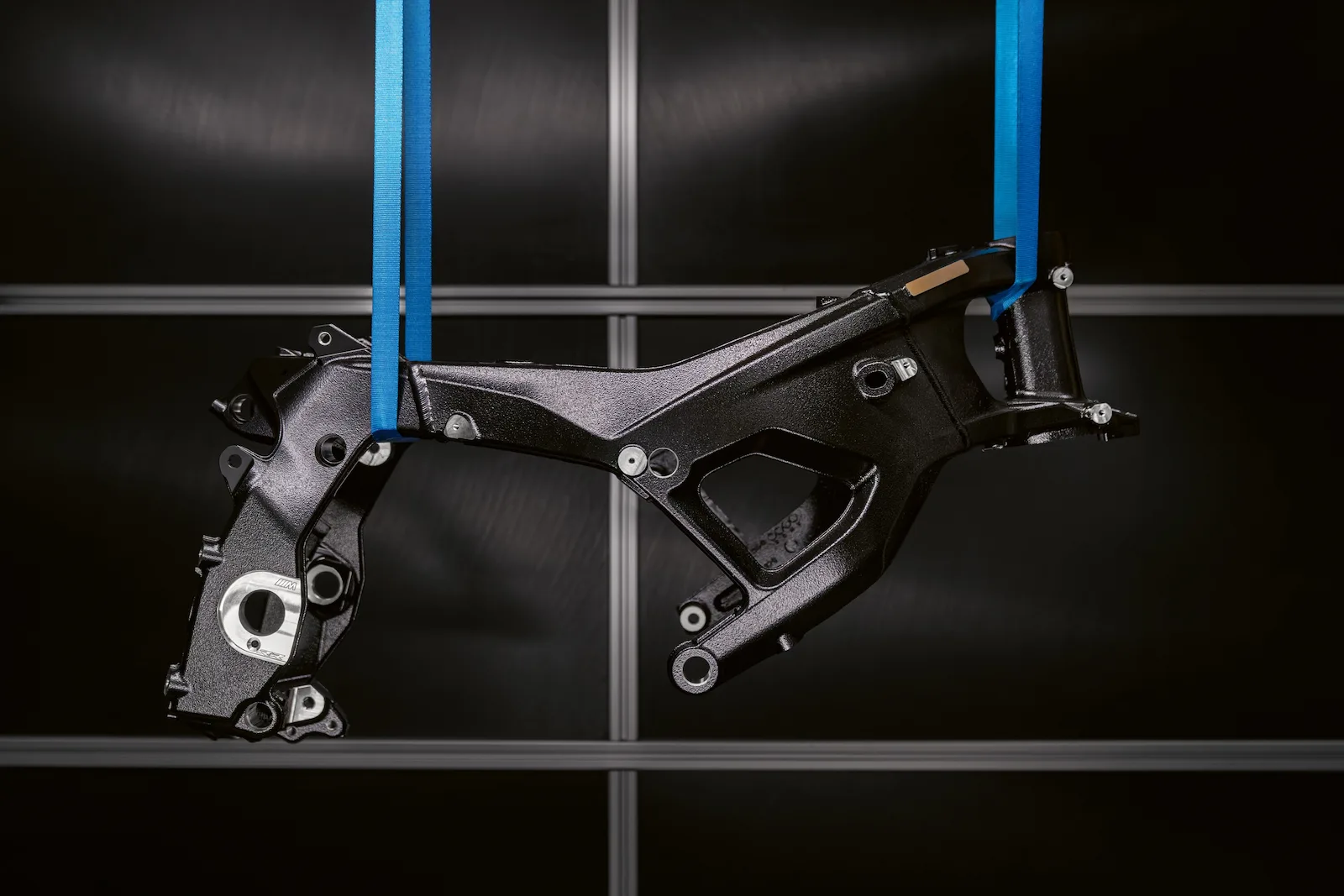
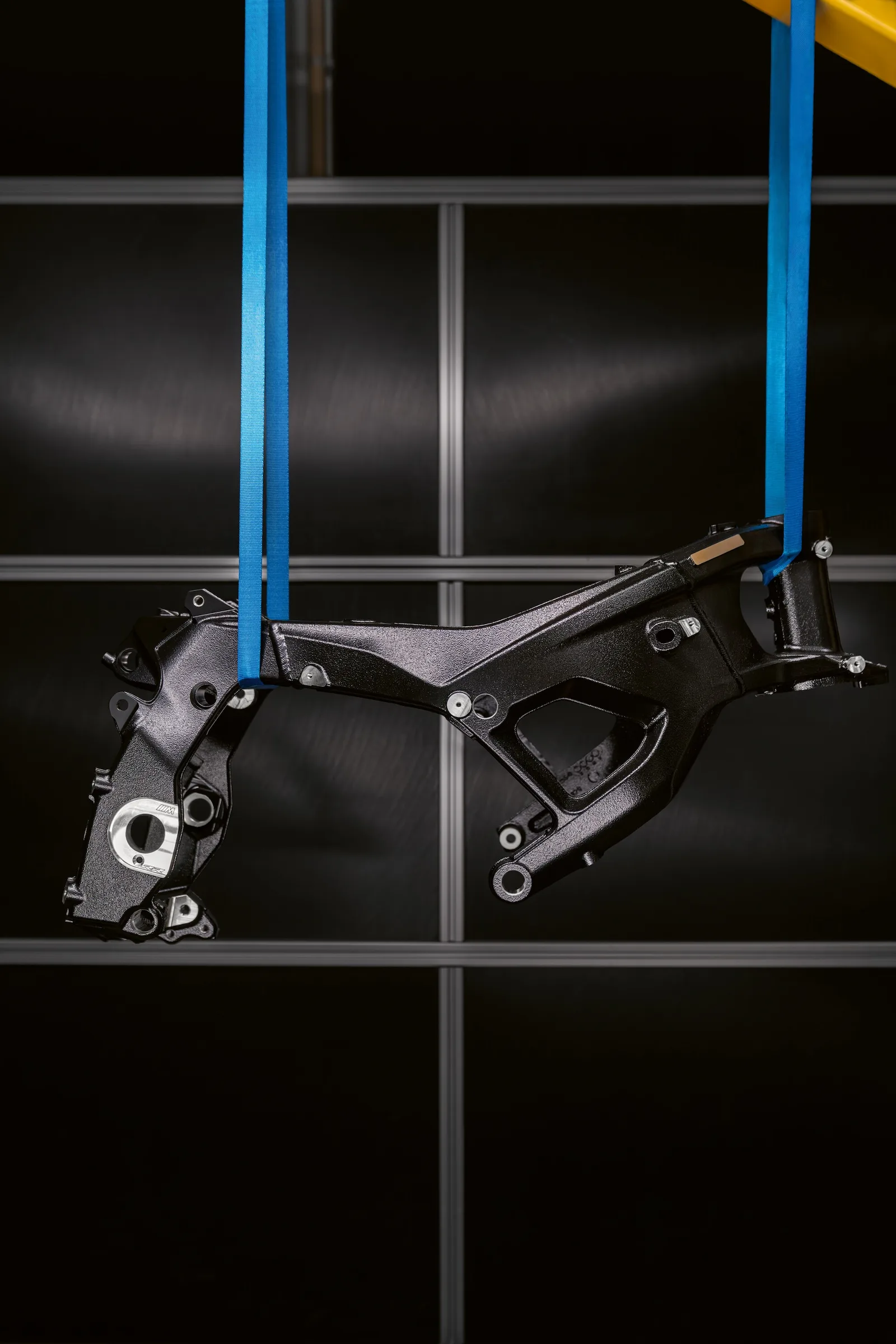
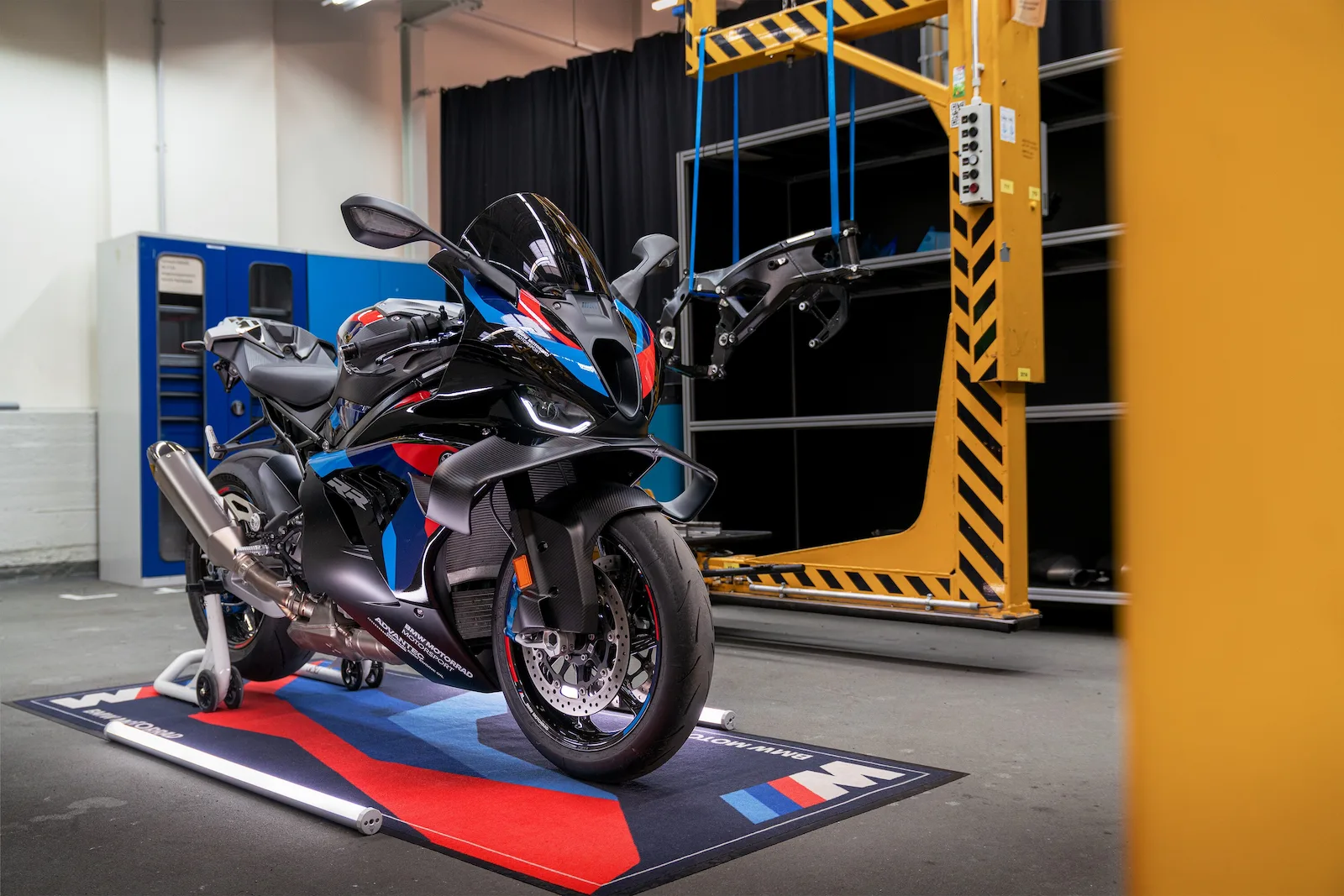
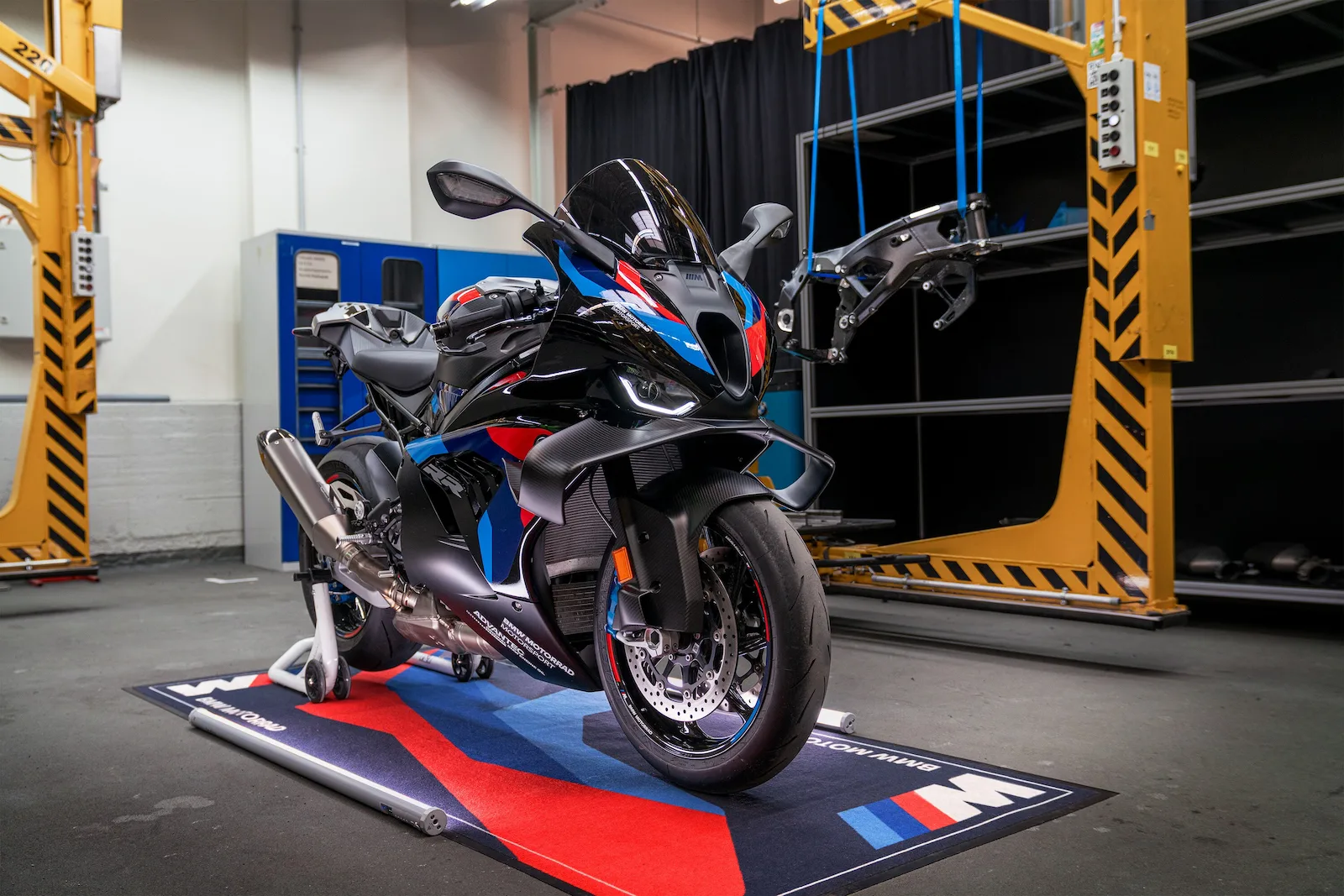
M Motorsport frame hanging in a workshop
M Motorsport frame hanging in a workshopFoto: BMW Motorrad

Design and testing in Munich

At BMW Motorrad Development in Munich, engineers design the frame's geometry, wall thicknesses and stiffness distribution on the computer, then check them in simulations, on test rigs and in riding tests. Once the data is approved, it becomes the basis for the four cast parts that make up the frame: the steering head, the left and right side sections, and the rear section.

Casting in Landshut

BMW Group Plant Landshut, which specializes in lightweight construction, casts those four thin-walled aluminum parts using low-pressure casting. In this process the molten aluminum is fed into the mold in a controlled way, which cuts turbulence and trapped air, both of which can weaken a thin casting.

Hollow sections are formed by temporary quartz sand cores. Before any tooling is built, a core-shooting simulation models how the sand-air mixture flows, packs and cures, so the nozzles and vents can be laid out correctly from the start. The cores are made, cured and placed in the mold with the cold-box process and removed after casting. Each part is then machined and inspected with X-ray checks, wall-thickness measurements and coordinate measurements before it goes to Berlin.
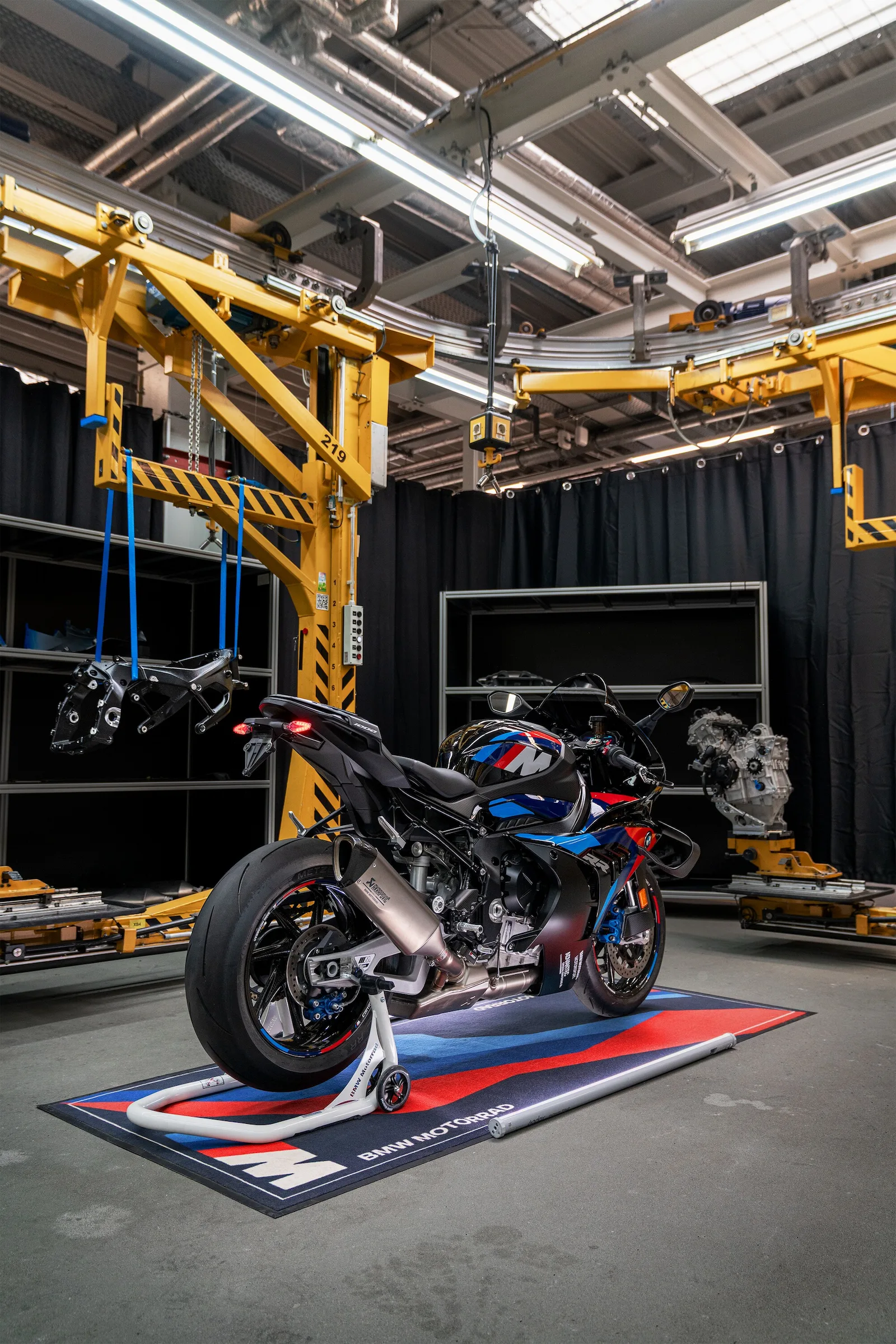
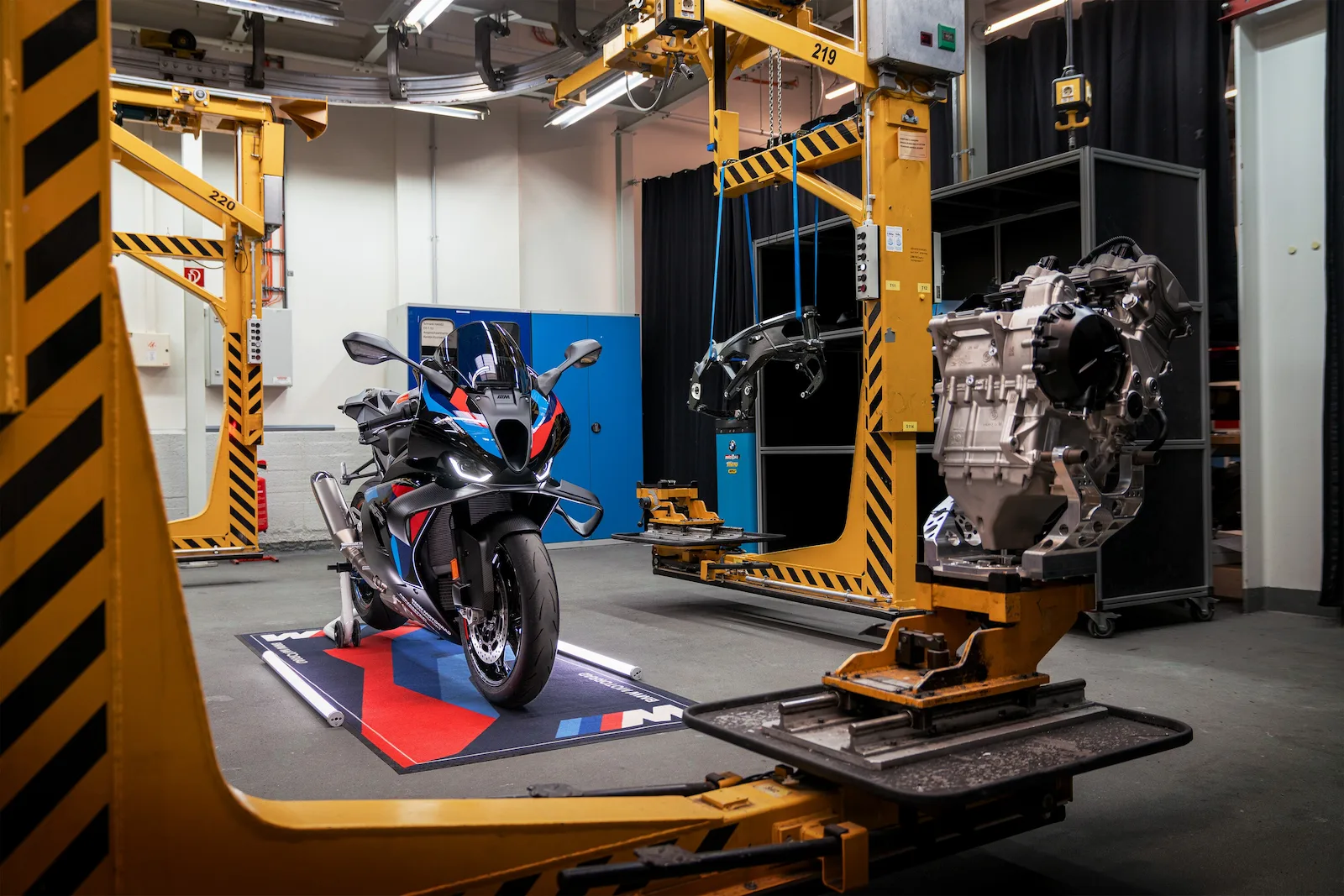
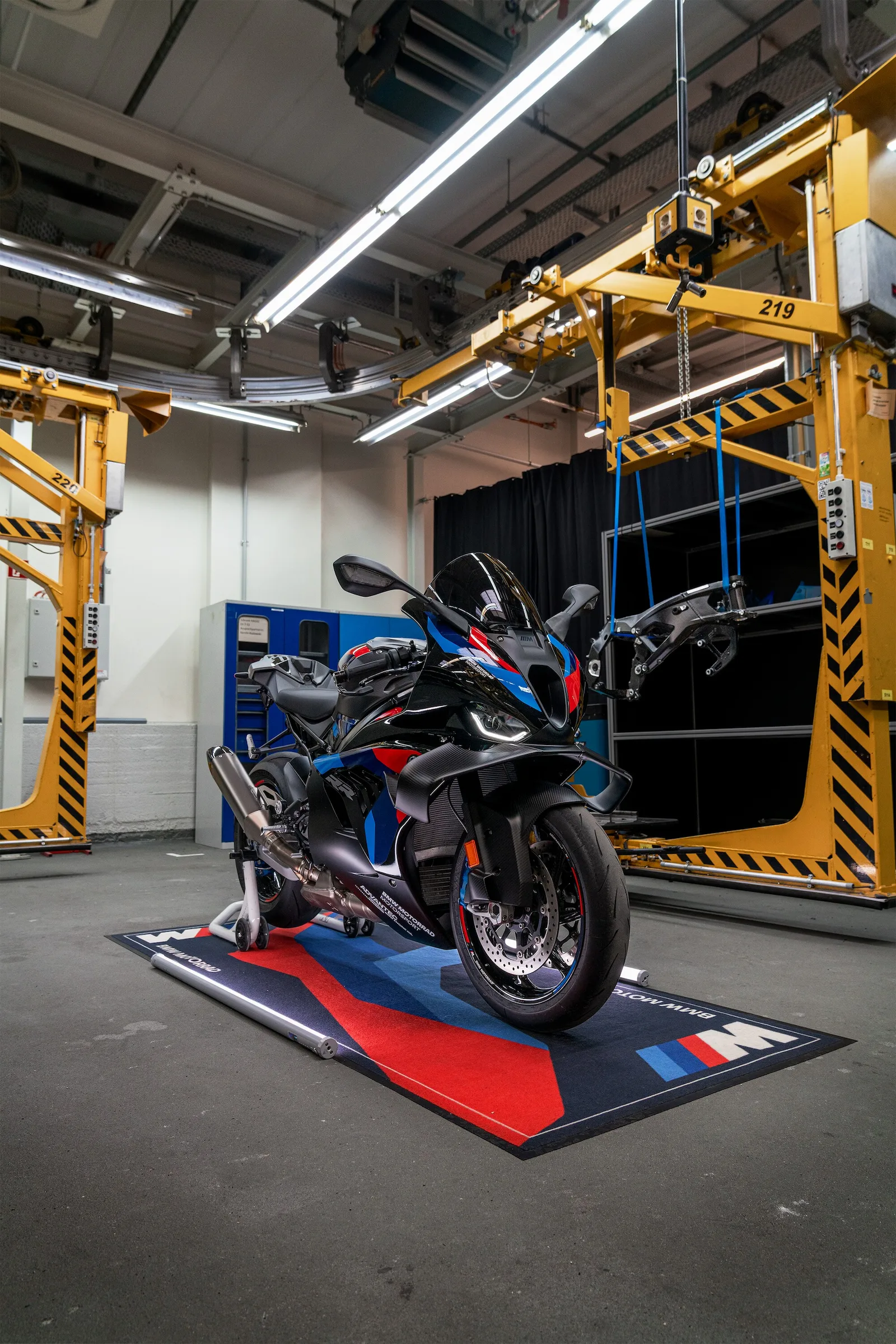
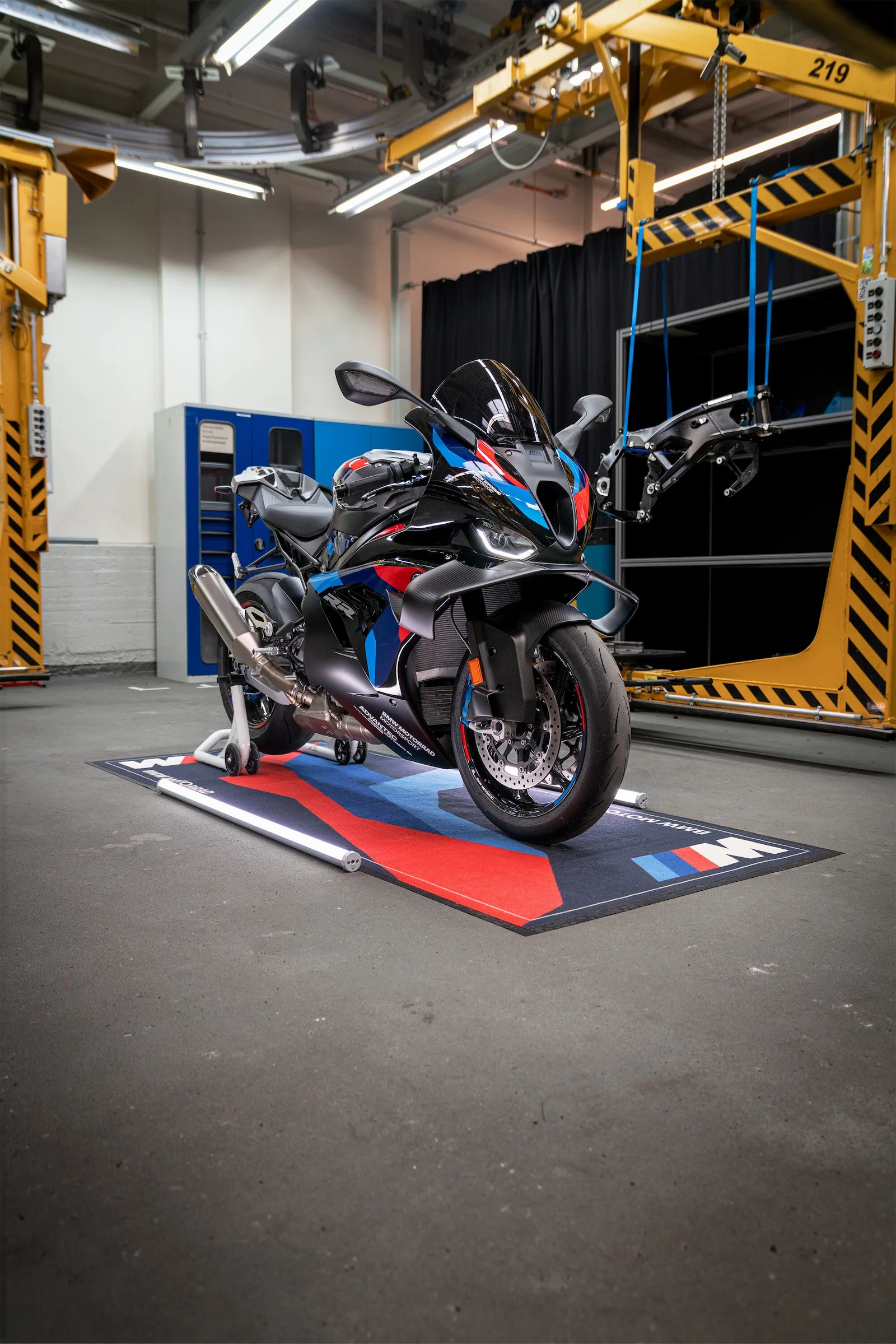
BMW M 1000 RR in M colors in a workshop, portrait framing
BMW M 1000 RR in M colors in a workshop, portrait framingFoto: BMW Motorrad

Welding and finishing in Berlin

BMW Group Plant Berlin, the lead plant of BMW Motorrad's production network, positions the four castings precisely and joins them into a frame with TIG welding. Cathodic dip coating follows, giving even corrosion protection inside closed cavities as well as on the outside.

Final milling brings the functional surfaces and mounting points to their finished dimensions, and a last coordinate measurement of the complete frame confirms it is accurate before it is cleared for assembly into an M 1000 RR. BMW says Berlin also brings many years of motorsport experience to the job.
Especificaciones clave

Solo cifras publicadas en el comunicado oficial.

2027 BMW M 1000 RR M Motorsport frame (from the release)
GenerationThird generation M Motorsport frame
FitmentStandard in the BMW M 1000 RR from model year 2027
MaterialAluminium
Weight savingAround 1.3 kg lighter than the previous version≈ 3 lb (convertido)
Wall thicknessReduced by up to 30 per cent
Lateral behaviorFlexes laterally to a defined degree at lean
Longitudinal behaviorHigh level of stiffness retained
Cast componentsFour: steering head, left and right side sections, rear section
Casting processLow-pressure casting, quartz sand cores (cold-box process)
JoiningTIG welding
Corrosion protectionCathodic dip coating
PriceNot in the release

Chassis: full specifications, explained

Values as printed in the official release; unit conversions by CBC.

Chassis: full specifications, explained
SpecValue (US)MetricWhat it means
FrameThird generation M Motorsport frame—Standard on the M 1000 RR from model year 2027.
Frame materialAluminium——
Weight saving vs previous frame2.9 lb1.3 kgLess weight to move helps quick direction changes.
Wall thickness reductionUp to 30 per cent—Thinner walls let BMW tune stiffness and flex area by area.
Lateral flexFlexes laterally to a defined degree at lean—Helps the suspension absorb bumps when leaned over.
Longitudinal stiffnessHigh level of stiffness retained—Keeps braking and drive forces precise and response predictable.
Cast componentsFour: steering head, left and right side sections, rear section——
Casting processLow-pressure casting with temporary quartz sand cores (cold-box process)—Controlled mold filling reduces turbulence and air inclusions.
Casting plantBMW Group Plant Landshut——
JoiningTIG welding——
Corrosion protectionCathodic dip coating—Even protection, including inside enclosed cavities.
Final machiningFinal milling of functional surfaces and mounting points——
Quality checksX-ray inspection, wall-thickness measurements, coordinate measurements——
Frame assembly plantBMW Group Plant Berlin——

Price and availability: full specifications, explained

Values as printed in the official release; unit conversions by CBC.

Price and availability: full specifications, explained
SpecValue (US)MetricWhat it means
IntroductionModel year 2027, fitted as standard——
PriceNot given in the release——

BMW M1000RR por año modelo

Generaciones y cambios año por año de nuestro Bike Dossier →

  1. 2027 · este comunicado

    2027 BMW M 1000 RR gets a third-generation M Motorsport frame as standard, around 1.3 kg lighter

  2. 2023-present · Gen 2

    Updated Generation

    • 2023: Major update: new carbon fiber fairing with revised winglets, integrated front brake cooling ducts, higher top speed (314 km/h), lighter Pankl titanium connecting rods, updated intake system, improved TFT display
    • 2024: Refined engine mapping and improved launch control calibration
  3. 2021-2022 · Gen 1

    First Generation

    • 2021: Launch year with carbon wheels, winglets, and M Performance package
    • 2022: Minor ECU updates and revised suspension mapping

Comunicado oficial

Comunicado oficial: RACING TECHNOLOGY FOR THE ROAD: THE BMW M 1000 RR´S M MOTORSPORT FRAME. (BMW Motorrad, 20 oct 2026). Citado y enlazado; no es una reseña.

Escrito por Cali Biker Club News con nuestras propias palabras a partir del comunicado oficial del fabricante. Las especificaciones y precios son del fabricante; revisa el comunicado para todos los detalles.

Comparte esta noticia

Correo
Motos nuevas →

Acerca de Cali Biker Club News

Cali Biker Club News cubre modelos nuevos, llamados a revisión, tecnología y noticias de servicio para pilotos que investigan la moto que tienen o que podrían comprar. Trabajamos con materiales de prensa oficiales de los fabricantes, citamos y enlazamos cada fuente y escribimos con nuestras propias palabras.

Nuestros artículos se escriben con ayuda de IA y se comparan con el comunicado oficial del fabricante antes de publicarse.

Contacto de prensa

Correo
media@calibiker.club
Para prensa y fabricantes →