

La historia completa
What it means for you
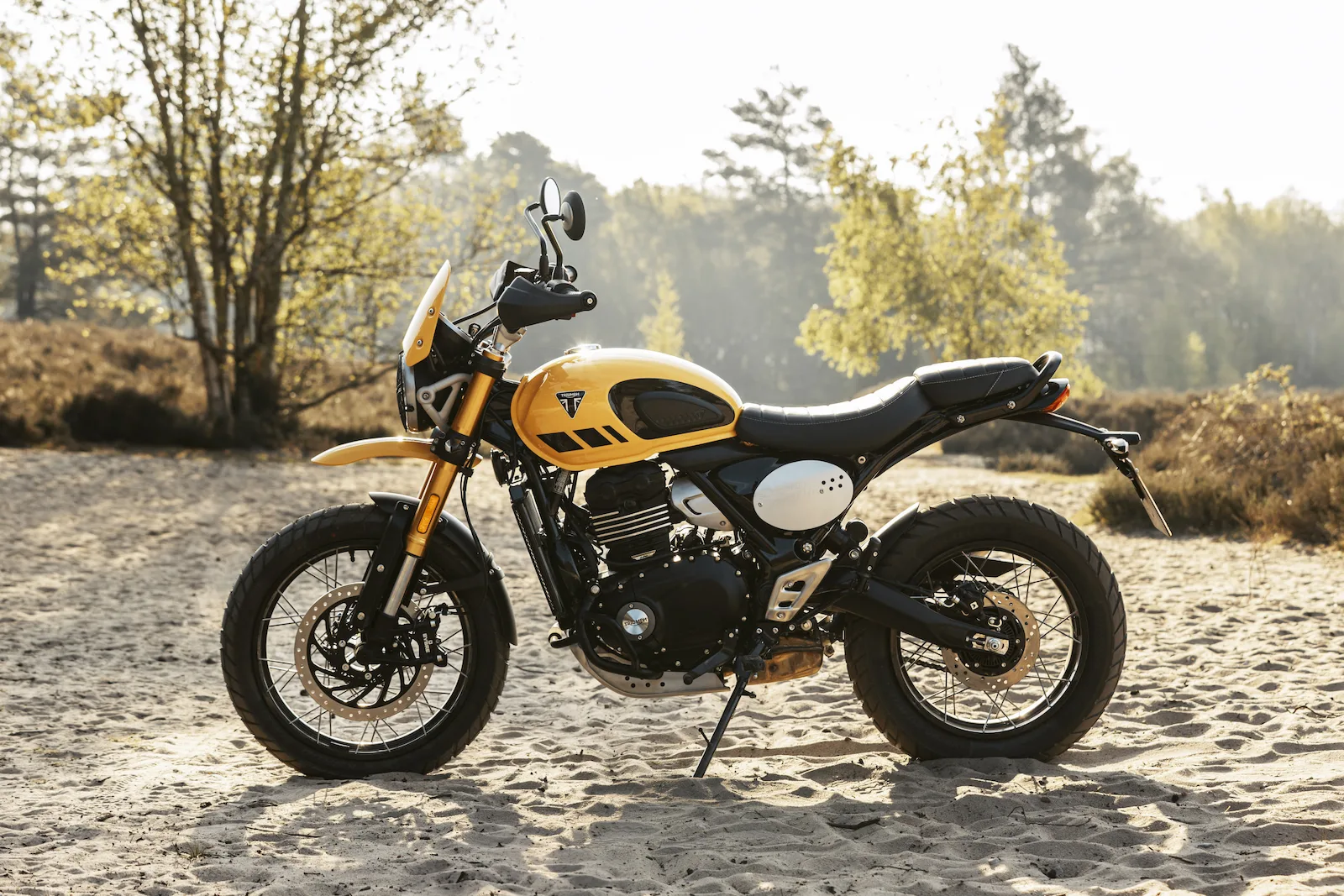
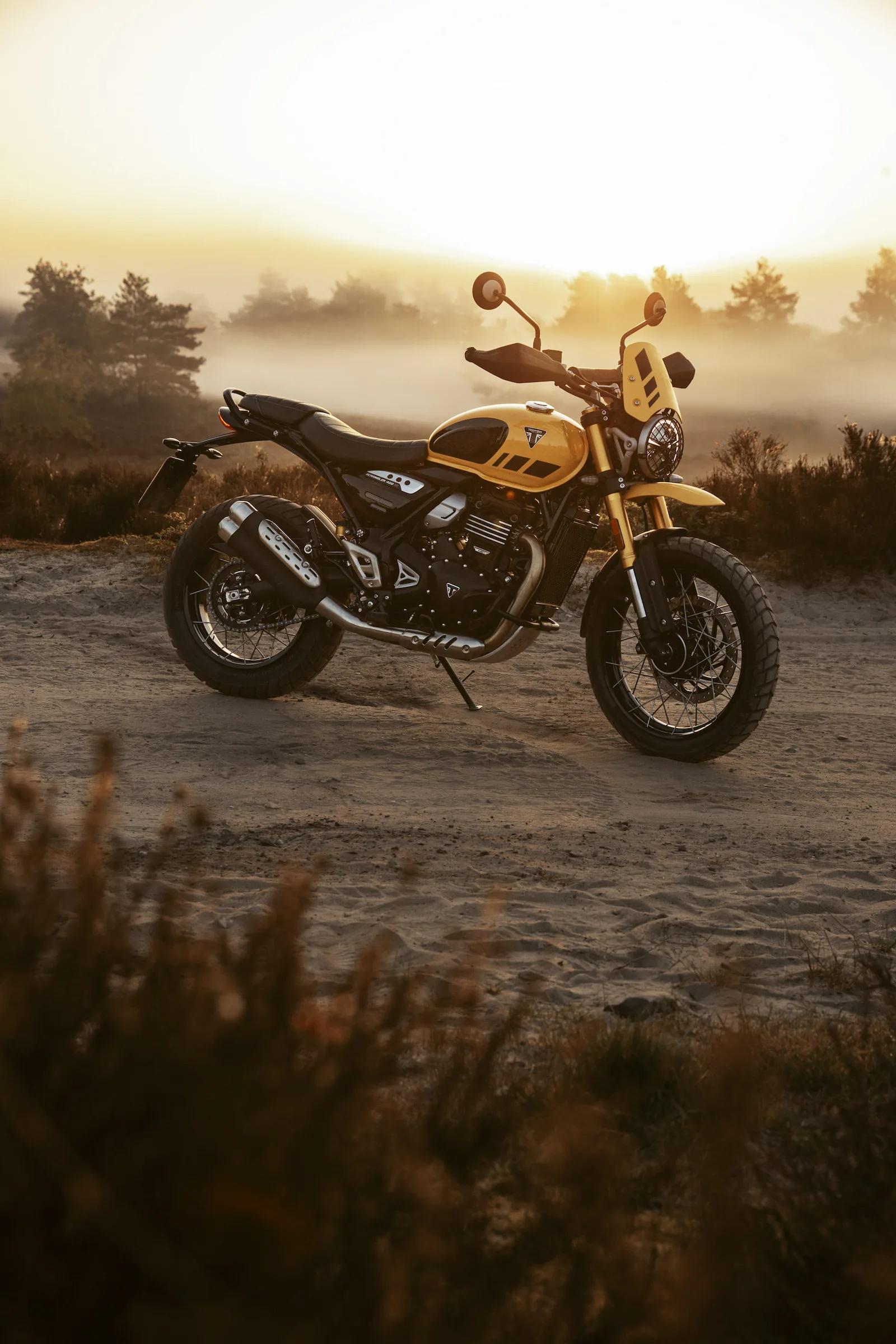
- Choosing between the two 400 Scramblers: the XC is the one with spoked tubeless wheels, handguards, a high fender, flyscreen, sump guard and engine bars. If you will not ride dirt, compare it with the Scrambler 400 X on price at your dealer, since the release prints none.
- Try the seat before you buy: at 835 mm it is not low, and the 186 kg wet weight is what you will be holding up at a stop.
- Set rear preload for your load; it is the only suspension adjustment listed, and both ends run 150mm of travel.
- Carry a tubeless plug kit and a small pump: the side-laced rims let you fix a puncture on the trail without pulling the wheel.
- Learn the switchable traction control and the off-road ABS mode in a safe place before using them on loose ground.
- Plan service around the 10,000 miles (16,000km) or 12-month interval and keep records for the two-year unlimited-mileage warranty.
Qué cambió para 2026
Scrambler 400 XC
- Nuevo
Wheels and tires
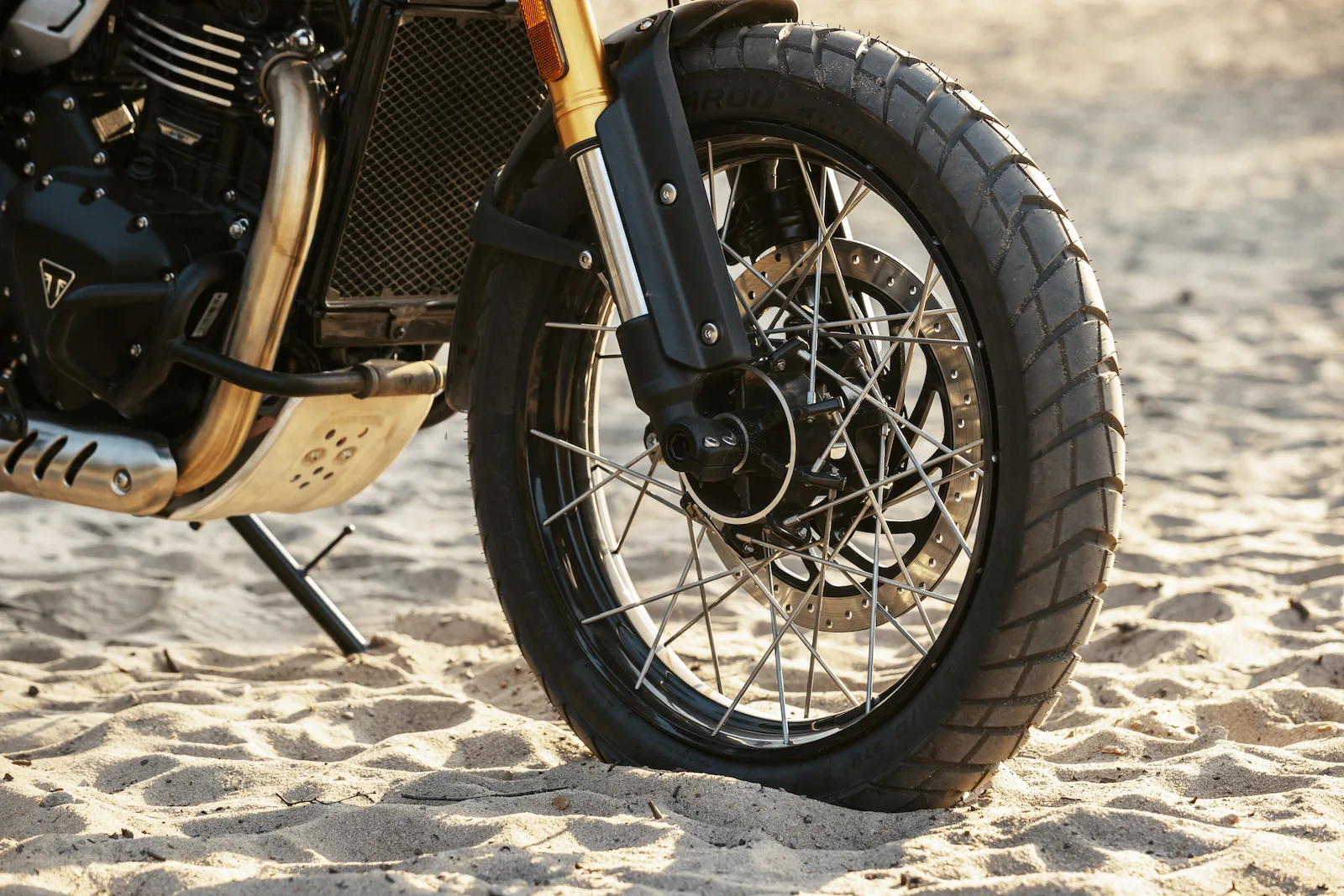
Side-laced spoked tubeless wheels, 19-inch front and 17-inch rear, Excel aluminum rims, Metzeler Karoo Street tires
- Nuevo
Protection
Colour-coded high-level front mudguard and flyscreen, plus handguards, aluminum sump guard and engine bars
- Solo color
Colors
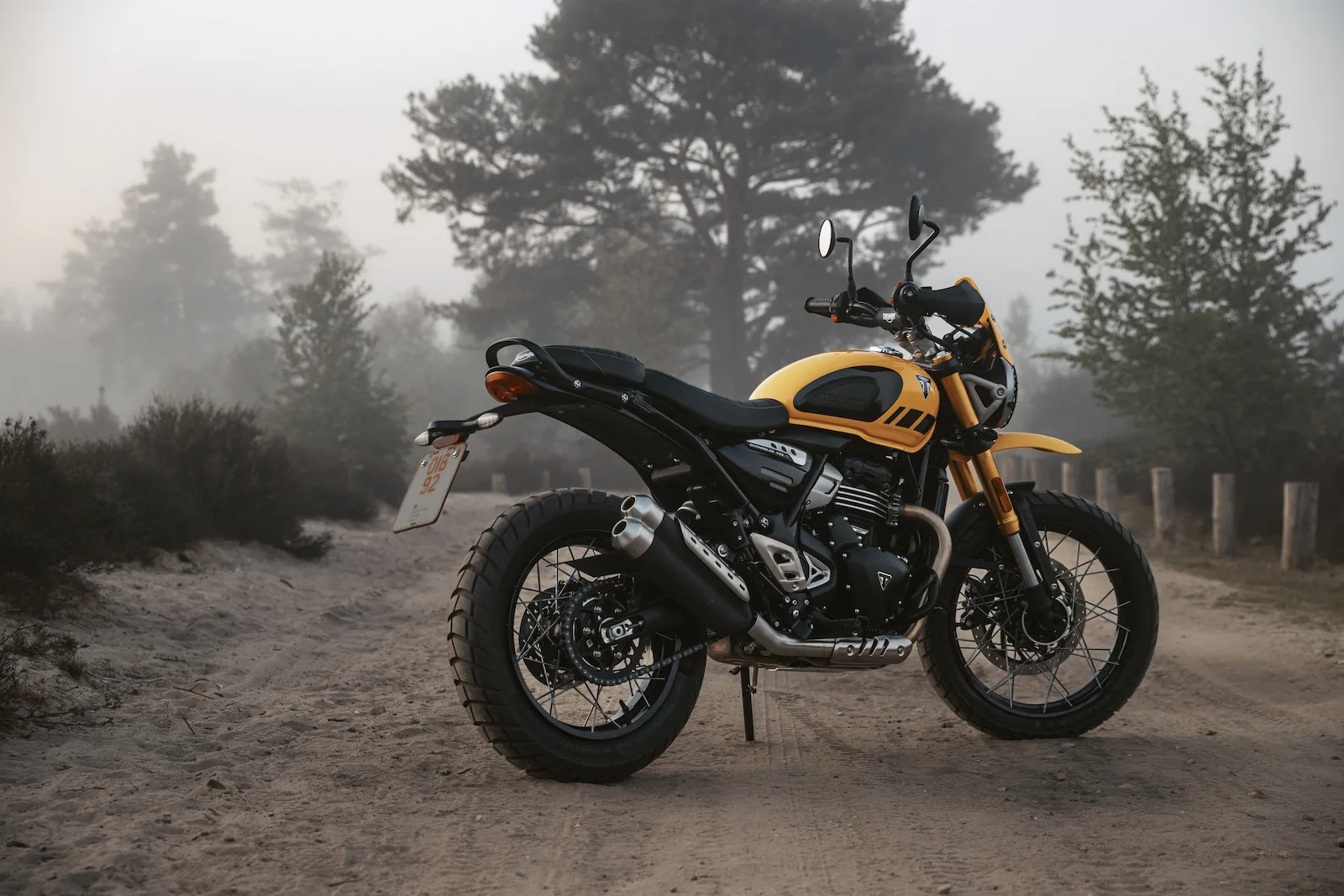
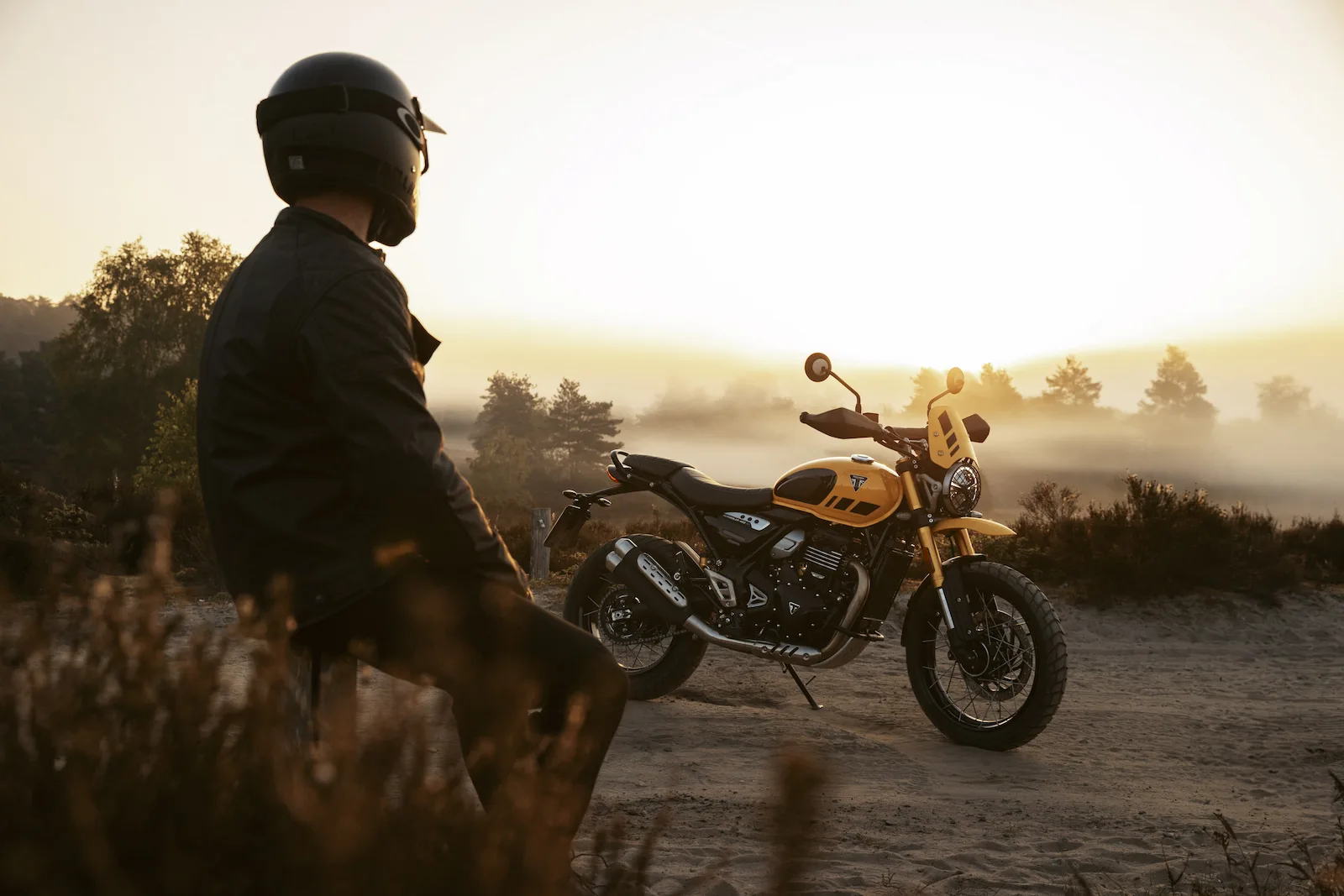
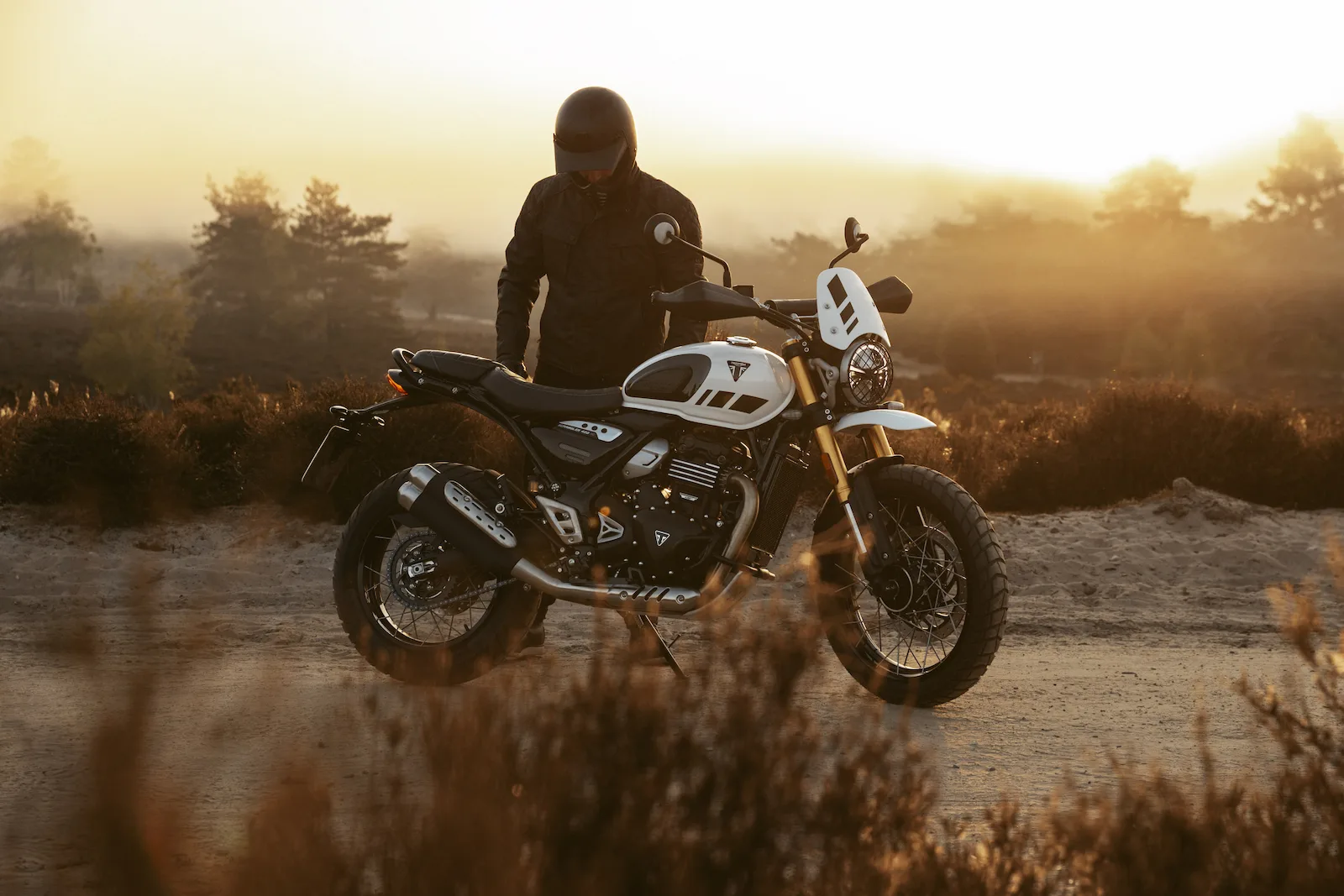
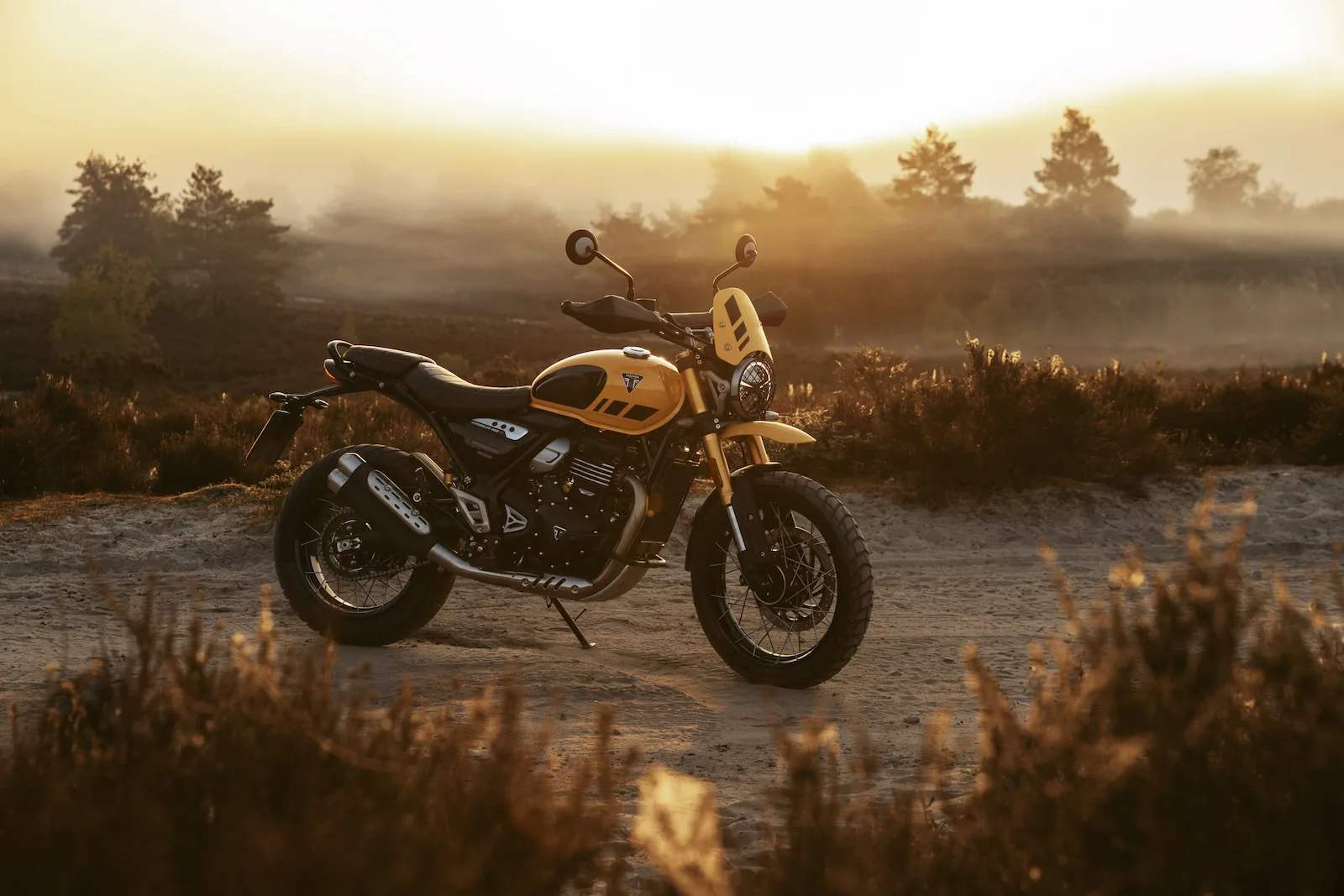
Racing Yellow, Storm Grey, Vanilla White
- Nuevo
Availability
Global dealer network from September 2025
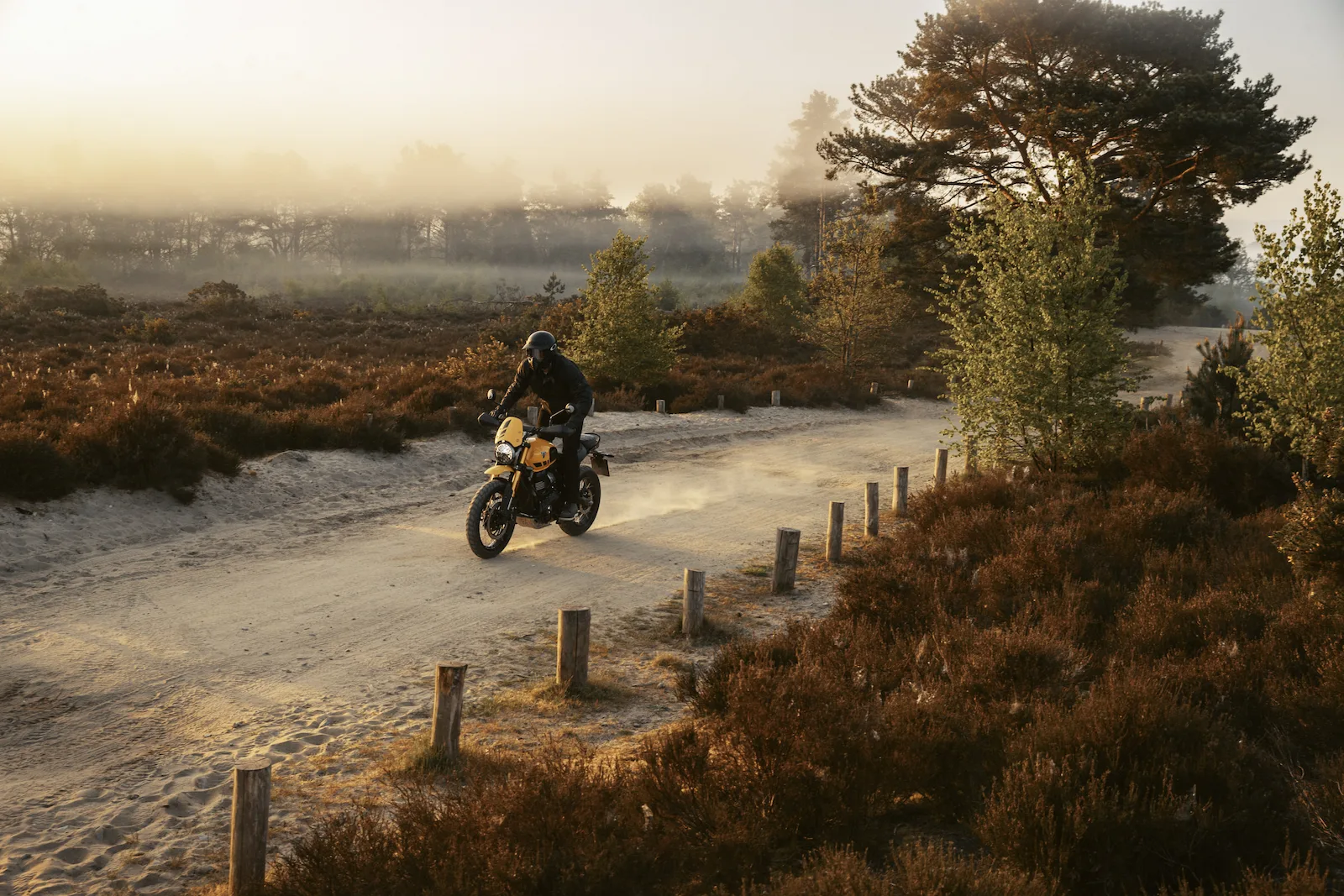
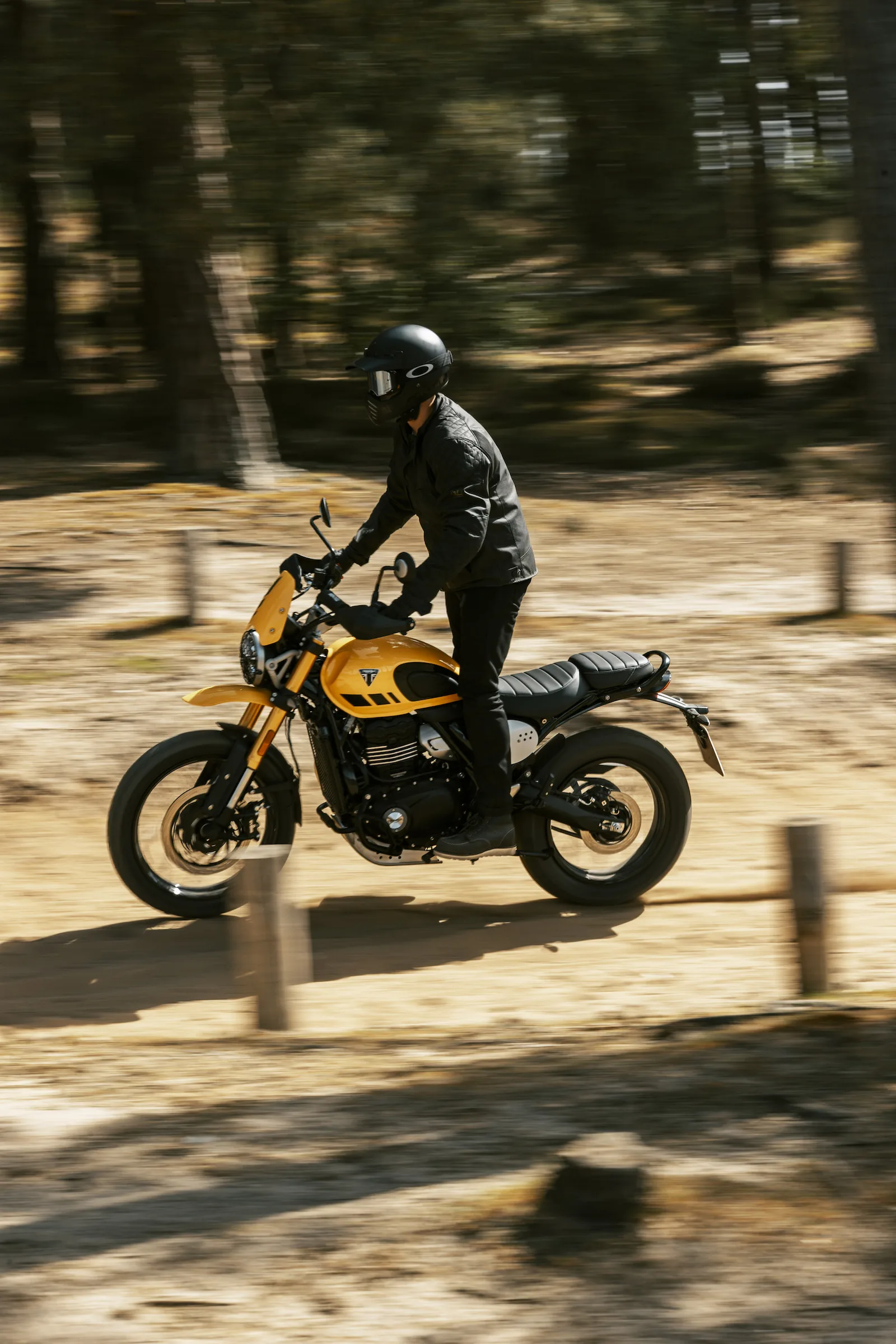
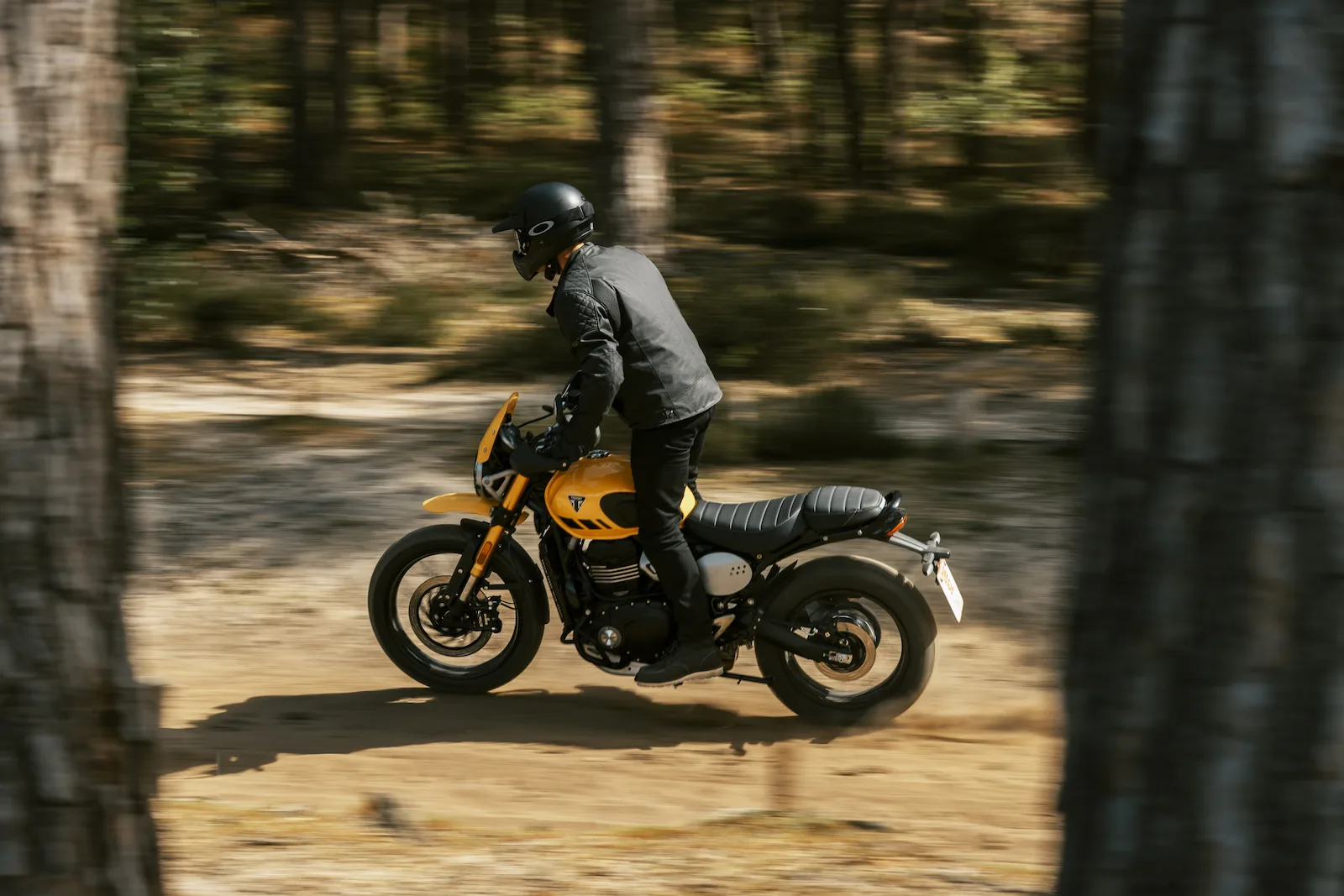
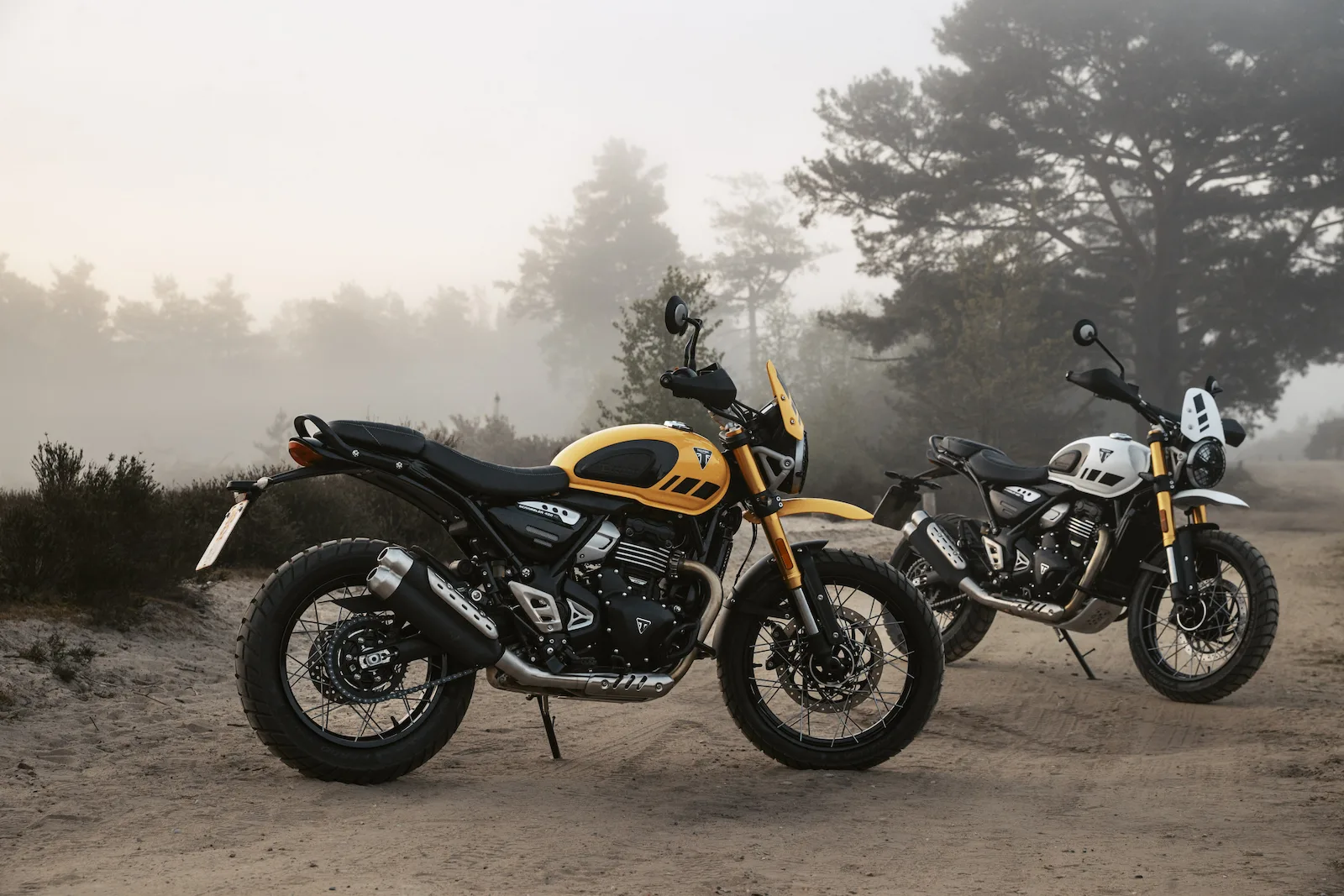
Triumph is taking the Scrambler 400 XC worldwide. The bike has been on sale in India, where Paul Stroud, Triumph's chief commercial officer, says buyers took to it strongly, and from September 2025 it goes into Triumph's global dealer network. It does not replace the Scrambler 400 X; the two will sit side by side in the 400cc Modern Classic range, with the XC as the better-equipped, more off-road-minded version.
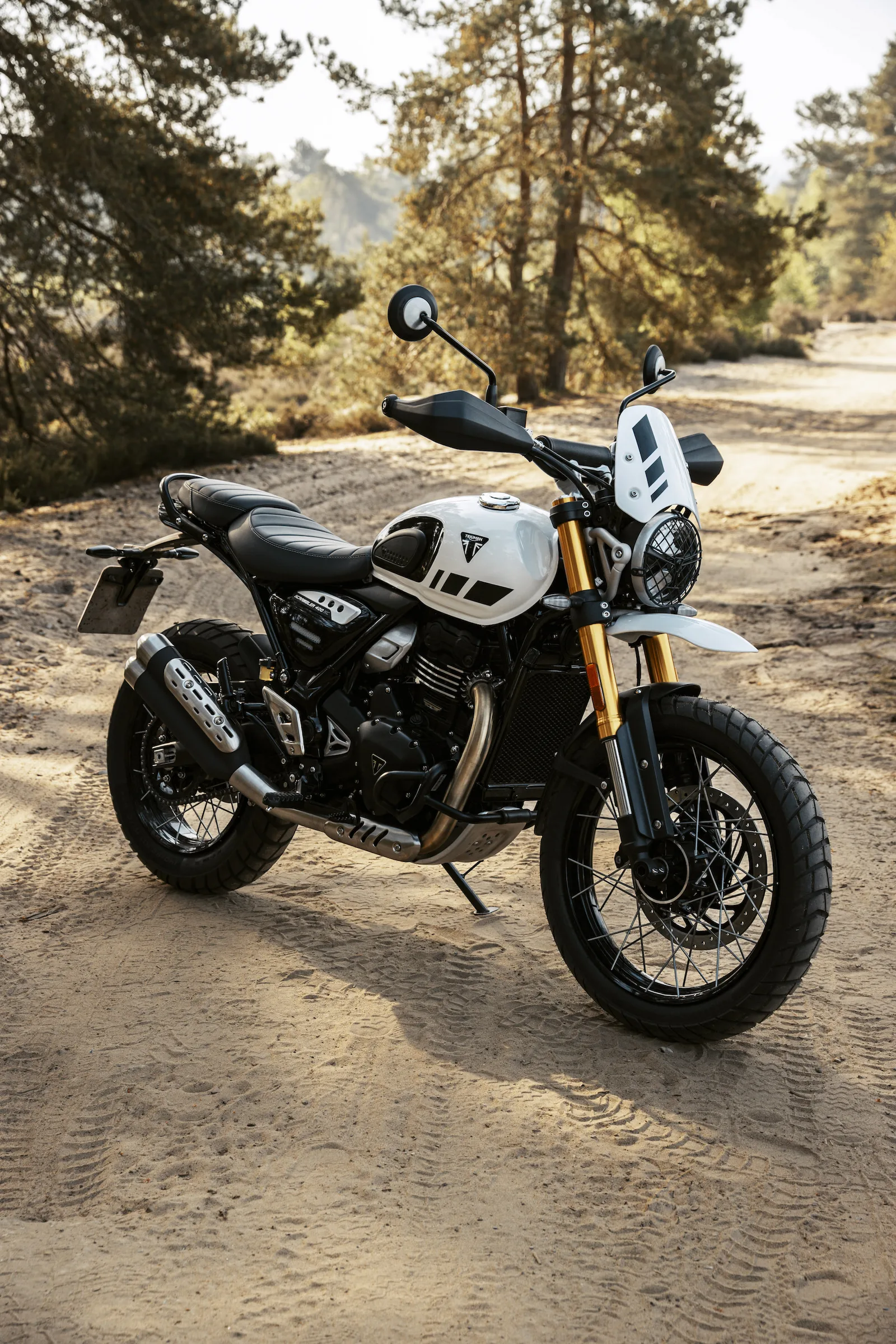
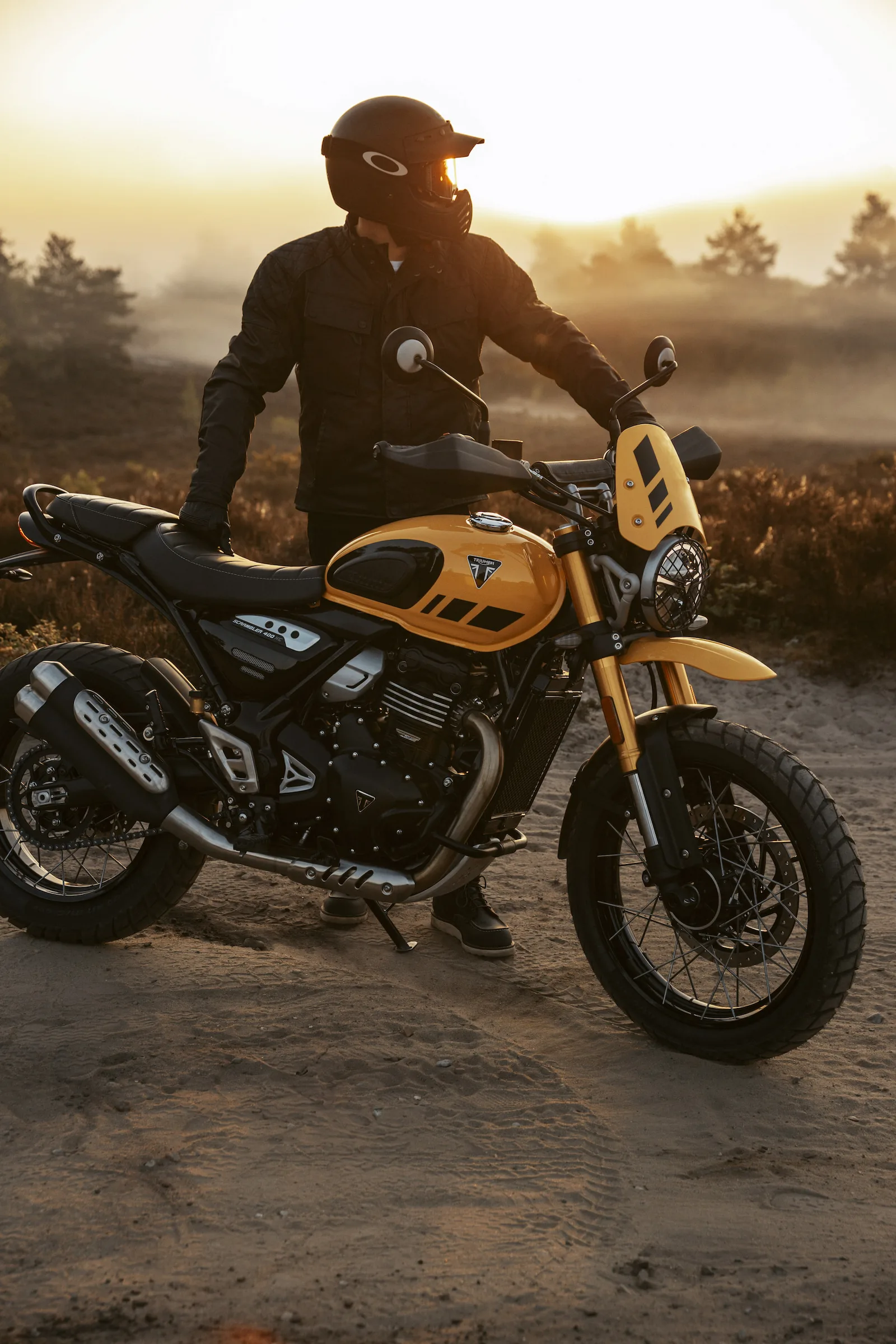
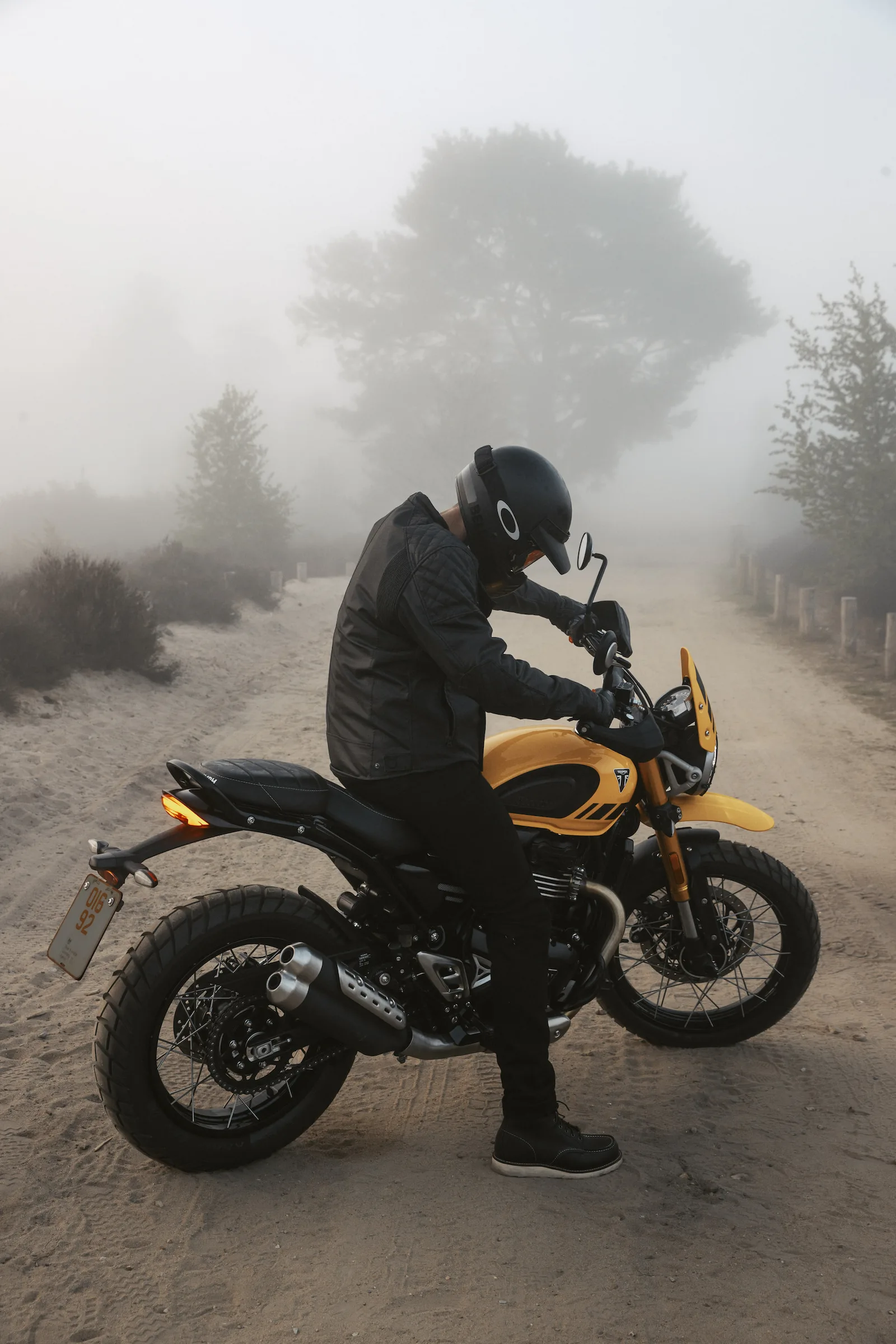
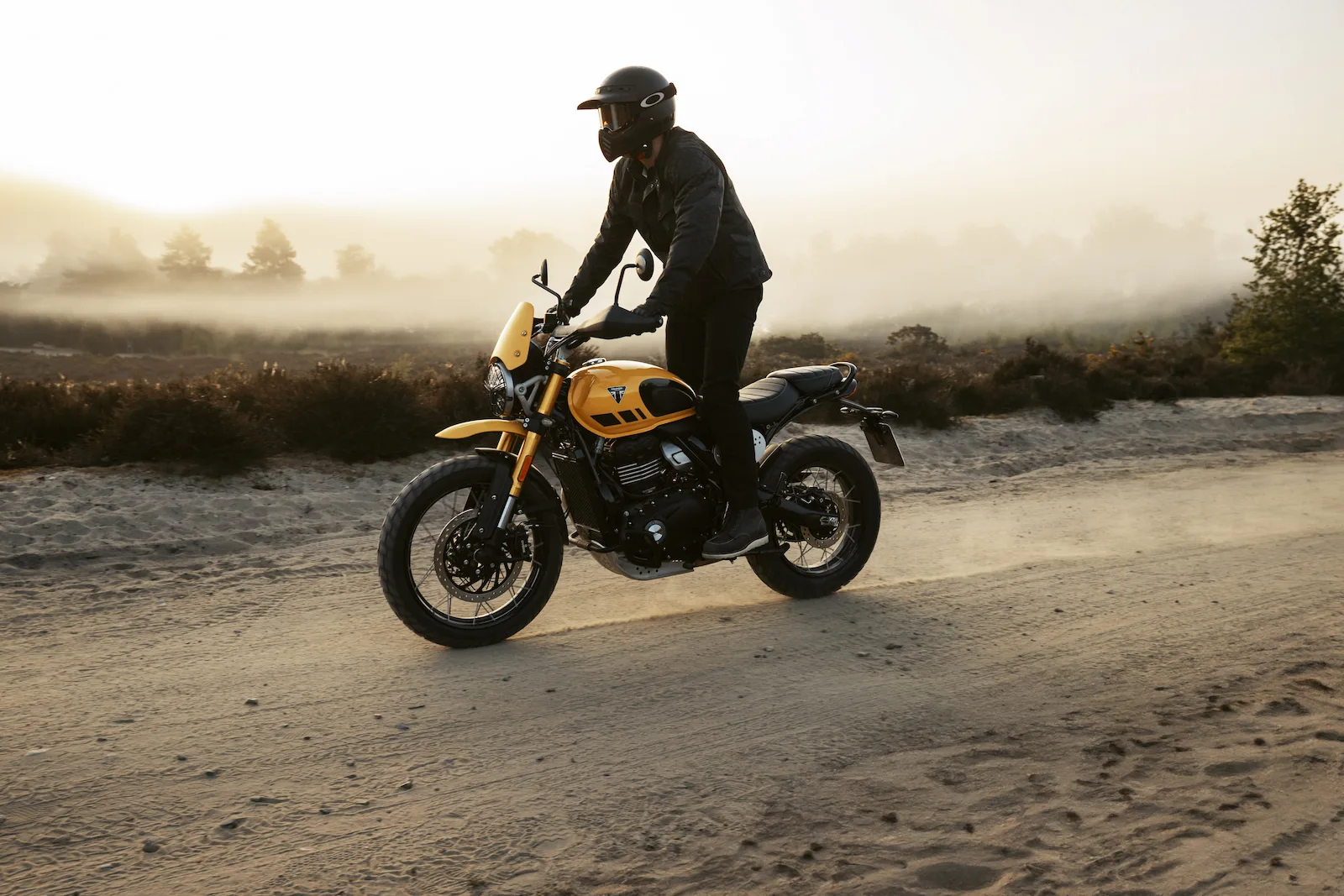
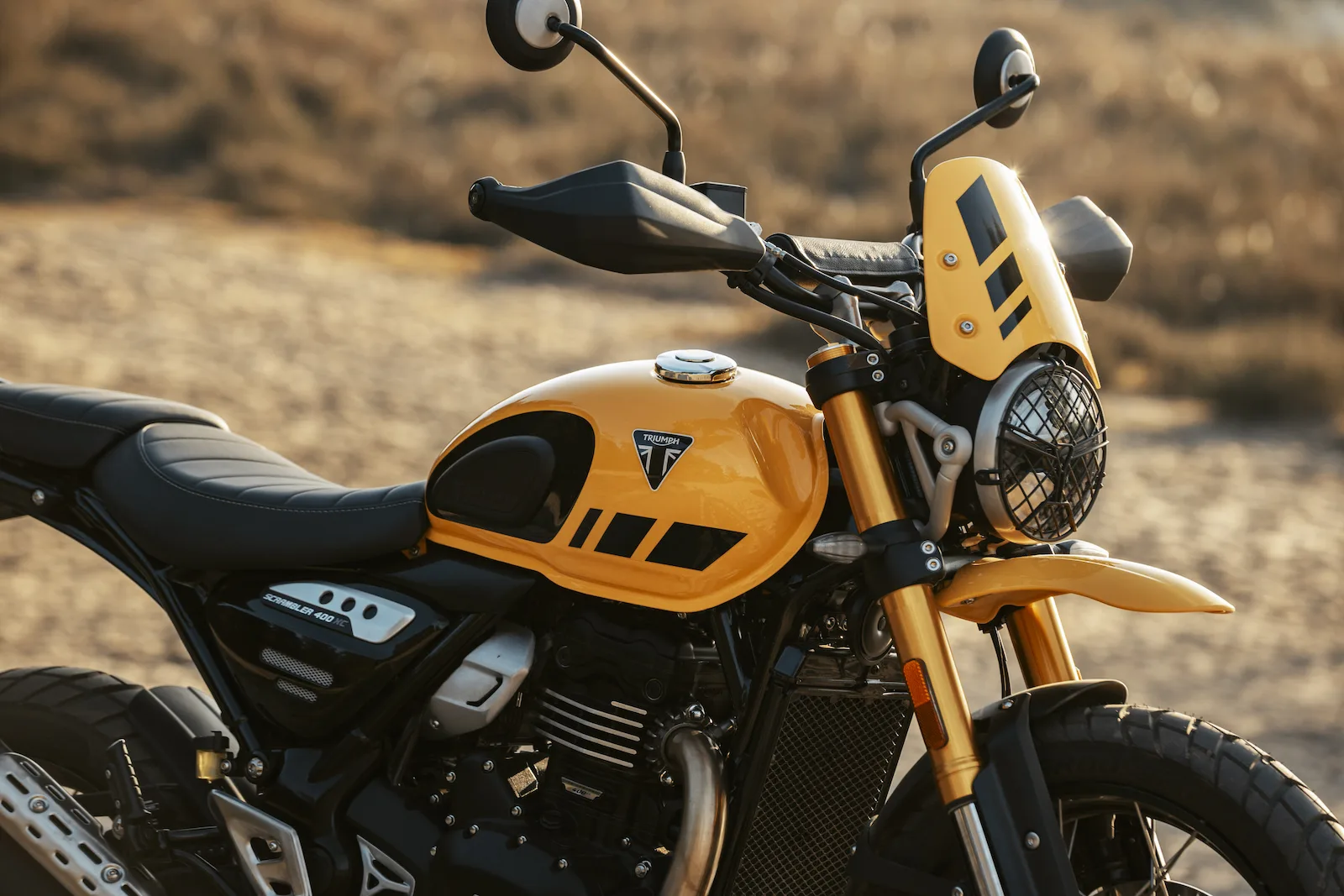
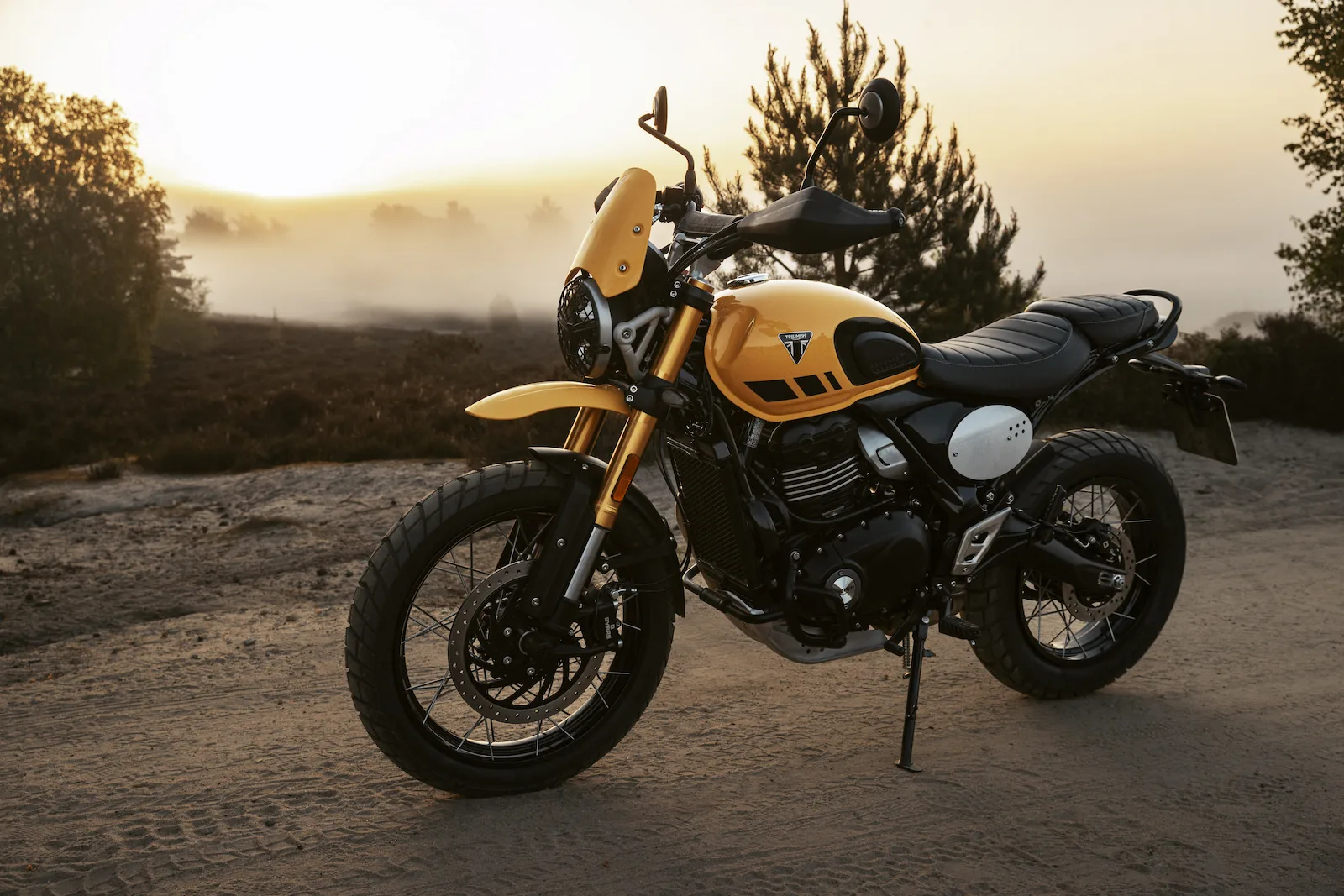
What the XC adds: side-laced wire-spoked wheels with Excel aluminum rims and tubeless Metzeler Karoo Street tires, a color-matched high-level front fender, a flyscreen, handguards, an aluminum sump guard and engine bars. It comes in three new color schemes, Racing Yellow, Storm Grey and Vanilla White. The release is written for riders who want the Scrambler look but expect to leave the pavement, and Triumph pitches the 400 platform at riders of every age and experience level. It does not print a price.
Wheels, tires and protection
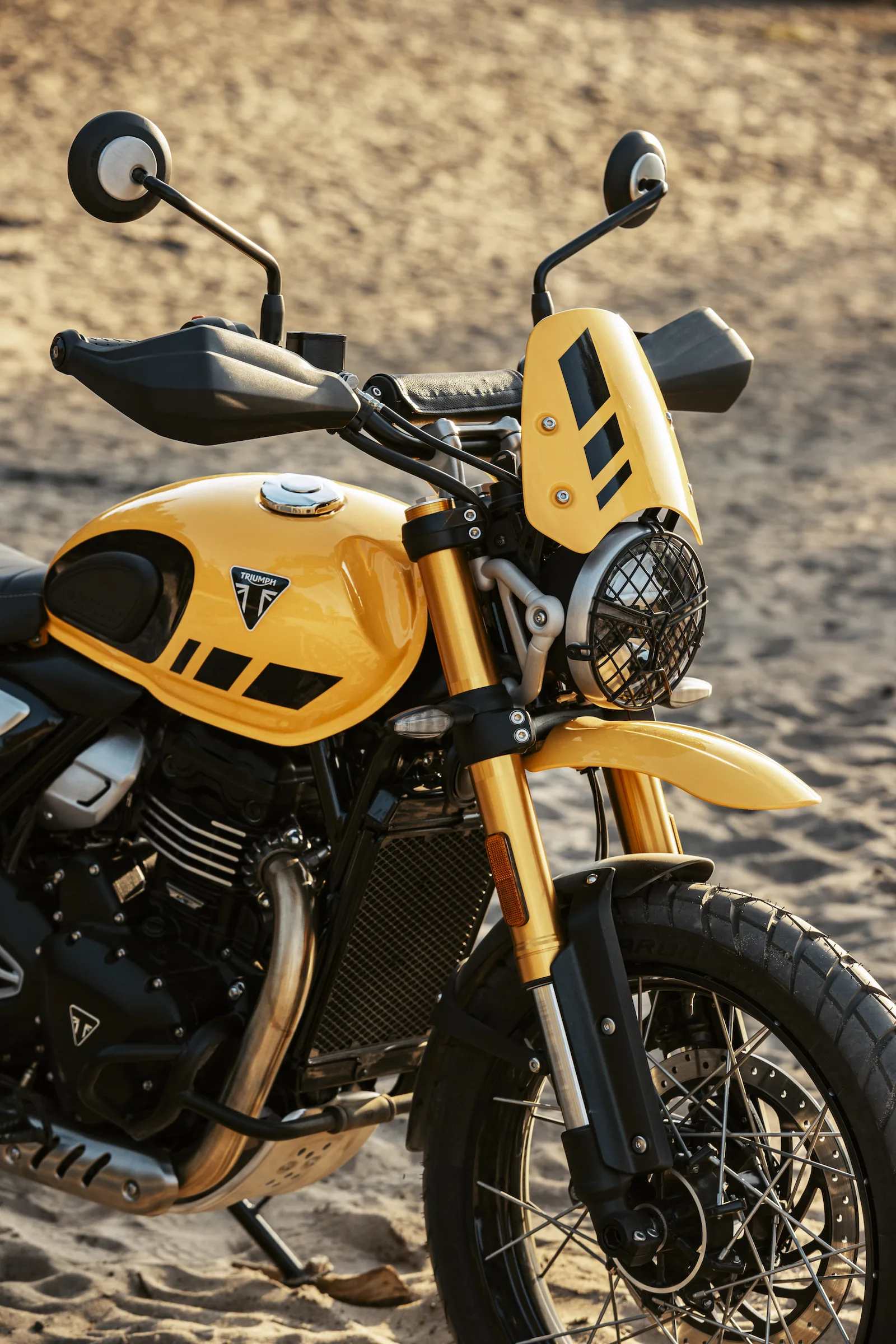
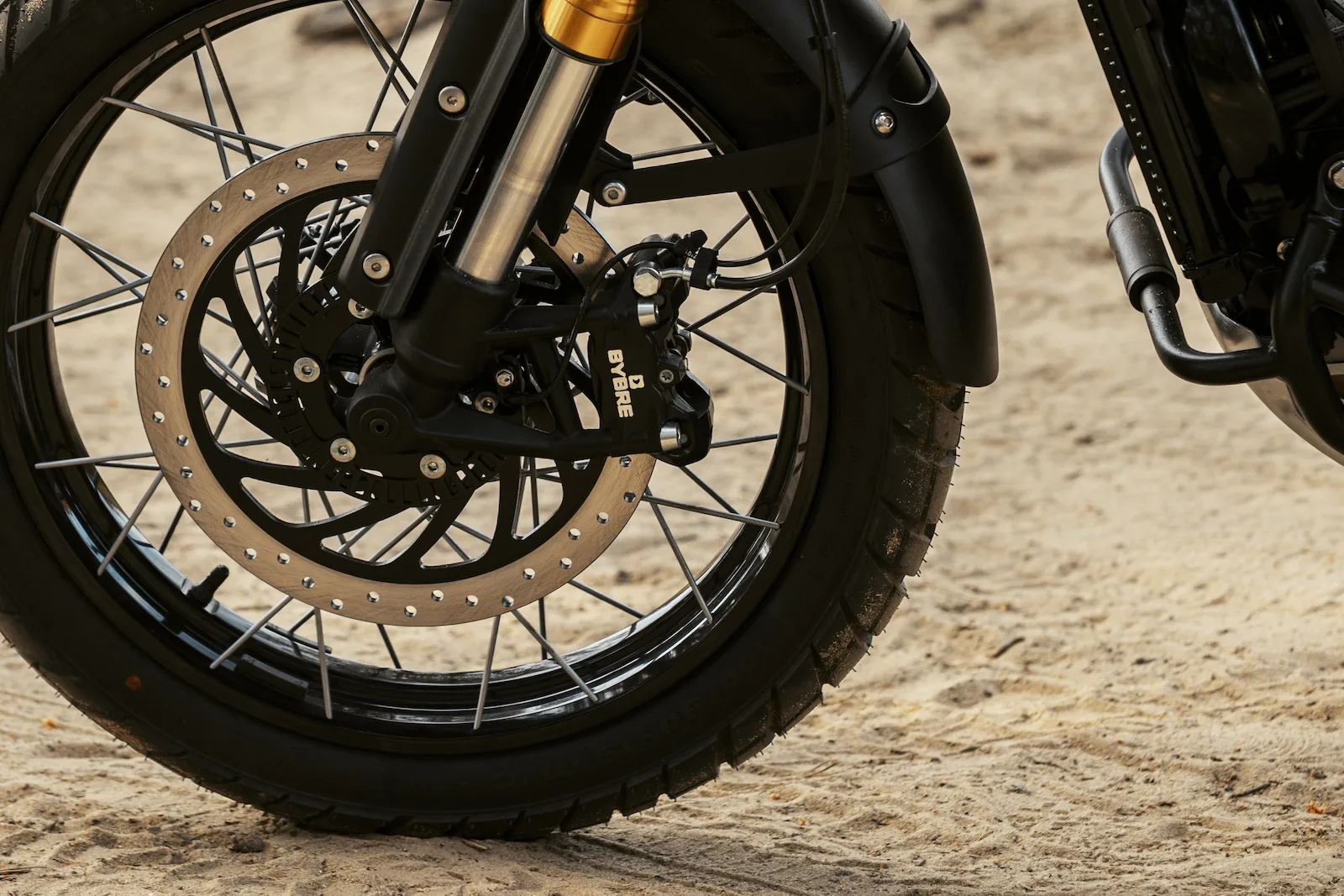
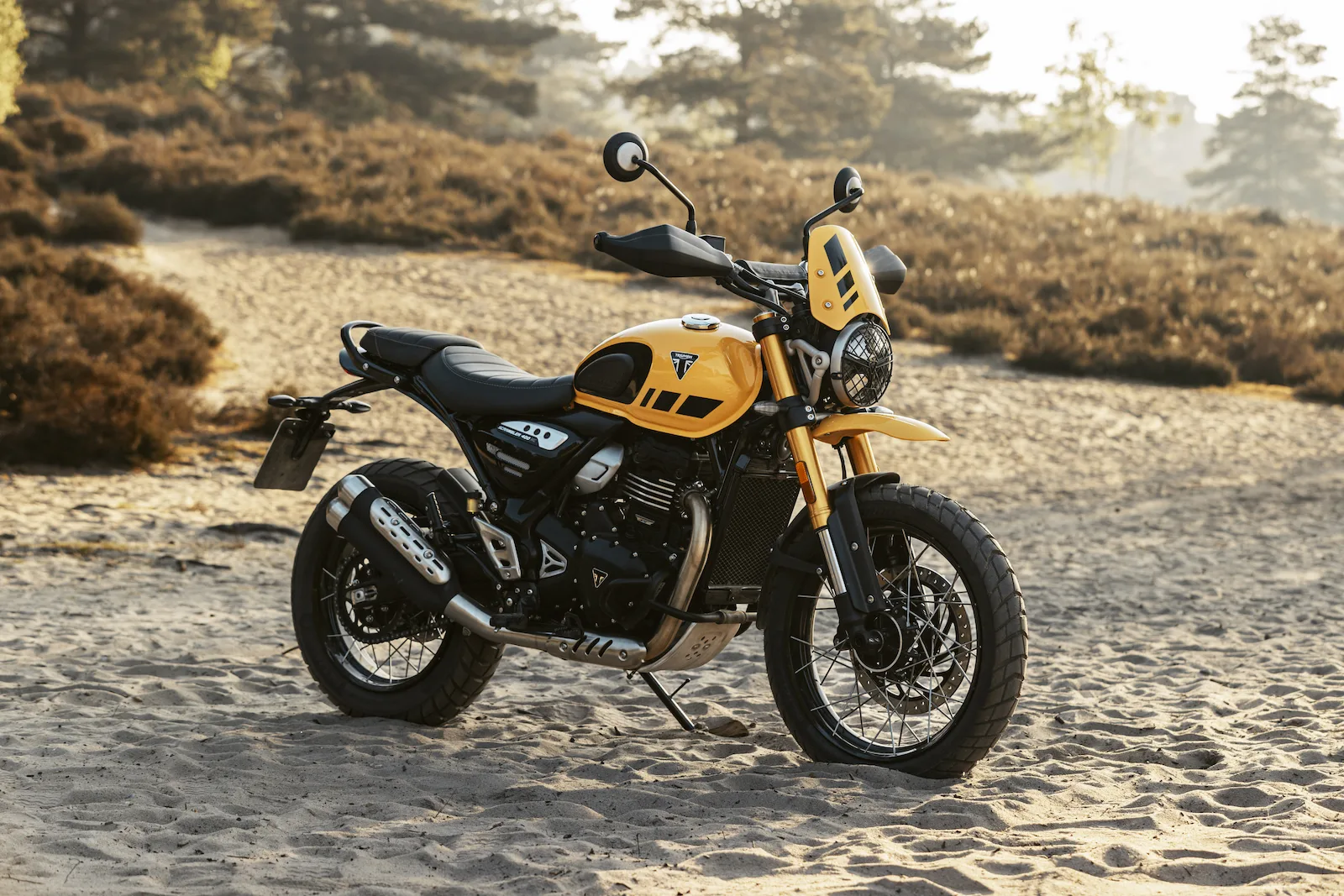
The wheels are the main hardware change. The XC runs a 19-inch front and a 17-inch rear, spoked, with the spokes laced to the side of the rim so the tires can be tubeless. Sizes are 100/90-19 up front and 140/80-17 at the back, on Metzeler Karoo Street dual-purpose rubber. For you that means the look and give of a spoked wheel while keeping the simple roadside plug repair of a tubeless tire, and a tall front wheel that rolls over ruts and rocks more easily and gives the bike its upright scrambler stance.
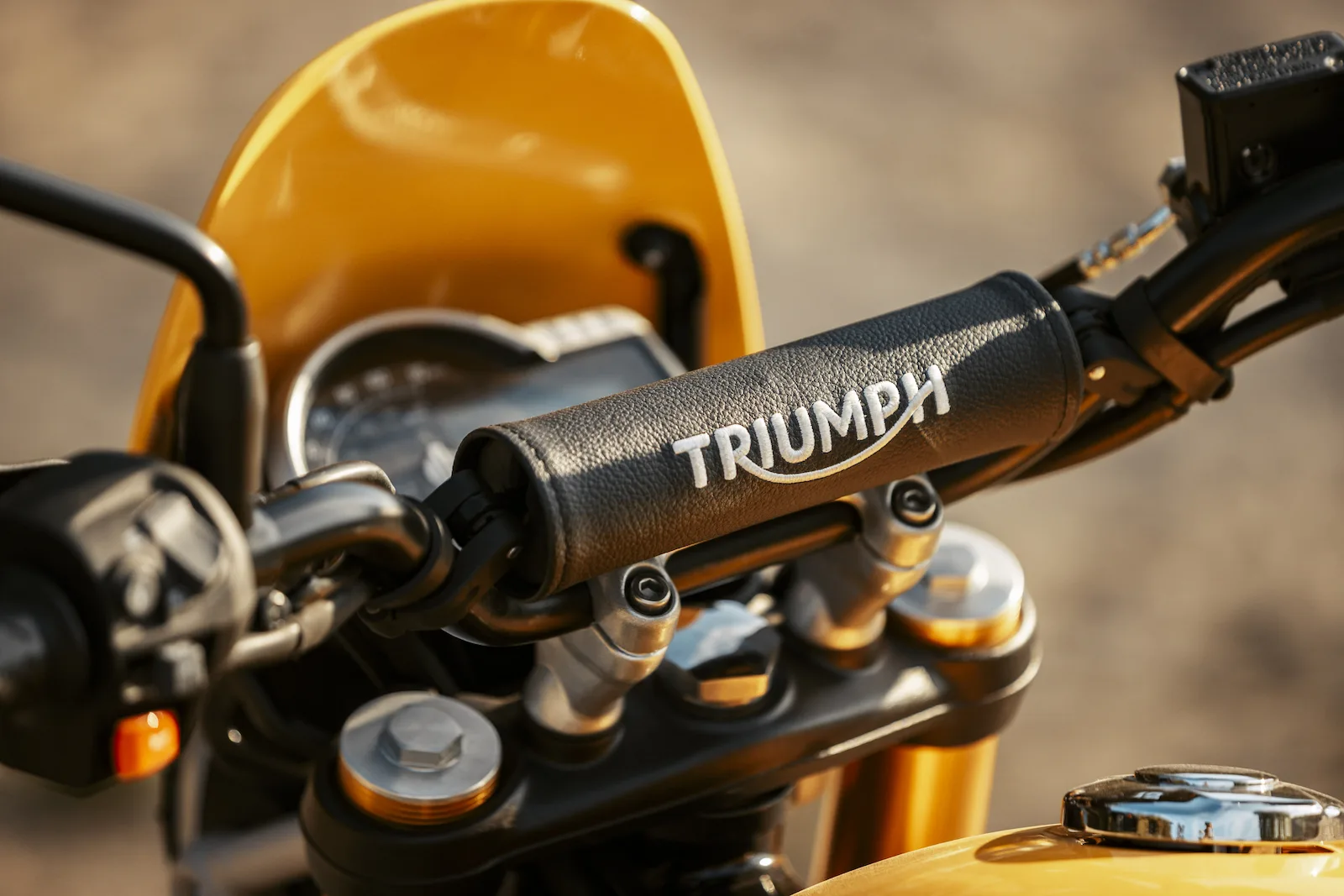
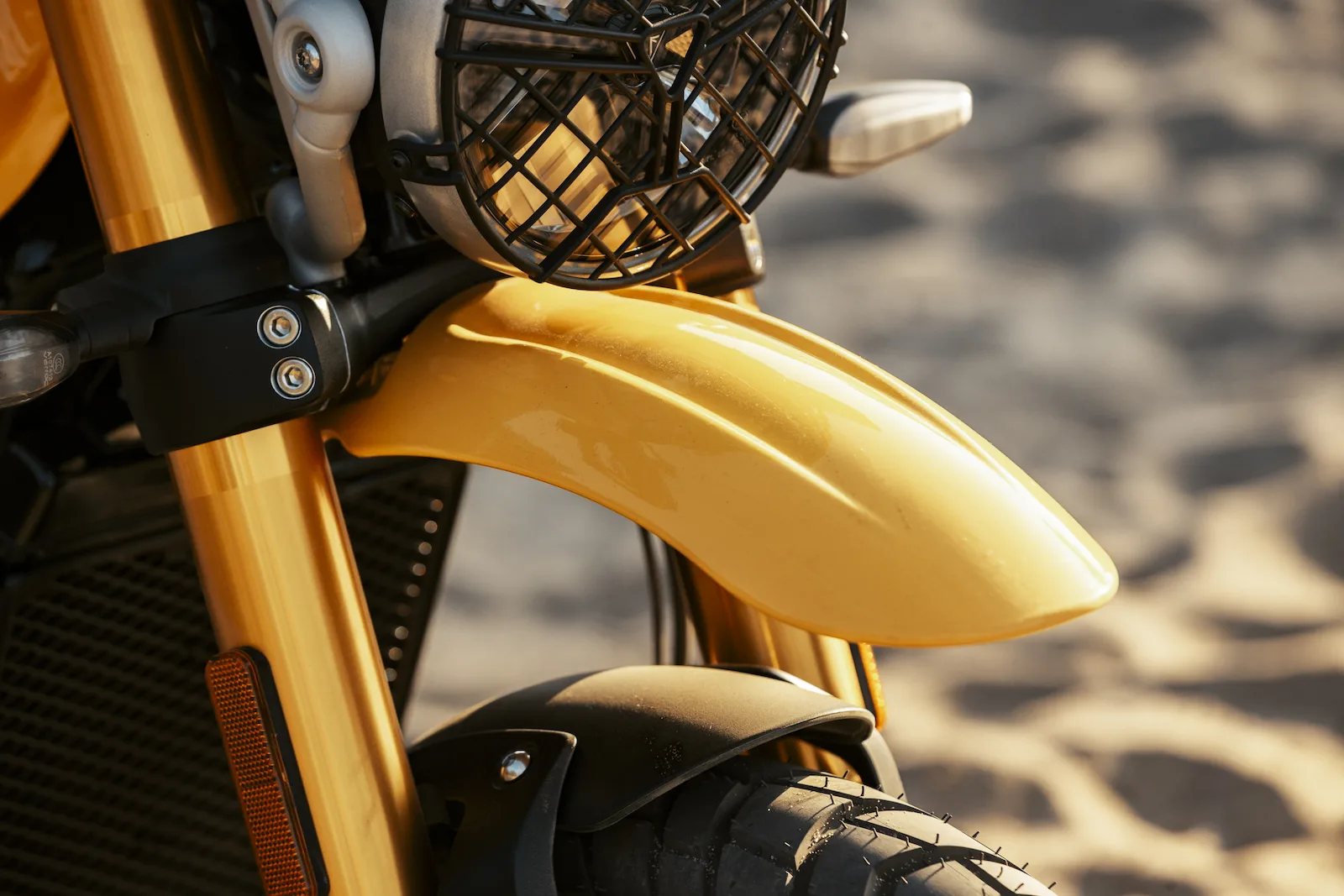
Protection is the other half of the package. The front fender is mounted high and painted to match the bodywork, the flyscreen takes a little wind off your chest, and handguards cover your hands and levers from branches and spills. Underneath, the aluminum sump guard and the engine bars are there for the low-speed tip-overs that come with trail riding.
Suspension, brakes and rider aids
Up front are 43mm big-piston upside-down forks with gold anodized tubes; at the rear sits a gas monoshock with a piggy-back external reservoir and preload adjustment. Both ends offer 150mm of wheel travel. Preload is the only adjustment the release lists, so set it for your weight, a passenger or luggage before a trip rather than expecting to dial in damping.
Braking comes from a single 320mm front disc gripped by a four-piston radial caliper with an optimized pad compound, and a 230mm rear disc with a single-piston floating caliper. ABS is standard, and there is a dedicated off-road ABS mode alongside traction control that can be switched off. The release does not explain exactly what the off-road mode changes, so read the owner's manual before you rely on it on gravel or dirt.
Engine and transmission
Power comes from Triumph's TR-series single: 398 cc, liquid-cooled, four valves and twin overhead cams, with an 89.0 mm bore, 64.0 mm stroke and 12:1 compression. Peak output is 40 PS, reached at 8,000 rpm, while torque tops out at 37.5 Nm at 6,500 rpm. Bosch fuel injection works with a ride-by-wire throttle that Triumph tuned for a linear, predictable response, which is what you want when feeding power to a rear tire on loose ground.
The six-speed gearbox works through a wet multi-plate slip-and-assist clutch (the prose calls it torque-assist), which keeps lever effort light and helps settle the rear wheel on hard downshifts. Final drive is an X-ring chain. The exhaust uses a stainless twin-skin header and an upswept stainless silencer.
Chassis, ergonomics and dimensions
The frame is a tubular steel hybrid of spine and perimeter designs with a bolt-on rear subframe, and the twin-sided swingarm is cast aluminum. A bolt-on subframe is usually simpler to replace after a fall than one welded to the main frame. Geometry is 23.2° rake and 108 mm trail on a 1418 mm wheelbase, which Triumph describes as extended, paired with long-travel suspension and wide handlebars, 901 mm across, for more stability and leverage on loose surfaces.
The footpegs have a high-grip surface and are placed so standing up on the bike feels natural. Triumph calls the seat height accessible; it is 835 mm, so shorter riders should sit on one at a dealer. Wet weight is 186 kg, and the fuel tank holds 13 liters.
Instruments, lighting and security
The dash pairs a large analog speedometer with an LCD inset that shows a digital tachometer, remaining fuel range and a large gear indicator, all run from a scroll button on the handlebar. A USB-C socket lets you charge a phone or navigation unit mounted on the bars while you ride.
The headlight carries a daytime running light in Triumph's DRL signature, the taillight uses molded light guides with Triumph branding, and the turn signals are slim. A steering lock and an immobilizer come standard; a transponder chip in the key means the engine starts only with the matching key.
Design and finish
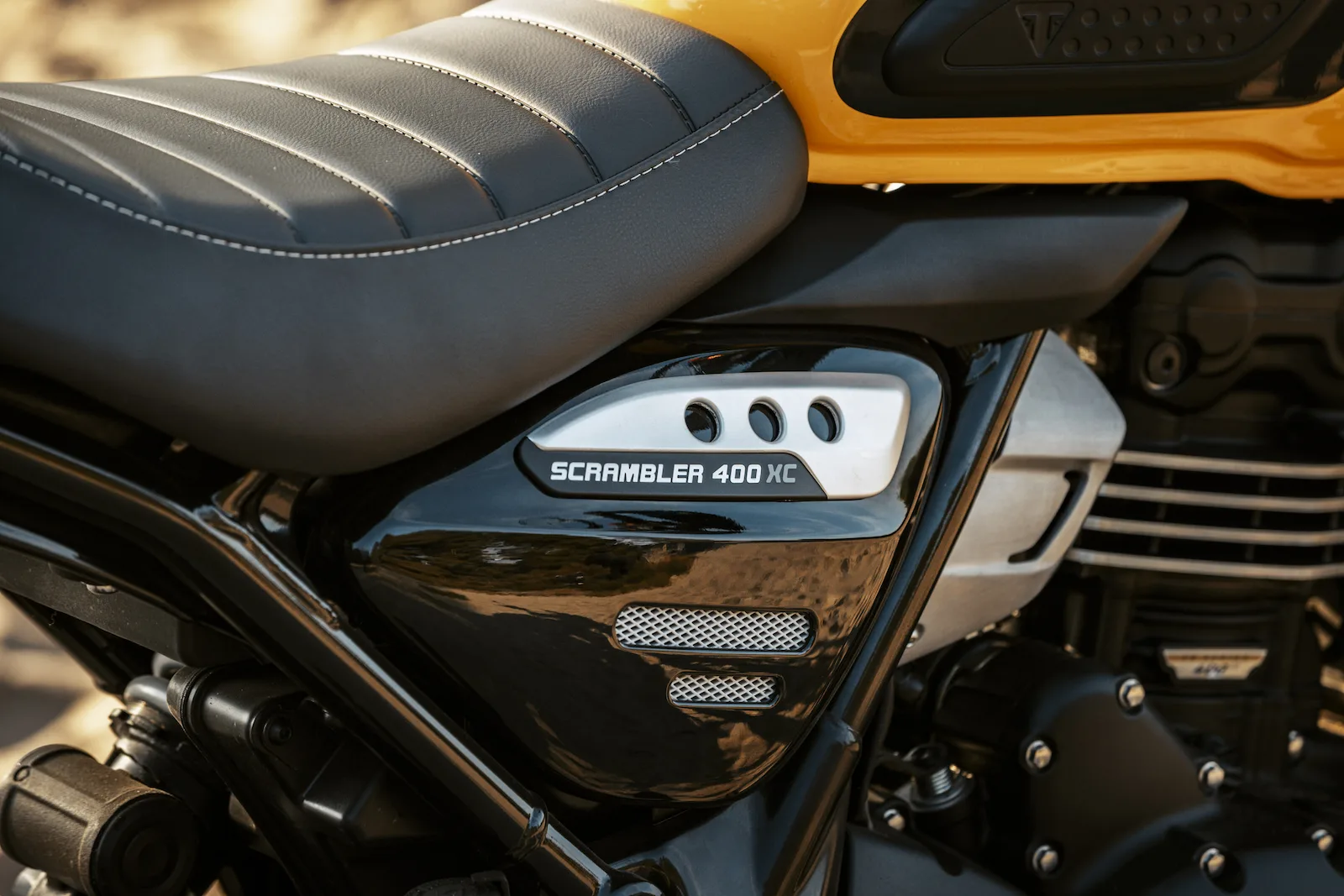
Triumph draws a line from the XC back to its larger Scrambler 900 and 1200 and to the factory Scramblers of the 1950s. The bike was designed in Hinckley, UK, and keeps the brand's familiar cues: a sculpted tank with knee indents, a finned cylinder head with header clamps, the Triumph triangle badge on the engine and an upswept silencer. Engine cases are black powder coated with machined cooling fins.
On the XC each color scheme gets its own graphics and a black Triumph logo; the tank infills, which carry knee pads, are black, as is the two-piece rider and passenger seat.
Ownership, accessories and availability
Service intervals are 10,000 miles (16,000km) or 12 months, whichever comes first, and the bike carries a two-year unlimited-mileage warranty. More than 20 genuine accessories are offered for the XC, covering styling, comfort, luggage and security, and you can build a spec in Triumph's online configurator. Triumph says its accessories are covered by the same two-year warranty.
The XC arrives in Racing Yellow, Storm Grey or Vanilla White from September 2025. The release names no price and gives no US-specific date or pricing; it points readers to Triumph's UK website.